
Tata Punch EV vs Tata Nexon EV: Which Electric Car Should You Actually Buy in 2026?
TATA EV Comparison | Punch EV vs Nexon EV 2026:

You have finally made up your mind — it is going to be an electric car. You have dismissed the range anxiety, charmed your family into the idea, and even had the society maintenance committee approve a charging point in your parking slot. Now you are staring at two Tata showroom brochures on your coffee table: the newly facelifted Punch EV 2026, and the well-established Nexon EV. Both are from the same manufacturer, both carry a five-star safety rating, and both will slash your monthly fuel bill to a fraction of what you pay today. The problem is that one of them is the right car for you — and the other, despite being excellent, is not.
According to Tata Motors’ official website, the Punch EV 2026 facelift — launched on 20 February 2026 — starts at an aggressive ₹9.69 lakh (ex-showroom) and goes up to ₹12.59 lakh for the fully loaded Empowered+ S 40. The Nexon EV, Tata’s bestselling electric car since 2020, starts at ₹12.49 lakh and climbs to ₹17.49 lakh for the ADAS-equipped Empowered+ A 45 variant. That is a gap of up to ₹5 lakh between the two — and every rupee of that gap tells a story.
We have conducted a comprehensive review of every specification available on Tata’s official website, corroborated the information with independent automotive testing sources, and analyzed real-world ownership experiences to deliver a transparent, scenario-driven assessment. By the time you finish this article, you will know exactly which car is your Bijli Wali Gaadi (EV).
Table of Contents
One surprising finding: The 2026 Punch EV facelift actually charges faster than the Nexon EV — 20–80% in just 26 minutes via a 65 kW DC fast charger, versus approximately 56 minutes for the Nexon EV’s 45 kWh battery on a comparable 60 kW charger. If you make frequent highway trips and depend on public fast chargers, that is not a trivial difference.
Tata Punch EV vs Tata Nexon EV: Our 60-Second Verdict
For most Indian buyers: For most daily commuters in Indian cities who drive under 80 km a day and charge at home overnight, the Tata Punch EV 2026 is the smarter buy — it delivers class-comparable range, faster public charging, and costs approximately ₹4.9 lakh less over five years. The Tata Nexon EV is the right car for larger families, buyers who travel frequently on highways above 100 km, or those who need V2L/V2V capability and a bigger cabin — and are willing to pay the premium for it.
In short: the Punch EV wins on value and efficiency; the Nexon EV wins on range, space, and technology. Neither is a bad choice — but they are distinctly different cars for distinctly different buyers.
Tata Punch EV vs Tata Nexon EV: Price, Variants and What Each Rupee Gets You
Let us begin where every Indian car buying decision begins: the price. The table below lists all key variants for both models as of May 2026, with ex-showroom prices sourced directly from the Tata.ev official website.
| Variant | Nexon EV Price | Punch EV Price |
| Creative Plus MR (30 kWh) | ₹12.49L | — |
| Creative 45 (45 kWh) | ₹13.99L | — |
| Smart 30 kWh | — | ₹9.69L ★ Entry |
| Smart+ 30 kWh | — | ₹10.49L |
| Adventure 30 kWh | — | ₹10.89L |
| Fearless+ MR (30 kWh) | ₹14.49L | — |
| Smart+ 40 kWh | — | ₹10.89L ★ Value Pick |
| Adventure 40 kWh | — | ₹11.49L |
| Empowered 45 (45 kWh) | ₹15.49L | — |
| Empowered 40 kWh | — | ₹11.99L |
| Empowered+ 45 (45 kWh) ★ Sweet Spot | ₹16.49L | — |
| Empowered+ 40 kWh | — | ₹12.29L ★ Sweet Spot |
| Empowered+ A 45 (ADAS top spec) | ₹17.49L | — |
| Empowered+ S 40 kWh (Top Model) | — | ₹12.59L |
The Sweet-Spot Variants
For the Nexon EV, the sweet-spot variant is the Empowered+ 45 at approximately ₹16.49 lakh — it gives you the full 45 kWh battery, lifetime battery warranty, panoramic sunroof, ventilated seats, V2L/V2V, and the 9-speaker JBL system, stopping just short of the ADAS suite that the ₹17.49 lakh Empowered+ A adds. For the Punch EV, the sweet spot is the Empowered+ 40 at approximately ₹12.29 lakh — that one variant unlocks the 40 kWh battery with its lifetime warranty, the 360° camera, ventilated front seats, sunroof, and the 10.25-inch dual-screen setup.
The price gap between these two sweet-spot variants is ₹4.2 lakh. Whether that gap is justified depends entirely on what you need the car to do — which is exactly what the rest of this article answers.
The Battery-as-a-Service Option on the Punch EV
One genuinely new development with the 2026 Punch EV facelift is the Battery-as-a-Service (BaaS) programme — a first for any Tata vehicle. Under BaaS, the Punch EV starts at just ₹6.49 lakh (ex-showroom), with a battery usage charge of ₹2.6 per kilometre billed monthly. This is a compelling option for buyers with modest annual mileage — say, under 8,000 km per year — but becomes more expensive than the full purchase at higher mileages. The Nexon EV does not offer a BaaS option as of May 2026.
Real-World Range: What Buyers Are Actually Getting on Indian Roads
The manufacturer’s ARAI range figures for both cars look impressive on paper — 489 km for the Nexon EV 45 kWh, and 468 km for the Punch EV 40 kWh. In the real world, as any experienced EV owner in India will tell you, ARAI claims and real-world results are two different conversations.
Based on data from leading automotive magazines, online car ownership platforms, and performance review outlets — all conducted on Indian roads under Indian conditions — here is what the actual range picture looks like:
| Driving Scenario | Nexon EV (45 kWh) | Punch EV (40 kWh Facelift) |
| ARAI Certified Range | 489 km | 468 km |
| Tata C75 Real-World (claimed) | ~375 km | ~355 km |
| City commute (AC on, mixed) | 250–290 km | 240–275 km |
| Highway (100 km/h, AC 22°C) | 280–320 km | 260–295 km |
| Extreme summer (38°C+, city) | 200–230 km | 195–220 km |
| Real-world advantage (highway) | +25–30 km | — |
Here is the honest take: in typical Delhi-NCR daily commuting — 30 to 60 km of mixed traffic, AC running, multiple start-stops — both cars will comfortably cover four to six days of driving on a single charge without you ever touching a public charger. The Nexon EV’s 25–30 km real-world advantage over the Punch EV only becomes meaningfully relevant if you are doing 200+ km highway runs. For a daily Gurugram–Delhi–Gurugram commuter of 70 km, the Punch EV’s 40 kWh battery is not just adequate — it is well-matched.
In real‑world summer driving under identical settings—Eco mode, Level 3 regenerative braking, and the air conditioning set to 22°C—the Nexon EV achieved a noticeably higher overall range due to its larger battery, reinforcing its suitability for frequent highway use.
Charging the Punch EV vs Nexon EV: At Home, On the Highway and at the Office
Charging is where the 2026 Punch EV facelift pulls off its biggest surprise. Tata has equipped it with a 65 kW DC fast charger — more powerful than the Nexon EV’s 60 kW system — and the result is dramatically faster public charging times, particularly for the 40 kWh battery’s smaller capacity.
Home Charging (15A Socket and 7.2 kW Wallbox)
Both cars support home charging via a standard 15A socket and a 7.2 kW AC wallbox. If you plug in the Punch EV 40 kWh every evening after your commute — say, draining 30% of the battery daily — a 7.2 kW wallbox tops it up in roughly 1.5 to 2 hours overnight. For the Nexon EV 45 kWh, the same 30% top-up takes closer to 2 to 2.5 hours. For full charges, the Punch EV’s 40 kWh pack takes approximately 5.3 hours from 10 to 100% on the wallbox; the Nexon EV’s larger 45 kWh takes 6.5 hours. Neither is a concern if you plug in before going to bed.
DC Fast Charging — Where the Punch EV Surprises
This is the headline: the 2026 Punch EV facelift charges from 20% to 80% in just 26 minutes on a 65 kW DC fast charger, per Tata’s official website data. The Nexon EV, equipped with a larger 45 kWh battery and supporting a maximum DC input of 60 kW, requires approximately 56 minutes to charge from 10% to 80%, according to verified automotive specifications. That is a 30-minute difference at a public fast charger — the difference between a comfortable chai and samosa break and sitting through an entire episode of a TV show.
For highway travellers stopping at Tata Power EZ Charge, ChargeZone, or BPCL Pulse stations — three of the most widespread networks on India’s national highways — this faster charge rate on the Punch EV is a genuine convenience advantage. The Nexon EV compensates with a larger battery that needs fewer charging stops in the first place.
| Charging Scenario | Nexon EV (45 kWh) | Punch EV 40 kWh (2026) |
| 15A Home Socket (10–100%) | ~14 hrs | ~10 hrs |
| 7.2 kW Wallbox (10–100%) | ~6.5 hrs | ~5.3 hrs |
| DC Fast Charge (20–80%) | ~56 min (60 kW) | 26 min (65 kW) ★ |
| 15-min DC top-up range | ~110–120 km | 135 km ★ |
| Max DC Charging Speed | 60 kW | 65 kW ★ |
Tata Punch EV vs Tata Nexon EV: Full Specification Comparison

The table below presents all significant specifications for both vehicles. The data has been sourced directly from the Tata.ev official website and corroborated through independent automotive publications and consumer reporting platforms as of May 2026
| Specification | Tata Nexon EV | Tata Punch EV (2026 FL) |
| Price Range (Ex-showroom) | ₹12.49L – ₹17.49L | ₹9.69L – ₹12.59L |
| Battery Options | 30 kWh (MR) | 45 kWh | 30 kWh | 40 kWh (Facelift) |
| Motor Power (Peak) | 142 hp / 215 Nm | 129 hp / 154 Nm (40 kWh) |
| ARAI Claimed Range | 275 km (30 kWh) | 489 km (45 kWh) | 365 km (30 kWh) | 468 km (40 kWh) |
| Real-World Range (City/Hwy) | 210–240 km | 300–375 km (45 kWh) | 260–275 km | 335–355 km (40 kWh) |
| 0–100 km/h | 8.9 sec (45 kWh) | ~9.0 sec (40 kWh) |
| DC Fast Charge Speed | 60 kW (10–80% in ~56 min, 45 kWh) | 65 kW (20–80% in 26 min, 40 kWh) |
| AC Wallbox Charge (7.2 kW) | 4.25 hrs (30 kWh) | 6.5 hrs (45 kWh) | 4.5 hrs (30 kWh) | 5.3 hrs (40 kWh) |
| Infotainment Screen | 12.3-inch floating touchscreen | 10.25-inch touchscreen |
| Digital Cluster | 10.25-inch driver’s display | 10.25-inch driver’s display |
| Sound System | 9-speaker JBL | HARMAN audio (6 speakers, top var.) |
| Sunroof | Panoramic (top variants) | Single-pane (top variants) |
| 360° Camera | Yes (Empowered+ variants) | Yes (Empowered+ variants) |
| Ventilated Front Seats | Yes (Empowered+ variants) | Yes (2026 Facelift, top variants) |
| Rear AC Vents | Yes | No (absent even in facelift) |
| V2L / V2V | Yes — both V2L & V2V | No |
| ADAS Level | Level 2 (Empowered+ A 45 only) | None |
| Bharat NCAP Safety | 5-Star (all variants, Apr 2025) | 5-Star (pre-facelift; facelift pending) |
| Brakes | All-disc | Front disc, Rear drum (facelift) |
| Boot Space | 350 litres | 366 litres |
| Ground Clearance | 205 mm (MR) | 190 mm (LR) | 190 mm |
| Battery Warranty | Lifetime* (45 kWh) | 8yr/1.6L km (30 kWh) | Lifetime* (40 kWh) | 8yr/1.6L km (30 kWh) |
| Vehicle Warranty | 3 years / 1,25,000 km | 3 years / 1,25,000 km |
| Running Cost (est.) | ~₹1.2–1.4/km | ~₹1.1–1.3/km |
| Colour Options | 10 dual-tone options | 7 options |
| BaaS Option | No | Yes — from ₹6.49L + ₹2.6/km |
| Connected Car (iRA/ZConnect) | iRA.ev — 60+ features, OTA | ZConnect — 60+ features, iRA.ev |
| OTA Updates | Yes | Yes |
.
Design and Cabin Comfort: Which One Feels Better to Live With?
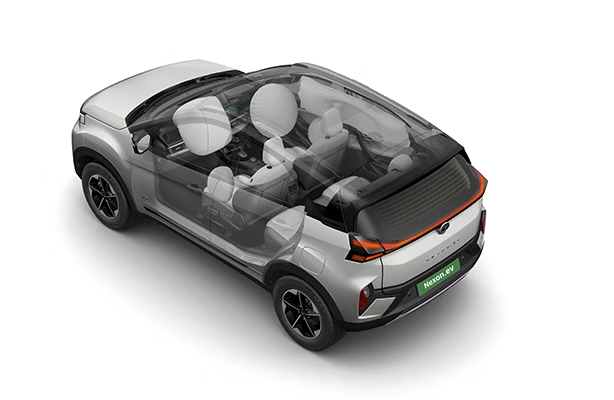
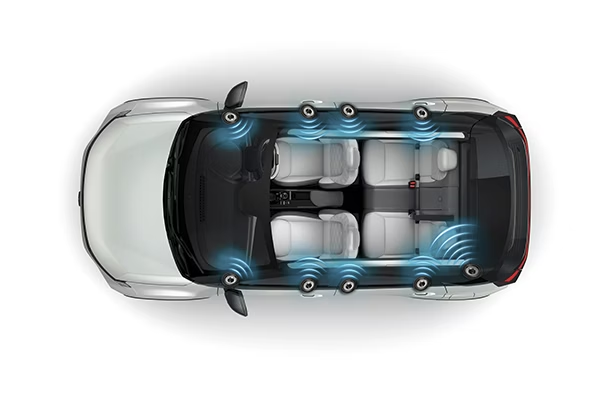
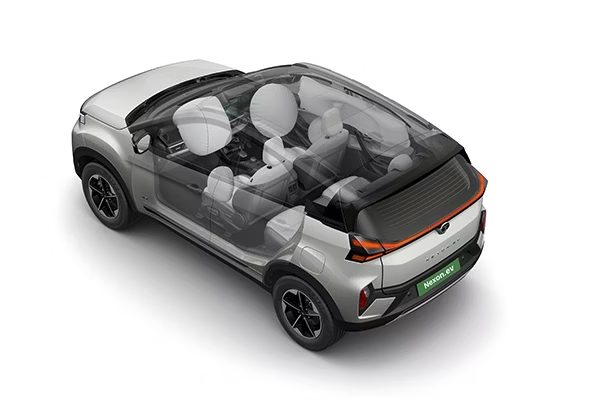
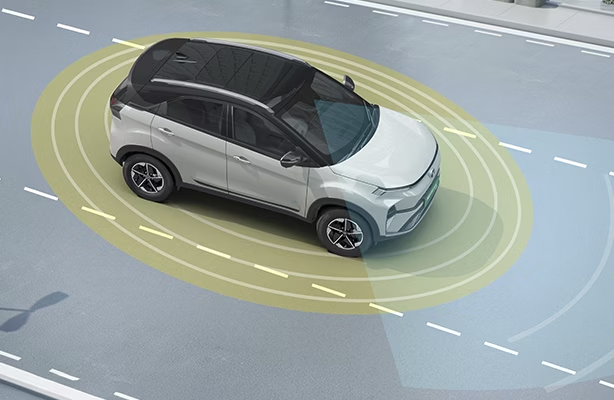
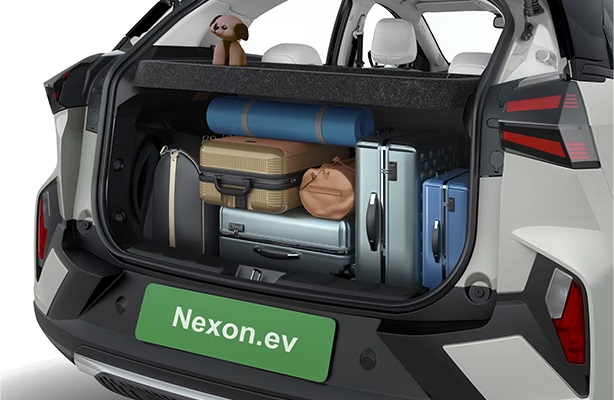
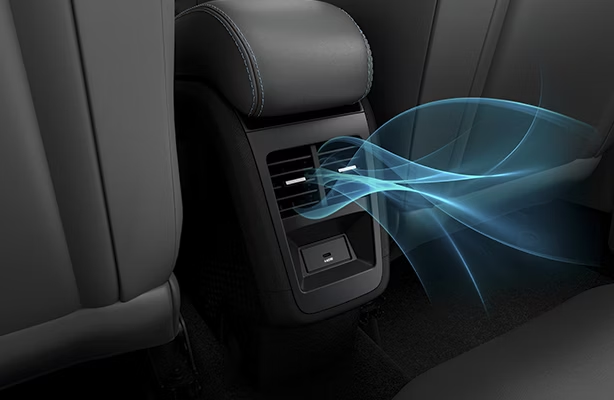
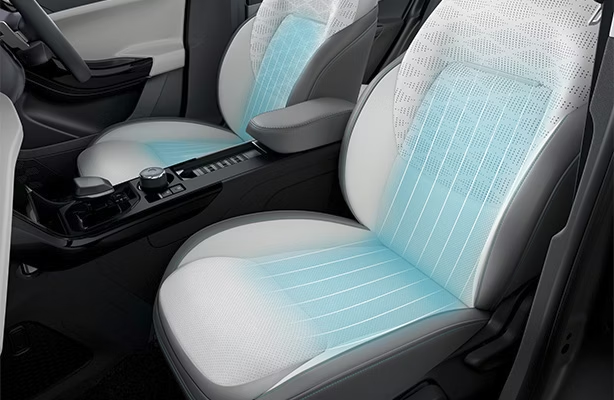
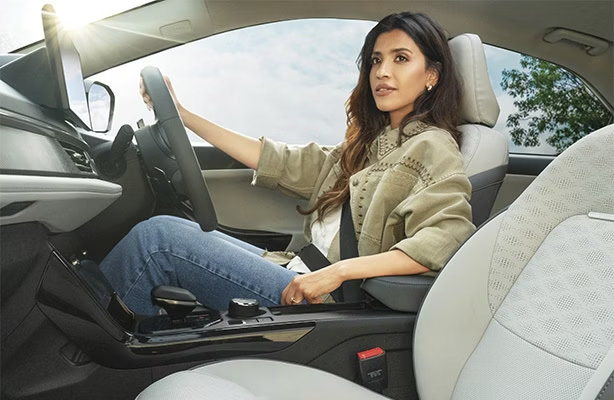
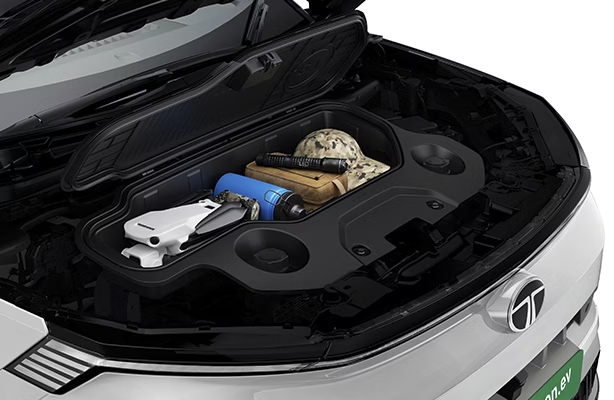
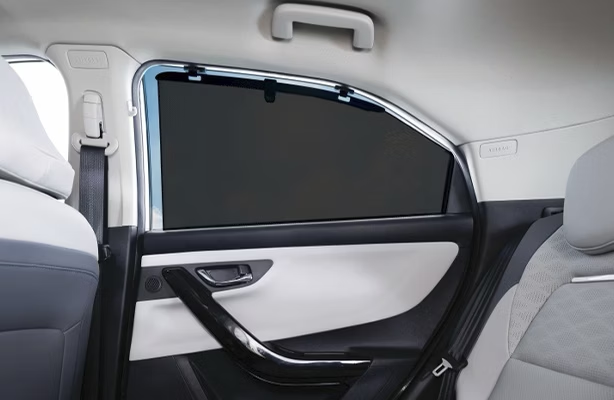
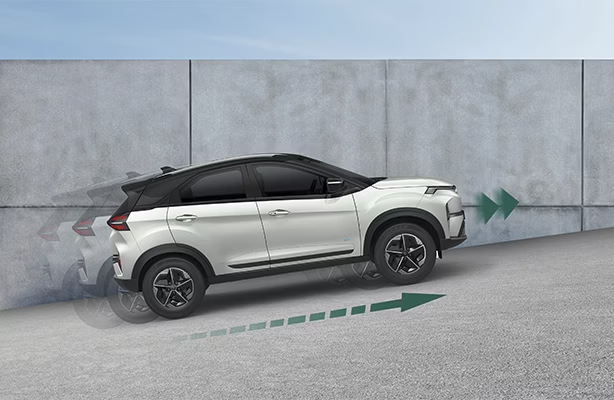
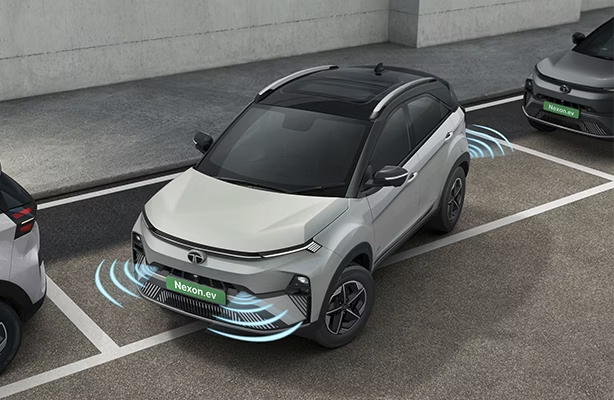
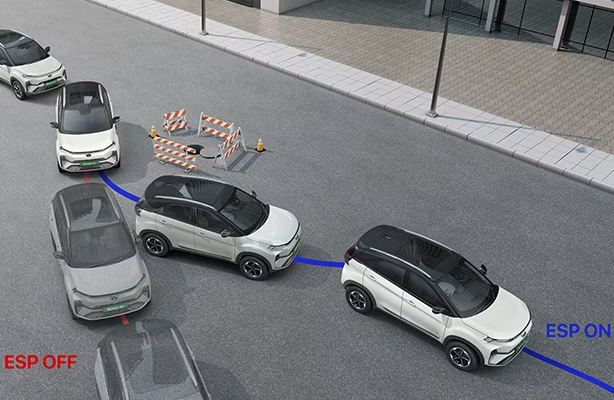
Open the doors of both cars side by side in a Tata showroom and you will immediately understand the price difference. The Nexon EV feels unmistakably more like a family car — wider, slightly taller, with more shoulder room in the rear seat and a sense of occasion when you settle into the driver’s seat. The Punch EV, for its part, feels compact and nimble, the kind of car that threads through Gurugram’s sector roads without the driver breaking a sweat.
Exterior: Two Different Design Philosophies
Both cars share Tata’s current design language — the full-width LED light bar at the front, the connected tail lamps at the rear, and the upright SUV stance that works so well on Indian roads. But where the Nexon EV has a sleeker, more aerodynamically conscious silhouette (Tata claims the Gen 2 body is more aerodynamic for better range), the 2026 Punch EV facelift has leaned into a bolder, burlier look with grey cladding, a more upright face, and new colour options like Bengal Rouge, Fearless Yellow, and Caramel that are unmistakably street-attention-getting. The Nexon EV counters with 10 dual-tone colour combinations — more than any other EV in its segment — including the dramatic Red Dark edition with blacked-out trim.
Interior: The Nexon EV Wins on Screen Size, the Punch EV Wins on Lightness
Sit in the Nexon EV’s Empowered+ variant and the 12.3-inch floating touchscreen is the first thing that demands your attention — it is larger and more visually dominant than almost any screen in a sub-₹20 lakh Indian car today. Paired with the 10.25-inch digital driver’s display, it gives the dashboard a genuinely premium feel. The Punch EV facelift counters with its own 10.25-inch dual-screen setup — commendable for a sub-₹13 lakh car, but the Nexon EV’s larger screen advantage is visible.
The Punch EV’s 2026 interior refresh introduces light grey materials with iToggle switches that make the cabin feel airy and modern — a deliberate contrast to the darker, more serious cabin tone of the Nexon EV. Where the Nexon EV’s HVAC controls are touch-based toggles (elegant, but prone to fingerprints), the Punch EV’s controls are more tactile and intuitive.
One thing the Punch EV has consistently missed — and still misses even in the 2026 facelift — is rear AC vents. On a 42°C June afternoon in Delhi, rear-seat passengers in the Punch EV depend entirely on the front unit to cool the cabin. The Nexon EV has rear vents as standard. For a family of four on a summer afternoon, that is not a minor omission.
Boot Space: Punch EV Edges Ahead
Interestingly, the smaller Punch EV provides slightly greater boot capacity — 366 litres compared to the Nexon EV’s 350 litres, according to verified automotive specifications. Both have under-floor storage for the charging cables. For most family grocery runs and weekend trips, both are adequate, but the Punch EV’s marginally roomier boot is a quiet win for the smaller car.
Ground Clearance: Nexon EV Leads
The Nexon EV MR variants offer 205 mm of ground clearance, compared to 190 mm for the Punch EV 2026. On broken Tier-2 city roads and the occasional monsoon-waterlogged lane, the Nexon EV’s extra 15 mm gives it more confidence. Both are well-suited to Indian road conditions, but if you drive frequently on unmaintained roads outside major metros, the Nexon EV’s ground clearance advantage is worth noting.
Features, ADAS and Safety: Which EV Keeps Your Family Safer?
Safety Ratings — Both Earn Five Stars, With One Caveat
The Tata Nexon EV holds a confirmed 5‑star Bharat NCAP rating across all its variants — including the 45 kWh pack, whose rating was formally extended in April 2025, according to official automotive safety assessments.. The Nexon EV is among the most thoroughly safety-certified EVs in India under ₹20 lakh. The Punch EV (pre-facelift) also earned a 5-star Bharat NCAP rating, and Tata’s safety philosophy has been consistent. However, it is important to note that the 2026 Punch EV facelift had not been officially Bharat NCAP tested as of the date of this article’s publication in May 2026. The expectation based on the pre-facelift result is positive, but the formal certification is pending.
One notable downgrade in the 2026 Punch EV facelift is the braking setup: while the earlier top-spec version featured disc brakes on all four wheels, the updated model now uses drum brakes at the rear. In standardized braking tests, the Nexon EV was able to stop from 100 km/h in a noticeably shorter distance than the Punch EV under comparable conditions, and the Punch EV’s move to rear drum brakes does not help reduce this difference.
ADAS — A Clear Nexon EV Exclusive
The Tata Nexon EV Empowered+ A 45 is the only variant in this comparison to offer a Level 2 ADAS suite — launched in September 2025 and priced at ₹17.29 lakh onwards. The feature set includes automatic emergency braking, adaptive cruise control, lane keep assist, and forward collision warning, among others. The Punch EV 2026 offers no ADAS whatsoever. If ADAS is on your checklist — and it increasingly is for safety-conscious family buyers in India — the Nexon EV is your only option at this price point.
V2L and V2V: The Nexon EV’s Lifestyle Differentiator
The Nexon EV offers both Vehicle-to-Load (V2L) and Vehicle-to-Vehicle (V2V) capability — you can power a laptop, a television, a portable air conditioner, or even charge another EV directly from your car’s battery. The Punch EV 2026 offers neither of these features. For a camper, an outdoor adventurer, or someone who wants a power backup solution during Gurugram’s occasional power cuts, V2L alone is a compelling reason to stretch the budget to the Nexon EV.
Connected Features
Both cars offer Tata’s connected car platform with 60+ features including remote lock/unlock, geofencing, driving analytics, and smartwatch connectivity. The Nexon EV uses the iRA.ev platform with OTA updates; the Punch EV 2026 runs on ZConnect with iRA.ev integration. Feature parity is broadly similar at equivalent trim levels, though the Nexon EV’s larger screen makes the connected features more comfortable to interact with while driving.
5-Year Cost of Ownership: Punch EV vs Nexon EV — Who Really Saves More?
This is the section that belongs in a WhatsApp forward — and for good reason. The purchase price is only one part of what you pay for a car. To make this comparison meaningful, we have modelled the 5-year total cost of ownership for the sweet-spot variants of each car: the Nexon EV Empowered+ 45 (₹16.49 lakh) and the Punch EV Empowered+ 40 (₹12.29 lakh), assuming 15,000 km of driving per year, electricity at ₹8 per unit (the average residential tariff in Delhi NCR in 2026), and comprehensive insurance including zero-depreciation cover.
| Cost Head | Nexon EV (Empowered+ 45) | Punch EV (Empowered+ 40) |
| Sweet-Spot Variant Compared | Empowered+ 45 | Empowered+ 40 |
| Ex-showroom Price | ₹16.49 lakh | ₹12.29 lakh |
| Estimated Year 1 Insurance | ~₹42,000 | ~₹30,000 |
| Insurance Years 2–5 (avg/yr) | ~₹22,000 × 4 | ~₹15,000 × 4 |
| Electricity Cost (15K km/yr × 5yr) | ~₹90,000 | ~₹84,000 |
| Annual Service (5 years total) | ~₹15,000 | ~₹13,000 |
| Total 5-Year Ownership Cost | ~₹19.4 lakh | ~₹14.5 lakh |
| 5-Year Cost Difference | — | ₹4.9 lakh cheaper |
Methodology: Insurance estimates based on IDV at ex-showroom price, comprehensive cover with zero-dep, sourced from Policybazaar and InsuranceDekho (2026 rates). Running cost at ₹8/unit electricity, 6.5–7 km/kWh real-world efficiency. Service cost per allaboutevs.com and Ride N Repair 2026 data for Tata EV servicing. Resale value not included as comparable data for 2026 facelift models is not yet available.
The Punch EV Empowered+ 40 costs approximately ₹4.9 lakh less over five years than the Nexon EV Empowered+ 45. That difference is large enough to fund a family holiday to Shimla every year for five years, or to fully equip your home with a 2-kW rooftop solar setup.
Where this calculation changes: if you have a specific use case that only the Nexon EV serves — regular highway trips over 200 km, regular need for the V2L feature, or a family of four that would genuinely use the rear AC vents and extra cabin space — then the Nexon EV’s ₹4.9 lakh premium is spent on something you will use daily. If you do not, it is not.
Bottom Line: Over 5 years at 15,000 km/year, the Tata Punch EV Empowered+ 40 costs approximately ₹14.5 lakh in total ownership versus approximately ₹19.4 lakh for the Tata Nexon EV Empowered+ 45 — a difference of ₹4.9 lakh. For most Indian city buyers, the Punch EV is the more financially sensible choice in 2026.
Our Recommendation: Who Should Buy the Punch EV and Who Should Pick the Nexon EV?
Buy the Tata Punch EV 2026 if you are —
- A daily city commuter driving under 80 km per day and charging at home every night. The 40 kWh battery is more than adequate, and the lower purchase price means you start saving money from day one.
- A first-time EV buyer looking for the most affordable entry into Tata’s proven electric ecosystem with a lifetime battery warranty. The Punch EV Empowered+ 40 at ₹12.29 lakh hits a sweet spot that no comparable EV in India matches as of May 2026.
- Someone who makes frequent stops at public DC fast chargers on highway trips. The Punch EV’s 26-minute 20–80% charge time is meaningfully faster than the Nexon EV’s at a public station — your chai break will be the right length.
- A solo driver or young couple without rear-seat comfort requirements. The smaller cabin is not a penalty for two people; it is simply right-sized.
- A budget-conscious buyer exploring the BaaS option, especially if your annual mileage is under 8,000 km — the ₹6.49 lakh entry price makes EV ownership accessible in a way that nothing else in the market currently does.
Buy the Tata Nexon EV if you are —
- A family of four who regularly travels with adults in the rear seat. The larger cabin, rear AC vents, and wider body make long-distance family trips genuinely more comfortable.
- Someone who takes 200+ km highway trips every month. The Nexon EV’s larger 45 kWh battery means fewer public charging stops per trip, and the 375 km real-world range gives you a comfortable buffer even on India’s hottest summer highways.
- A buyer who wants V2L or V2V capability — to power appliances on a road trip, at a campsite, or as a home power backup during outages. The Punch EV simply does not offer this.
- For buyers prioritizing driver‑assistance features, the Empowered+ A 45 variant priced at ₹17.49 lakh stands out as the only electric vehicle under ₹20 lakh in India to offer a Level 2 ADAS package as of May 2026.
- A buyer who values a more premium cabin feel — the 12.3-inch touchscreen, JBL 9-speaker system, and panoramic sunroof create a distinctly more upmarket ownership experience than the Punch EV’s setup.
Tata Punch EV vs Tata Nexon EV: Final Verdict Scorecard
The scorecard below rates both cars out of 10 across the key buying dimensions. Scores are based on objective specifications, real-world test data, and value-for-money assessment — not on overall capability alone.
| Category | Nexon EV | Punch EV 2026 | Winner ✓ |
| Value for Money | 7/10 | 9/10 | Punch EV |
| Real-World Range | 9/10 | 7/10 | Nexon EV |
| Charging Speed | 7/10 | 9/10 | Punch EV |
| Cabin Space & Comfort | 9/10 | 7/10 | Nexon EV |
| Features & Tech | 9/10 | 8/10 | Nexon EV |
| Safety | 9/10 | 8/10 | Nexon EV |
| Running Cost (5-Year) | 8/10 | 9/10 | Punch EV |
| After-Sales Network | 8/10 | 8/10 | Tie |
| Overall Winner | — | — | Nexon EV (by points) |
Bottom Line: For most Indian buyers who commute under 80 km per day and charge at home, the Tata Punch EV 2026 is the better buy — it offers faster public charging, class-comparable range, and approximately ₹4.9 lakh lower total cost of ownership over 5 years. The Tata Nexon EV is the right car for buyers who need more cabin space, V2L capability, ADAS safety features, or the confidence of a larger highway range buffer.
FAQs: Tata Punch EV vs Tata Nexon EV
-
Is the Tata Nexon EV better than the Punch EV for highway driving in India?
Yes, the Nexon EV is better for long highway drives. Its 45 kWh battery delivers approximately 300–320 km of real-world highway range at 100 km/h with AC running — roughly 25–30 km more than the Punch EV 40 kWh in comparable conditions, based on Autocar India and ZigWheels test data. Fewer charging stops per trip and a bigger safety buffer on less-charger-dense highway stretches make it the more confident highway companion.
-
Which has a longer battery warranty — Nexon EV or Punch EV?
Both are equal on battery warranty. The Nexon EV 45 kWh and the Punch EV 40 kWh now carry Tata’s Lifetime HV Battery Warranty — 15 years for the first individual owner from the date of registration, per Tata Motors’ official warranty policy (tata.ev, June 2025). The 30 kWh variants of both cars carry an 8-year / 1,60,000 km battery warranty.
-
Which has a longer battery warranty — Nexon EV or Punch EV?
Buy now if: you own your parking spot (or have confirmed apartment charging), commute under 100 km daily, and plan to keep the car 4+ years.
Wait or choose a hybrid if: you regularly do rural highway trips, have no reliable home charging option, or need a primary vehicle through areas with sparse charging infrastructure. -
Can I charge the Punch EV and Nexon EV at a Tata Power or ChargeZone station?
Yes, both cars are compatible with Tata Power EZ Charge, ChargeZone, BPCL Pulse, and other CCS2 / Type 2 public charging networks across India. The Punch EV 40 kWh supports up to 65 kW DC fast charging; the Nexon EV 45 kWh supports up to 60 kW DC fast charging. For a list of charging stations near you, use the Tata.ev app or the ChargeZone locator.
-
Is the Tata Punch EV safe? Does it have a 5-star rating?
The pre-facelift Punch EV holds a 5-star Bharat NCAP rating, established under the program’s 2023–2024 testing cycle. The 2026 Punch EV facelift had not been formally Bharat NCAP tested as of May 2026 — the rating is pending. One note of concern is the facelift’s switch from all-disc brakes to rear drum brakes, which may affect braking performance relative to the Nexon EV in emergency scenarios. The Nexon EV holds a confirmed 5-star Bharat NCAP rating across all variants, including the 45 kWh pack, formally confirmed in April 2025.
-
What is the real-world running cost per km for the Punch EV and Nexon EV?
At an average residential electricity tariff of ₹8 per unit in Delhi NCR, and assuming approximately 6.5–7 km per kWh of real-world efficiency, the running cost for both EVs is approximately ₹1.1–1.4 per km — compared to approximately ₹7–8 per km for a comparable petrol SUV. At 15,000 km per year, an EV owner typically saves between ₹80,000 and ₹1 lakh annually in fuel costs alone, versus a comparable petrol vehicle.
-
Does the Tata Punch EV 2026 have ADAS?
No. The 2026 Tata Punch EV facelift does not offer ADAS (Advanced Driver Assistance Systems) in any variant as of May 2026. ADAS Level 2 is exclusive to the Tata Nexon EV Empowered+ A 45 variant, launched in September 2025 at ₹17.29 lakh (ex-showroom).
-
Which is better for a first-time EV buyer — the Punch EV or the Nexon EV?
For a first-time EV buyer with a daily commute under 60 km, the Punch EV Smart+ 40 kWh at ₹10.89 lakh is the most accessible entry point into a proven EV platform with a lifetime battery warranty — making it arguably the best first EV in India under ₹11 lakh as of May 2026. For a buyer willing to spend more for a larger, more feature-rich first EV, the Nexon EV Empowered 45 at approximately ₹15.49 lakh is the logical step up.


