This Man Built a $20,724 Solar Powered Yacht That Travelled 3,000+ Nautical Miles Across Europe
Stay connected via Google 'Electric Vehicle' News
Follow BijliWaliGaadi | India's Trusted EV Insights Portal
source on Google
solar powered yacht | Helios 11 solar yacht | DIY solar yacht | solar powered boat | solar electric yacht | solar yacht 3000 nautical miles
A conventional yacht’s range is decided by the size of its fuel tank. Bigger tank, bigger engine, more diesel, more range — that’s the equation sailors have lived with for a century.
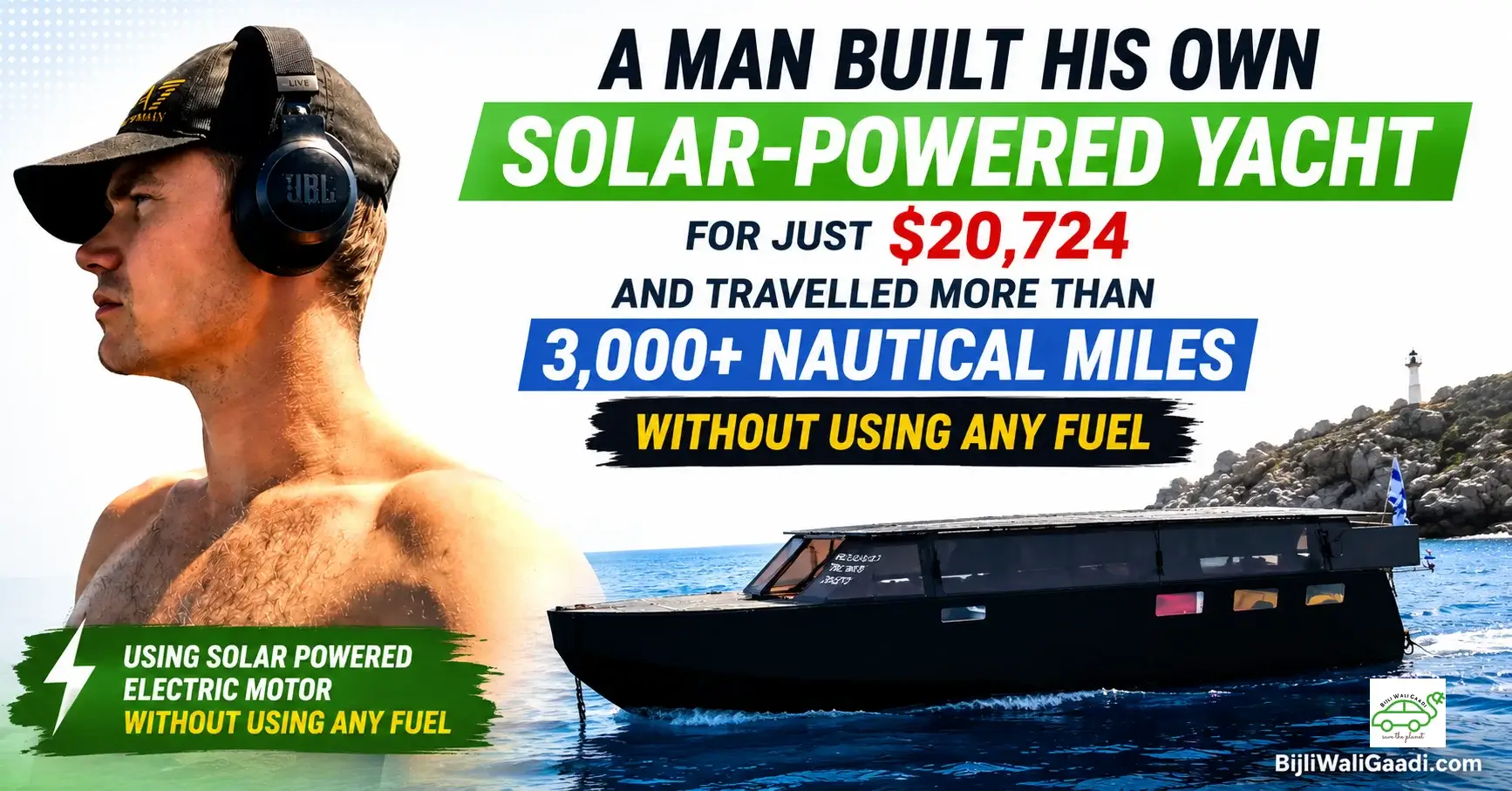
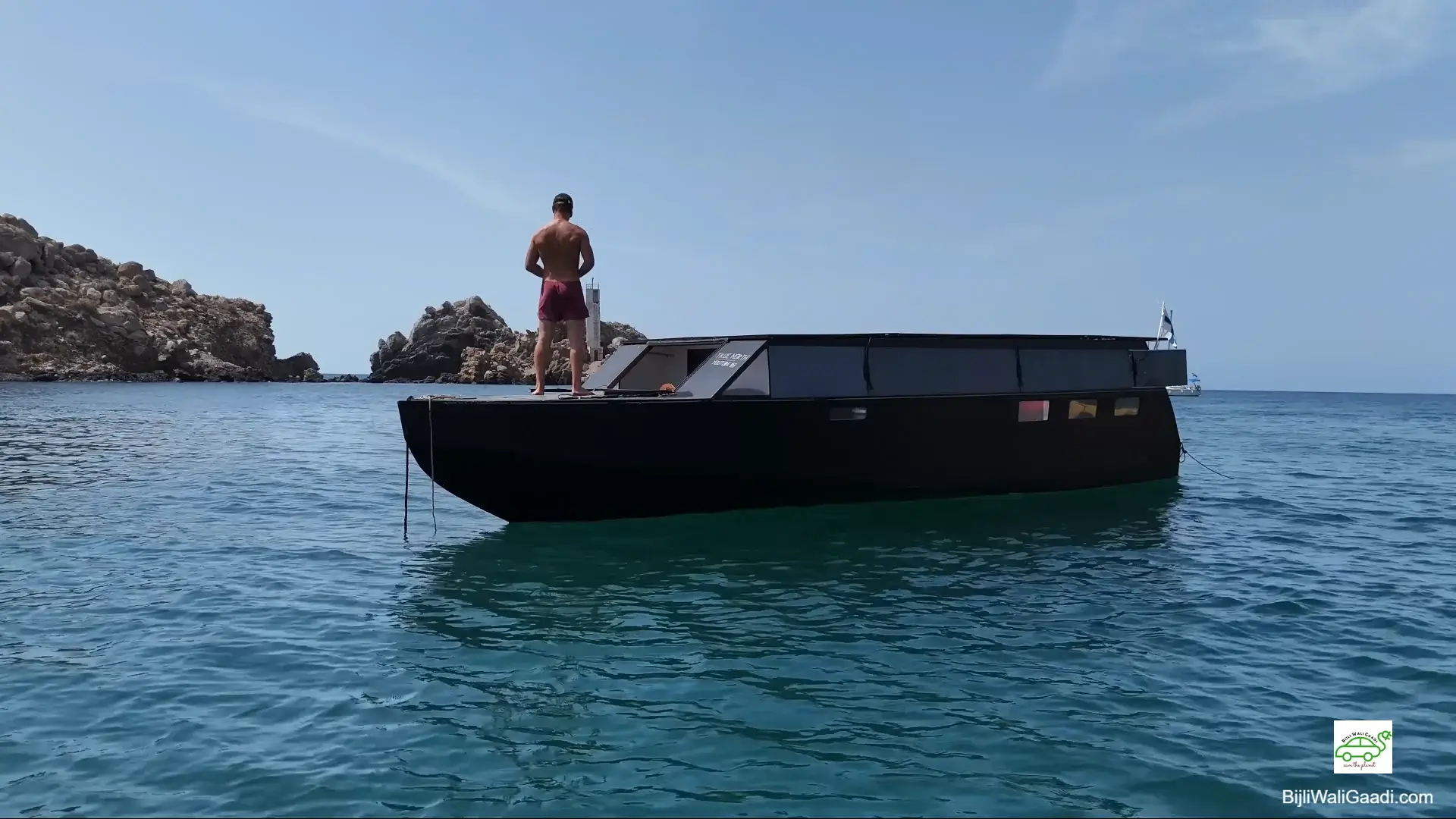
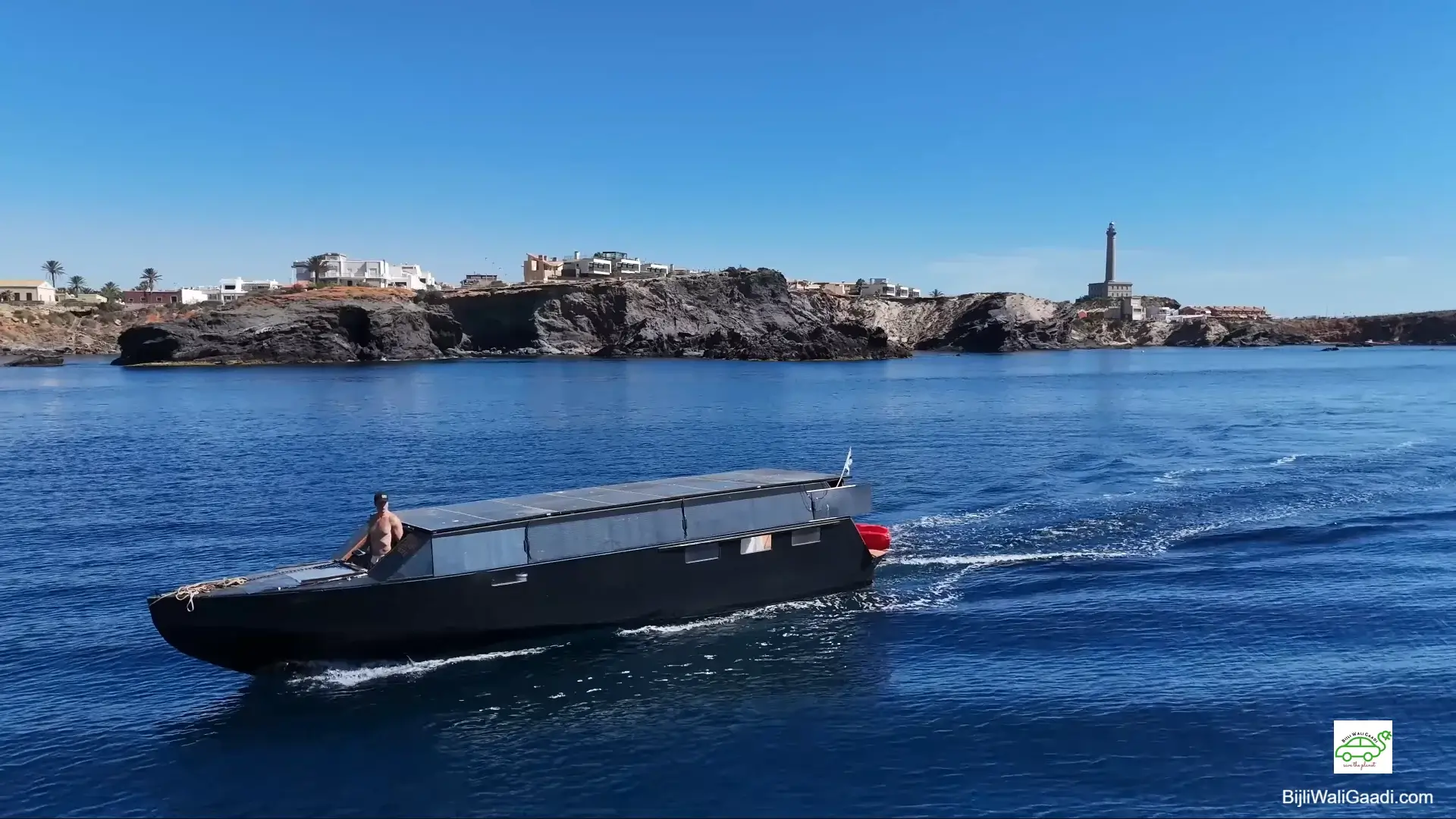
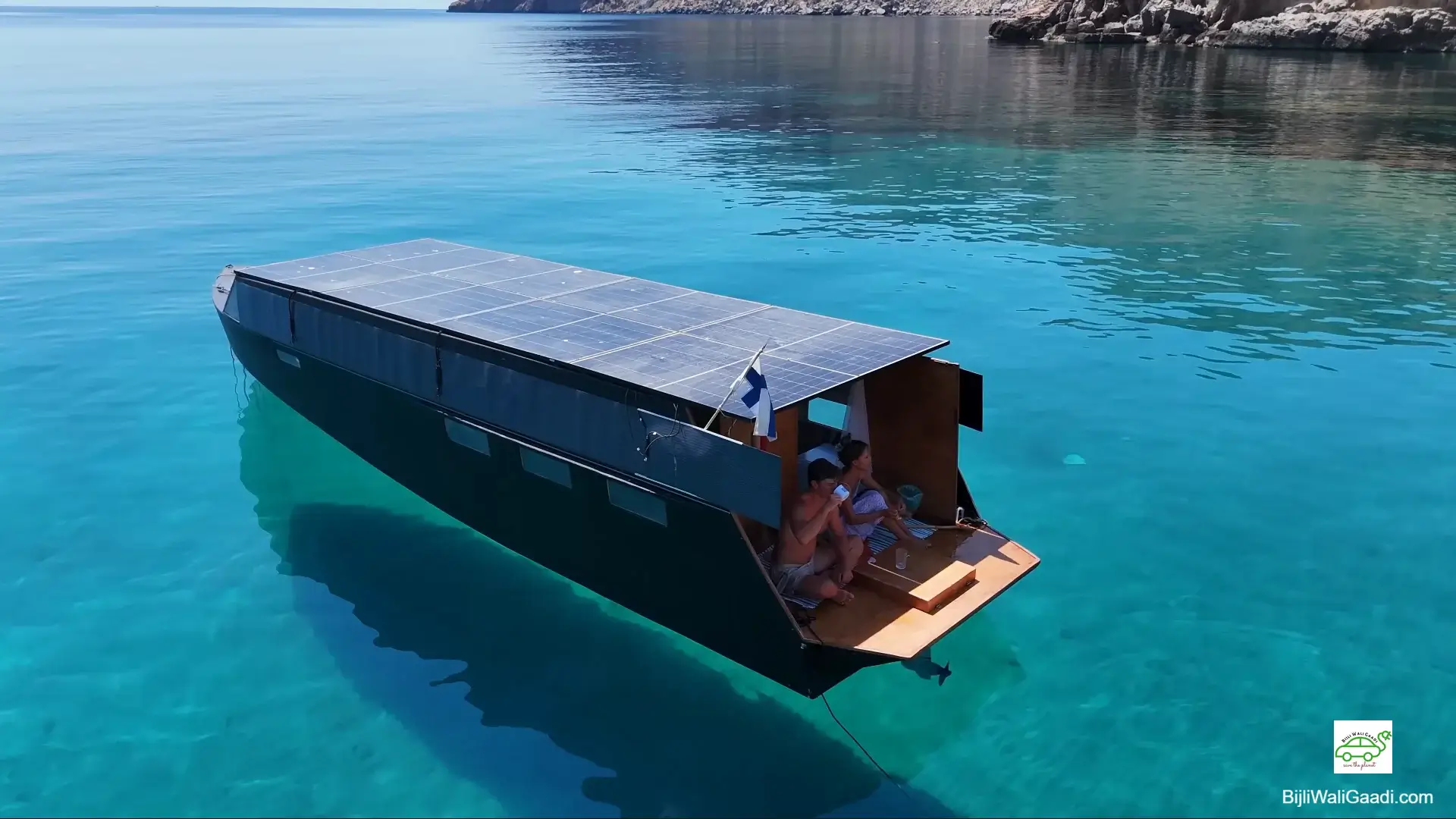
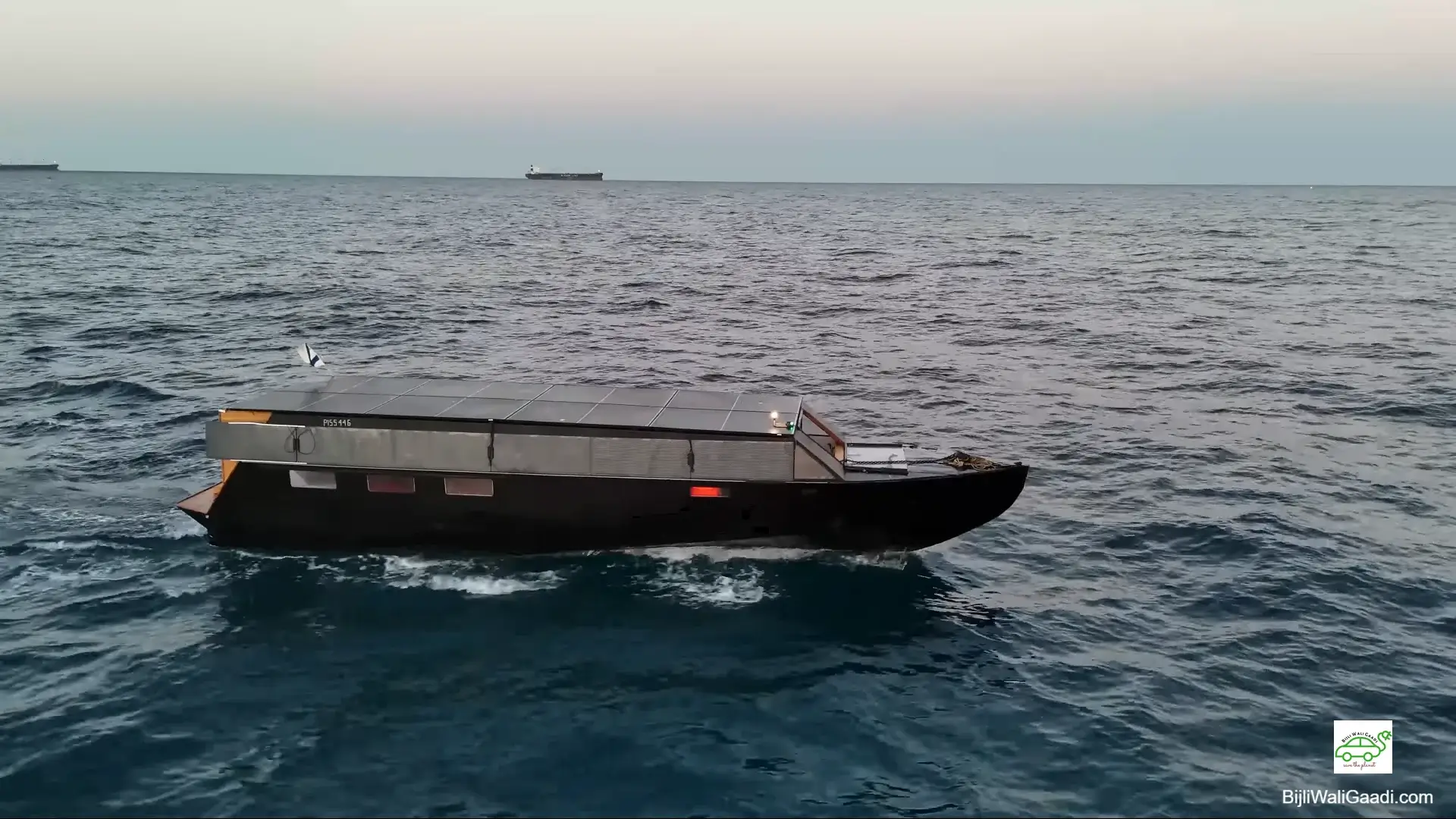
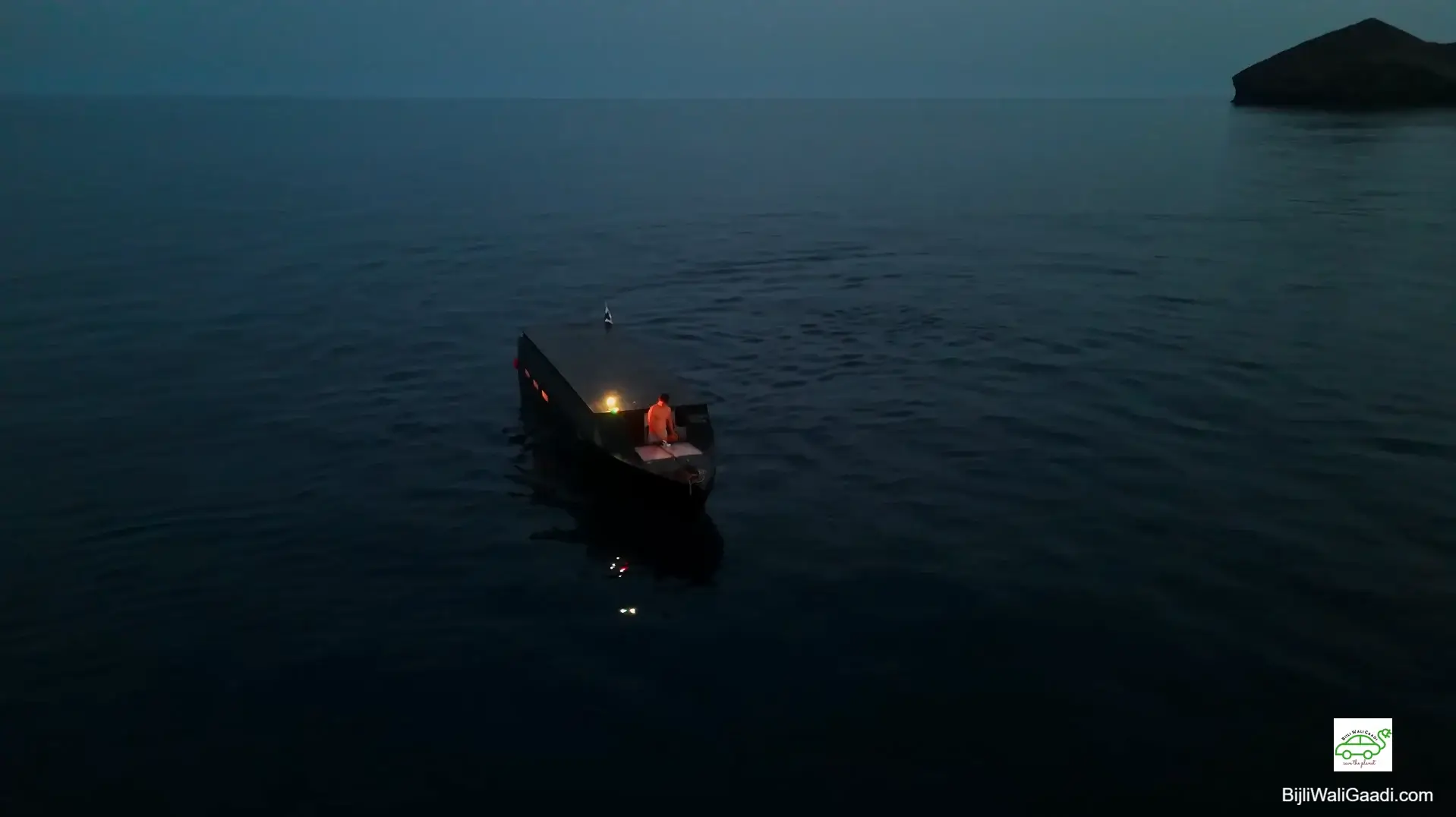
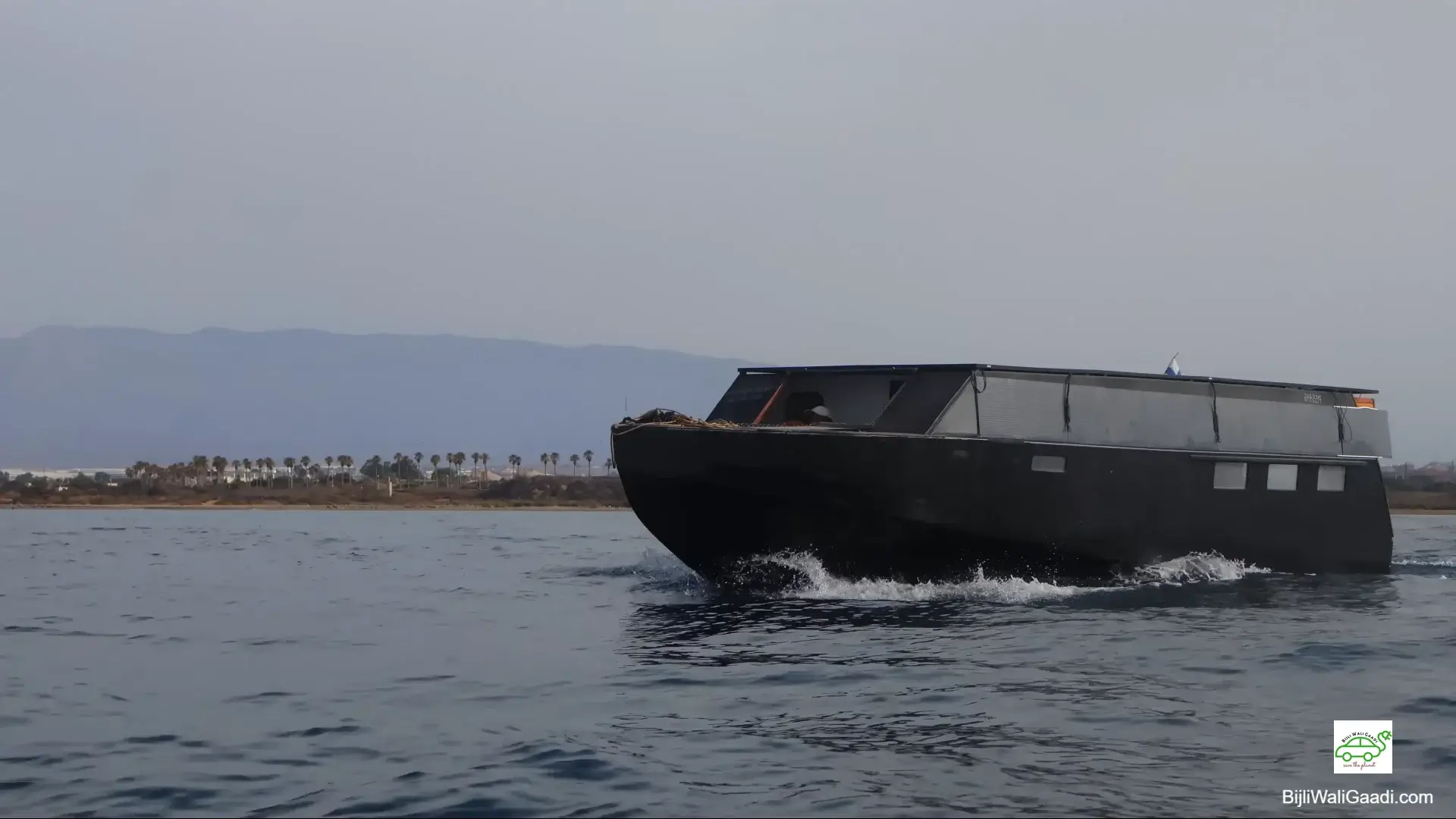
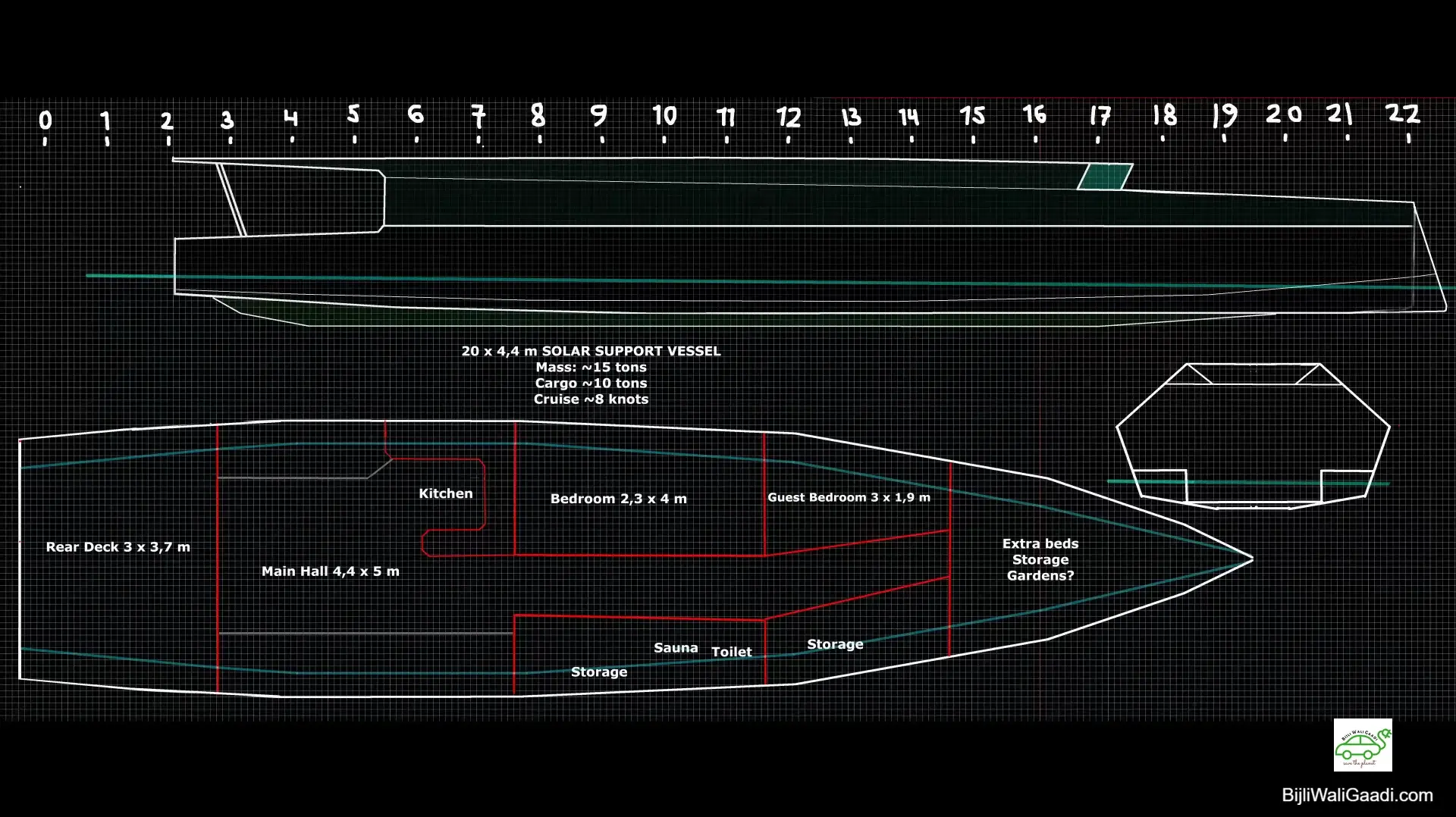
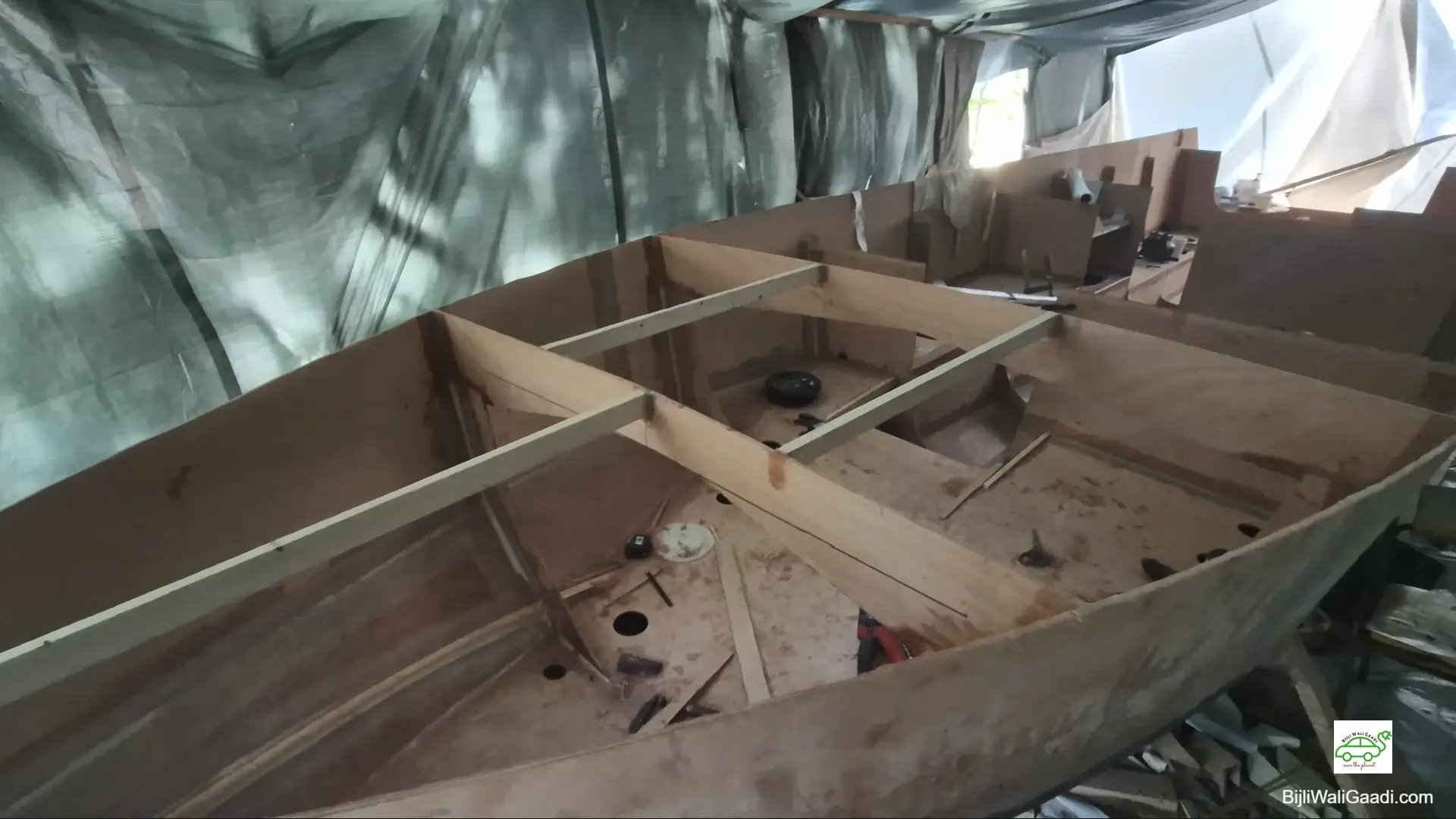
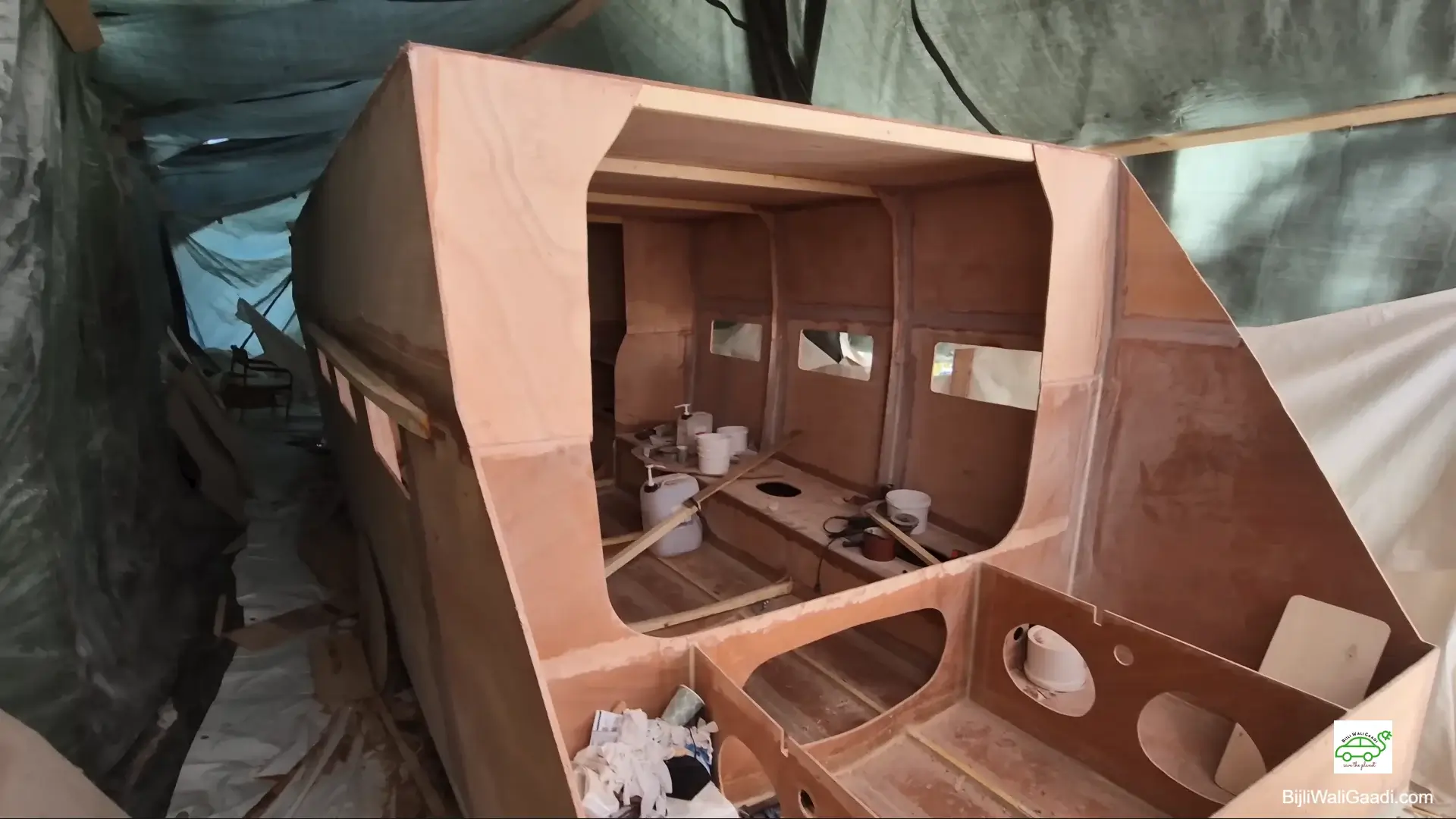
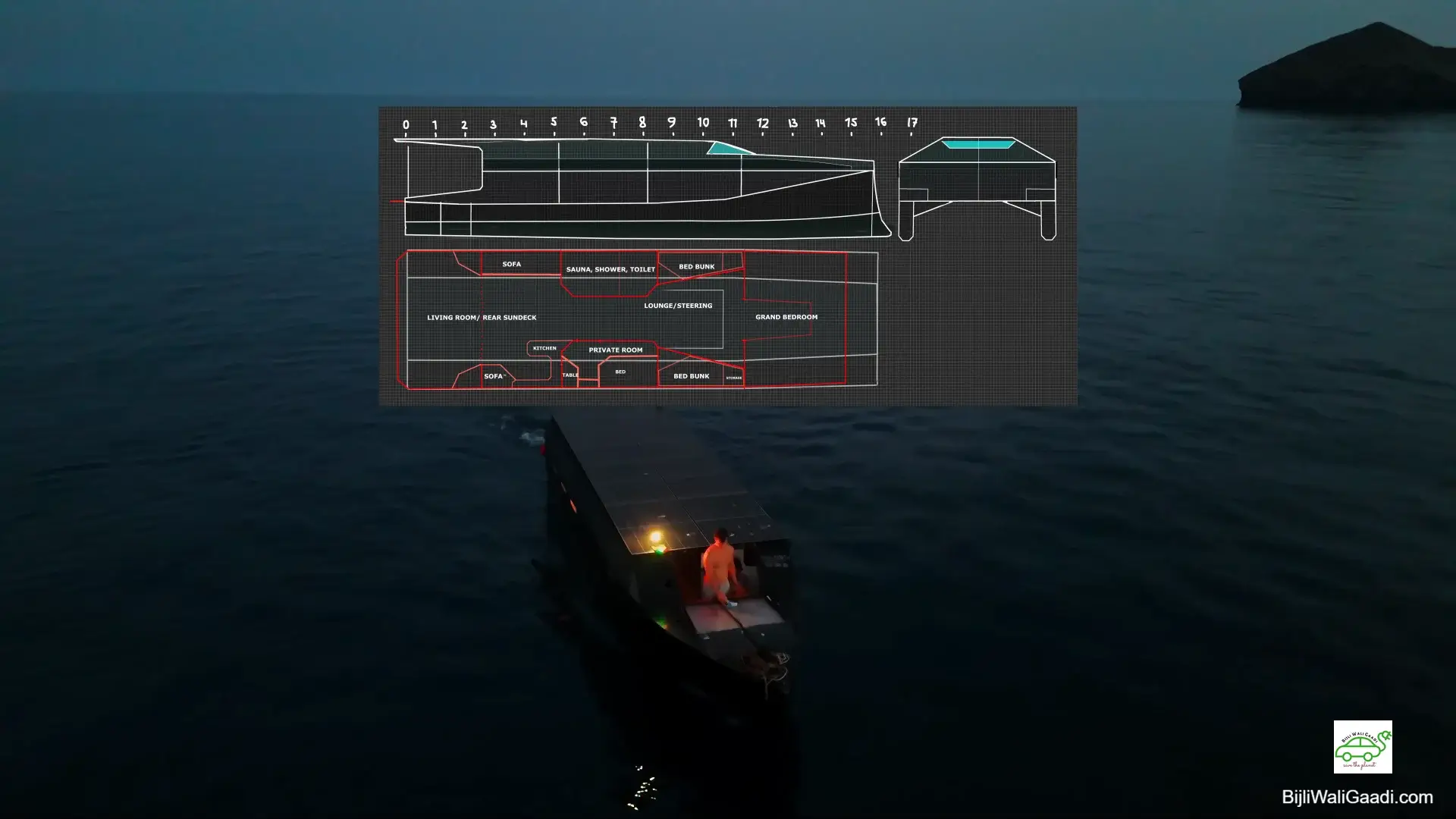
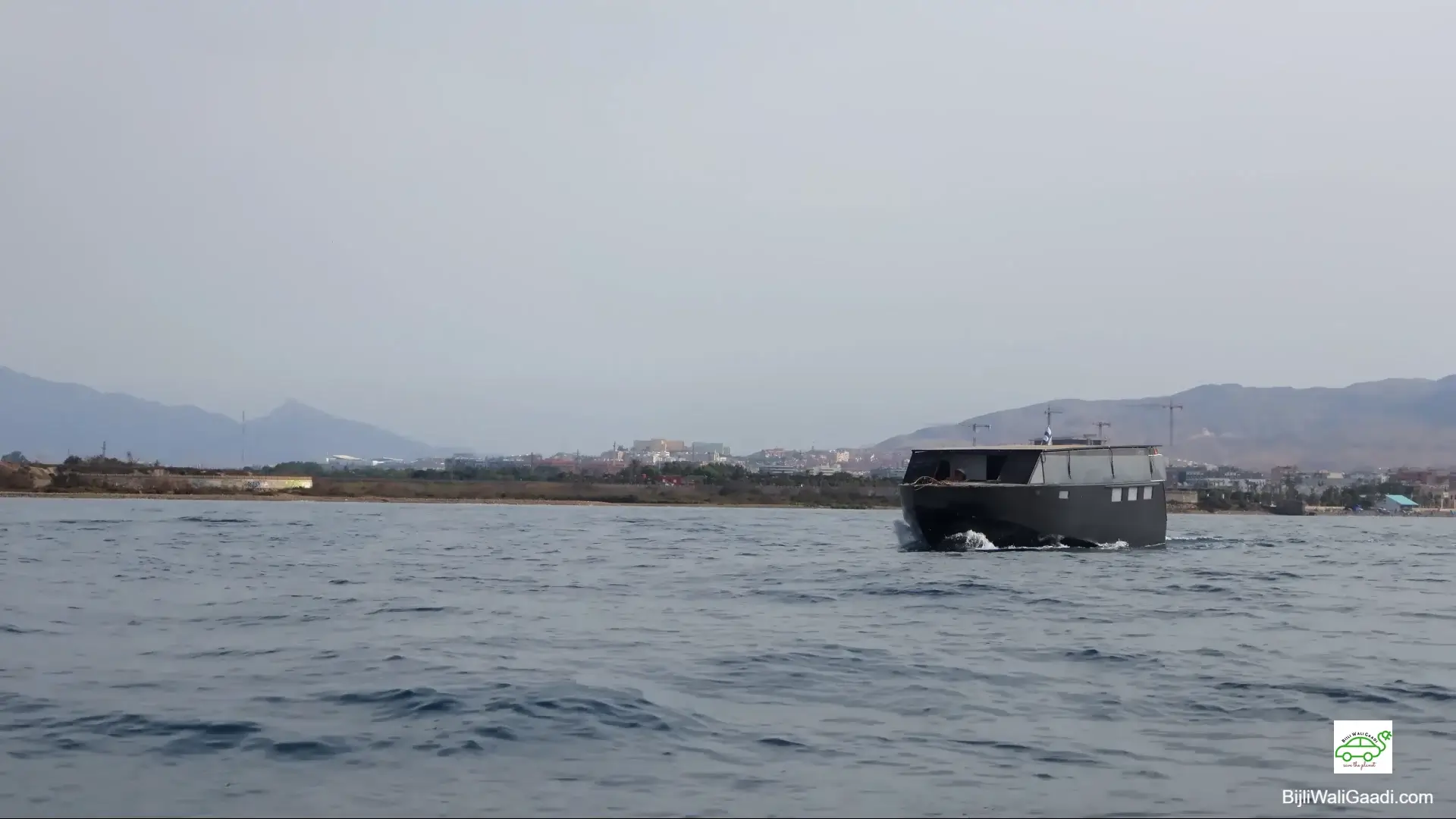
Finnish engineer Lukas Sjöman built his own 11-metre solar-electric yacht, named it Helios 11, spent a reported $20,724 on materials, and has now sailed it more than 3,000 nautical miles — roughly 5,556 km — using solar-electric propulsion without conventional fuel. No engine room, no fuel tank, no diesel bills. Just ten residential-style solar panels, a battery pack, and an electric outboard motor.
It sounds too simple to work. So how does a boat with roughly the solar capacity of a suburban rooftop move an 11-metre vessel across open water for months? The answer is less about brute power and more about how little power a well-designed hull needs.
Meet Lukas Sjöman, the Engineer Who Built Helios 11 Himself
The DIY vessel has spent months cruising across Europe, powered by sunlight collected through standard rooftop solar panels, with Sjöman building the boat himself on a budget. He documents the project on YouTube under the channel True North Yachts.
Quick facts on the build:
The 3,000-plus nautical miles reported so far represents cumulative distance covered over an extended, multi-leg voyage — not a claim of a single unbroken passage.
What makes the project unusual isn’t just the distance — it’s that an individual builder, working largely alone and on a hobbyist’s budget, produced a genuinely long-range solar-electric vessel rather than a short-hop demonstrator.
How Helios 11 Generates and Stores Its Own Energy
The energy chain on Helios 11 is straightforward in concept, even if the engineering behind it isn’t:
Sunlight → solar panels → charge controller → battery → electric motor → propeller → forward motion
| Specification | Reported figure |
| Vessel | Helios 11 |
| Length | Approximately 11 metres |
| Builder | Lukas Sjöman |
| Solar panels | 10 residential rooftop panels |
| Peak solar output | Approximately 4 kW (4,000 W) |
| Battery | 24 kWh |
| Electric motor | 6 kW outboard |
| Reported distance | 3,000+ nautical miles (~5,556 km) |
| Reported build cost | Approximately $20,724 |
Ten standard residential solar panels are mounted across the yacht’s roof, generating electricity during daylight hours to recharge the 24 kWh battery pack. That battery in turn powers the 6 kW electric outboard motor, letting the yacht cruise without gasoline or diesel.
Battery capacity isn’t the same as usable propulsion energy. Several factors eat into that 24 kWh before it ever reaches the water as thrust:
How Can Just 4 kW of Solar Power Move an 11-Metre Yacht?
This is the crux of the story, and it hinges on a distinction that’s easy to blur: power versus energy.
The solar array’s roughly 4,000 watts of peak output occurs under peak sunlight conditions — it is a power figure, not a guaranteed hourly energy figure. It does not mean the system generates 4 kWh every hour throughout the day. Several things pull real-world generation below that peak, and to zero after dark:
That’s why the 24 kWh battery matters: it buffers, absorbing surplus solar energy when generation exceeds propulsion demand and supplying stored energy when the sun isn’t cooperating. The builder reports that the battery can be fully recharged while the yacht is anchored under favourable sunlight.
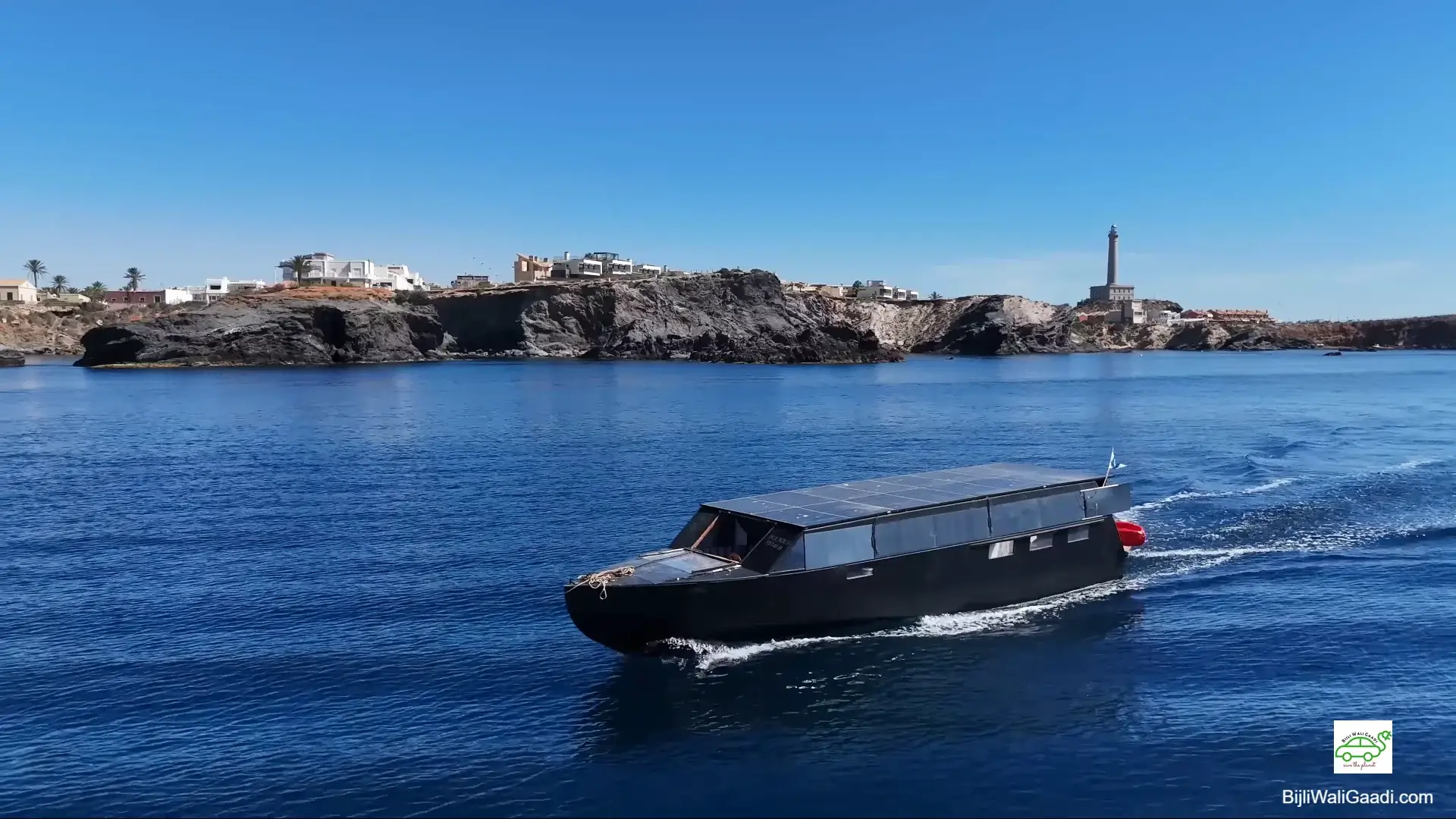
The other half of the answer is that the 6 kW motor doesn’t need much power to move this hull at cruising speed. A 6 kW electric motor is roughly equivalent to 8 horsepower — though direct comparisons with combustion engines are imperfect, since drivetrain characteristics and efficiency differ between the two. The electric motor can operate efficiently at the relatively modest power levels required for the yacht’s cruising profile, while its torque characteristics are well suited to low-speed propulsion. On a single 30-nautical-mile journey, Sjöman estimated he avoided spending around $46 on gasoline by relying on solar power instead — a snapshot of how little energy a low-drag hull needs at modest speed.
At the relatively low cruising speeds the vessel is designed for, its energy consumption can stay low enough for the available solar generation and battery storage to support extended operation. Marine energy consumption depends heavily on hull design, displacement, speed, water resistance, wind, waves and propeller efficiency — which is why this approach won’t translate directly to every type of boat.
None of this defies physics. Helios 11 isn’t generating energy from nothing — it’s harvesting solar energy over time and spending it efficiently, at a pace the hull and motor were built around.

What the 3,000-Nautical-Mile Journey Actually Represents
Three thousand nautical miles converts to approximately 5,556 kilometres — a remarkable cumulative distance for a small solar-electric vessel to cover without conventional fuel for propulsion.
That distance was covered over a months-long voyage across Europe, sailing from Finland toward Spain, rather than in one continuous non-stop passage. This is cumulative mileage racked up across an extended cruising season, which arguably tests the technology more meaningfully than a single sprint would, since it reflects sustained, repeatable, day-after-day operation.
A shallow draft of roughly half a metre also lets the yacht tuck into secluded, shallow anchorages that larger conventional boats can’t reach — a practical side benefit of building light and solar-first.
Why the $20,724 Price Tag Is So Interesting
The widely reported project cost is $20,724, while one detailed cost-breakdown Sjöman shared totals approximately $20,724. That breakdown includes:
At an approximate exchange rate of ₹95 per US dollar (August 2026), $20,724 works out to roughly ₹19.7 lakh — an illustrative conversion only, not part of the original reported figure.
That number looks remarkable next to commercial electric yachts, which routinely cost several times more. But it isn’t a fair apples-to-apples comparison. Sjöman estimated that a similar DIY project, including workshop costs, tools and electricity, would realistically run between $23,047 and $34,571 and that having the same yacht professionally built would likely cost between $69,141 and $92,188. That multi-fold markup is the real story: it reflects labour, marine-grade certified components, safety compliance, insurance, testing, warranty coverage and dealer infrastructure — all the overheads a solo DIY build simply skips.
Is a Solar-Powered Yacht Actually Practical?
Advantages:
- No conventional fuel consumption during solar-electric cruising
- Near-silent propulsion
- Reported full battery recharge at anchor under good sunlight
- Reduced local emissions
- Less dependence on marinas and fuel docks for range
Limitations:
- Performance is weather-dependent
- Solar generation drops sharply in cloud or low-sun conditions
- Usable range shrinks fast at higher speeds
- Battery weight and cost still shape the design
- The approach currently suits a lightweight, low-drag hull — not a heavy displacement cruiser or high-speed sport boat
The concept works because Helios 11 was designed around low propulsion power, an efficient hull, moderate cruising speeds, a large solar collection area and battery buffering — not because solar-electric propulsion is a drop-in replacement for every kind of boat.
What This DIY Yacht Says About the Future of Electric Mobility
Electrification conversations tend to centre on cars, two-wheelers and buses, but Helios 11 is a reminder that the same underlying technology — panels, batteries, efficient motors — scales sideways into boats, ferries and workboats too. Marine vessels get a genuine structural advantage here: large, mostly flat roof and deck areas that can carry meaningful solar capacity, something a car’s roof simply can’t match.
Sjöman’s next project, by his own account, is a solar-powered catamaran, which he estimates will need at least $40,000 just for the solar system, motors and batteries — before accounting for the cabin and hull — a sign that scaling this idea up gets meaningfully harder and pricier, not easier.
The fascinating part of Helios 11 isn’t that solar panels magically make a yacht capable of unlimited travel. It’s that careful hull design, modest propulsion requirements, battery storage and daily solar generation can work together to make thousands of nautical miles possible without conventional fuel for propulsion. That’s a useful lesson for electric mobility generally: sometimes efficiency matters more than simply installing a bigger battery — a principle that applies just as well to ferries, workboats and delivery craft as it does to a DIY yacht.
For more information about DIY yacht you can check out his resources : True North Archive
Stay connected via Google 'Electric Vehicle' News
Follow BijliWaliGaadi | India's Trusted EV Insights Portal
source on Google