E3 TRION Launch Signals India’s AI Mobility Shift
Stay connected via Google 'Electric Vehicle' News
Follow BijliWaliGaadi | India's Trusted EV Insights Portal
source on Google
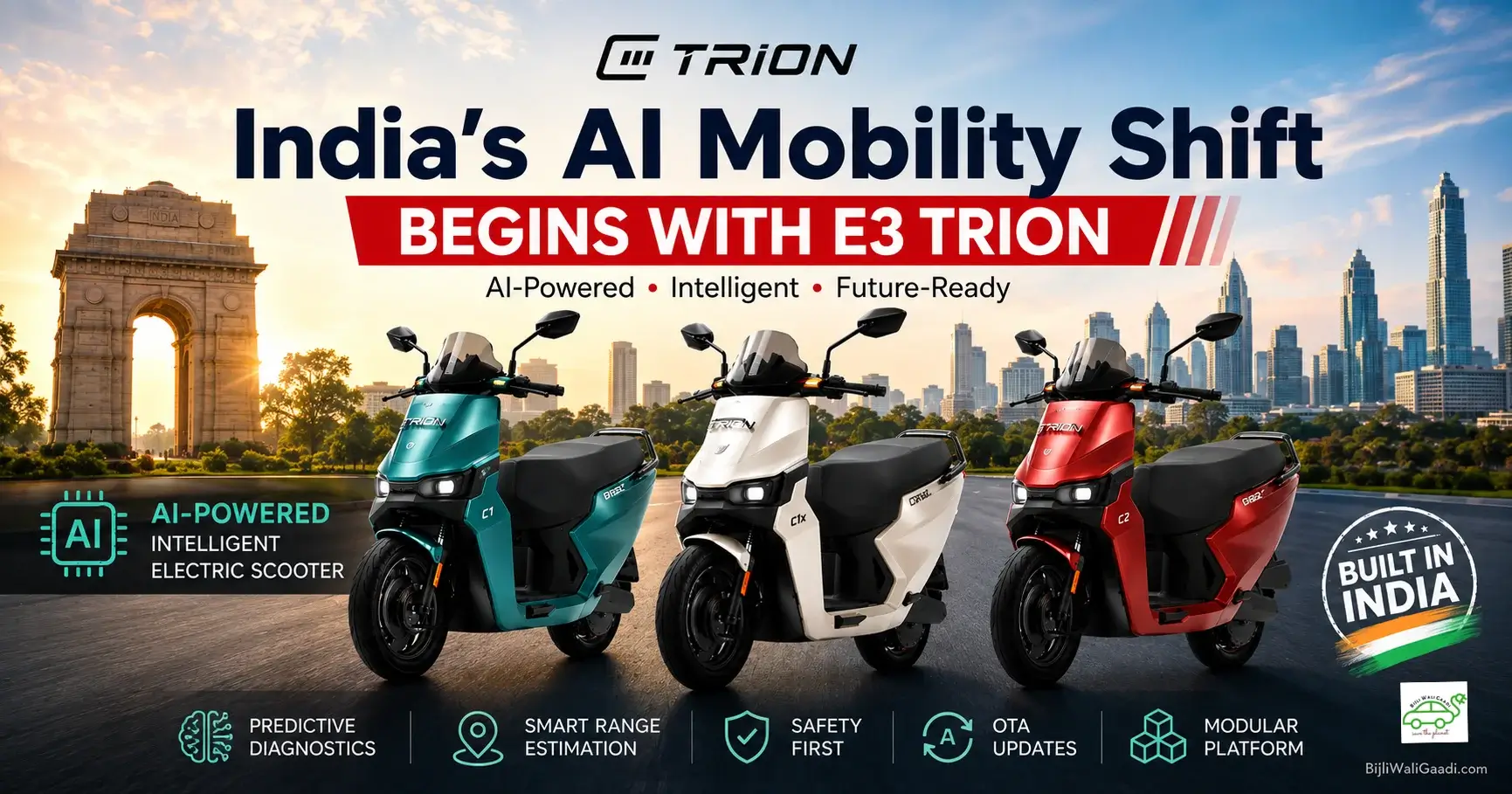
Every electric scooter launched in India over the past five years has answered the same question first: how far will it go on a charge? On August 6, 2026, Bengaluru startup E3 Electric.AI launched the E3 TRION — a scooter that answers a different question first: what does the vehicle know, and what can it do about it before something breaks?
The launch followed a ₹100 crore Series A round the company closed roughly two weeks earlier, when founder and CEO P. Sanjeev told the business show Startup Street that “hardware powers the product, but intelligence solves the ownership experience.” That framing — a company statement, not an independently verified fact — is the lens for examining the TRION’s specifications, software claims, and market timing.
Key Takeaways
Why the E3 TRION Launch Matters
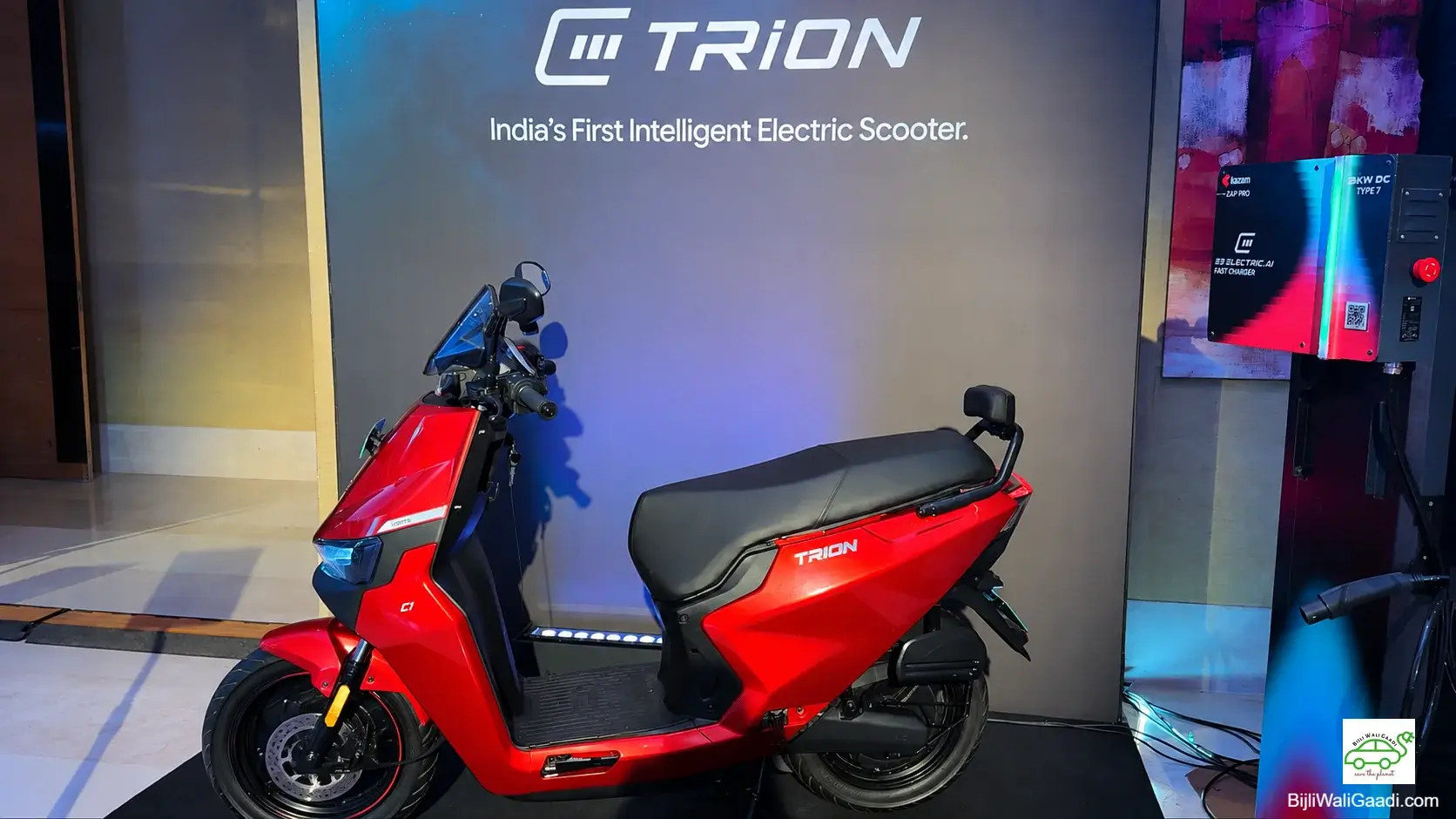
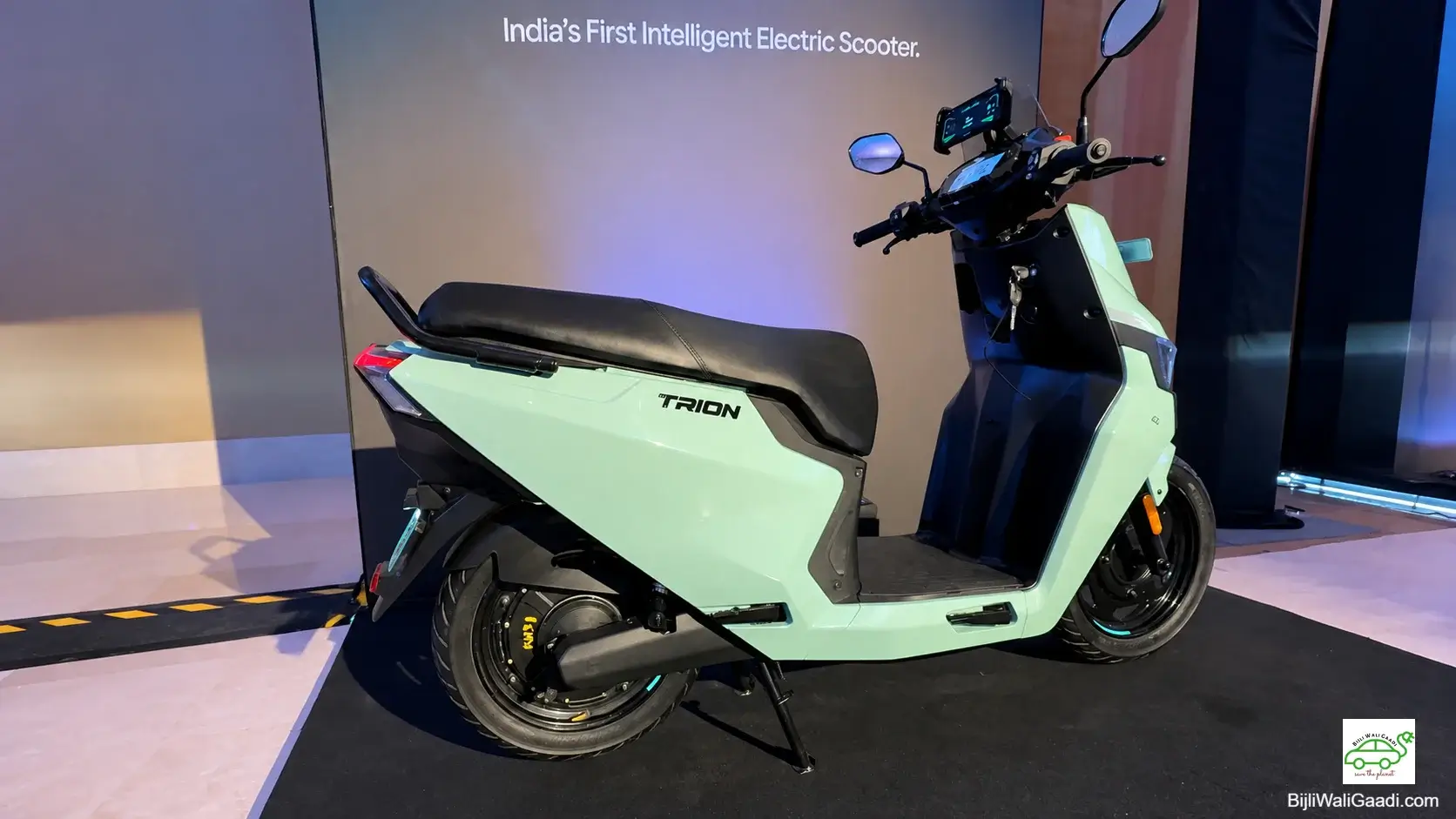
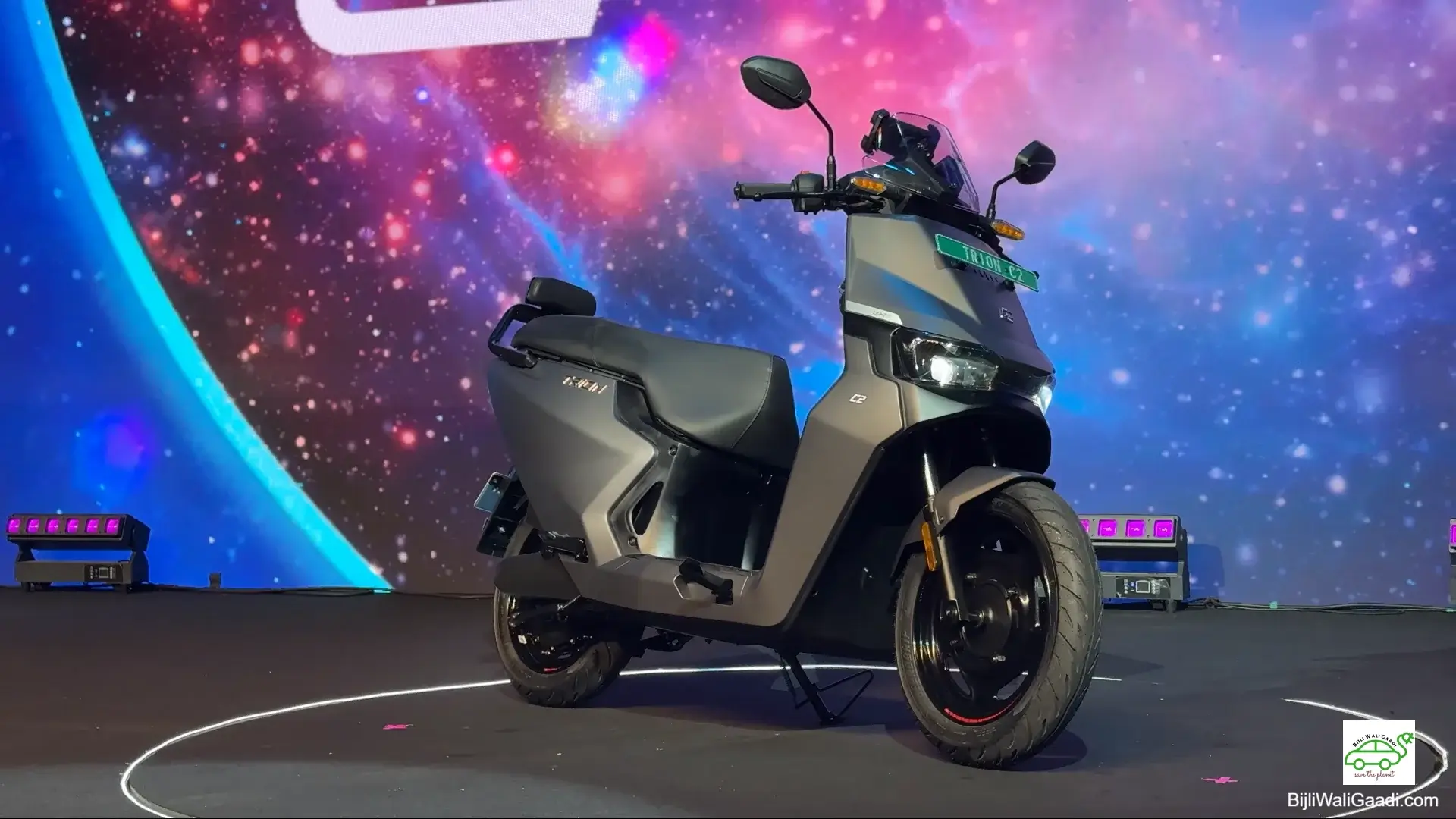
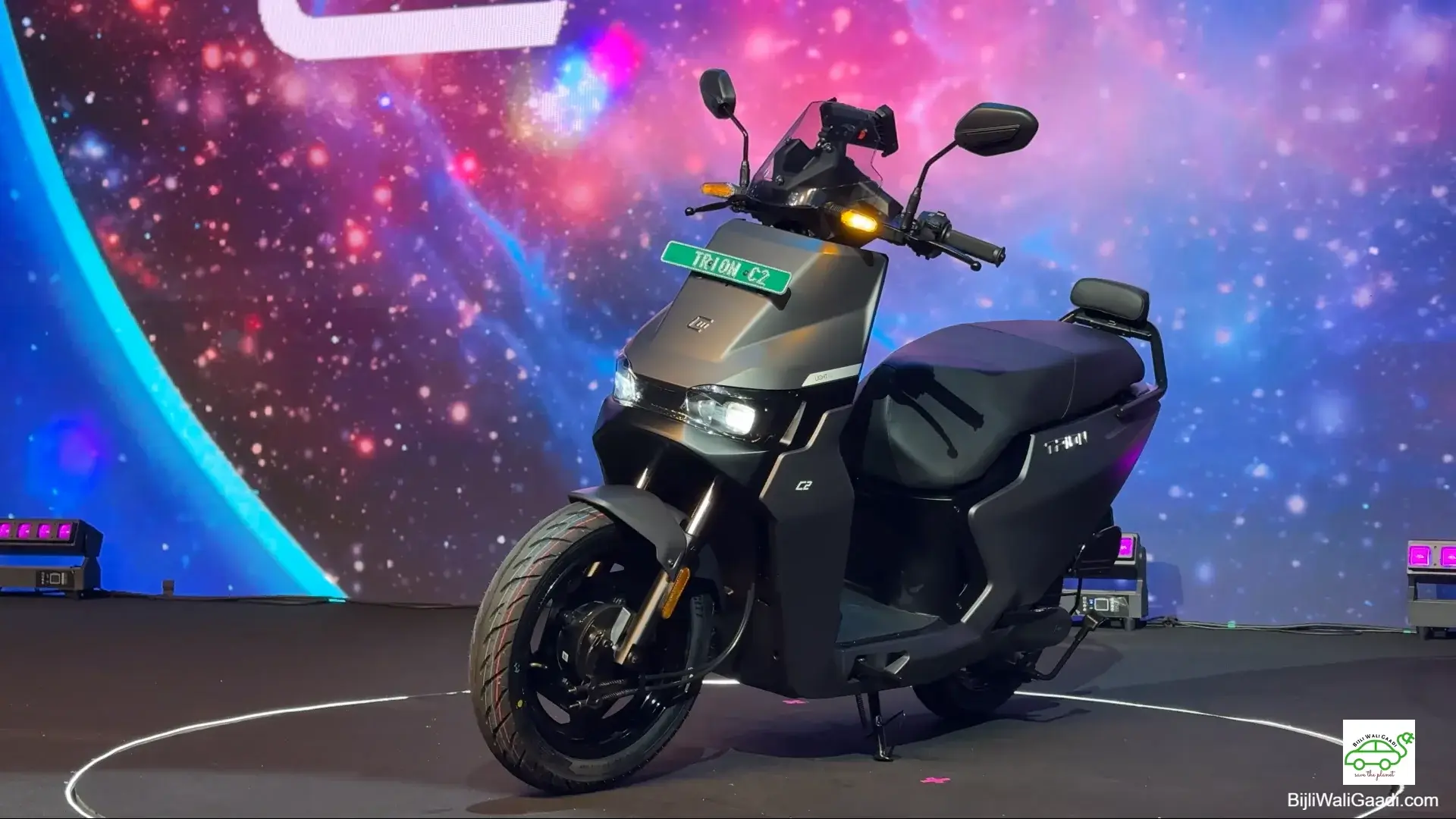
The TRION‘s significance extends beyond its spec sheet. Sanjeev, who has tracked India’s EV industry grow from “20,000 a year to a million and a half” annual sales over roughly seven years, argues the market’s next phase will be decided by intelligence rather than battery chemistry — because range anxiety, safety, and unreliable service, not hardware limits alone, keep buyers from trusting EVs. That is the company’s stated thesis, not an established consensus. For investors, the launch tests whether that thesis can be commercialized profitably after a ₹100 crore raise; for the industry, it tests whether predictive software can differentiate a scooter in a market long decided by range and price.
India’s Electric Two-Wheeler Market in July 2026: Growth, Penetration and Competition
That broader industry context is where the TRION’s timing becomes relevant. Total EV sales across categories reached 327,557 units in July 2026, up from 310,107 in June, per Vahan dashboard data via EVreporter. Electric two-wheelers led that growth, with penetration climbing to 11.2 percent — nearly double the 7.7 percent a year earlier. Scale players still dominate: Ather Energy sold 30,317 units on a fully electric portfolio, Ola Electric 14,102, and Ampere Vehicles 10,127. Bajaj Auto led legacy makers on electrification at 25 percent, TVS Motor at 14.8 percent — a market where hardware parity is common and software is the emerging battleground.
Who Makes the E3 TRION? Inside E3 Electric.AI’s Bengaluru Startup
E3 Electric.AI, registered as E3 Technology Pvt Ltd, is a Bengaluru startup founded by CEO P. Sanjeev. In the pre-launch interview, Sanjeev summarized the company’s philosophy as building a scooter that can “learn and predict” rather than compete purely on hardware — a stated design priority, not a claim this article independently verifies.
The ₹100 crore Series A round is being deployed across three areas, per Sanjeev: developing the company’s AI “intelligence stack,” early commercialization, and building what he called “cutting-edge service” infrastructure — company-stated priorities.
On manufacturing, Mr. Sanjeev described an “asset-light” model, working with 61 tier-one suppliers in India and globally rather than owning extensive in-house production, so its own investment concentrates on AI, design, and engineering. E3 Electric.AI was separately named a winner in the Mobility & Logistics category of the NASSCOM Deeptech Emerge 50 Awards 2025, and says it holds 13 patents and 40-plus IP filings. It launched with three trims — C1, C1x, C2 — rather than a single flagship, reflecting its stated intent to target volume commuters from day one.
TRIAXISFRAME, E3 COMMANDCENTER and AI HEALTHSCAN Explained
Mr. Sanjeev has said the company identified four recurring concerns holding back EV adoption: range anxiety, safety, unpredictable failures, and inconsistent after-sales service. The TRION’s software is built to address each, according to the company.
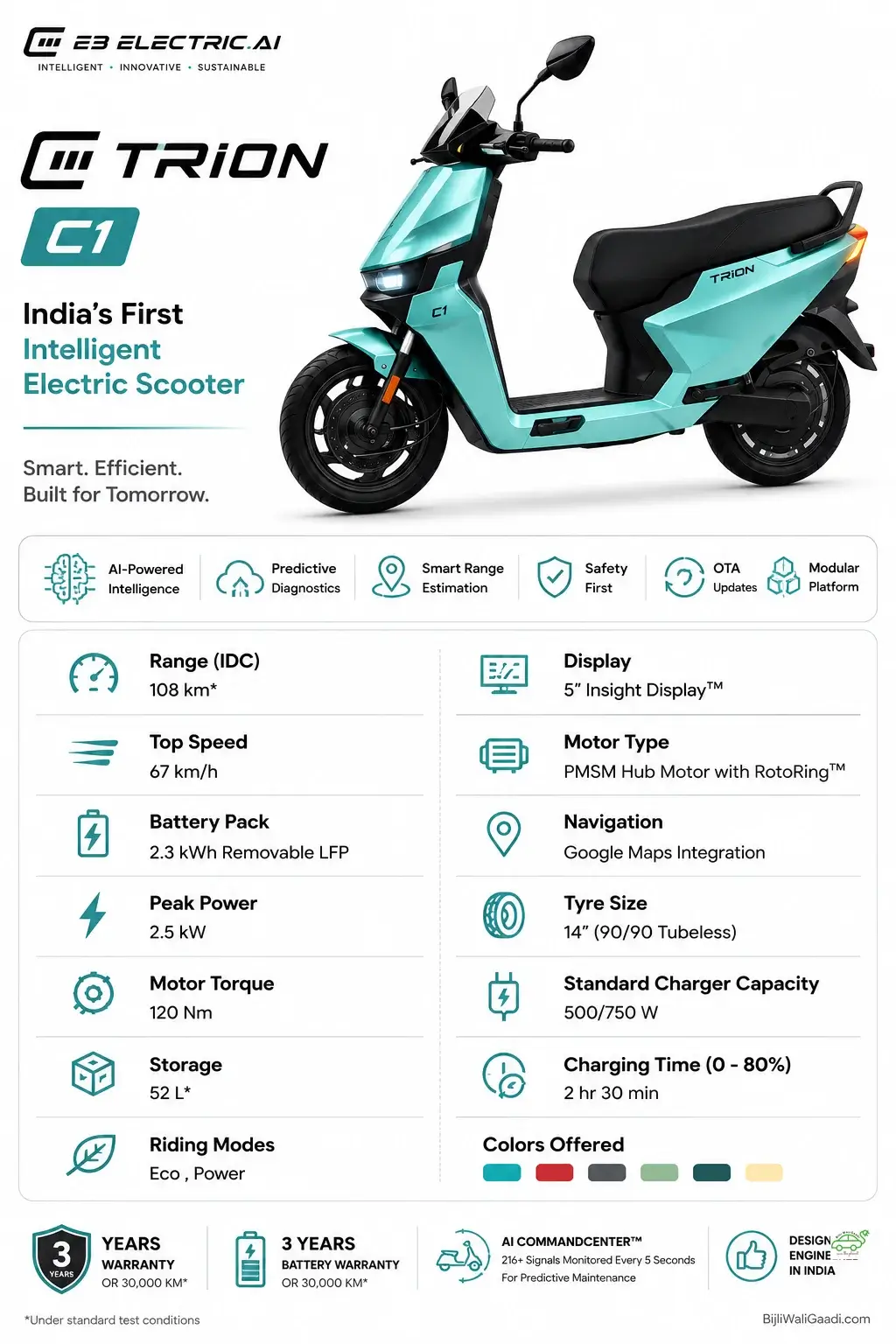
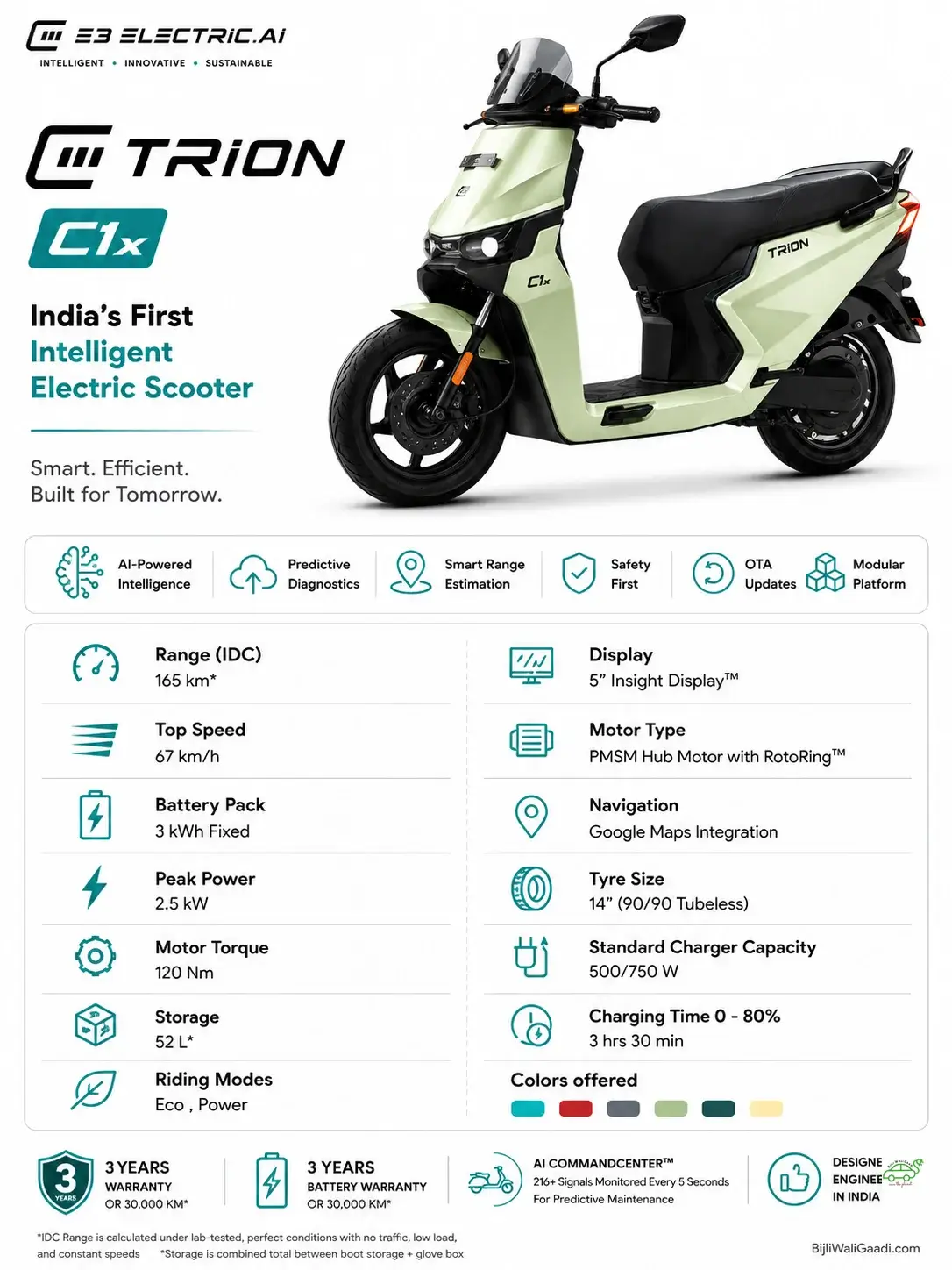
The chassis, TRIAXISFRAME™, is a modular platform supporting removable and fixed battery configurations — the same frame can become a lighter, swappable-battery commuter or a higher-range, fixed-battery model without redesign. Sanjeev says the platform shares roughly 70 percent of components across variants, lowering manufacturing complexity and speeding up future models.
On range, Sanjeev cited a common complaint: certified figures rarely match real-world results, since usable range depends on riding style. E3 Electric.AI says its software is designed to estimate rider-specific usable range from actual riding behaviour rather than relying solely on standard IDC figures — a claim not independently tested here.
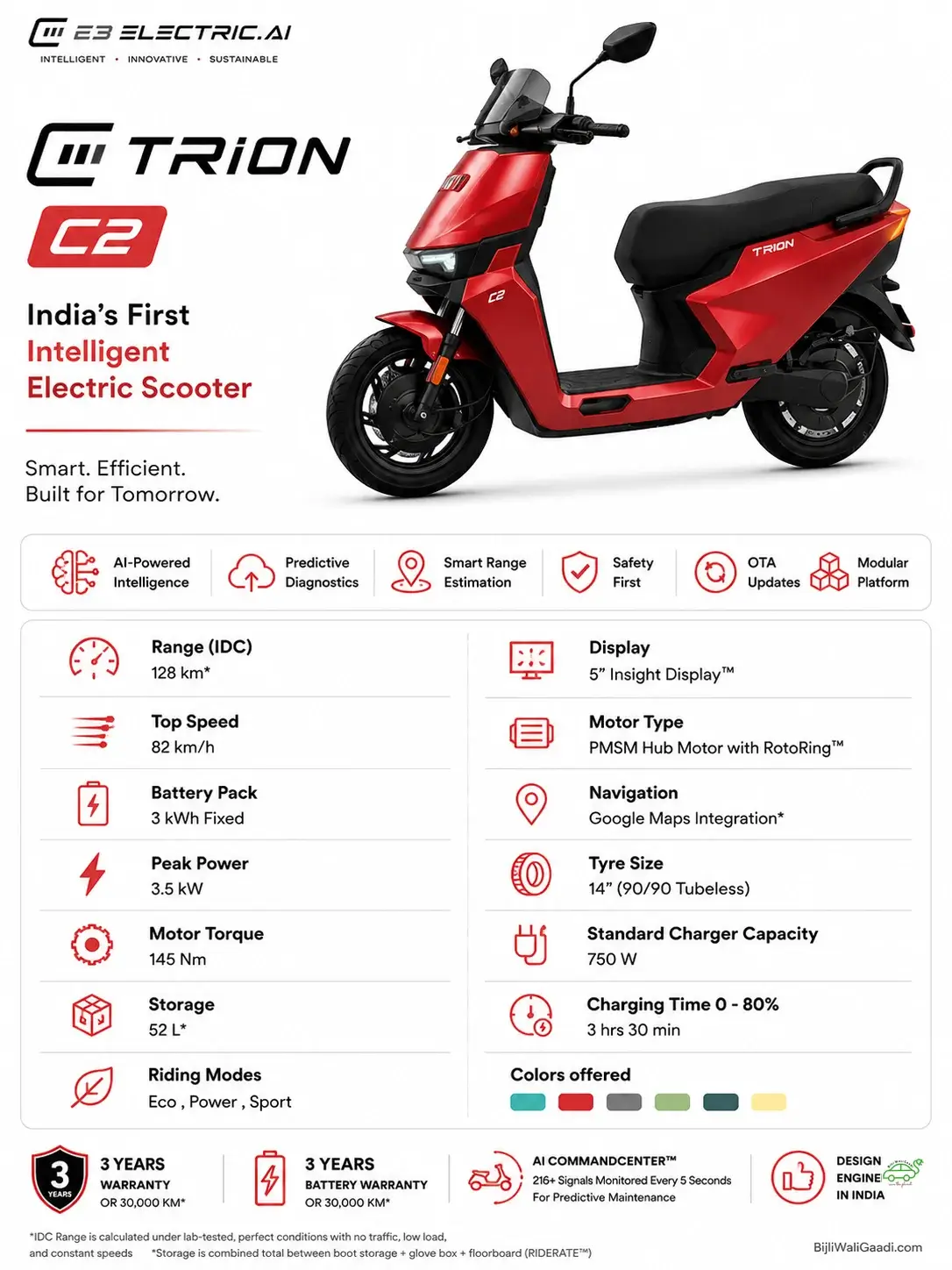
The diagnostic layer works similarly. E3 COMMANDCENTER™ reportedly scans 216 signals across the battery, motor, and core systems every five seconds, while AI HEALTHSCAN runs a roughly 10-second scan generates predictive alerts — flagging an early fault, before it breaks down and before the rider notices. TRIPSENSE™ powers the 5-inch Insight Display with turn-by-turn Google Maps navigation, and a beta feature, E3 Foresight, adds predictive route insights. E3 Electric.AI also lists 100-plus connected features and a claimed 9,000-plus charger network — company figures, unverified independently.
E3 TRION Price, Range, Battery and Specifications: C1 vs C1x vs C2
That platform and software layer ship across three variants:
| Specification | C1 | C1x | C2 |
| Ex-showroom price (Bengaluru) | ₹99,999 | ₹1,09,999 | ₹1,19,999 |
| Battery | 2.3 kWh, removable LFP | 3 kWh, fixed LFP | 3 kWh, fixed LFP |
| IDC range | 108 km | 165 km | 128 km |
| Top speed | 67 km/h | 67 km/h | 82 km/h |
| Peak power | 2.5 kW | 2.5 kW | 3.5 kW |
| Motor torque | 120 Nm | 120 Nm | 145 Nm |
| Charging time (0–80%) | 2 hr 30 min | 3 hr 30 min | 3 hr 30 min |
| Ride modes | Eco, Power | Eco, Power | Eco, Power, Sport |
| Battery warranty | Up to 8 years | Up to 8 years | Up to 8 years, extendable |
All variants share the TRIAXISFRAME chassis, a PMSM hub motor with RotoRing, 14-inch tubeless wheels, IP67 sealing, and 52 litres of storage. The C2 is claimed to hit 0–40 km/h in 6 seconds in Sport mode — a company figure not independently tested.
Why Software Could Become India’s Next EV Battleground
The TRION rides a broader shift already reshaping passenger EVs globally: the software-defined vehicle, whose capabilities keep expanding after purchase through OTA updates rather than being fixed at sale. Sanjeev has framed the company’s positioning against that backdrop, saying it is “not chasing the same customer with the same formula” as rivals, but attempting to solve ownership pain points through software — a strategic claim, not yet market-tested.
Applying predictive diagnostics to a sub-₹1.2 lakh commuter scooter is a genuinely new bet in a market typically bought on price. If it works as described, it could reduce unplanned downtime and warranty costs — but connected features also raise open questions around data privacy and rural connectivity, trade-offs the industry is only beginning to address.
The rollout remains deliberately narrow: pre-bookings are live only in Bengaluru, with an experience centre opening in Koramangala on August 15, 2026. Sanjeev says part of the ₹100 crore raise is earmarked for this service infrastructure ahead of wider expansion — typical for a startup entering a market still dominated by Ather, Ola, Bajaj, and TVS, all with national networks E3 Electric.AI has yet to build.
Frequently Asked Questions About the E3 TRION
Stay connected via Google 'Electric Vehicle' News
Follow BijliWaliGaadi | India's Trusted EV Insights Portal
source on Google