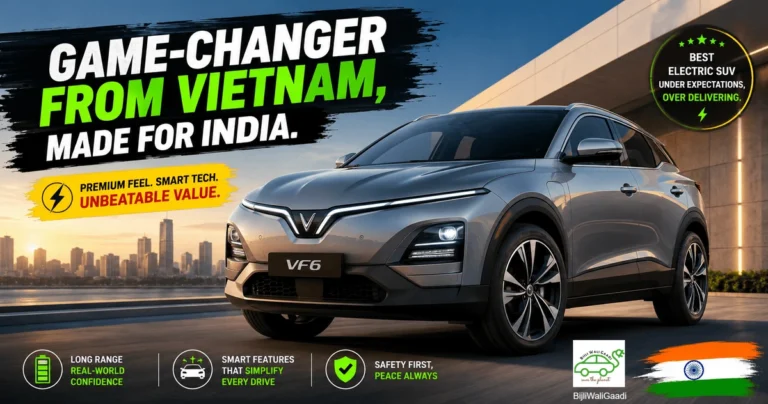
VinFast India Dealership Network Crosses 60 Outlets
Stay connected via Google 'Electric Vehicle' News
Follow BijliWaliGaadi | India's Trusted EV Insights Portal
source on Google

A new Patna showroom marks VinFast’s first entry into Bihar, as the Vietnamese EV maker races to build scale against India’s established carmakers
Vietnamese automaker VinFast has opened its 60th dealership in India, marking its first retail entry into Bihar. The new outlet in Patna arrives just over a year after VinFast’s debut Indian showroom, underlining how quickly the company is scaling its retail footprint.
The expansion lands at a moment when India’s passenger electric vehicle market is showing renewed momentum, with Vahan registration data pointing to steady growth in July 2026. For buyers, more dealerships mean easier access to test drives, servicing and financing closer to home.
For the industry, VinFast’s rapid rollout raises a sharper question: can a newcomer build real scale in a passenger EV market already led by Tata Motors, Mahindra, JSW MG Motor India, Hyundai, Kia and BYD?
VinFast reaches 60 dealerships in India
VinFast’s 60th outlet is a new 3S facility in Patna, developed by Patliputra Motors Private Limited under dealer principal Harsh Raj. The showroom sits on NH-30, Bypass Road, positioning it as an access point for customers across the state.
The 11,500-square-foot facility follows VinFast’s global retail format, combining sales, service and customer support in one location. A 3,000-square-foot showroom lets visitors interact with the brand’s electric SUV lineup, while dedicated teams handle the ownership journey from purchase to maintenance.
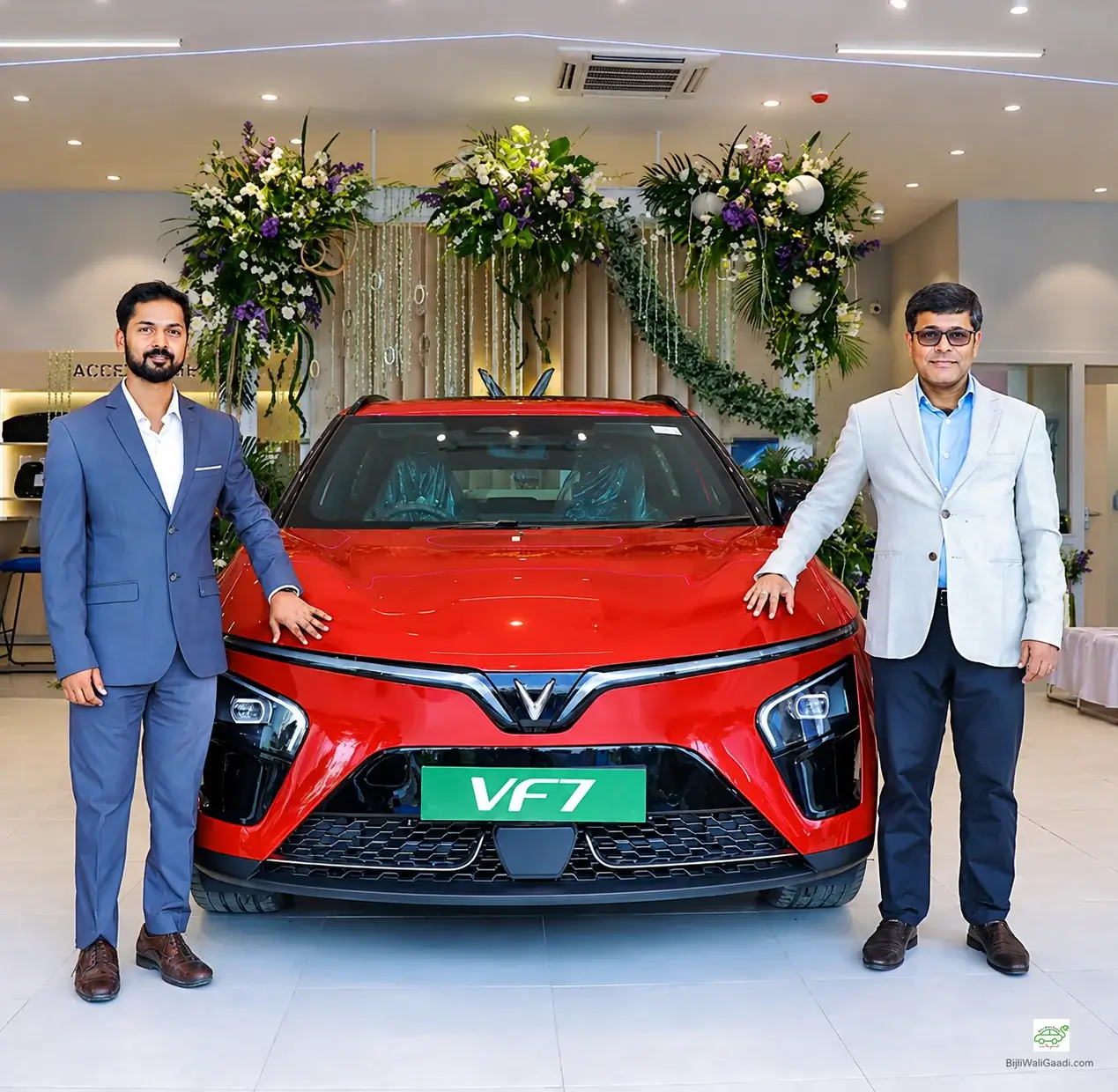
Key details of the Patna 3S dealership:
- First VinFast outlet in Bihar and eastern India
- Located on NH-30, Bypass Road, Patna
- 11,500 sq ft total facility with a 3,000 sq ft showroom
- Combines sales, service and spare parts under one roof
- Opened roughly 12 months after VinFast’s first Indian showroom
VinFast Auto India CEO Tapan Ghosh said the Bihar launch marks an important step in the company’s growth journey and opens opportunities in eastern India, while reaffirming its focus on building a strong retail and after-sales network. The company has said it intends to reach 75 dealerships across more than 60 cities by the end of 2026, extending its presence into tier 2 and tier 3 markets alongside major metros.
Local manufacturing underpins the retail push
VinFast’s dealership expansion is backed by an equally significant manufacturing commitment. The company’s vehicles sold in India, including the VF6 and VF7, are locally assembled at its plant in Thoothukudi, Tamil Nadu, which was inaugurated in August 2025 as VinFast’s first manufacturing facility outside Vietnam. The 400-acre SIPCOT facility began with an annual capacity of 50,000 units, as part of a broader $2 billion investment commitment in India, with a further $500 million announced for expansion into electric buses and two-wheelers.
VinFast has said the plant is central to its localization strategy, aimed at reducing import dependence and improving long-term price competitiveness. A dealership network built alongside local production, rather than ahead of it, signals a more structural commitment to the Indian market than retail expansion on its own would suggest, though the pace of localization will ultimately determine how sustainable that commitment proves to be.
Which vehicles the new dealerships will sell
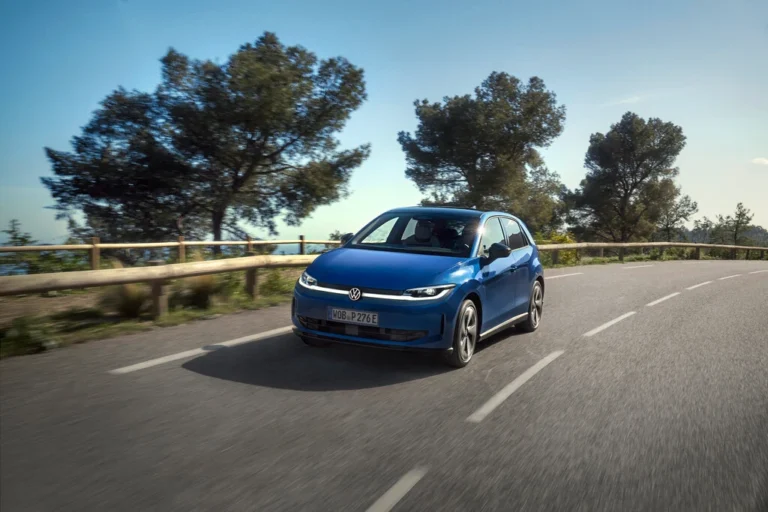
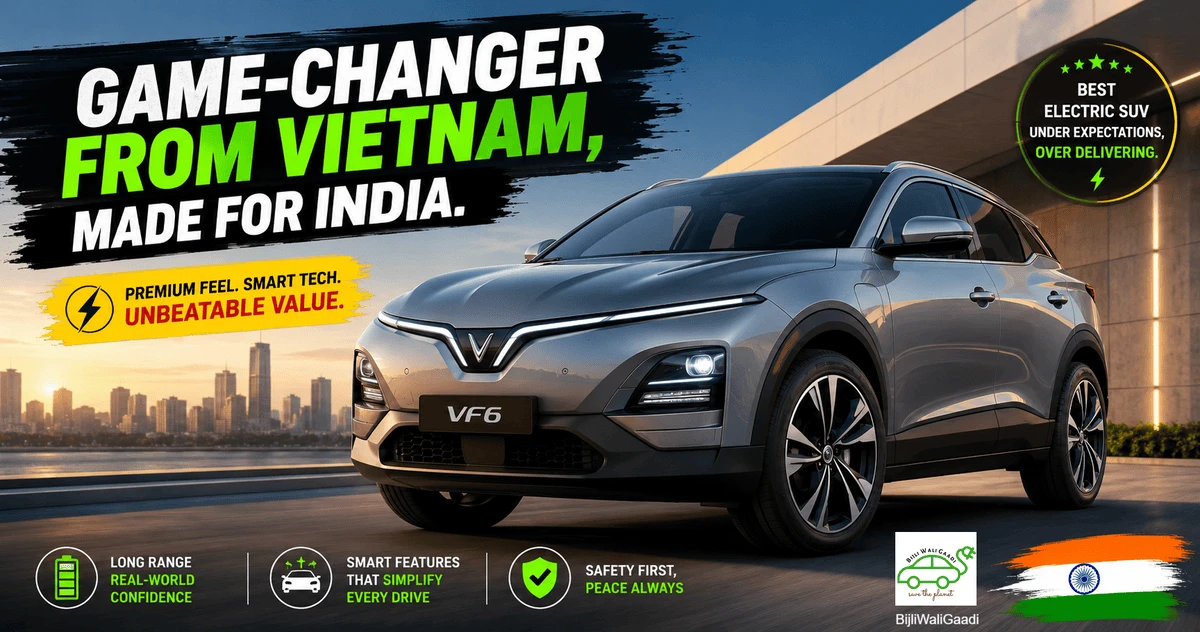
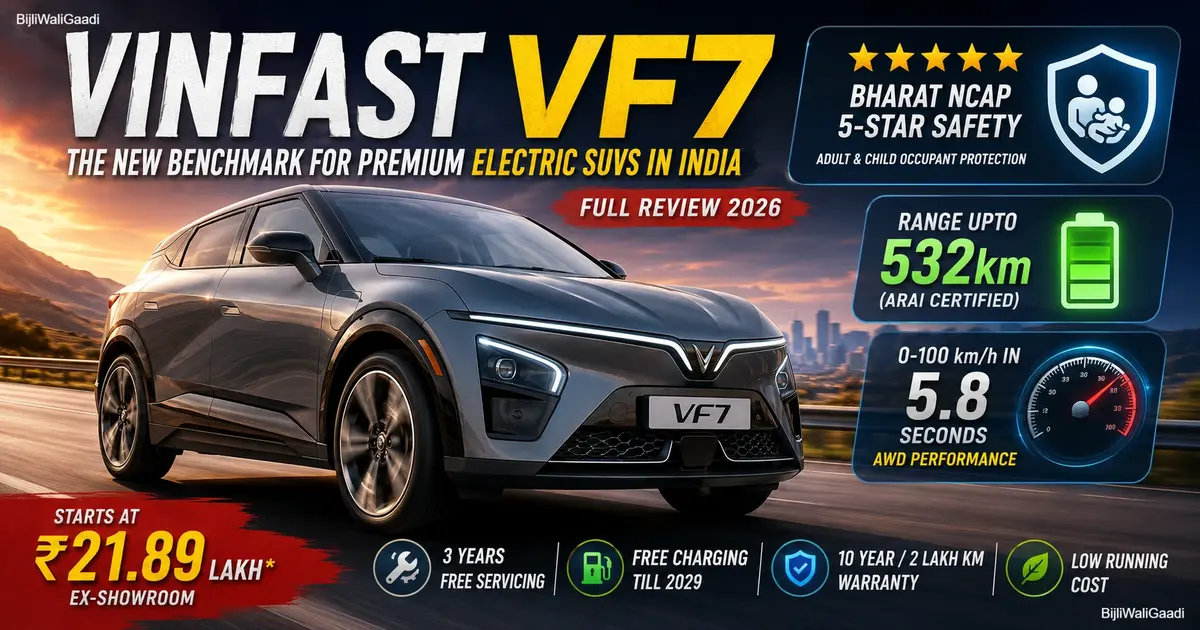
VinFast’s India lineup currently comprises the VF6, VF7 and the seven-seat VF MPV 7, all sold through the expanding dealership network.
Both models carry 5-star Bharat NCAP ratings for adult and child occupant protection, a safety credential the company has used to support its pitch to buyers still evaluating an unfamiliar brand. Exact on-road pricing varies by city and has been revised upward since the brand’s September 2025 launch, reflecting the end of introductory pricing.
Why VinFast is expanding aggressively
VinFast’s dealership sprint reflects a broader bet on India’s long-term EV demand. The company is simultaneously investing in local manufacturing, charging infrastructure and dealer partnerships to support what it describes as India’s shift toward sustainable mobility.
Three factors appear to be driving the pace of expansion:
Analysts note that dealership density often signals an automaker’s confidence in a market — a scaled network reflects long-term commitment rather than a limited pilot, though it does not by itself guarantee sales traction.
July 2026 Vahan EV registration data shows rising opportunity
Vahan registration data shows India recorded 3,27,557 total EV sales in July 2026, up from 3,10,107 in June. Over the twelve months to July 2026, cumulative EV sales stood at nearly 29.64 lakh units, with July marking the highest monthly total in that period.
The four-wheeler passenger segment tells a more mixed story. Electric car and cab registrations eased slightly to 32,609 units in July from 33,334 in June. Still, EV penetration in the four-wheeler segment held at 7.9%, sharply higher than the 5.2% recorded in July 2025.
What the numbers mean: Overall EV adoption in India continues to climb, led by two- and three-wheelers, while passenger car electrification is growing more gradually. A 7.9% EV share in four-wheelers reflects steady progress rather than a breakout shift, leaving room for new entrants like VinFast to compete for a still-expanding but far from saturated customer base.
Maruti Suzuki remained India’s largest passenger vehicle seller by volume in July, with EVs making up just 1% of its sales. JSW MG Motor India posted the highest EV share among major OEMs at 80.9%, ahead of Tata Motors at 23.3% and Mahindra & Mahindra at 13.8%.
How VinFast compares with existing EV leaders
VinFast enters a market with clearly established leaders, each pursuing a different strategy for electrification. The table below summarises how the major passenger EV players in India compare, based on July 2026 Vahan registration data and publicly disclosed company strategy.
| Brand | EV Strategy | Dealer Network | Market Position | Key Strength |
| Tata Motors | Broad EV lineup across price points, sold alongside ICE models | Extensive, established pan-India network | Market leader by EV volume | Scale and first-mover advantage |
| Mahindra & Mahindra | Dedicated EV sub-brand and platforms alongside ICE range | Wide dealer base, expanding EV-specific outlets | Strong and growing EV share (13.8%) | SUV-focused EV design language |
| JSW MG Motor India | Electric-heavy portfolio relative to overall sales | Established mid-size network | Highest EV penetration among major OEMs (80.9%) | Early EV specialisation |
| Hyundai Motor India | Gradual EV rollout alongside dominant ICE business | Large, mature pan-India network | Low EV share (1.2%) but high overall volume | Brand trust and service reach |
| Kia India | Selective EV launches alongside ICE portfolio | Growing but smaller network than Hyundai | Low EV share (1.8%) | Design-led product positioning |
| BYD | Premium, import-driven EV-only strategy | Limited, city-focused outlets | Niche premium presence | Battery and EV manufacturing expertise |
| VinFast | Fully electric portfolio; no ICE models sold in India | 60 dealerships, targeting 75 by end-2026 | 100% EV sales but modest overall volume | Rapid retail expansion, local manufacturing base |
VinFast’s position is distinct: it is the only brand in this group with a 100% EV product mix, unlike diversified rivals that continue to sell both ICE and electric models. Its overall volumes, however, remain modest next to Tata Motors, Mahindra and MG, reflecting an early stage of network and brand building rather than an early stage of ambition.
What the dealership expansion means for customers
A larger dealership network directly affects the EV ownership experience, particularly outside major metros.
Can VinFast become a serious player in India?
Dealer expansion alone does not guarantee commercial success, and VinFast’s next phase will be judged less by showroom count than by what happens after a customer walks in. Several factors will shape whether the brand converts network scale into durable market share.
Product competitiveness and pricing remain central. VinFast’s VF6 and VF7 compete against well-established rivals in the same price bands, and the company has already revised prices upward since its 2025 launch — a reminder that early promotional pricing is not a permanent strategy.
Localization will influence both cost structure and consumer perception. The Thoothukudi plant gives VinFast a domestic manufacturing base, but the extent to which components are sourced locally will affect its ability to price competitively as volumes scale, particularly given battery costs remain sensitive to import exposure.
Charging infrastructure, service quality and resale value are equally important. A newer brand faces a steeper trust curve than incumbents with decades of after-sales history in India, and used-vehicle values for VinFast models are not yet established the way they are for Tata or Hyundai EVs.
Industry expectations suggest India’s four-wheeler EV penetration will keep rising gradually rather than surging, meaning VinFast’s growth is likely to track the broader market rather than dramatically outpace it in the near term — a projection based on current registration trends rather than confirmed company guidance. Its outcome will ultimately depend on execution: converting showroom footfall into deliveries, and dealership count into genuine, repeatable market share, rather than on the pace of expansion alone.
For now, VinFast’s growing India dealership network gives the brand a physical presence few new entrants achieve this quickly. The more consequential test — whether India’s electric car buyers choose VinFast at the showroom counter, and return for their next purchase — is still unfolding.
Frequently Asked Questions
Stay connected via Google 'Electric Vehicle' News
Follow BijliWaliGaadi | India's Trusted EV Insights Portal
source on Google