Australia’s Next Ute War: BYD Shark 6, Ford Ranger PHEV, Chery Stockman and D-Max EV Compared
Stay connected via Google 'Electric Vehicle' News
Follow BijliWaliGaadi | India's Trusted EV Insights Portal
source on Google
Electric utes Australia | BYD Shark 6 | Ford Ranger PHEV | Chery Stockman | Isuzu D-Max EV
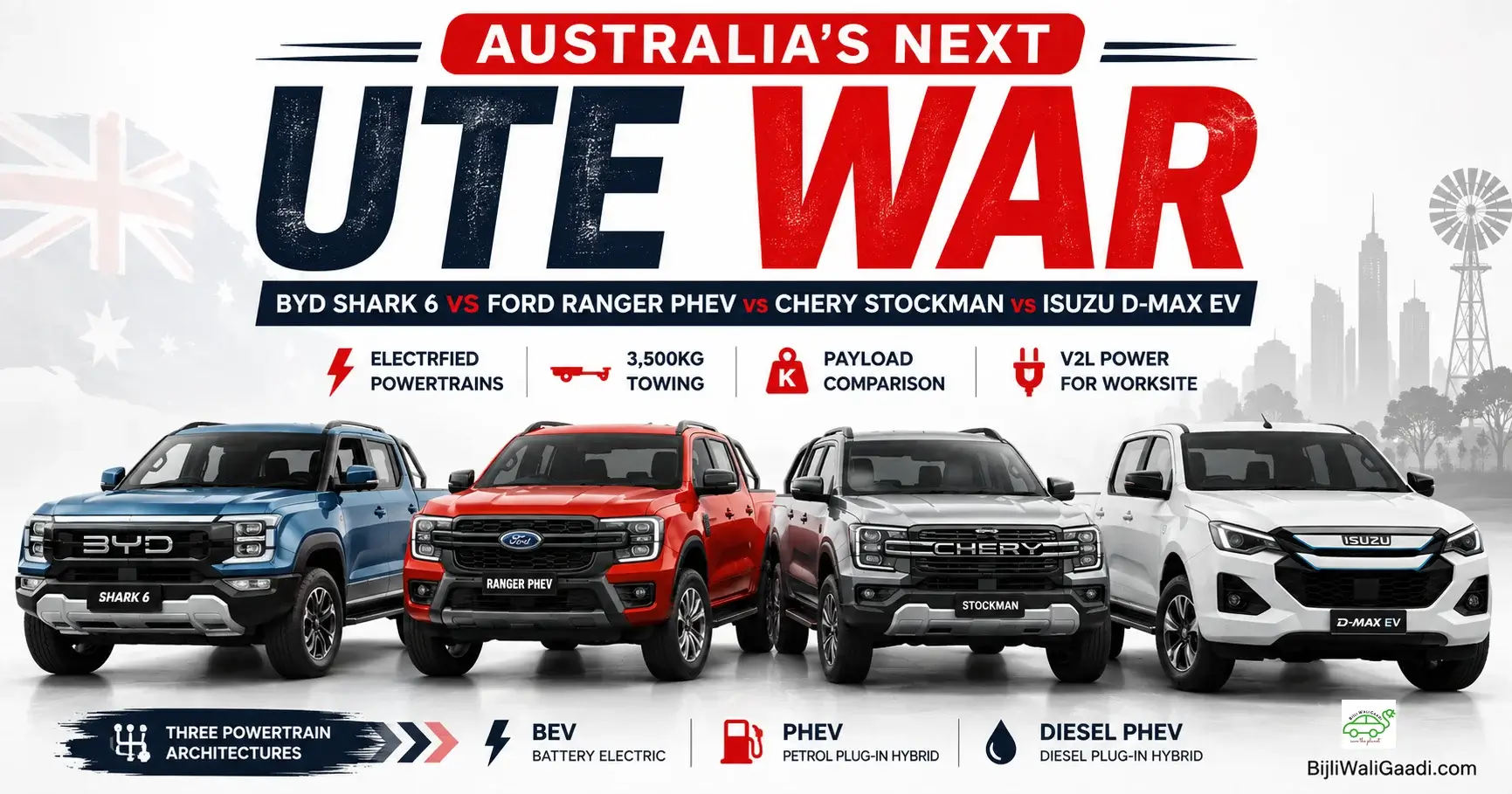
For fifty years, the dual-cab ute has been more than a vehicle in Australia — it’s a load-bearing cultural institution. The Ford Ranger and Toyota HiLux have traded top-selling honours for a decade, for unromantic reasons: payload, towbar rating, and the ability to shrug off a corrugated track without complaint. So when regulators started pointing utes toward electrification, tradies and fleet managers had one blunt question: can an electrified ute still do the job Australians buy utes to do?
The real contest isn’t about which ute has the biggest battery; it’s about which powertrain best matches the job.
Quick Answer: Which Electrified Ute Makes the Most Sense?
The answer depends less on battery size than on where, how far and how heavily the ute is expected to work. Based on the capabilities and duty cycles discussed below:
Australian and Trans-Tasman Policy Pressure
Australia’s New Vehicle Efficiency Standard (NVES), mandatory from 1 July 2025, sets fleet-average CO2 targets for manufacturers rather than taxing any individual vehicle. Brands selling a high proportion of high-emitting utes face pressure to bring their fleet average back under target, and PHEVs and BEVs help manage that compliance position — a fleet-level mechanism, not a per-vehicle diesel tax.
Across the Tasman, New Zealand’s Clean Car Standard works on a related principle, pressuring importers to improve the emissions profile of the vehicles they bring in, rather than directly mandating what buyers purchase. New Zealand’s rural and South Island duty cycles — long distances, sparse charging infrastructure, serious towing loads — remain a useful stress test for these utes, even though Australia is this article’s primary market.
Three Powertrain Architectures, Four Utes
This isn’t simply “electric versus diesel.” Australian buyers now face three distinct powertrain architectures in dual-cab form: full battery-electric (BEV), petrol plug-in hybrid (PHEV) and, in the Stockman’s case, a diesel plug-in hybrid. The four utes compared here — BYD Shark 6, Ford Ranger PHEV, Chery Stockman and Isuzu D-Max EV — aren’t the entire electrified-ute market; they’re four particularly different answers to the same question: what should an Australian work ute become?
BYD Shark 6
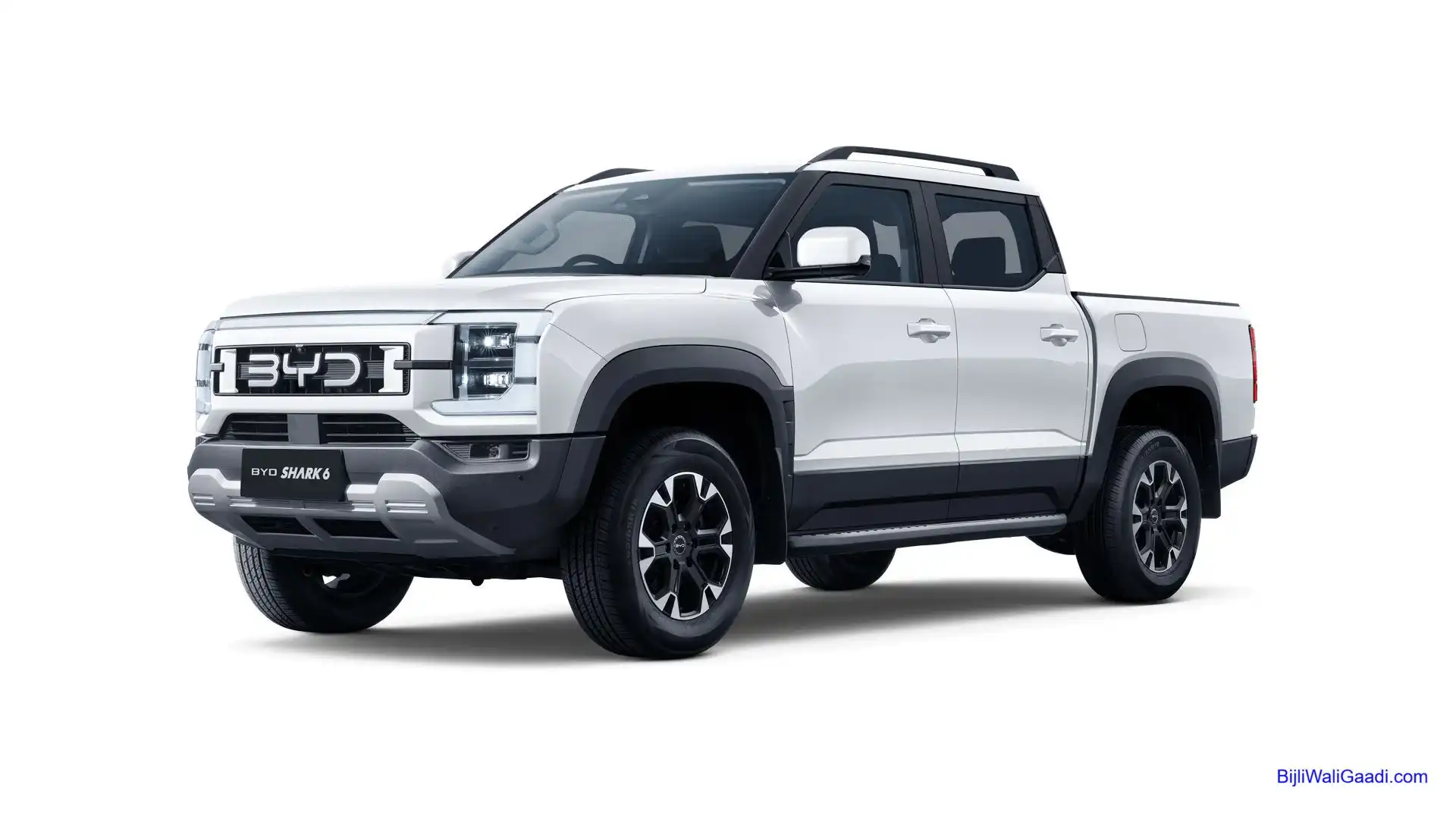
The BYD Shark 6 launched in Australia in late 2024 as the country’s first mainstream PHEV ute. Its DM-o Super Hybrid system pairs a turbo-petrol engine with dual electric motors drawing on a 29.58kWh LFP Blade battery, with BYD’s Australian specifications quoting up to 100km of electric-only range. Towing varies by variant: 1.5-litre Dynamic and Premium grades are rated to 2,500kg braked, while the 2.0-litre Performance variant is rated to 3,500kg braked. Payload sits at 790kg on published models, trailing several diesel rivals. V2L output is rated at 6.6kW across multiple 230V outlets.
Ford Ranger PHEV
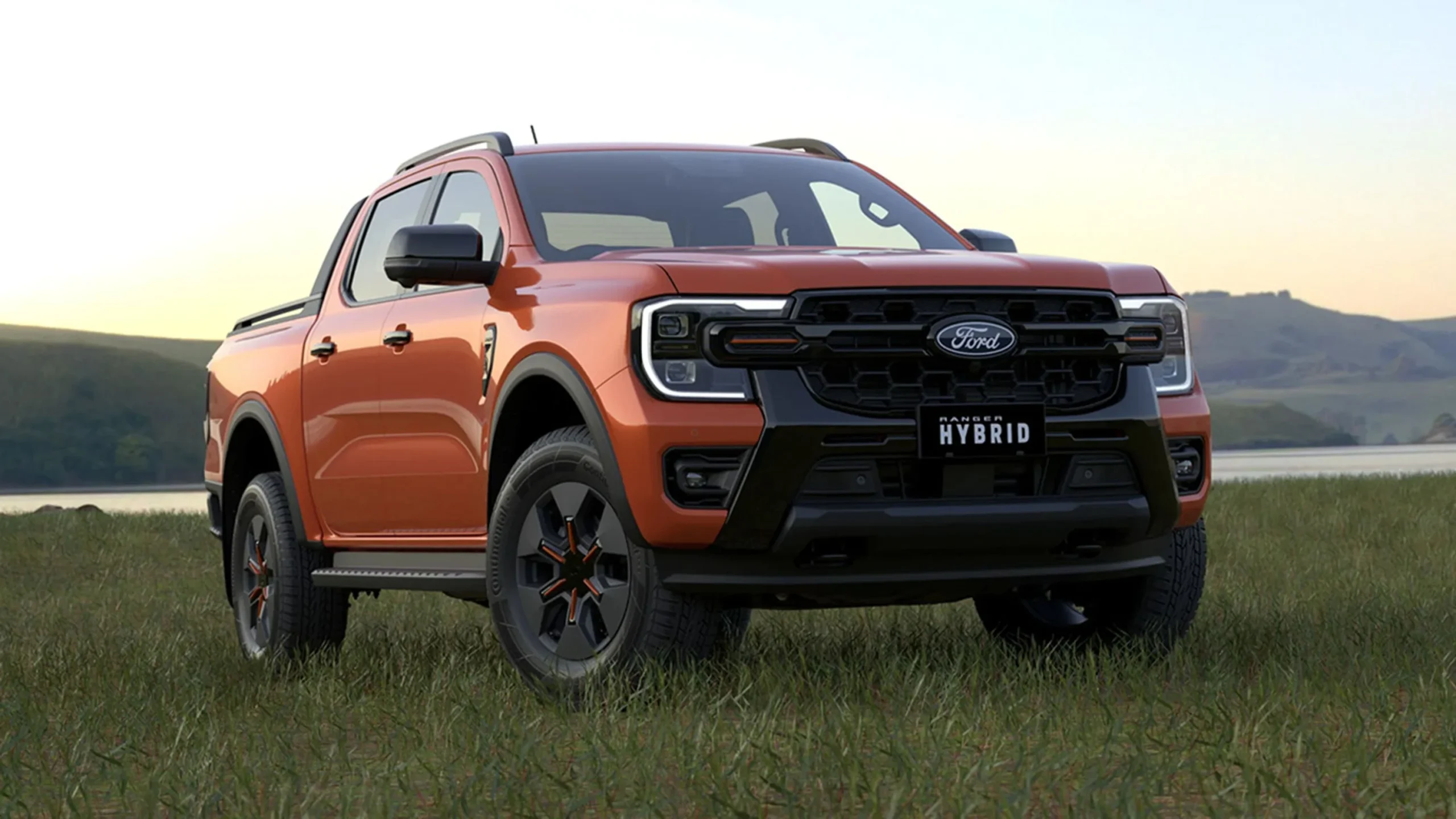
The Ranger PHEV’s 2.3-litre EcoBoost four-cylinder combines with a rear-mounted electric motor and an 11.8kWh usable battery for a claimed 49km on the NEDC cycle — modest next to the Shark 6. In exchange, every variant carries the full 3,500kg braked towing rating shared with the diesel Ranger, and payloads range from roughly 808kg to 973kg, ahead of the Shark 6’s published figure. Ford’s approach is pragmatic: it prioritises familiar towing and worksite capability over maximising electric-only range. Pro Power Onboard, its 6.9kW onboard power system, exports AC power through three outlets. Our head-to-head comparison of the BYD Shark 6 vs Ford Ranger PHEV breaks down the towing and payload trade-offs in detail.
Chery Stockman
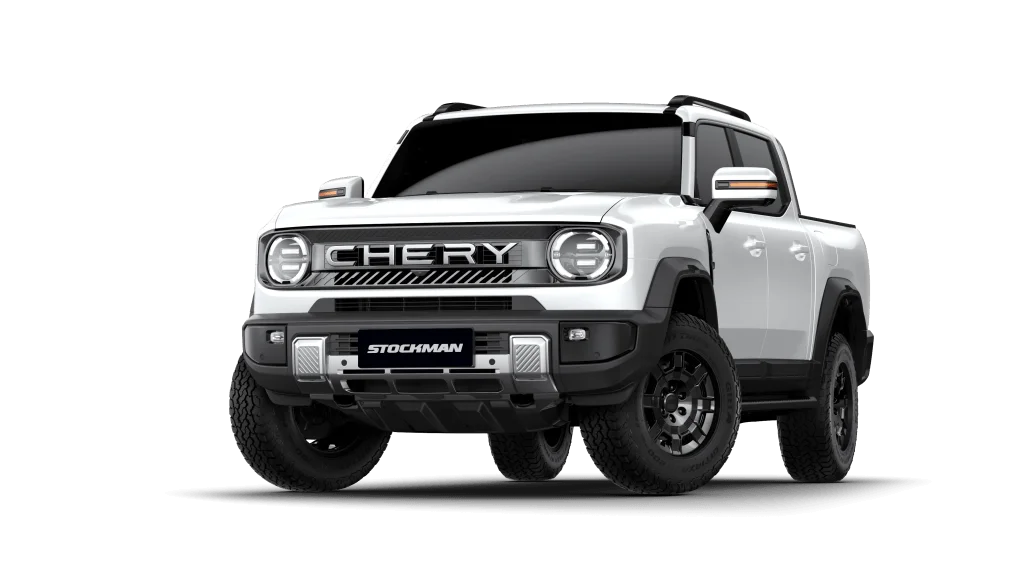
The Stockman is the most speculative entrant here. Chery is positioning it as the world’s first diesel plug-in hybrid ute, pairing a 2.5-litre turbo-diesel with its Diesel Super Hybrid system. Chery says it will target a combined 350kW and 800Nm, up to 100km of electric-only range (NEDC) and 3,500kg braked towing — but the company itself has flagged these outputs as preliminary, subject to change ahead of a targeted fourth-quarter 2026 Australian arrival. Battery capacity and V2L output remain unpublished. Our in-depth analysis of the Chery Stockman diesel-hybrid ute tracks how this diesel-electric approach aims to close the range-anxiety gap pure BEV utes still face in remote areas, while flagging which figures remain provisional.
Isuzu D-Max EV
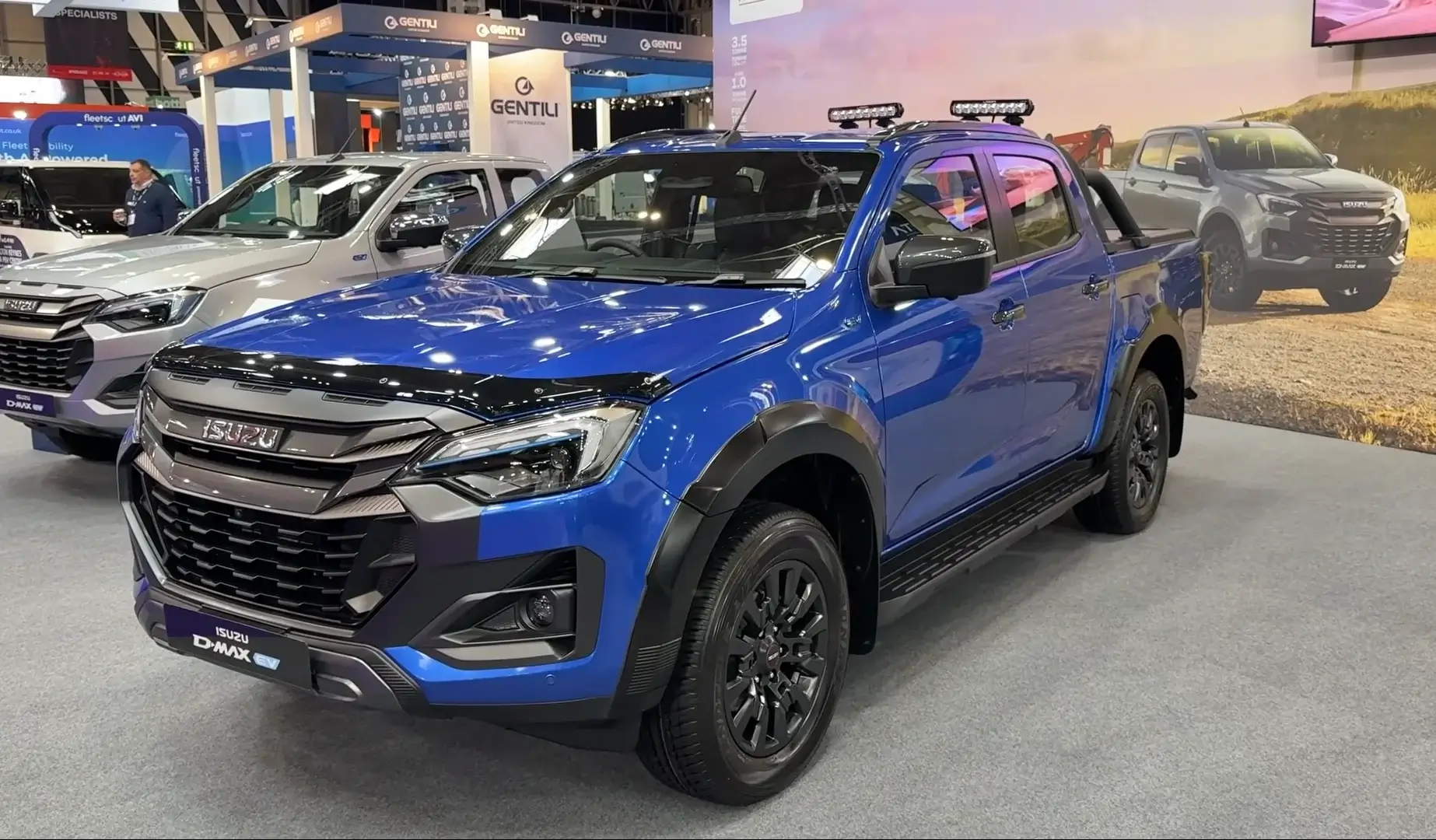
Isuzu’s D-Max EV sits at the fully electric end of the spectrum. Its dual-motor AWD layout draws on a 66.9kWh battery for a claimed 263km WLTP range, and Isuzu has confirmed it matches the diesel D-Max on both 3,500kg braked towing and 1,000kg payload. Charging uses 11kW AC for overnight depot use and 50kW DC fast charging, with Isuzu quoting a 20-80% top-up in roughly an hour — modest by current BEV standards and a real constraint on long, unplanned highway runs. As of publication, Isuzu Ute Australia has not confirmed local pricing or an on-sale date; its Australian launch remains pending.
The Four Utes Compared
| Model | Powertrain | Battery | Claimed Driving Range | Towing (braked) | V2L / Onboard Power | Australian Status |
| BYD Shark 6 | Petrol PHEV (DM-o Super Hybrid) | 29.58kWh LFP Blade | Up to 100km (NEDC) | 2,500kg (Dynamic/Premium) / 3,500kg (Performance) | 6.6kW V2L | On sale in Australia |
| Ford Ranger PHEV | Petrol PHEV (2.3L EcoBoost + e-motor) | 11.8kWh usable | Up to 49km (NEDC) | 3,500kg | 6.9kW Pro Power Onboard | On sale in Australia |
| Chery Stockman | Diesel PHEV (2.5L Diesel Super Hybrid) | Not specified by Chery | Up to 100km (NEDC), preliminary | 3,500kg, preliminary | TBC | Expected Australia Q4 2026 (unconfirmed) |
| Isuzu D-Max EV | Full BEV, dual-motor AWD | 66.9kWh | 263km (WLTP) | 3,500kg | Not specified as V2L-capable | Australian launch not yet confirmed |
Range note: Claimed ranges use each manufacturer’s published test cycle. NEDC and WLTP figures aren’t directly comparable — WLTP is generally the more demanding procedure — so the Shark 6’s and Ranger PHEV’s NEDC numbers shouldn’t be read against the D-Max EV’s WLTP figure as equivalent.
Towing, Payload and the GVM/GCM Reality
A 3.5-tonne trailer can dramatically reduce the effective range of an electrified ute, particularly at highway speeds, where aerodynamic drag becomes a dominant energy load. The actual penalty varies significantly with trailer aerodynamics, speed, payload, terrain and weather. For the D-Max EV, that matters even more because its 50kW DC charging capability means long-distance towing can involve significantly longer charging stops than a modern high-power EV would require.
Battery packs also add meaningful mass compared with conventional powertrain components, which can affect payload unless the manufacturer compensates through the vehicle’s certified Gross Vehicle Mass (GVM) — as Isuzu has done to preserve the D-Max EV’s 1,000kg payload. Gross Combination Mass (GCM), the certified legal limit for vehicle and trailer combined, must be calculated for the specific vehicle, accessories and load; a headline towing figure doesn’t mean a ute can simultaneously carry maximum payload and tow its maximum rated trailer. Payload and towing capacity are not independent numbers.
Battery Thermal Management in Australian Conditions
Sustained towing, high ambient temperatures and repeated fast charging place real demands on any battery, regardless of chemistry. LFP — used in the Shark 6’s Blade battery — generally offers strong thermal stability and cycle life; NMC, more common among longer-range BEVs, generally offers higher energy density. Chemistry alone doesn’t determine how a battery copes with a 40°C day towing through the outback; cell design, pack architecture, cooling capacity and battery-management software all matter. Real-world Australian testing under towing and heat will ultimately tell buyers more than a chemistry label ever will.
V2L, Pro Power Onboard and Worksite Productivity
V2L is one of the more immediately useful features electrification brings to a tradie’s toolkit. The Shark 6’s 6.6kW V2L and the Ranger PHEV’s 6.9kW Pro Power Onboard both export power without a separate generator to load, fuel and maintain. Chery hasn’t published a V2L figure for the Stockman, and Isuzu hasn’t specified V2L capability for the D-Max EV, so buyers weighing those two on this criterion should wait for confirmed local specs. Onboard power is a genuine worksite convenience — its actual saving depends on how often a buyer would otherwise hire or fuel a generator.
Fleet TCO and FBT: What Actually Applies
Total cost of ownership depends on duty cycle, energy prices, financing and charging infrastructure, not powertrain alone. Electrified utes can meaningfully cut energy and maintenance costs for fleets that can charge at a depot or home base, though purchase price and charging access still matter for the whole-of-life sum.
On tax, PHEVs lost access to Australia’s electric-car FBT exemption for new arrangements from 1 April 2025, subject to transitional grandfathering for arrangements already in place. Separate commercial-vehicle FBT concessions may still apply to eligible utes of any powertrain where the ATO’s conditions on the vehicle and its private use are met. Don’t assume the badge or the powertrain automatically determines the tax outcome — check the specific arrangement.
Which Electrified Ute Suits Which Australian Duty Cycle?
A metro-based trade business doing short daily hops may be well served by a Shark 6 or Ranger PHEV, where regular charging cuts petrol use and onboard power substitutes for a generator on site — though FBT treatment depends on the arrangement, not the powertrain alone.
A grazier or remote fleet operator towing heavy loads across long, unserviced distances has good reason to watch the Chery Stockman as it nears its Australian launch, given its stated aim of pairing diesel range and refuelling speed with electric-motor torque — though its final specifications remain provisional until Chery confirms them locally. The Isuzu D-Max EV is shaping up as a strong option for depot-based fleets running predictable routes with reliable overnight charging, and less suited to operators regularly needing long-distance towing between charges.
Final Verdict
Australia’s ute culture isn’t disappearing under electrification — the engineering underneath it is changing. Payload, towing and reliability remain the decisive criteria, with each powertrain making different trade-offs elsewhere. There is no single best electrified ute for every Australian buyer; duty cycle, not marketing or battery size, should determine the powertrain. PHEVs offer a genuinely useful bridge for many trade and metro applications today, BEVs become increasingly compelling wherever predictable charging exists, and diesel plug-in hybrids may yet prove the right answer for long-distance, high-load work — provided the Stockman’s technology performs in production as confidently as it has been announced.
Stay connected via Google 'Electric Vehicle' News
Follow BijliWaliGaadi | India's Trusted EV Insights Portal
source on Google