Mercedes-Benz GLC EV Priced From $112,200 in Australia With 630km Range
Stay connected via Google 'Electric Vehicle' News
Follow BijliWaliGaadi | India's Trusted EV Insights Portal
source on Google
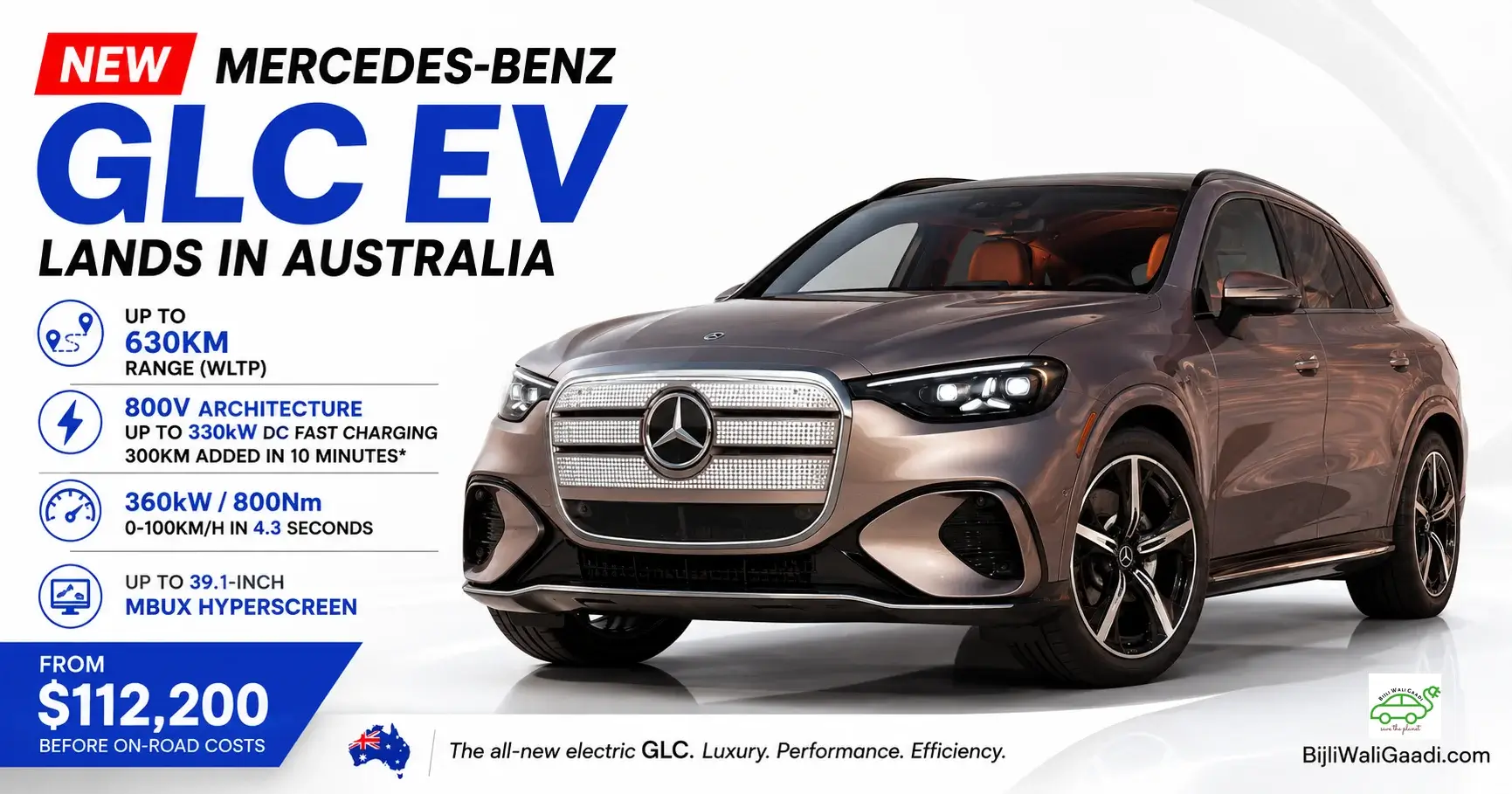
Mercedes-Benz has opened orders for the GLC 400 4MATIC, its first fully electric GLC, in Australia, with pricing starting at $112,200 before on-road costs. A limited-run Launch Edition is available from $110,000 before on-road costs.
The GLC 400 4MATIC produces 360kW and 800Nm from a dual-motor all-wheel-drive system, uses a 94.4kWh usable battery for a WLTP-claimed range of up to 630km, and runs an 800V electrical architecture with DC fast charging up to 330kW. Orders opened on 22 July 2026, with Australian customer deliveries expected from October 2026.
It’s the first fully electric version of Mercedes-Benz’s popular mid-size SUV, built on a dedicated EV platform rather than sharing underpinnings with the petrol or plug-in hybrid GLC.
Mercedes-Benz GLC EV Price in Australia
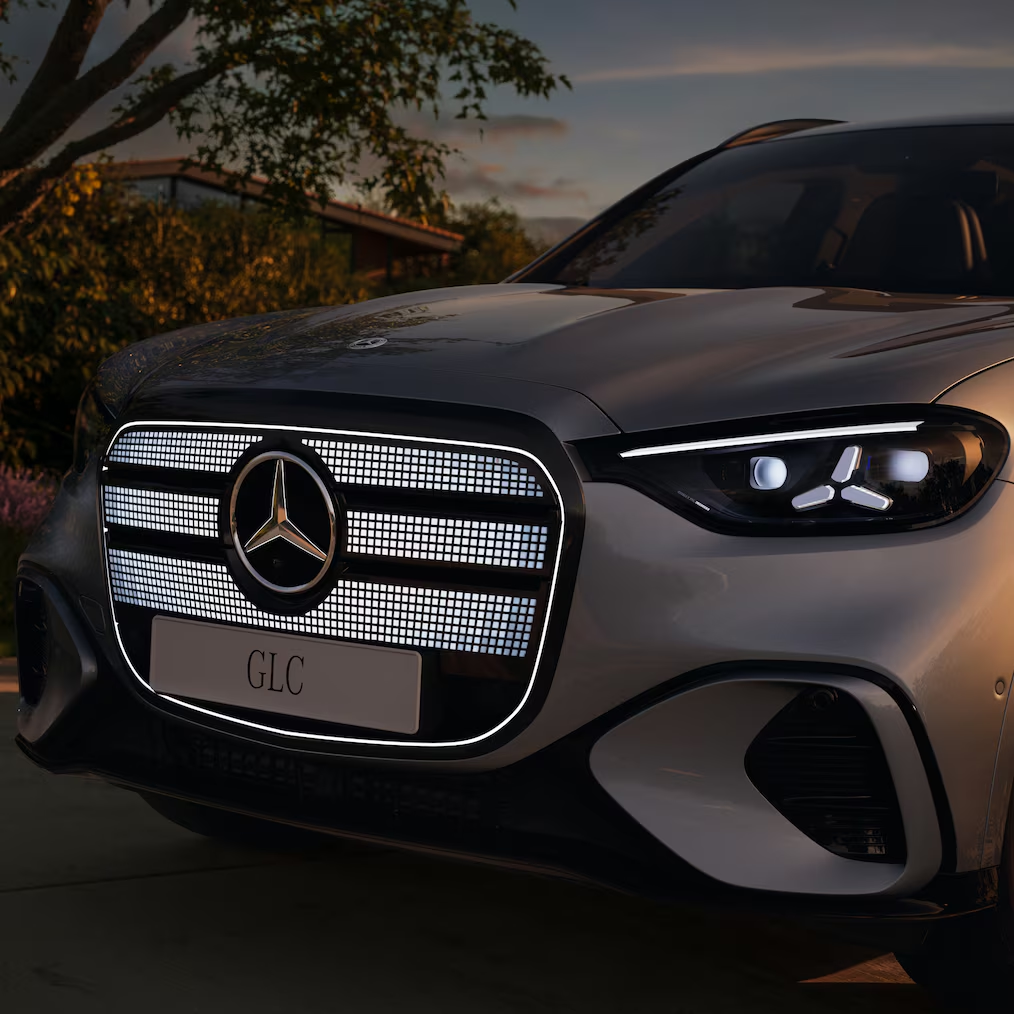
The GLC 400 4MATIC is priced from $112,200 before on-road costs, positioning it within Australia’s increasingly competitive premium electric SUV market.
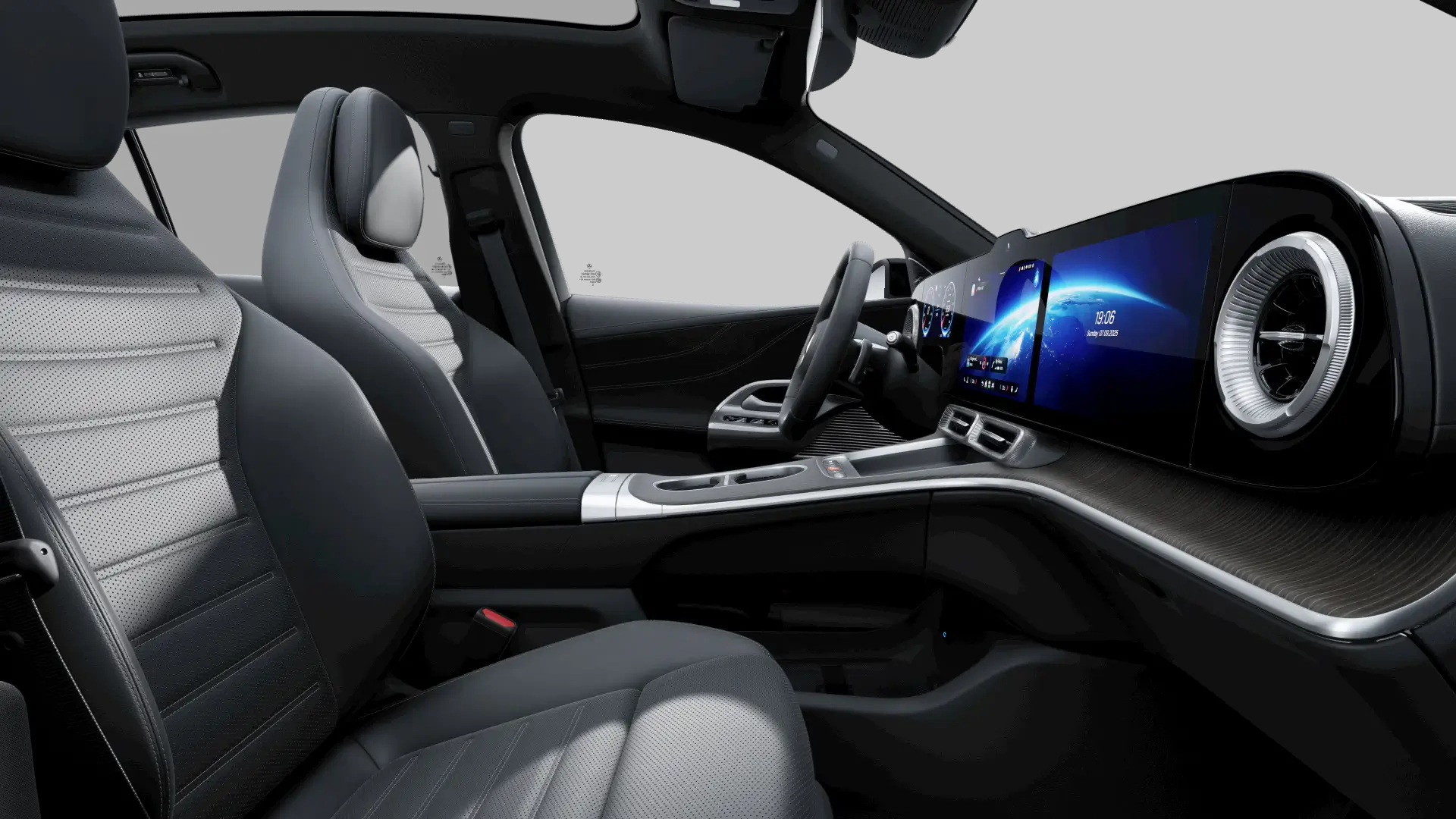
Mercedes-Benz is also offering a limited-run GLC 400 4MATIC Launch Edition from $110,000 before on-road costs. The Launch Edition is mechanically unchanged from the standard GLC 400 4MATIC, but it swaps the standard MBUX Superscreen for a static passenger-side display capable of showing wallpapers and animations, and uses black ARTICO upholstery instead of the standard trim.
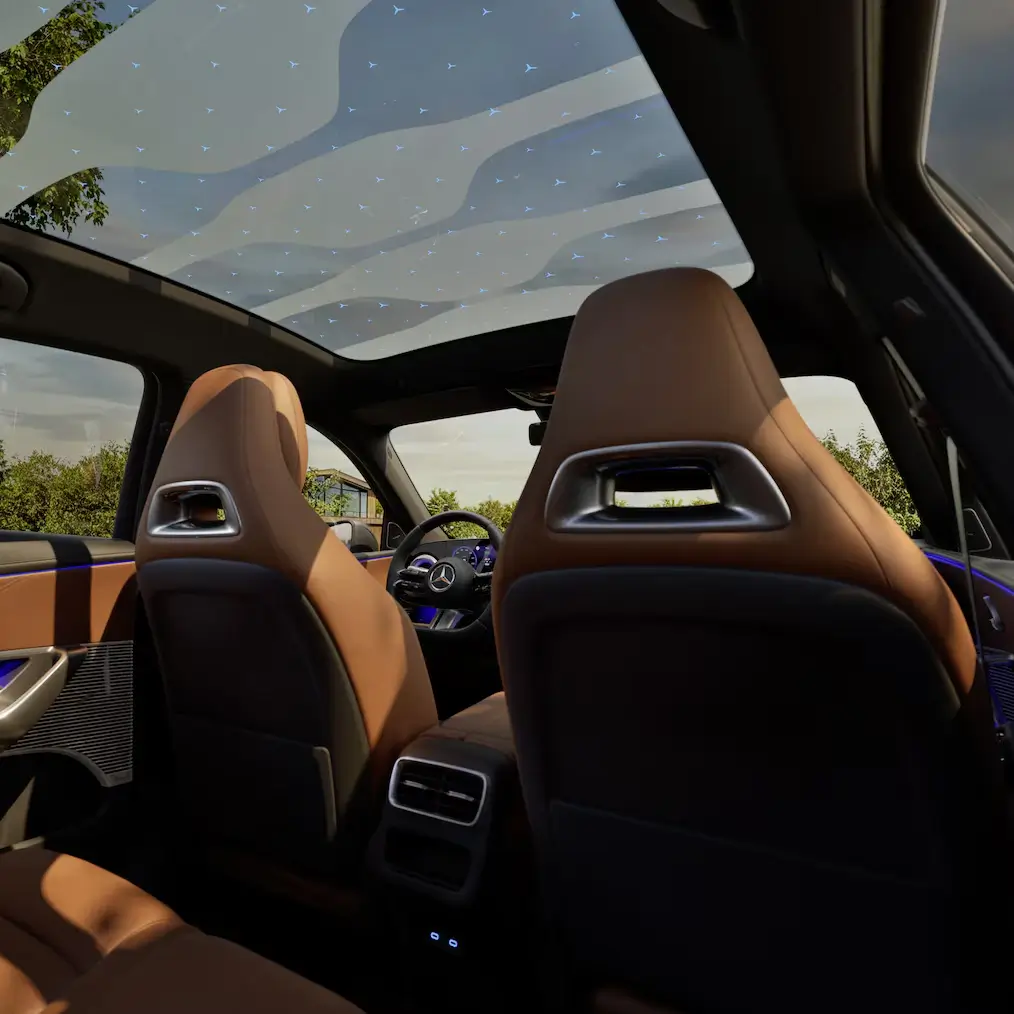
Buyers wanting the full-width MBUX HYPERSCREEN need to add the $8,200 Luxury Package, which also brings ventilated and massaging front seats, heated rear seats, an illuminated star pattern for the panoramic roof, DIGITAL LIGHT projection functions, additional driver-assistance technology and a Burmester 4D surround sound system. A separate $5,200 Agility and Comfort Package adds AIRMATIC air suspension and rear-axle steering.
Mercedes-Benz Australia has not confirmed additional GLC EV variants for local sale. Any future single-motor, rear-wheel-drive or other GLC EV variants for Australia remain unconfirmed.
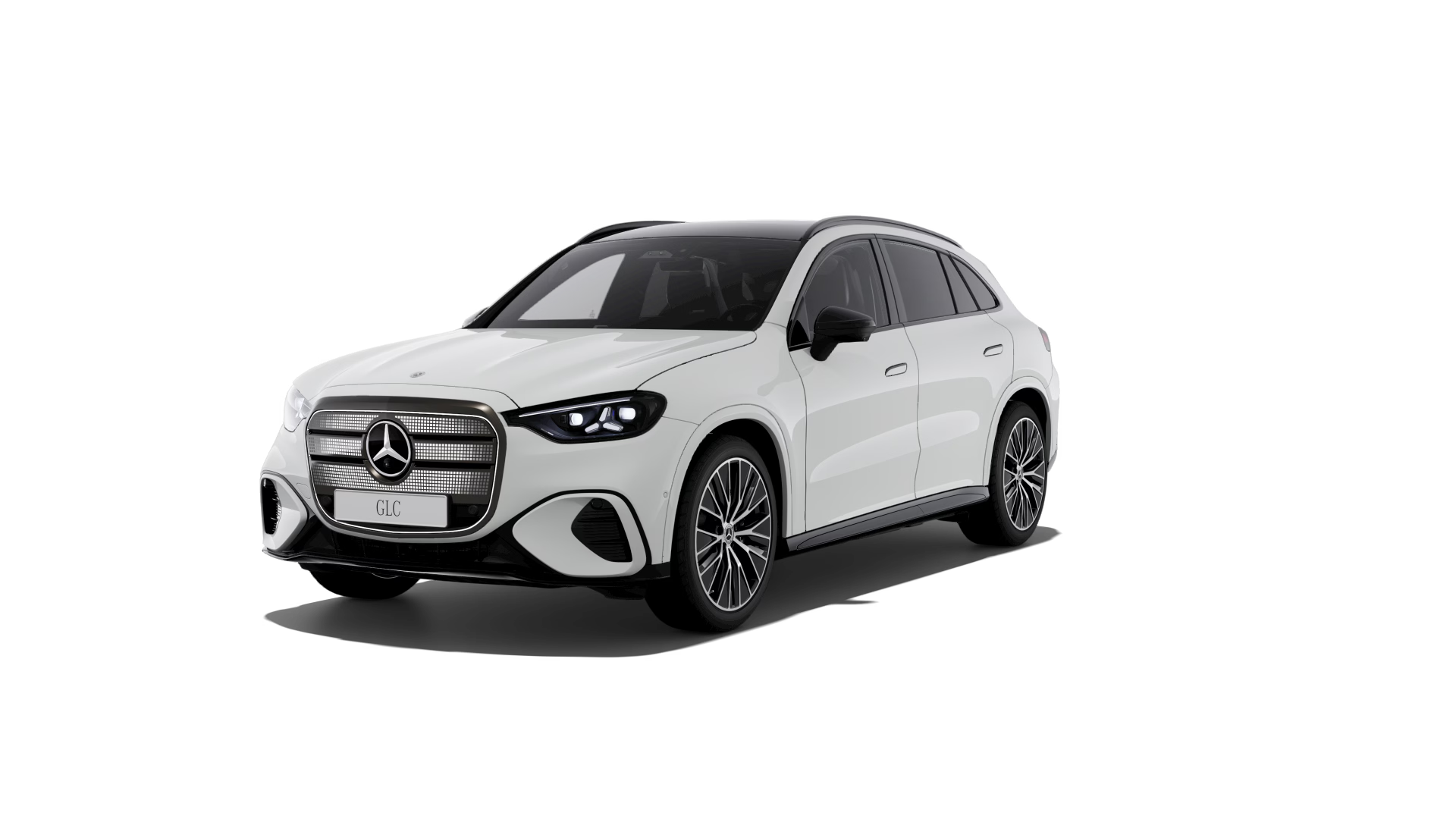
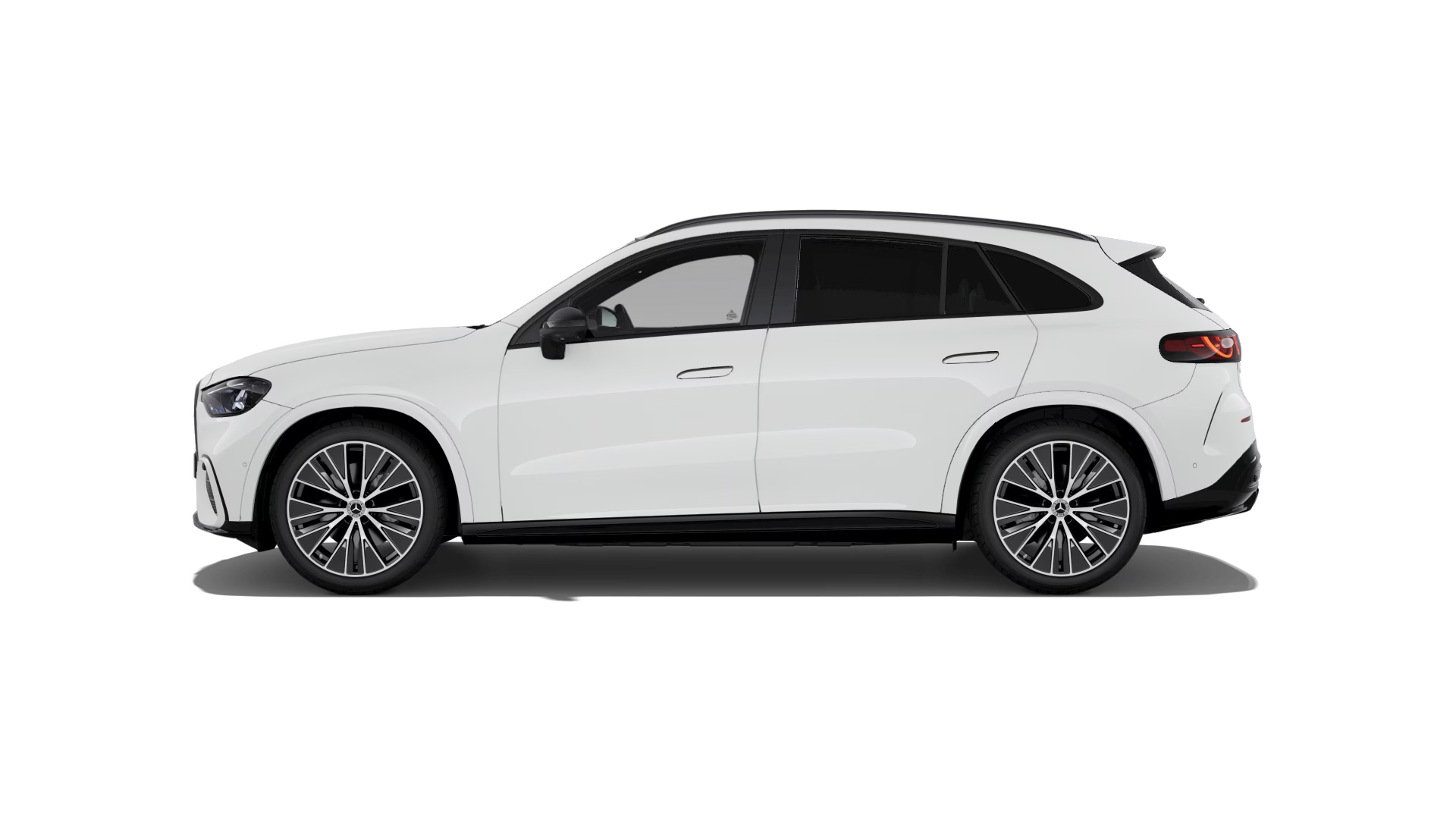
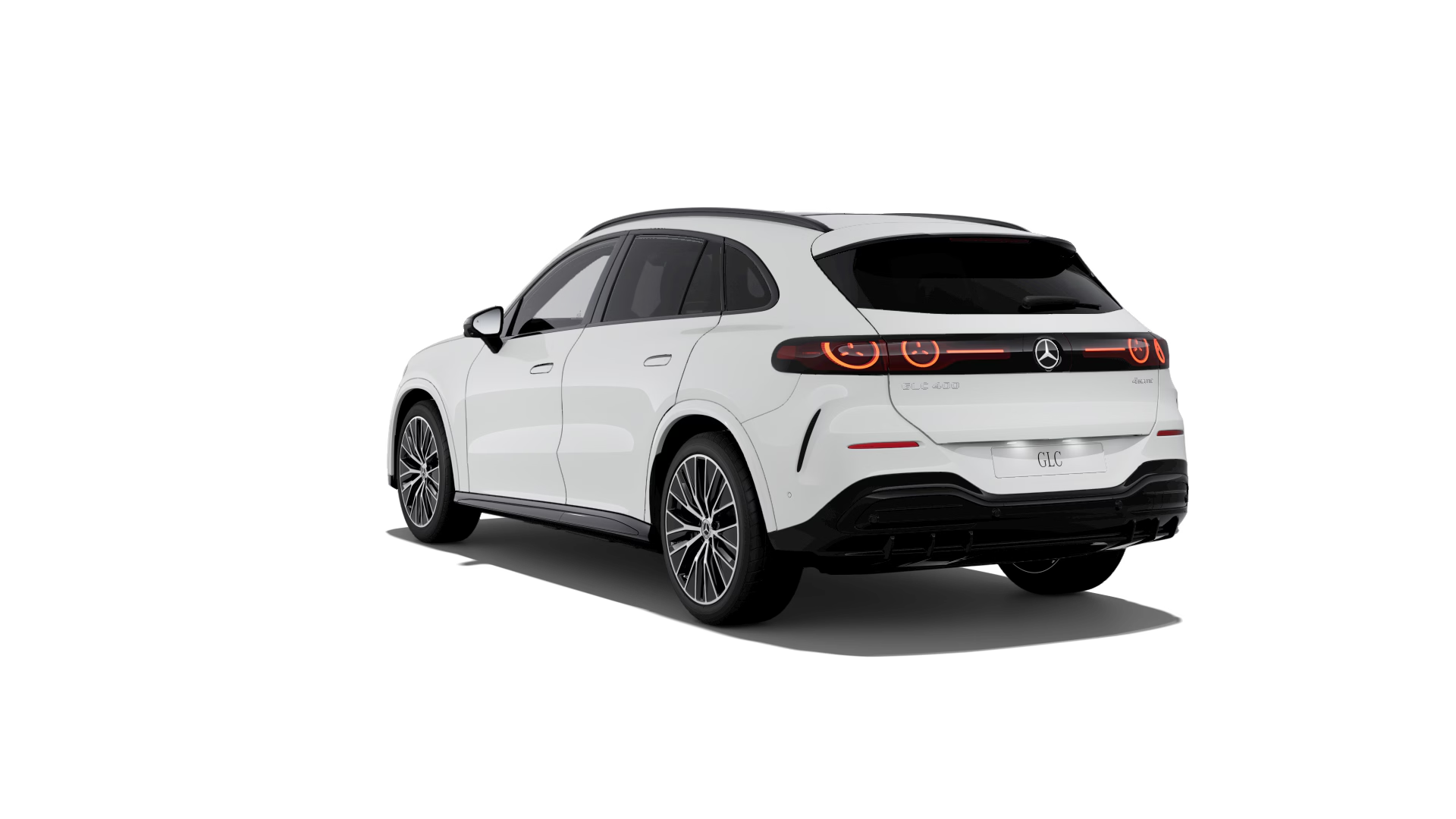
When Will the Mercedes-Benz GLC EV Arrive in Australia?
Orders opened on 22 July 2026, with Australian customer deliveries expected from October 2026. Exact delivery timing can vary by state, vehicle configuration and production/shipping schedules, so buyers should confirm timing with their Mercedes-Benz dealer.
Mercedes-Benz GLC EV: Power, Battery and Range
| Specification | Mercedes-Benz GLC 400 4MATIC |
| Power | 360kW |
| Torque | 800Nm |
| Battery | 94.4kWh usable |
| Battery chemistry | NMC (nickel-manganese-cobalt) |
| Claimed range | Up to 630km WLTP |
| Drive | Dual-motor AWD |
| 0–100km/h | 4.3 seconds (claimed) |
| Top speed | 210km/h |
| DC charging | Up to 330kW |
| DC charging time | 10–80% in approximately 22 minutes (claimed) |
| AC charging | Up to 11kW |
| Architecture | 800V |
| Platform | Mercedes-Benz MB.EA-M |
| Braked towing capacity | 2,400kg |
Unless otherwise noted, specifications are manufacturer-quoted figures for the Australian-market GLC 400 4MATIC. The 630km range and charging-related range figures use the WLTP test methodology where stated. Real-world range and charging performance will vary with conditions.
Why the GLC EV’s 800V Architecture Matters
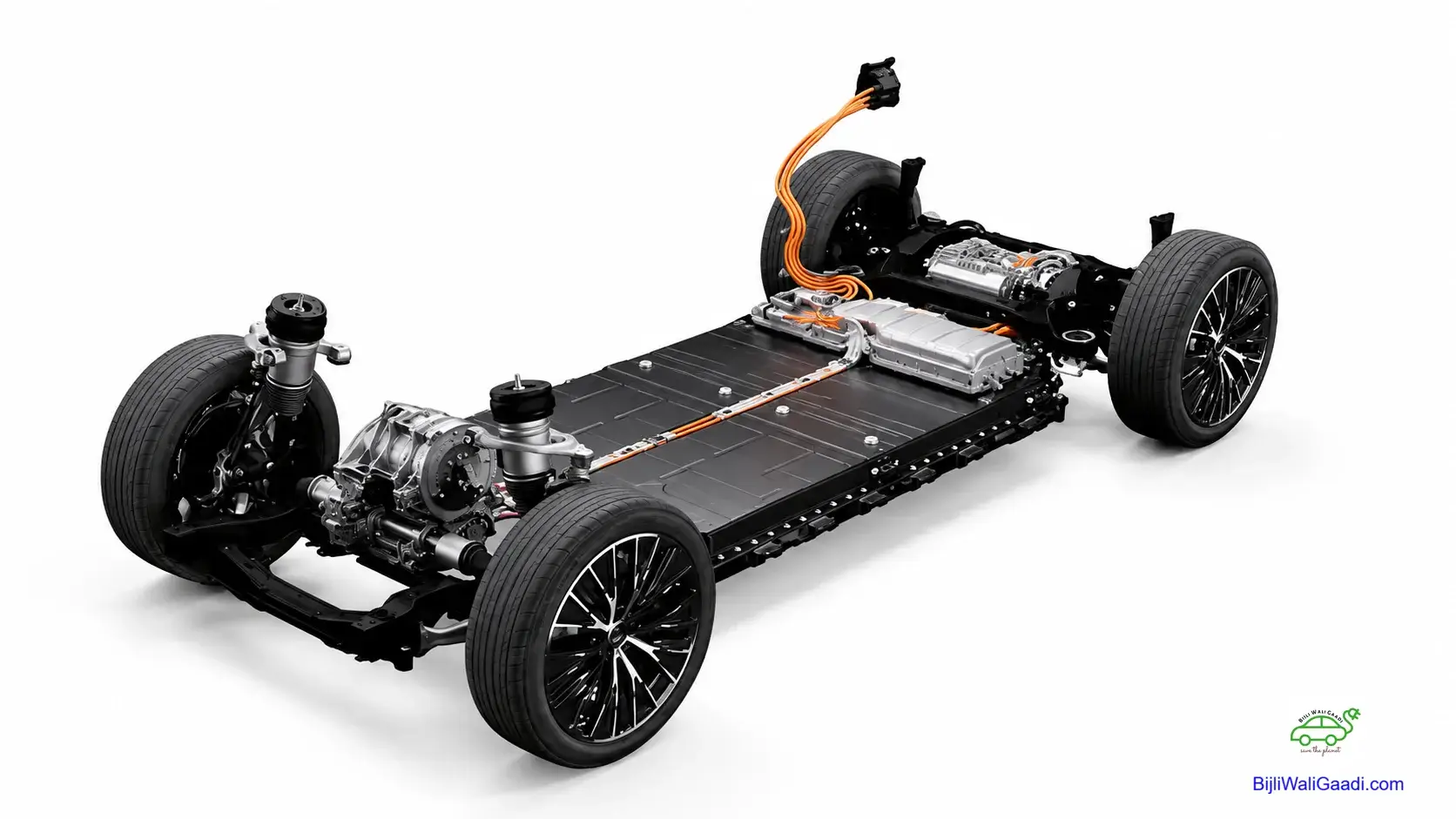
The GLC EV is built on Mercedes-Benz’s dedicated MB.EA-M electric platform and uses an 800V electrical architecture — two related but distinct things. The platform is the vehicle’s underlying structure and engineering; the 800V system is the electrical design that runs through it.
Many current EVs use electrical systems around 400V, while the GLC EV uses an 800V architecture. For a given power level, higher voltage means lower current is needed to deliver it. Lower current can reduce resistive losses and heat build-up in cables, connectors and onboard electronics, which is part of why 800V vehicles can generally sustain higher charging rates without needing oversized, heavier cabling.
However, 800V does not automatically mean every charging session is faster. Charging performance depends on the entire charging system and battery conditions — the charger’s own voltage and power capability, compatibility between vehicle and charger, the battery’s temperature, its state of charge, and the vehicle’s thermal management all play a part.
Mercedes-Benz GLC EV Charging
Mercedes-Benz’s key charging claims for the GLC 400 4MATIC:
- Up to 330kW peak DC charging via the 800V architecture
- 10–80% charge in approximately 22 minutes under suitable conditions
- Up to 240–305km of additional WLTP range added in 10 minutes, under ideal conditions
- Up to 11kW maximum AC charging, per Mercedes-Benz Australia’s published technical data
A 350kW-rated public charger does not automatically mean the GLC will receive 330kW. Real-world charging performance depends on the charger’s voltage capability, its power capability, vehicle/charger compatibility, the battery’s temperature and state of charge, the car’s thermal management, and site power availability where charging bays share capacity. Reaching the GLC’s peak rate requires a suitably specified high-power DC charger capable of operating within the vehicle’s required voltage and current range.
MBUX Superscreen and 39.1-inch HYPERSCREEN
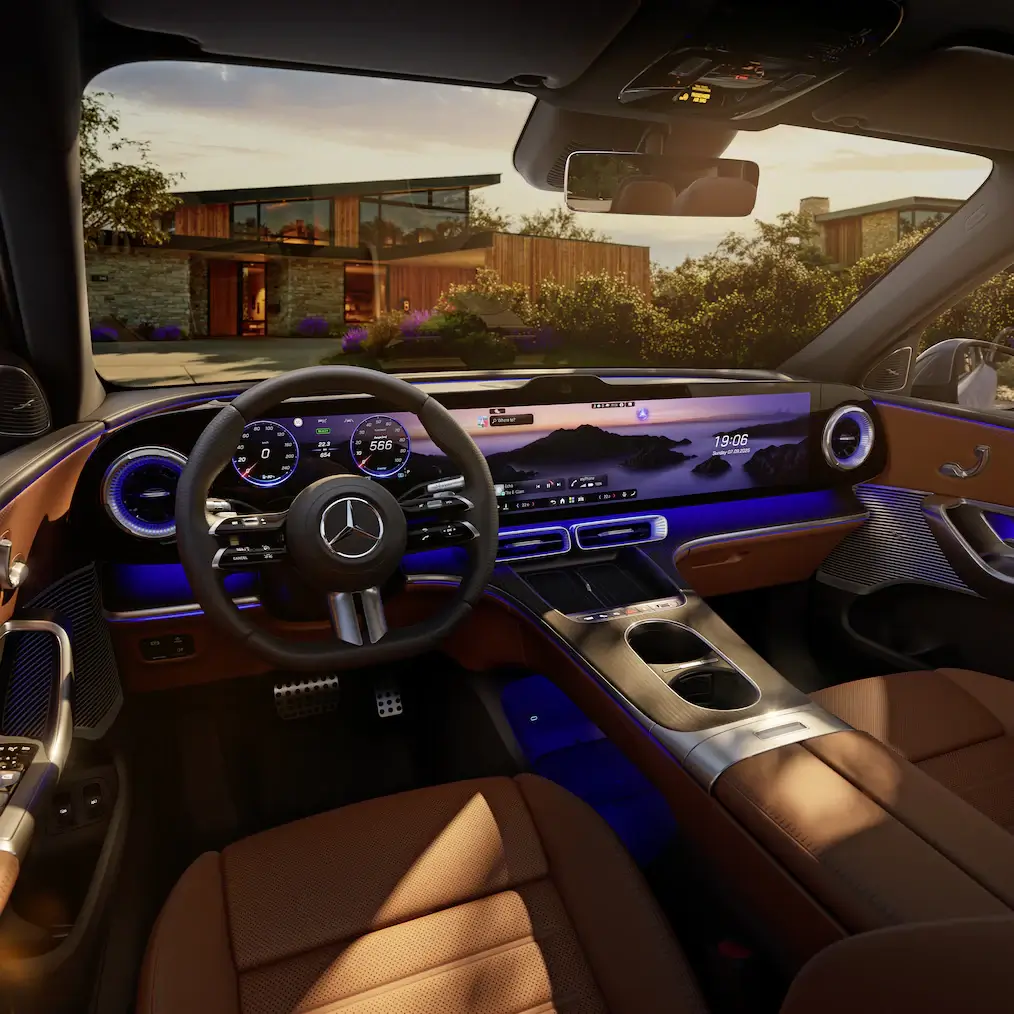
Standard GLC 400 4MATIC models are fitted with the MBUX Superscreen: a 10.3-inch driver display, 14-inch central display and 14-inch front-passenger display, arranged beneath a single glass surface across the dashboard.
The optional 39.1-inch MBUX HYPERSCREEN, available through the Luxury Package, merges those three displays into one continuous panel, giving the GLC EV one of the most distinctive digital dashboards in its segment.
Both setups run on the Mercedes-Benz Operating System (MB.OS), which the company says is designed to continuously refine vehicle functions and connectivity through over-the-air software updates. A head-up display is included, and driver-assistance functions are supported by an 8-camera, multi-radar sensor suite.
Practicality, Boot Space and Towing
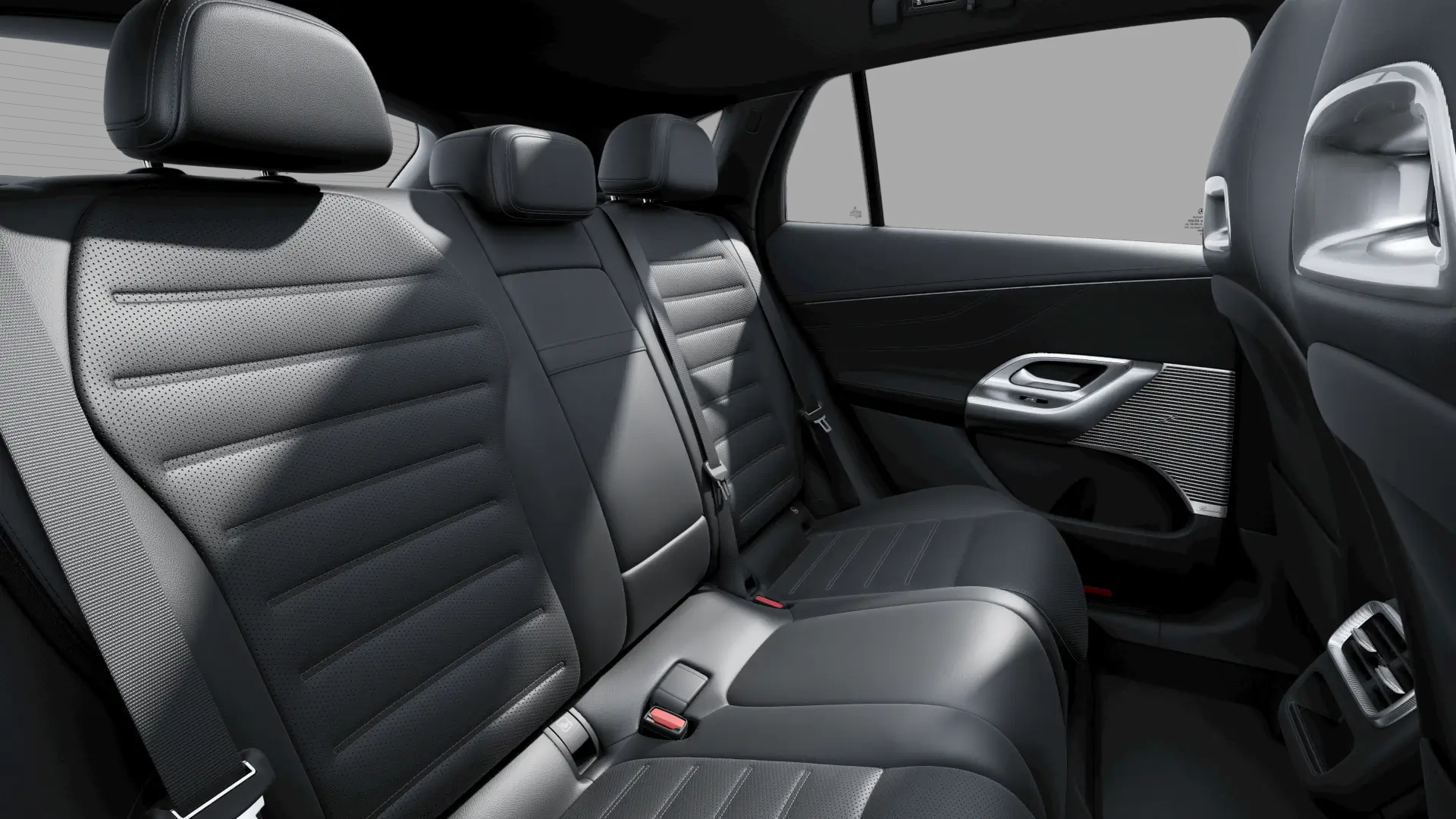
Built on a dedicated EV platform, the GLC EV has an 84mm-longer wheelbase than the combustion GLC, freeing up extra front and rear legroom — a genuine benefit for families cross-shopping mid-size SUVs. Boot space is rated at 570 litres with the rear seats upright, expanding to 1,740 litres with them folded, plus a 128-litre front storage compartment under the bonnet.
The GLC EV is also rated to tow up to 2,400kg braked, a figure that matters to Australian buyers considering a caravan or boat trailer. Actual towing range and performance will vary with trailer mass, aerodynamic drag, terrain, speed, weather, payload and the vehicle’s state of charge, so the maximum figure shouldn’t be treated as a guarantee across every trailer and driving condition.
Mercedes-Benz GLC EV Warranty in Australia
The GLC 400 4MATIC is covered by Mercedes-Benz’s standard 5-year/unlimited-kilometre vehicle warranty, with an 8-year/160,000km warranty for the high-voltage battery pack. Warranty terms, conditions and exclusions apply, so buyers should confirm the latest details with Mercedes-Benz Australia before purchase.
How the GLC EV Compares With Key Premium Electric SUVs
| Model | Australian price* | Power | Drive | Claimed range |
| Mercedes-Benz GLC 400 4MATIC | $112,200 | 360kW | AWD | 630km |
| BMW iX3 50 xDrive | $109,900 | 345kW | AWD | Up to 805km |
| Volvo EX60 Ultra P10 AWD | $101,990 | 375kW | AWD | Up to 660km |
| Audi Q6 e-tron quattro | $122,500 | 285kW | AWD | 572km |
*Prices exclude on-road costs. Specifications and range figures are based on Australian-market published data and may vary by model year, wheel/tyre configuration and equipment. Range figures use the relevant manufacturer’s stated test methodology. BMW’s iX3 range varies with wheel, tyre and equipment configuration; buyers should check the specific Australian vehicle specification. Volvo’s Australian EX60 figures are preliminary and subject to final local certification.
On price, the GLC 400 4MATIC sits above the BMW iX3 50 xDrive and Volvo EX60 Ultra P10 AWD, but below the Audi Q6 e-tron quattro. The GLC also brings a strong standard technology package, including the Superscreen, DIGITAL LIGHT headlights, head-up display and 21-inch AMG wheels.
What Makes the Mercedes-Benz GLC EV Different?
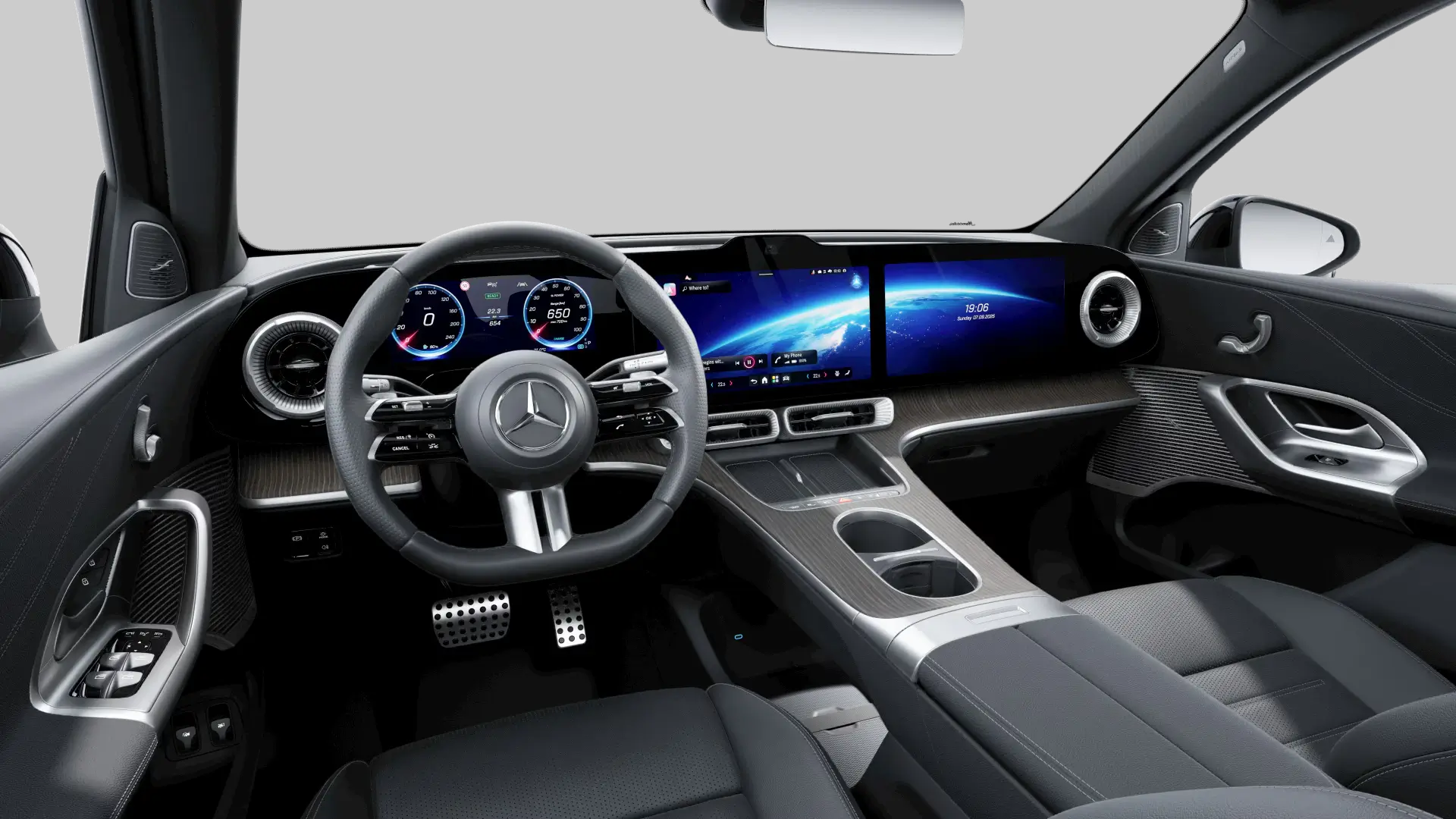
A handful of characteristics separate the GLC EV from the rest of the field, and each matters differently to Australian buyers:
- Dedicated MB.EA-M electric platform — built specifically for electric propulsion rather than adapted from a combustion structure, which is part of why cabin space has grown over the petrol GLC.
- 800V architecture and 330kW peak DC charging — competitive charging headline numbers, though real-world speeds depend on available infrastructure.
- 360kW/800Nm dual-motor AWD — strong performance for the class, with a claimed 4.3-second 0-100km/h time.
- 630km WLTP range — competitive, although BMW quotes up to 805km for the iX3 50 xDrive depending on configuration.
- Optional 39.1-inch HYPERSCREEN — a meaningfully different cabin experience to most rivals.
- 570-litre boot plus 128-litre front storage — useful everyday practicality for family buyers.
- 2,400kg braked towing capacity — a point of difference for buyers who tow.
Mercedes-Benz GLC EV Australia: The Verdict
Strengths: 360kW/800Nm performance, a 630km WLTP range, 800V architecture with up to 330kW DC charging, a genuinely differentiated cabin technology package, practical cargo space, and a 2,400kg towing capacity.
Weaknesses: a $112,200 starting price, just one confirmed Australian variant at launch, no cheaper rear-wheel-drive option yet confirmed locally, and a 630km range that’s competitive but not class-leading. Maximum charging performance, as with any EV, also depends heavily on finding infrastructure capable of delivering it.
The GLC EV is not primarily a value proposition; it’s Mercedes-Benz’s premium technology, performance and luxury offering in the electric mid-size SUV segment, aimed at buyers who already want the badge and are prepared to pay for the cabin experience that comes with it.
FAQs
Stay connected via Google 'Electric Vehicle' News
Follow BijliWaliGaadi | India's Trusted EV Insights Portal
source on Google