Clemson’s Deep Orange 17 Isn’t Just a Solar Car — It’s an EV Designed to Generate More Energy Than It Uses
Stay connected via Google 'Electric Vehicle' News
Follow BijliWaliGaadi | India's Trusted EV Insights Portal
source on Google
Most solar cars ask one question: how much sunlight can a car collect? Deep Orange 17, the latest prototype from Clemson University’s automotive engineering program, asks a more useful one — how little energy can a car be made to need in the first place, so that the sunlight it does collect actually matters?
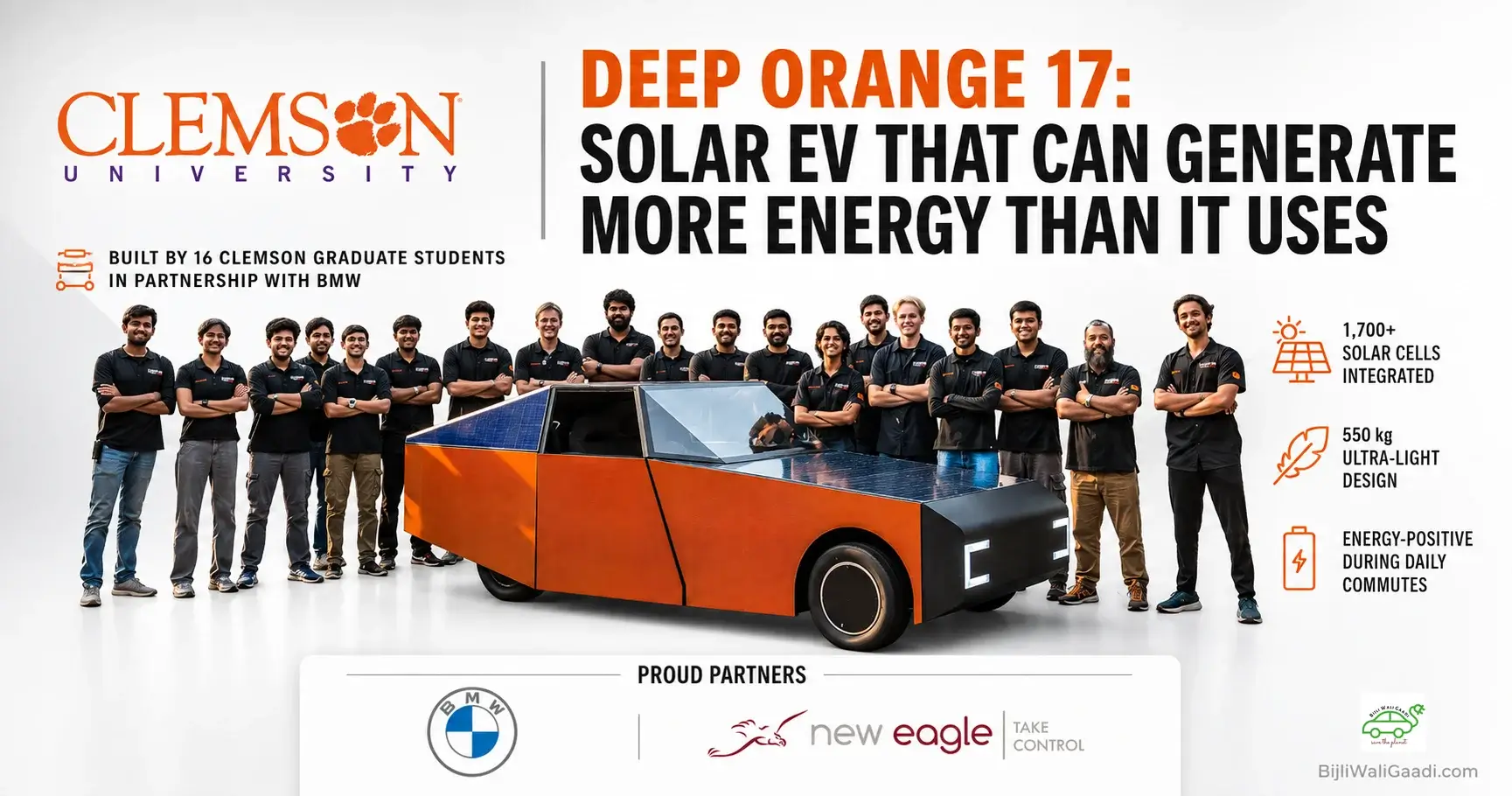
Built by 16 graduate students in partnership with BMW, Deep Orange 17 is a solar-integrated, energy-positive electric vehicle prototype designed to generate more energy than it consumes over a standard 24-hour commuting cycle. The engineering logic behind it — combining solar generation with extreme weight reduction and efficiency — is worth understanding on its own terms.
What Deep Orange 17 Is and Who Built It
Deep Orange 17 is the seventeenth project in Clemson’s Deep Orange program, in which automotive engineering graduate students take a concept vehicle from initial research through to a fully functional prototype, working alongside an industry sponsor. Working closely with BMW, the team set out to explore whether an electric vehicle could generate more energy than it consumes during everyday commuting. BMW is a long-standing industry partner of Clemson’s Deep Orange program and the primary sponsor of Deep Orange 17.
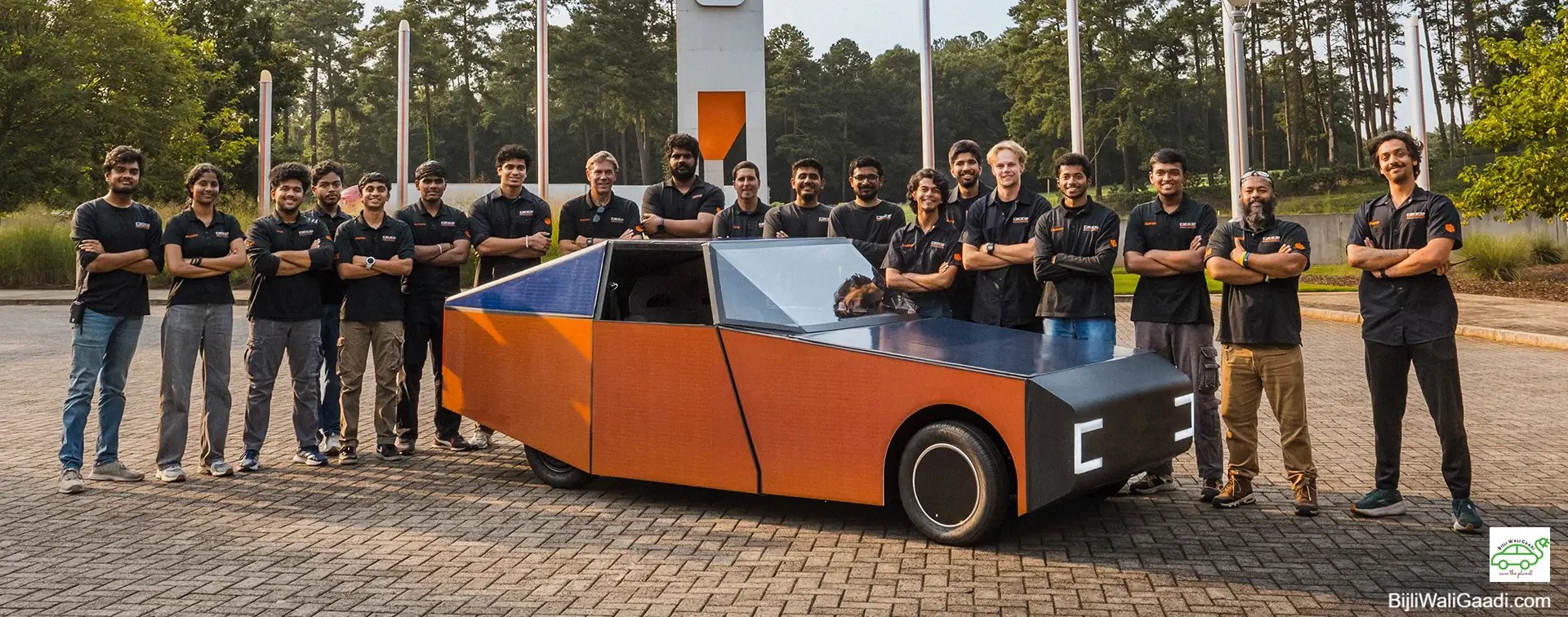
The finished two-door coupe, named Luminetta, was unveiled in August 2026 and is scheduled to appear at CES 2027 in Las Vegas. Deep Orange 17 is a prototype, and Clemson’s current project information points to continued research at CU-ICAR rather than a production launch.
How Deep Orange 17 Integrates Solar Power Into the EV Design
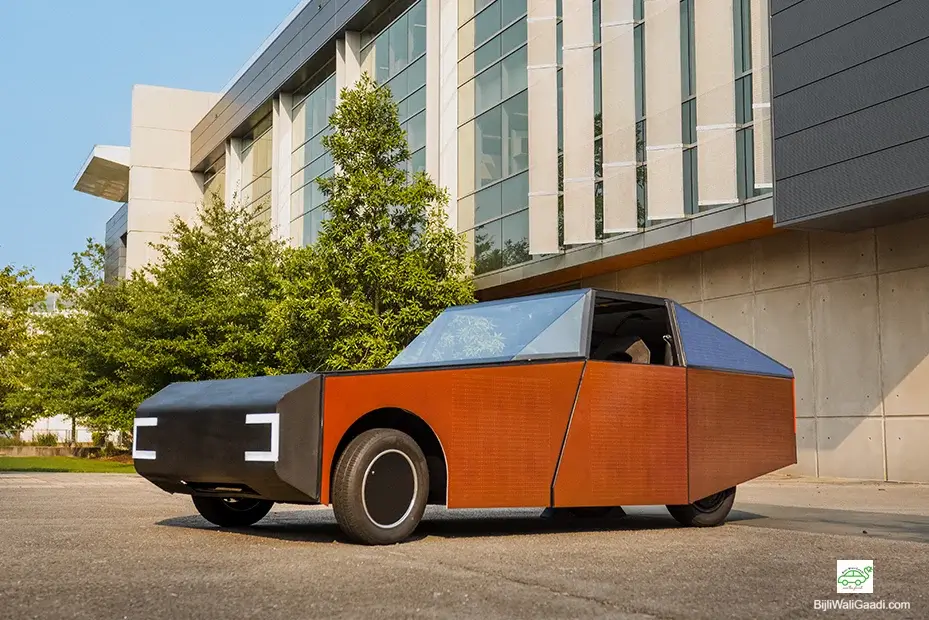
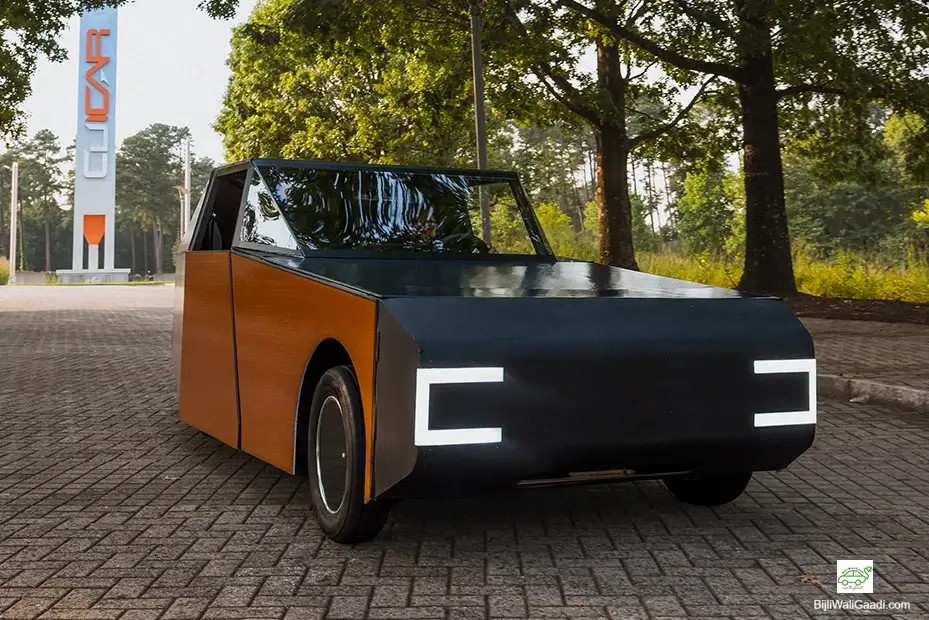
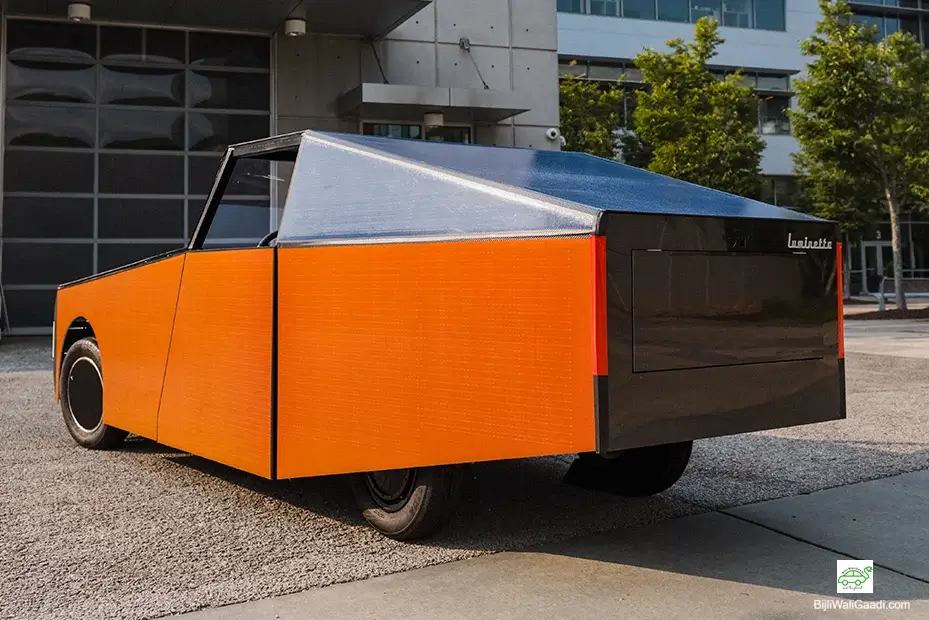
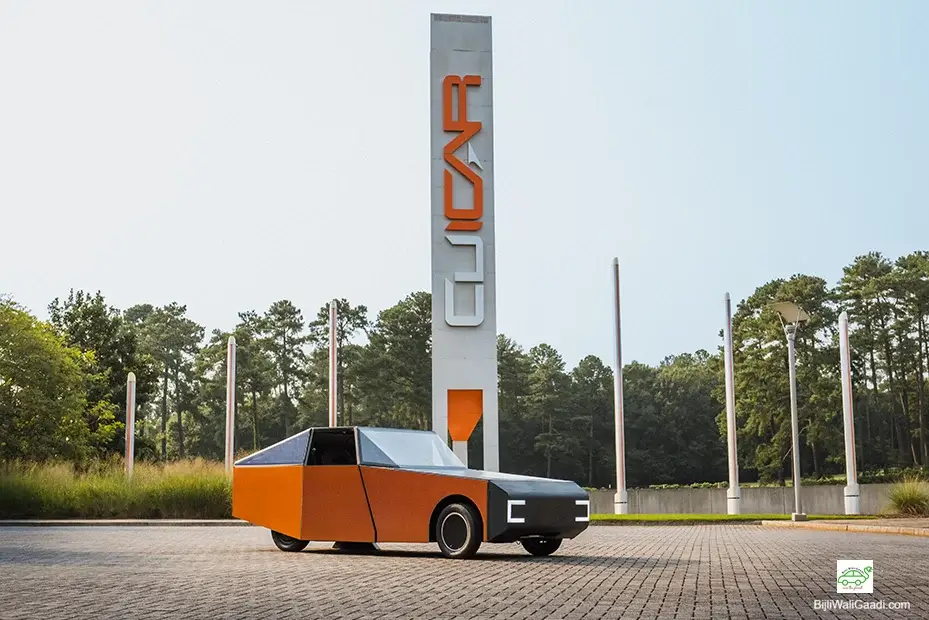
The distinguishing choice behind Deep Orange 17 isn’t that it has solar panels — it’s where solar generation sits in the design process. Rather than adding panels as an accessory, Clemson’s team treated solar as a core part of the propulsion strategy from the start.
More than 1,700 photovoltaic cells (1,781, per Clemson’s project page) are built directly into the vehicle’s exterior body panels, developed in collaboration with the Fraunhofer Institute for Solar Energy Systems. This lets the car harvest sunlight both while parked and while being driven, since most passenger cars spend the majority of their time sitting still, not moving. The panels are also engineered to keep generating power even when part of the array is shaded — a detail that matters more on a real street lined with trees or buildings than in a lab.
Deep Orange 17 Pairs Solar Power With Lightweight EV Engineering
Solar cells alone don’t make a vehicle energy-positive — a heavy, aerodynamically inefficient EV could carry the same panels and still lose the energy math. Deep Orange 17’s real engineering achievement is treating efficiency as a multiplier for its solar system rather than a separate problem.
The prototype weighs just 550 kilograms (1,212 lbs) — approximately one-fourth the weight of many similarly sized production vehicles — using a multi-material structure of steel, aluminum, carbon fiber and 3D-printed metal joints. Its exterior draws inspiration from the boxfish, a form Clemson’s team used as part of its aerodynamic design approach. Regenerative braking, intelligent torque distribution and tuned drivetrain controls complete the picture.
| Deep Orange 17 Feature | Why It Matters for Future EVs |
| Solar cells integrated into body panels | Makes energy generation part of the vehicle’s core design, not an accessory |
| 550 kg curb weight (~1/4 of a comparable production vehicle) | Lowers energy demand, so the same solar input covers a larger share of it |
| Generation continues under partial shading | Reflects real parking and street conditions, not just lab sunlight |
| Modeled across four cities and climates | Suggests the underlying concept isn’t limited to one location |
Deep Orange 17 Modeling Shows 50 km of Average Surplus Range Across Four Cities
Clemson’s team modeled the vehicle’s solar performance in four cities with very different sunlight profiles: Greenville, South Carolina; Frankfurt, Germany; Madrid, Spain; and Mumbai, India. Assuming a daily commute of 12 miles (20 km), the modeling showed enough surplus solar energy to correspond to an average of 31 miles (50 km) of additional driving range across the four locations.
This is a modeled additional-range equivalent tied to a specific 20 km daily commute assumption — not a measured real-world daily range, and not guaranteed for every driver. It shows that, under those conditions, Deep Orange 17 generates more energy than it uses on a typical day; it does not mean the car never needs external charging. The project demonstrates that energy-positive mobility is achievable under modeled conditions, not that solar energy universally replaces plugging in.
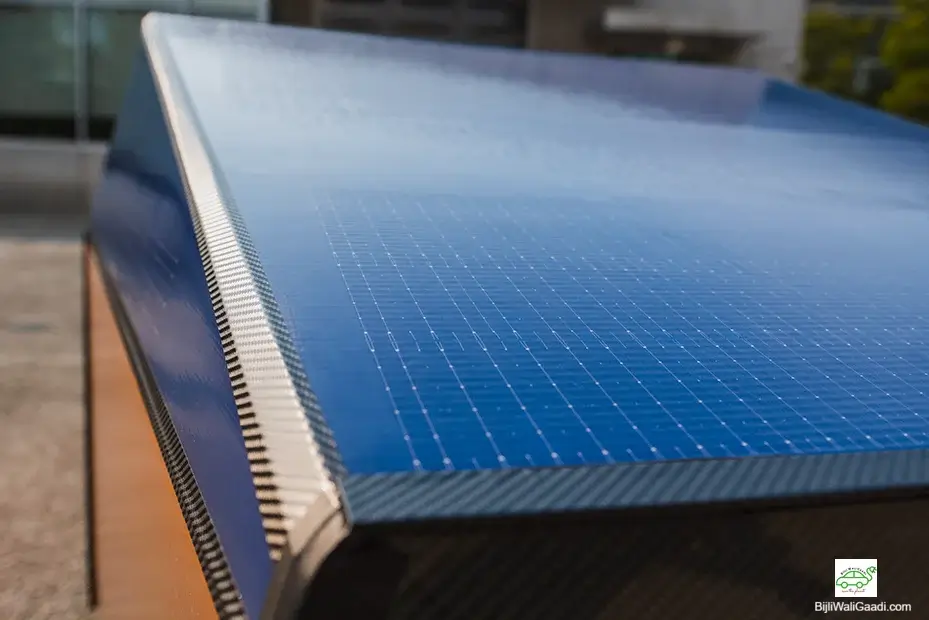
What Deep Orange 17’s Mumbai Modeling Means for Indian EVs
Mumbai makes the project especially interesting for Indian EV readers because Clemson included the city in its solar-performance modeling. The result does not prove that the same vehicle would deliver identical performance on Indian roads, but it does raise useful questions about lightweight EVs, integrated solar generation and short urban commutes.
For Indian EV engineers, the more useful takeaway is not a ready-made blueprint but a set of design questions: Could future EVs be made meaningfully lighter? Could exterior solar integration offset a measurable share of short urban trips? And could vehicle efficiency be designed around actual parking and commuting patterns rather than standardized test cycles?
What Deep Orange 17 Could Mean for Future EV Charging and Design
Deep Orange 17‘s stated next step is continued research at CU-ICAR and a planned appearance at CES 2027, not a manufacturing timeline. But the question it puts in front of the industry is one every EV buyer has a stake in: does the next real gain in EV usability come from ever-larger battery packs, or from vehicles engineered to be dramatically lighter, more aerodynamic, and able to generate a meaningful share of their own energy?
The project doesn’t settle that question industry-wide. It does show, with a working prototype and modeled energy performance across four cities, that the second path is technically achievable when solar generation, weight and aerodynamics are engineered together rather than treated separately. Industry partner New Eagle provided the hardware and software platforms, including the RCM112 ECU, that enabled the student engineering team to design and validate model-based powertrain controls, develop embedded software, and implement CAN network integration.
Why Clemson’s Deep Orange Program Matters Beyond This One Car
Deep Orange isn’t a one-off stunt — it’s Clemson’s ongoing model for testing unconventional vehicle ideas with an industry partner absorbing the cost and risk before any production decision. BMW‘s involvement makes that structure arguably as significant as the car itself: automakers don’t need to commit a model line to an idea like energy-positive mobility just to find out whether it holds up. A university partnership can pressure-test it first, with real engineering constraints and a working prototype at the end.
Conclusion
Deep Orange 17 isn’t proof that solar panels will replace EV charging. It’s evidence that when solar generation, weight reduction and aerodynamics are engineered together — rather than bolted on separately — a vehicle can meaningfully offset its own daily energy use, at least under the modeled conditions Clemson tested. As battery costs and charging infrastructure remain central to the global EV conversation, that combination is a genuinely different engineering direction worth watching — in India and elsewhere.
Credit: images used into this article are sourced from Clemson University official website.
Stay connected via Google 'Electric Vehicle' News
Follow BijliWaliGaadi | India's Trusted EV Insights Portal
source on Google