Electric Motorcycles Are Getting Gearboxes Again, and the Tech Comes Straight From MotoGP
Stay connected via Google 'Electric Vehicle' News
Follow BijliWaliGaadi | India's Trusted EV Insights Portal
source on Google
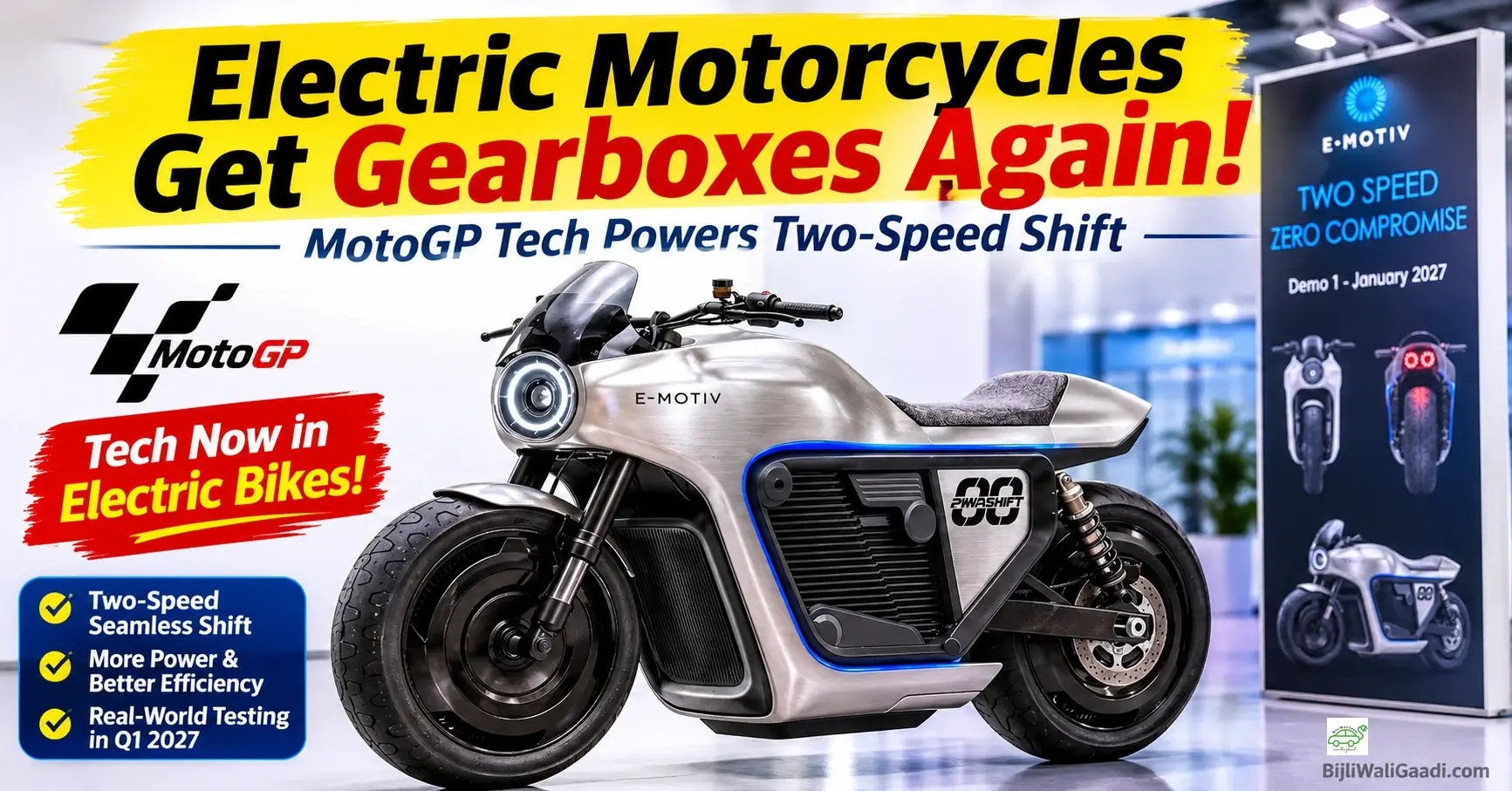
Electric motorcycles may soon get something riders thought they had left behind: gears. British company E-Motiv Shift Systems is showing a two-speed seamless powershift transmission for electric motorcycles at EICMA 2026 in Milan. Its roots lie in technology that has raced in MotoGP since 2015. The promise is simple: real gear ratios without interrupting the flow of torque to the rear wheel.
Quick Take-away: E-Motiv’s two-speed seamless powershift transmission lets an electric motorcycle change ratio without interrupting drive. A demonstrator bike called Demo 1 begins real-world testing in the first quarter of 2027.
What Is E-Motiv’s Two-Speed Seamless Powershift Transmission?
It is a compact, patented two-ratio transmission designed for light electric vehicles, including electric motorcycles. E-Motiv, based in Milton Keynes in the U.K., says it shifts without interrupting torque. That could mean stronger acceleration and improved efficiency. It was shown at EICMA 2026 in Milan, November 3 to 8.
Why Most Electric Motorcycles Use a Single-Speed Drive
Most electric motorcycles rely on a single-speed transmission and the broad torque of the electric motor. It handles everything from pulling away at traffic lights to highway cruising. The appeal is simplicity: no clutch, no complicated shifting mechanism and fewer moving parts to wear out. That means lower maintenance, fewer potential failure points and, generally, less money spent on the machine.
The trade-off is that one fixed ratio must cover every riding condition. E-Motiv’s pitch: shorter-gearing punch off the line, plus a taller ratio when the road opens up.
How a Seamless Powershift Keeps Torque Flowing During a Gear Change
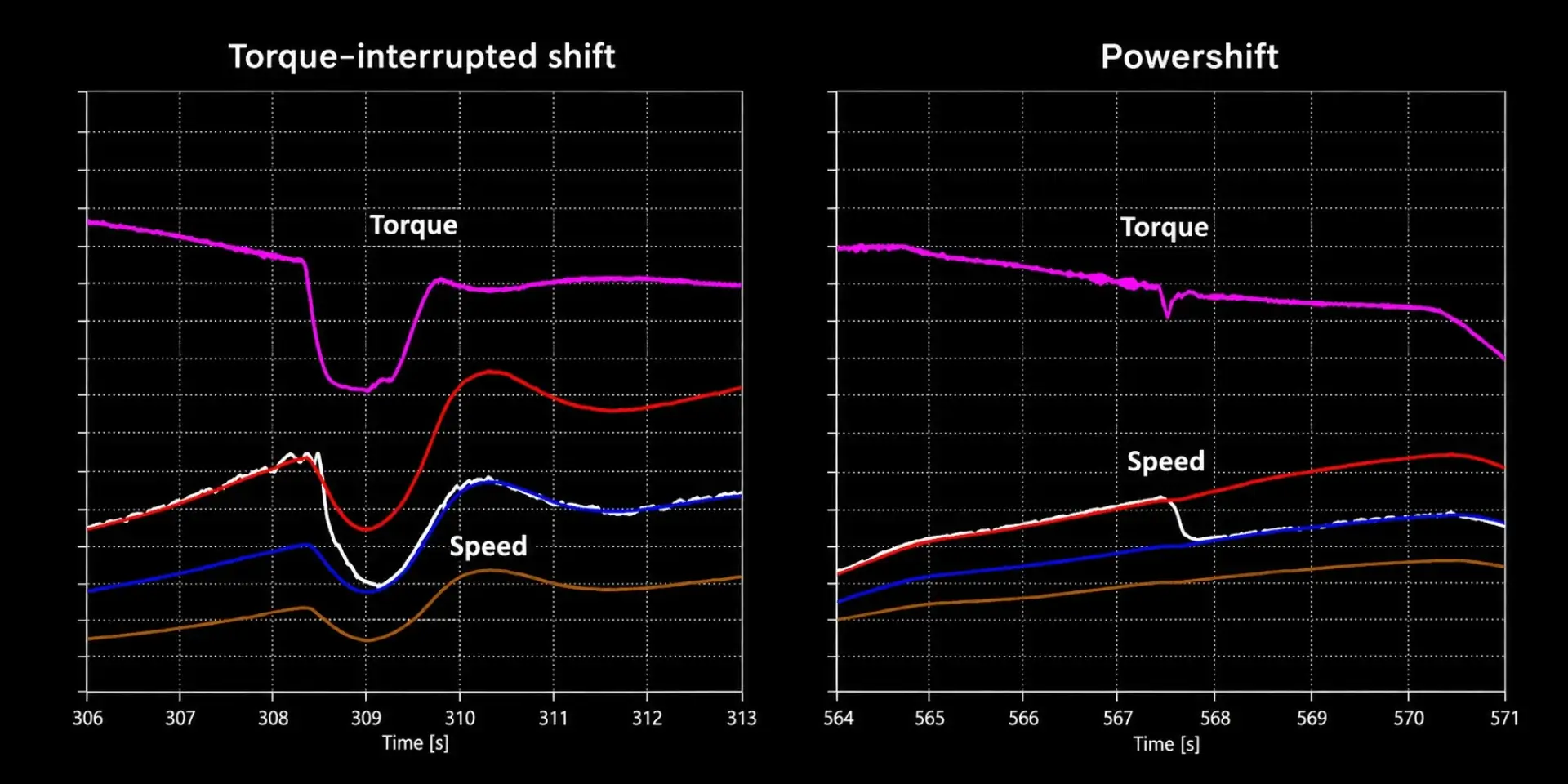
A conventional gear change briefly interrupts power. A powershift avoids that gap.
The underlying principle uses specially designed dog-engagement rings. They let the second gear take over before the first has completely disengaged. The next ratio is already engaged and ready to assume the load, which removes the small delay in torque delivery found in conventional shifts. In the words of E-Motiv’s managing director, Tony Inchbold, the architecture is designed to “maintain drive through a ratio change.”
How Aprilia’s MotoGP Technology Became an Electric Motorcycle Gearbox
The EV system builds on the Zeroshift seamless selector gearing system for combustion engines, which originated almost 25 years ago. Aprilia Racing integrated that first-generation technology into its RS-GP MotoGP bike in 2015. According to E-Motiv, the team has since taken more than 30 podium finishes, including a 1-2-3 result at the Silverstone Grand Prix in July 2026.
E-Motiv designed and developed the patented powershift technology for light EV applications.
What a Second Gear Could Do for Electric Motor Performance and Efficiency
The benefit is not just a combustion-like riding feel. Two ratios could let engineers keep the electric motor closer to its optimum operating range. If the technology delivers, that means stronger acceleration at low speeds and more relaxed, potentially more efficient running at higher speeds. These are stated goals for a demonstrator-stage system, not measured production figures.
How Manufacturers Can Tune Shift Character for Touring and Performance Bikes
E-Motiv says manufacturers can tailor the transmission to different machines and riding styles. The same technology could suit different motorcycles, with shift behaviour matched to duty cycle and market position. That might mean smoother transitions for a touring motorcycle or sharper, more aggressive responses for a performance-focused one.
Demo 1 Electric Motorcycle: Design, Build and Testing Timeline
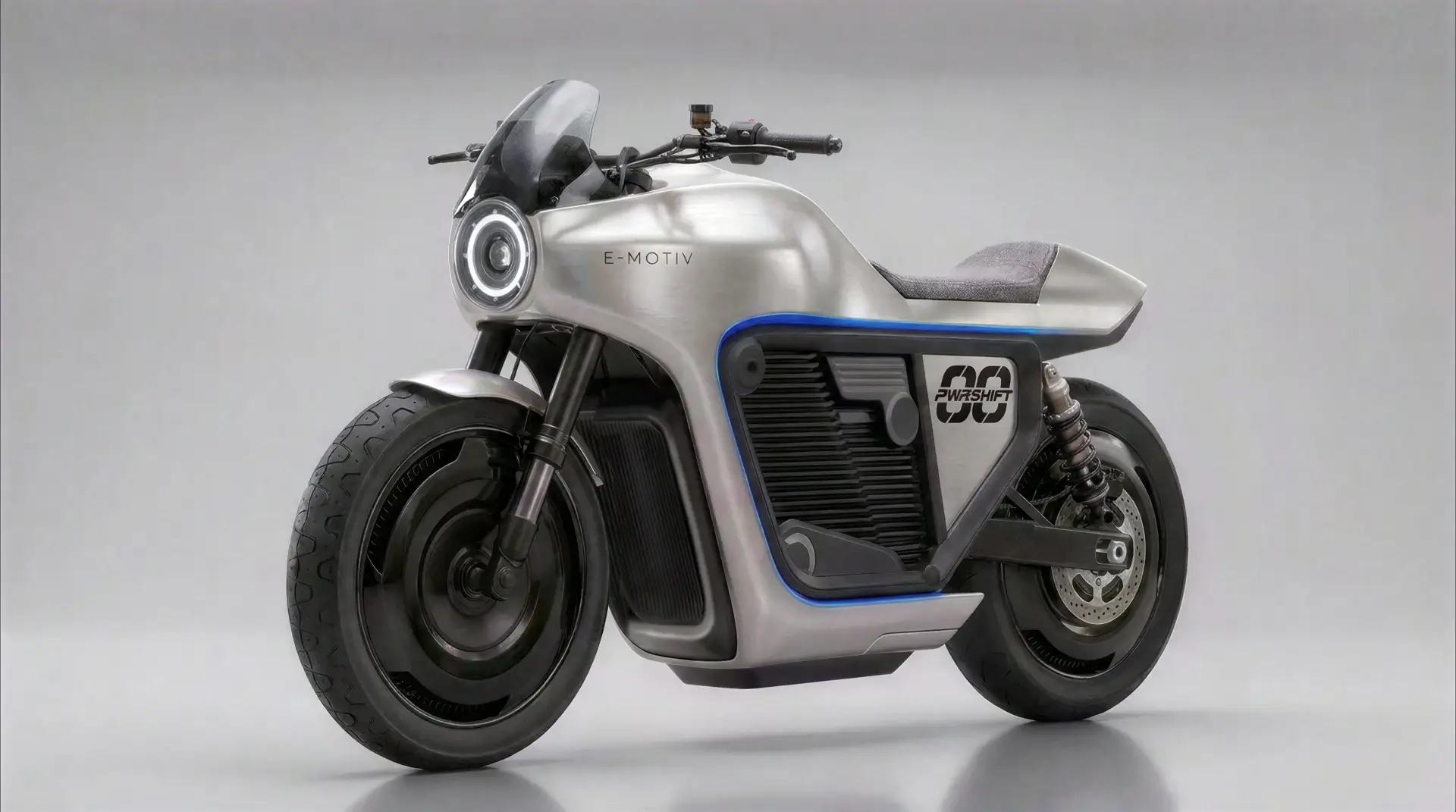
Demo 1 is the demonstrator bike built around the transmission. British design and realization consultancy Envisage conceived it, and IAAPS is building it at its £77 million ($102.9 million), 121,600-square-foot (11,300 sq m) research and innovation facility in the U.K.
- Now: Prototype shown at EICMA 2026, Stand S79, Hall 9
- January 2027: Seamless Shift demonstrator arrives, according to E-Motiv’s display
- Q1 2027: Real-world testing begins
E-Motiv’s display notes that demonstrations are by trade booking only.
Who Is Behind the E-Motiv Two-Speed Transmission Project?
The technology was validated through a £1 million ($1.34 million) grant project funded by the U.K. government’s Innovate UK Design and Build initiative. E-Motiv worked with motorcycle manufacturer BSA, the University of Bath and the Institute of Advanced Automotive Propulsion Systems (IAAPS). The system is still to be proven on the road.
Could Multi-Speed Transmissions Reach Electric Cars Next?
Electric cars face the same compromise between quick launches and highway efficiency. A well-executed multi-speed setup could help, particularly where long-distance highway driving is common. E-Motiv’s focus is light electric vehicles, so car use remains speculation.
Frequently Asked Questions
Stay connected via Google 'Electric Vehicle' News
Follow BijliWaliGaadi | India's Trusted EV Insights Portal
source on Google