Kawasaki’s Hydrogen Powered ICE Motorcycle: Inside the HySE Project
Stay connected via Google 'Electric Vehicle' News
Follow BijliWaliGaadi | India's Trusted EV Insights Portal
source on Google
hydrogen powered ICE motorcycle | Kawasaki hydrogen motorcycle | hydrogen ICE motorcycle | H2-ICE motorcycle | hydrogen powered motorcycle
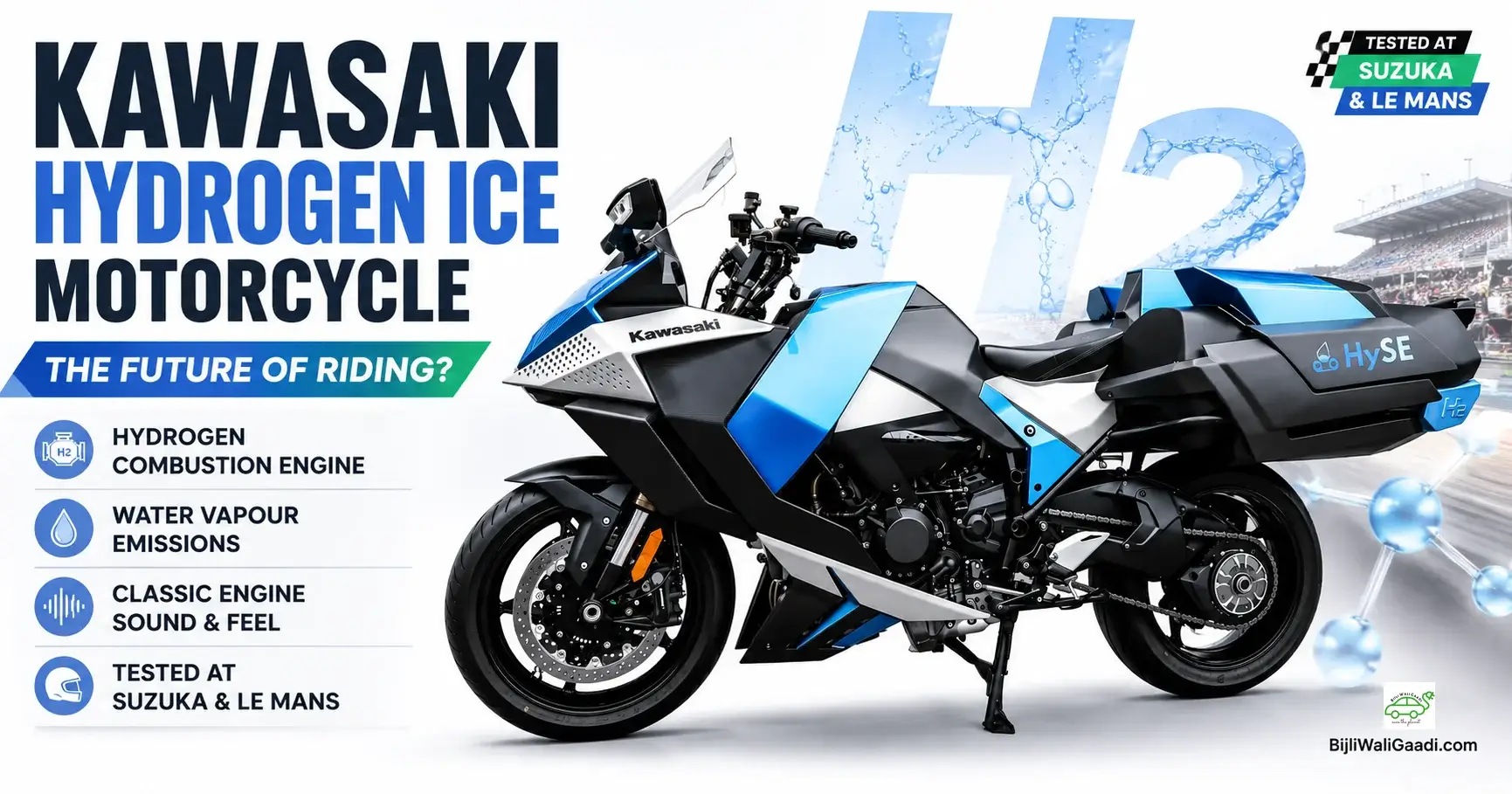
A Ninja H2-derived (a hydrogen powered ICE motorcycle), supercharged four-cylinder engine is burning hydrogen instead of petrol, and it’s already moved from the test bench to public tarmac — first at Suzuka Circuit, then at the Le Mans 24 Hours. This is Kawasaki‘s hydrogen-powered ICE motorcycle, one of the clearest demonstrations yet of hydrogen combustion applied to a two-wheeled vehicle.
Kawasaki Motors, part of the Kawasaki Heavy Industries Group, ran the machine publicly at Suzuka in July 2024, calling it the world’s first public demonstration run of a hydrogen ICE (internal combustion engine) motorcycle by a mass-production manufacturer. In April 2025, a HySE research prototype built on the same approach appeared at Le Mans, ridden by test pilot Matthias Hoeppner.
This project is sometimes mistakenly linked to Mitsubishi. It isn’t — neither Mitsubishi Motors nor Mitsubishi Heavy Industries has any documented connection here; the engineering and HySE research belong entirely to Kawasaki.
What Is the Kawasaki Hydrogen ICE Motorcycle?
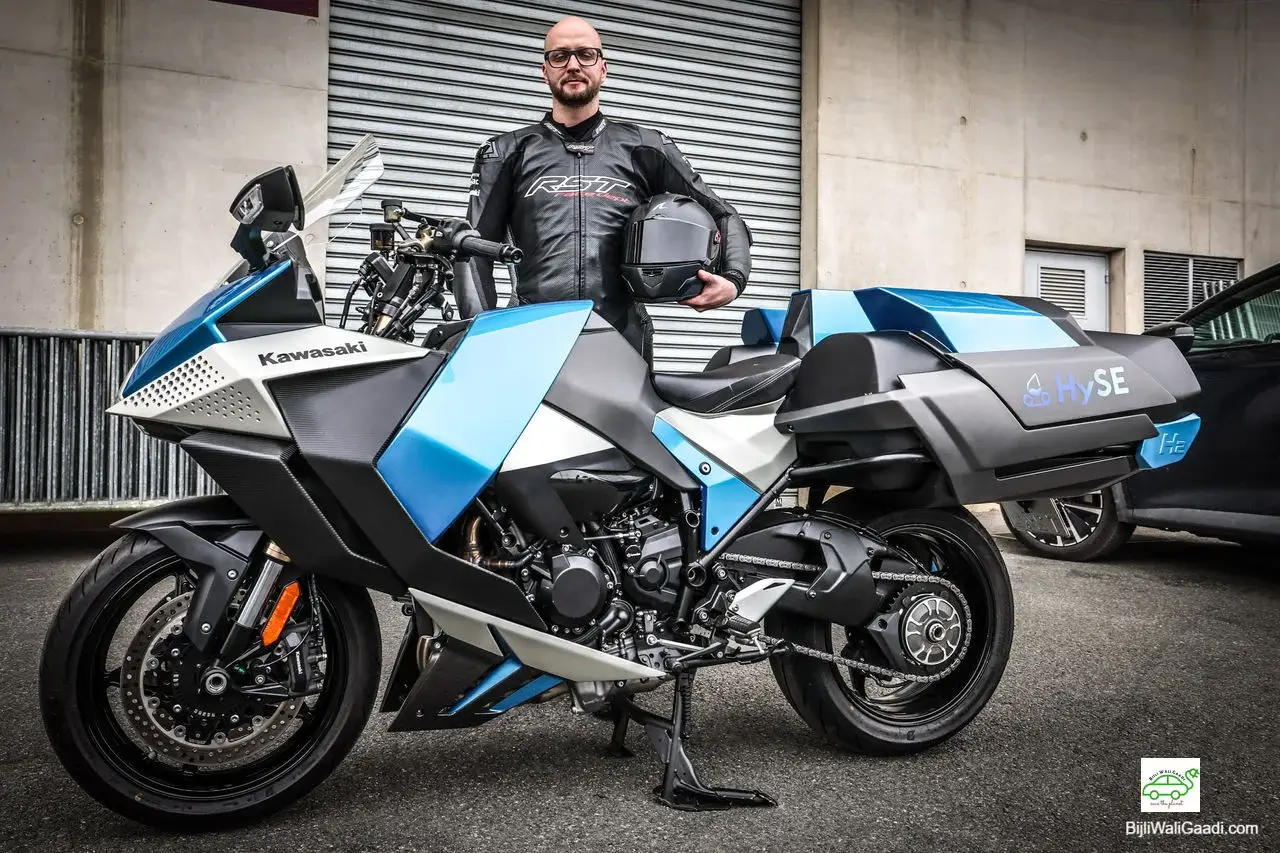
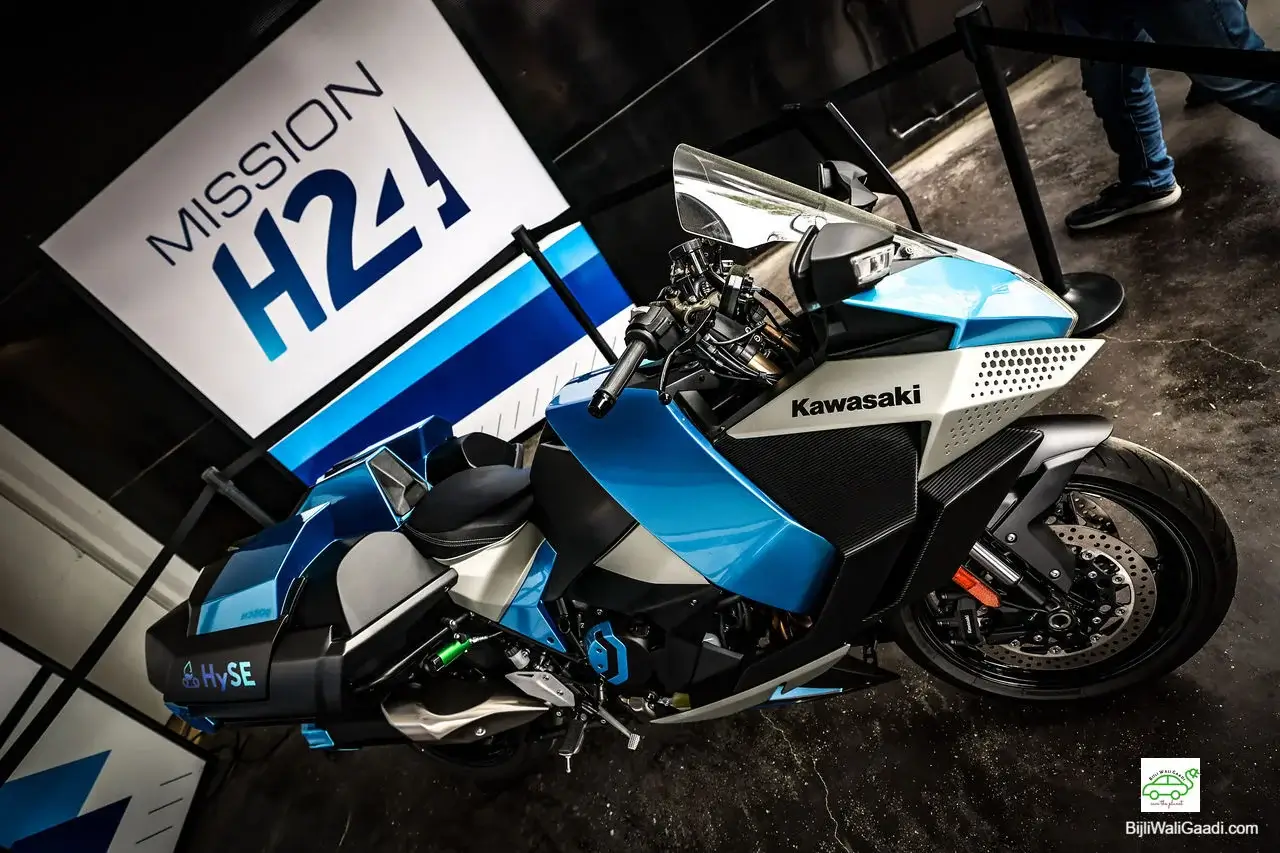
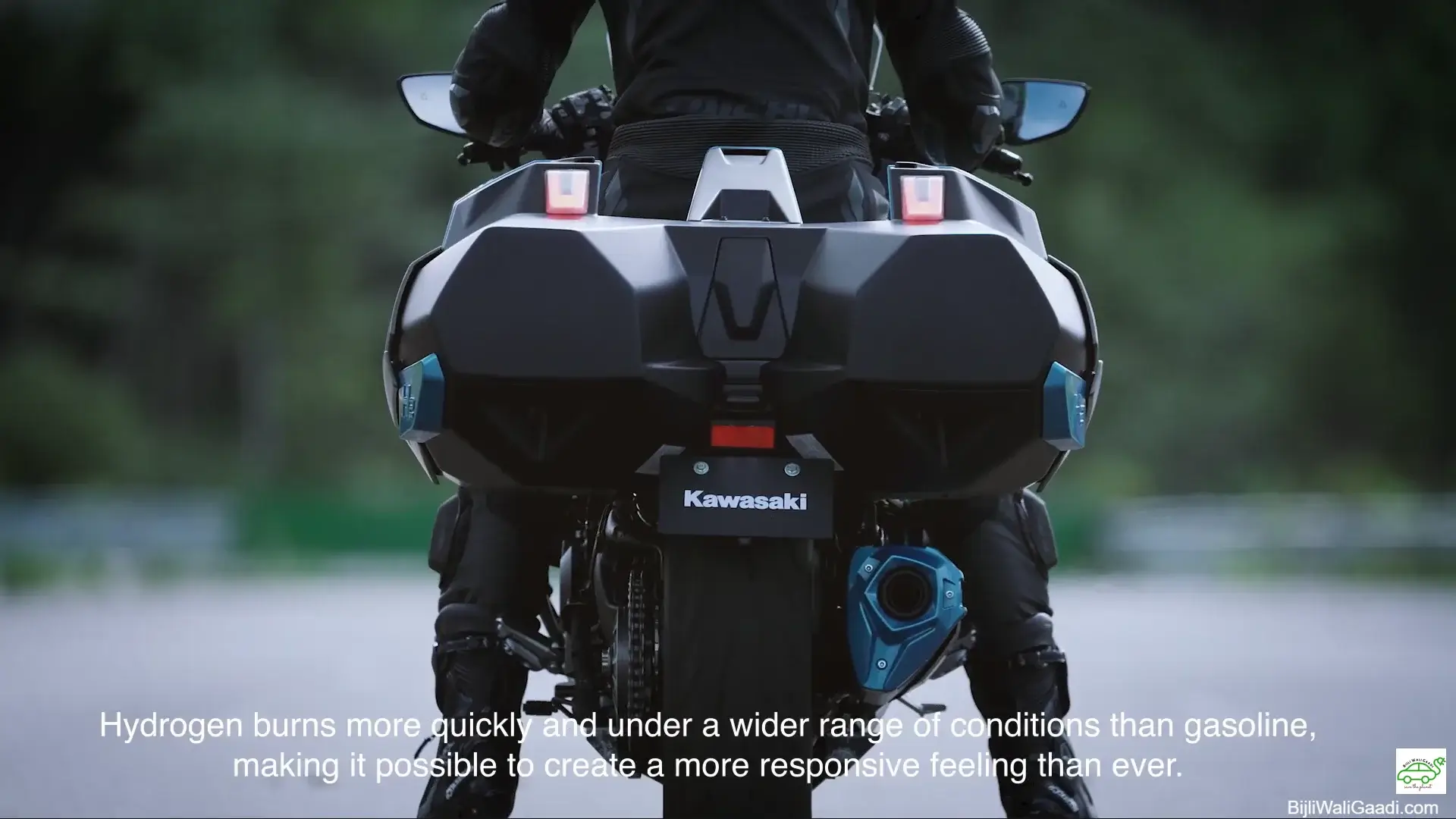
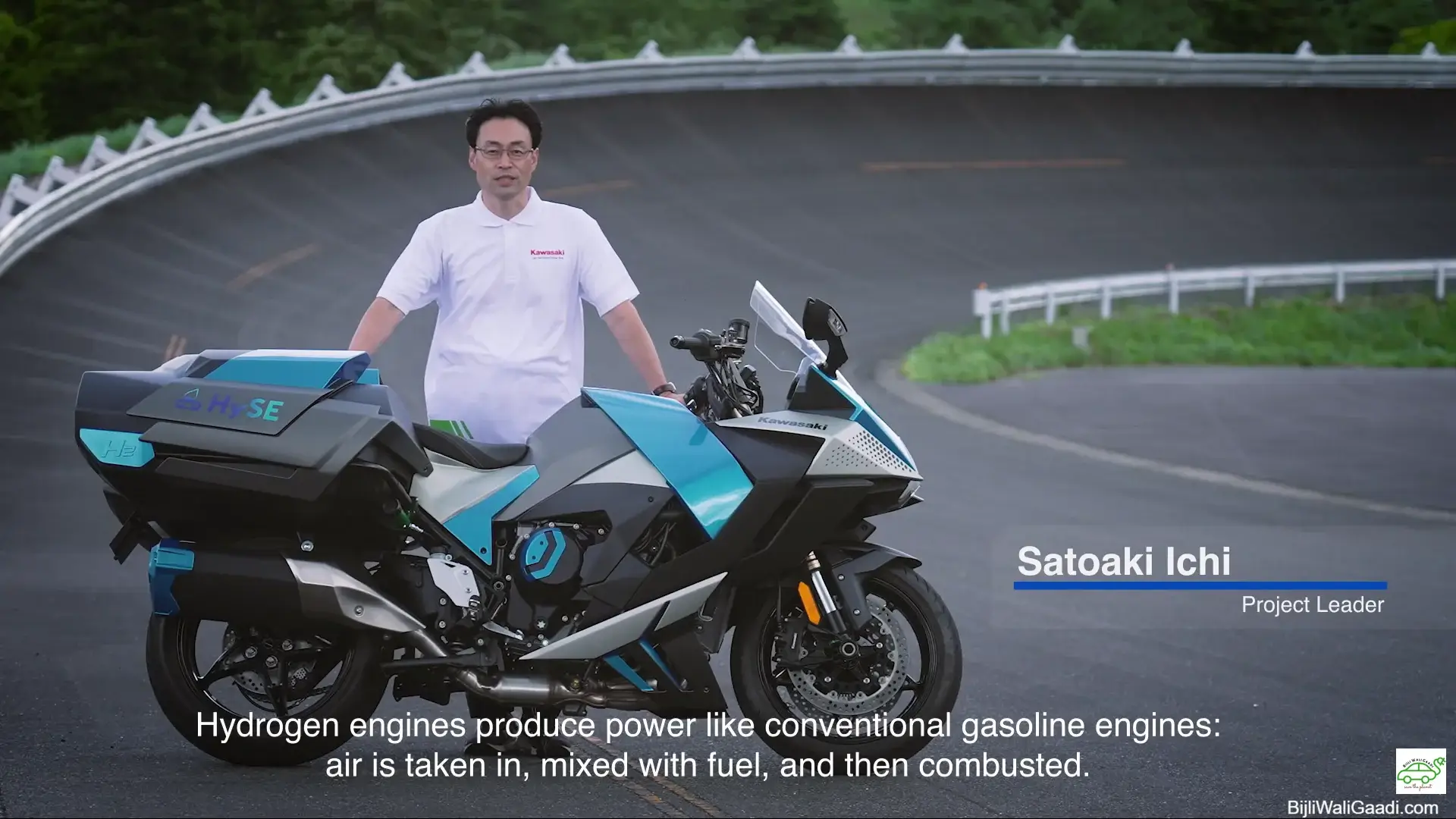
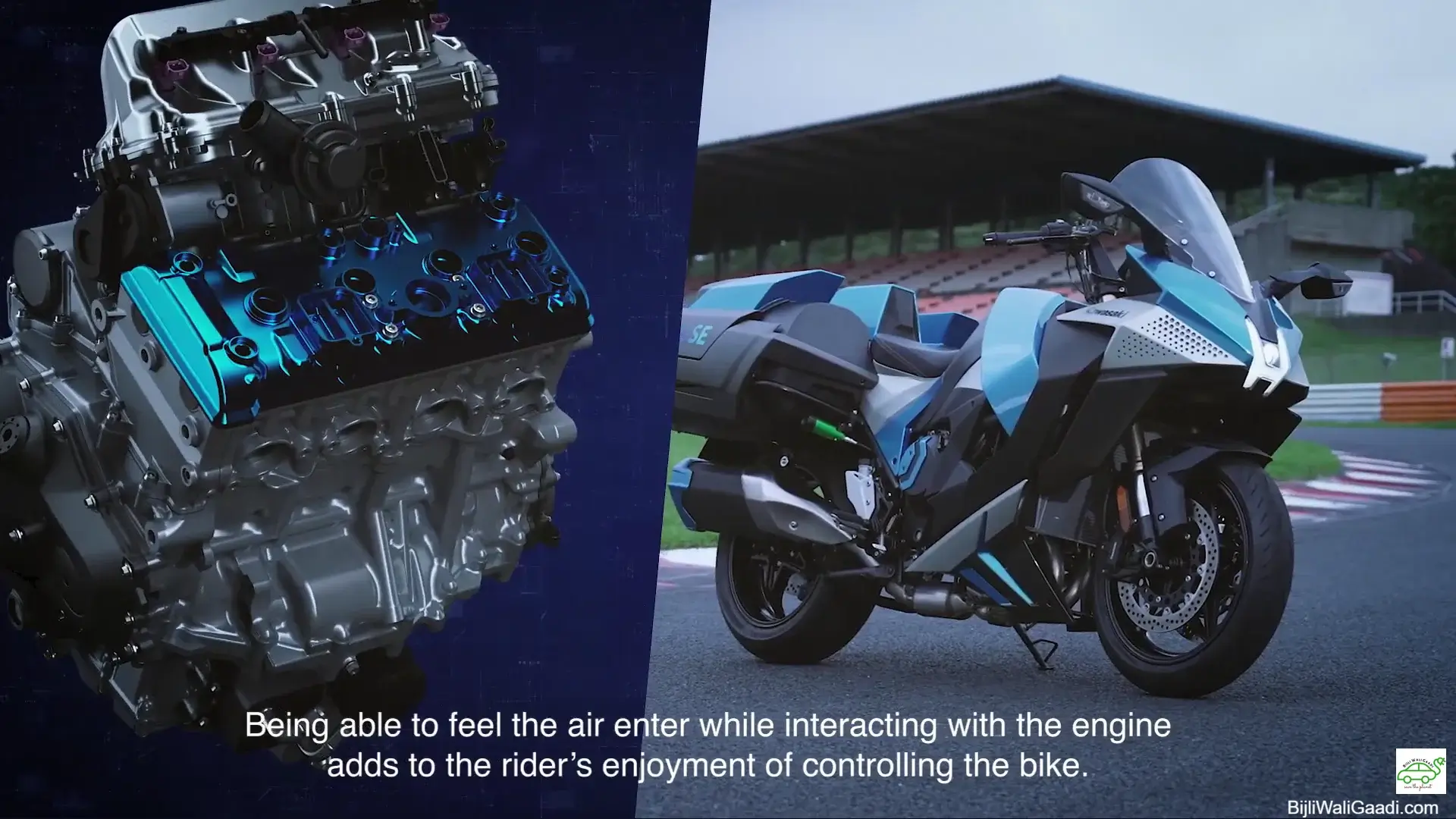
It’s a running prototype that burns hydrogen inside a modified internal-combustion engine, rather than relying on a battery or fuel cell. Kawasaki Motors built it around the 998cc in-line four supercharged engine from the Ninja H2, re-engineered for direct hydrogen injection, with a chassis redesigned for onboard hydrogen canisters and a fuel supply system.
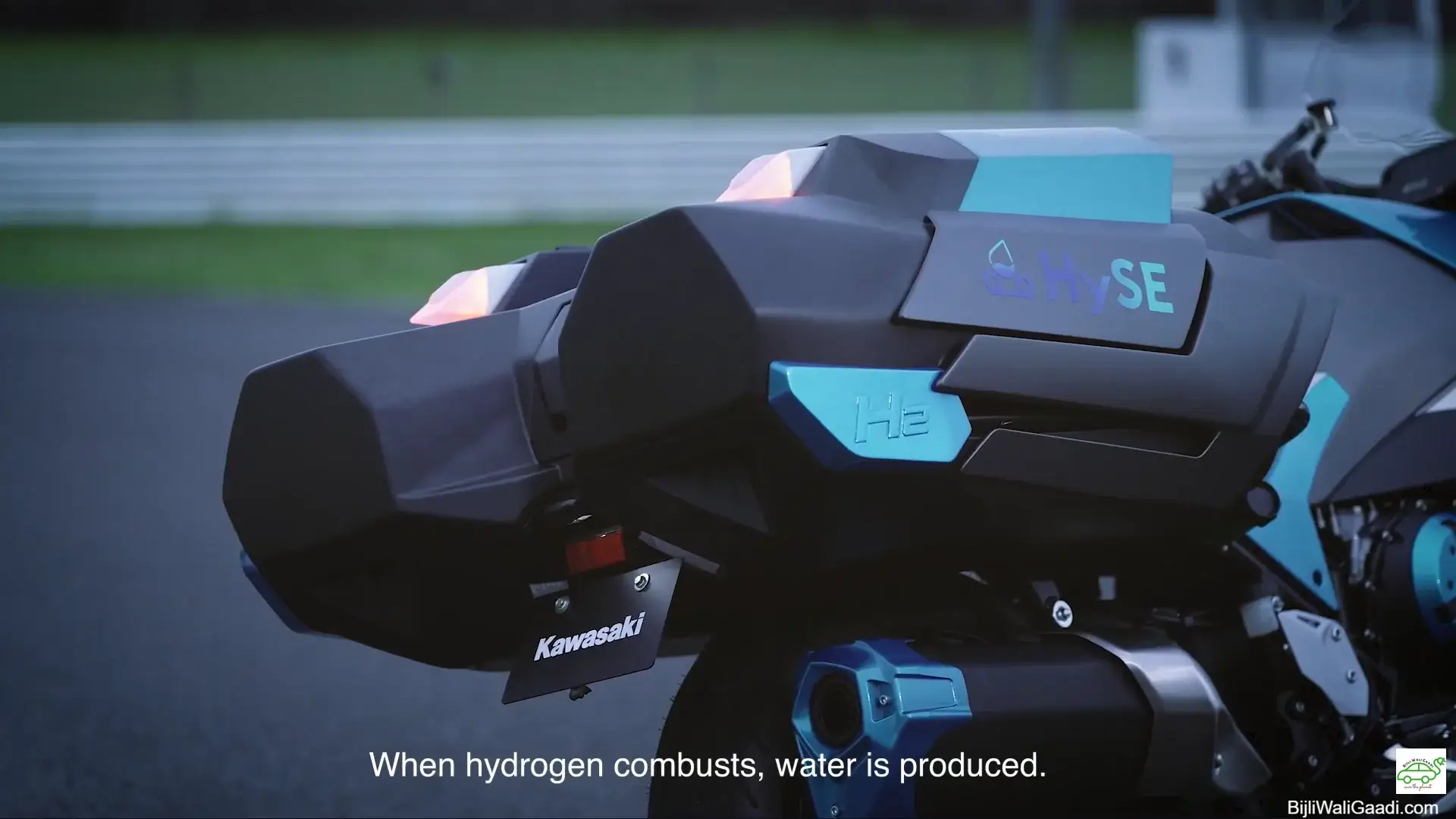
Development began in March 2023, moved into test running through 2024, and reached its first public demonstration at Suzuka that July. The Le Mans machine followed the same approach — a Ninja-based platform powered exclusively by hydrogen stored in tanks at either side of the rear.
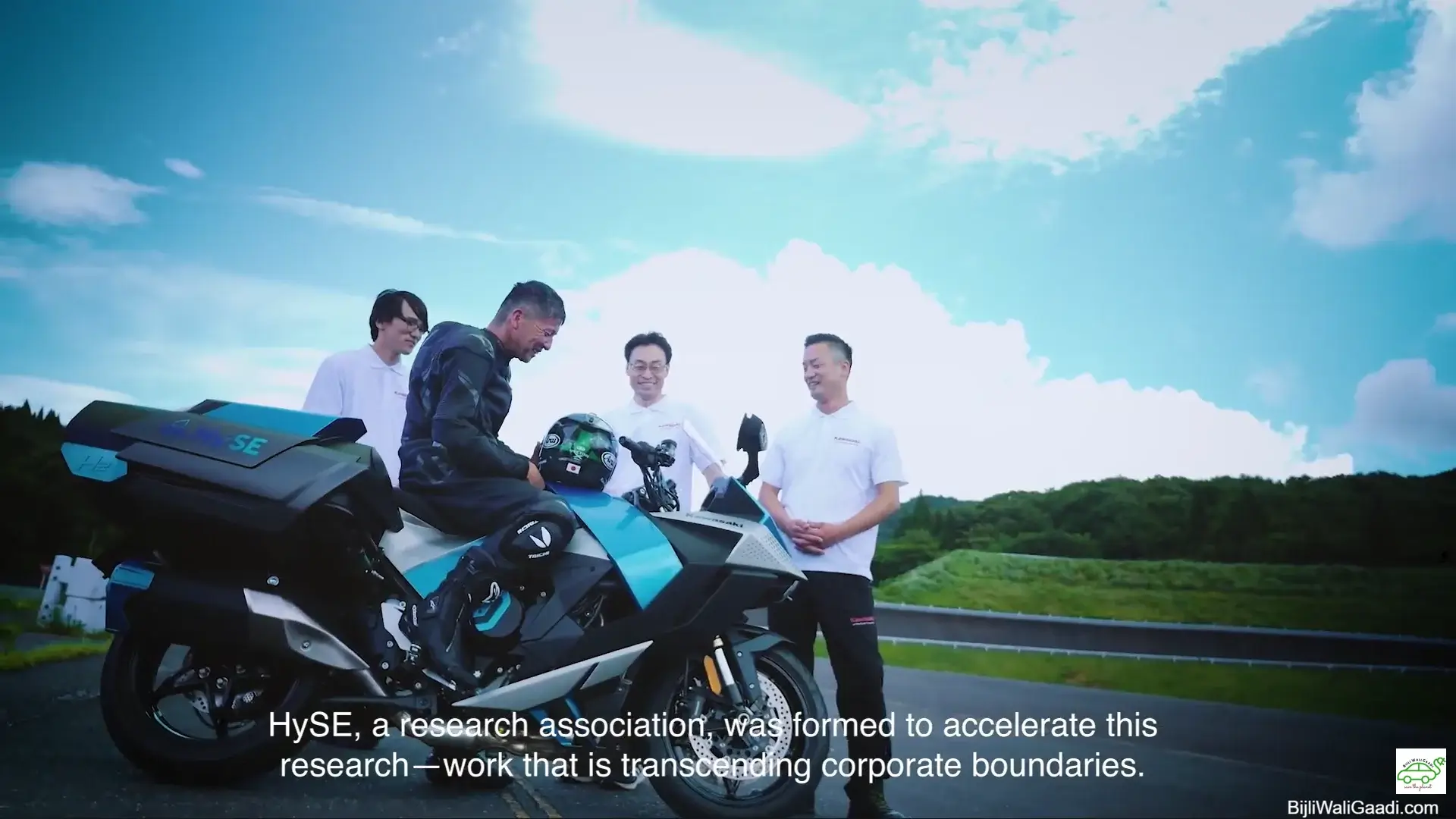
Kawasaki is a founding member of HySE (Hydrogen Small mobility & Engine technology), a Japanese research association also including Suzuki, Toyota, Honda and Yamaha, working on hydrogen engines and fuel-supply technology for small mobility.
Why Kawasaki Is Exploring Hydrogen Combustion for Motorcycles
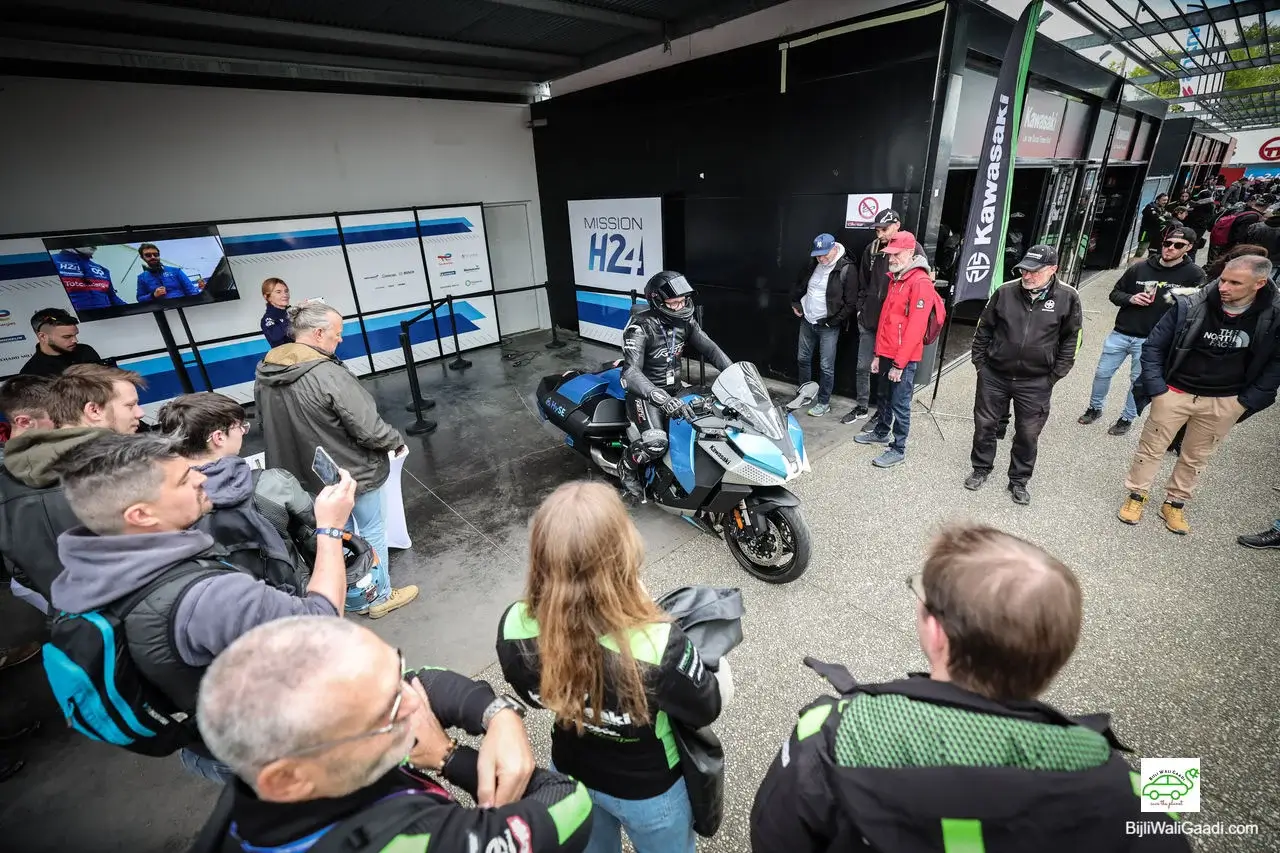
Kawasaki frames the project as one option within its carbon-neutral strategy, with a stated ambition of realizing a functioning hydrogen ICE motorcycle for riders in the early 2030s — timing that depends on hydrogen infrastructure and regulation in each market. Rather than abandon combustion, Kawasaki Motors is testing whether the rumble, throttle response and pulsating four-cylinder character of a supercharged ICE can survive a switch to hydrogen fuel — the enthusiast question at the heart of this project. Kawasaki’s demonstrations are evidence toward that goal, not proof of it; the company already sells petrol, hybrid and electric motorcycles, and a hydrogen ICE model would sit alongside those rather than replace them.
How Does a Hydrogen ICE Motorcycle Work?
A hydrogen ICE motorcycle still runs an internal-combustion drivetrain — only the fuel changes. Hydrogen gas is injected directly into the cylinders, mixes with air, and combusts, generating the pressure that drives the pistons and turns the crankshaft, delivering mechanical propulsion exactly as a petrol engine does. There’s no fuel-cell stack and no electric motor involved, though the engineering underneath is far from a drop-in swap: Kawasaki modified the Ninja H2’s engine for direct hydrogen injection and built a chassis to carry pressurised onboard canisters and a dedicated fuel-supply system, since hydrogen behaves differently in combustion and needs purpose-built hardware and storage.
Kawasaki describes the result as retaining the rumble and pulsating sensation of a combustion engine, with exhaust that is mainly water. One qualification matters: a very small amount of engine oil burns during operation, producing a very small amount of CO2, and high-temperature hydrogen combustion can also generate NOx — a known engineering consideration Kawasaki hasn’t attached a published figure to for this prototype.
What Happened During the Hydrogen Motorcycle Demonstrations?
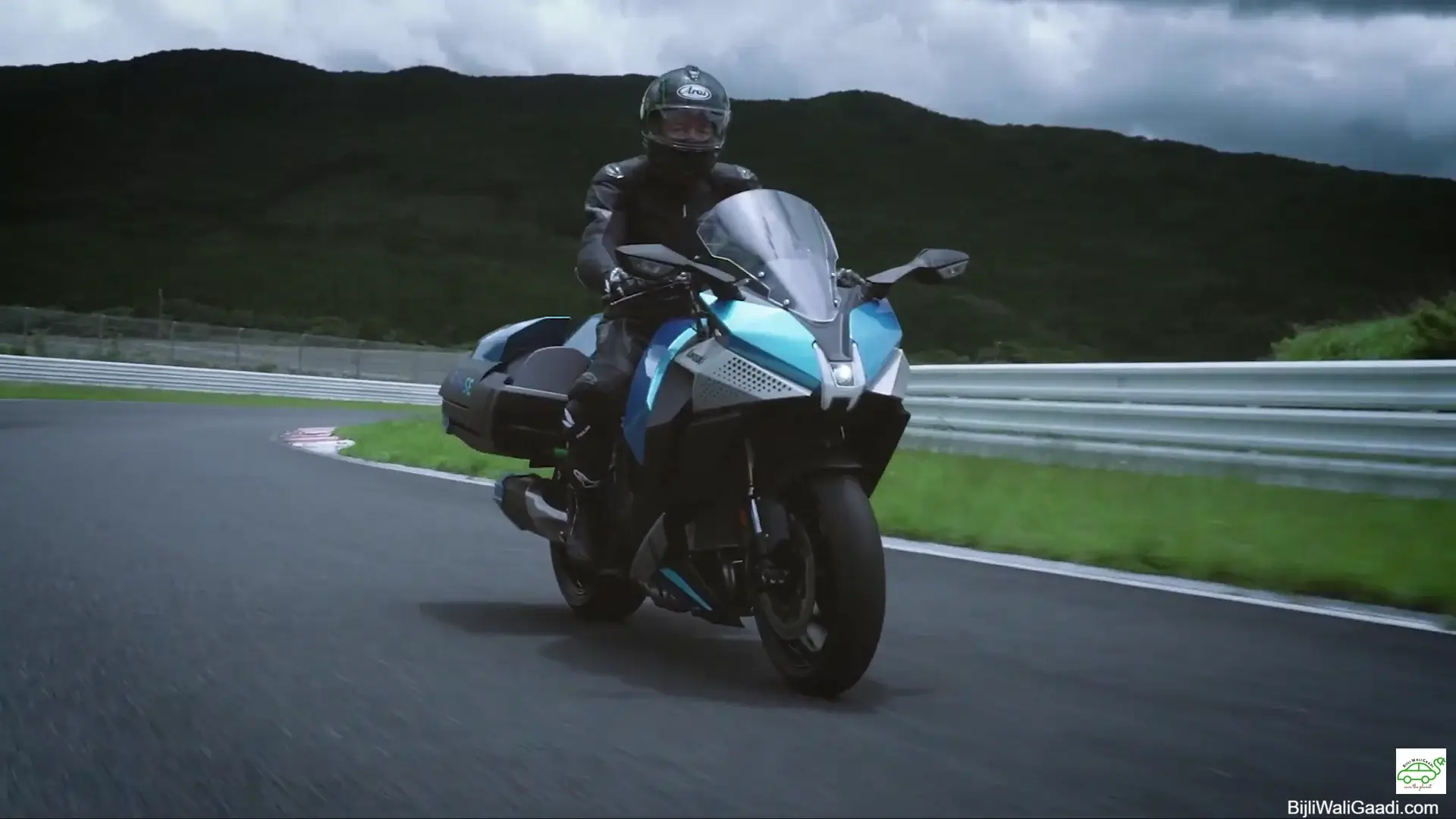
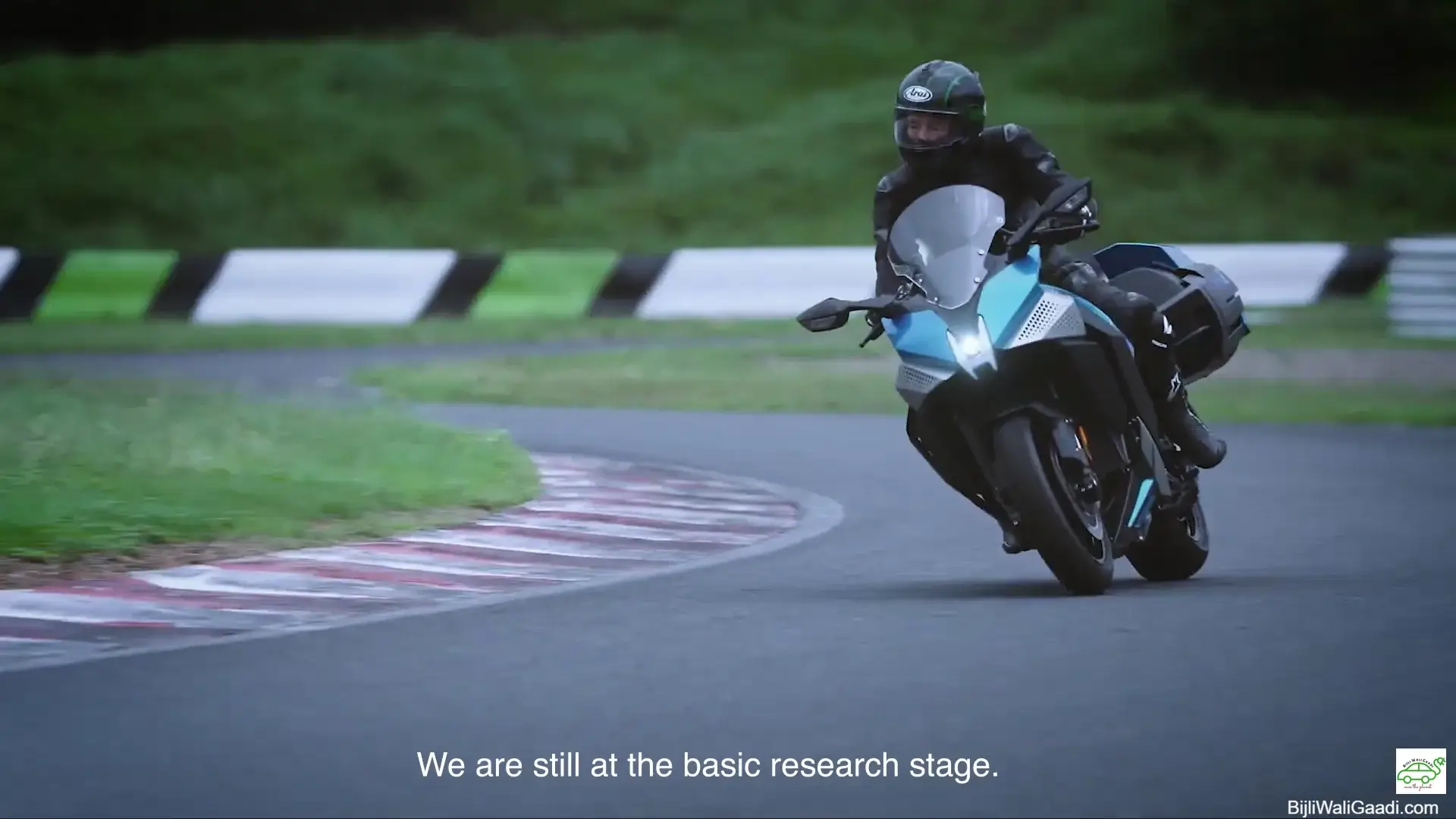
At Suzuka Circuit in July 2024, Kawasaki Motors ran the prototype on track in what it called a world-first public run by a mass-production motorcycle manufacturer, following earlier test runs at Autopolis Circuit.
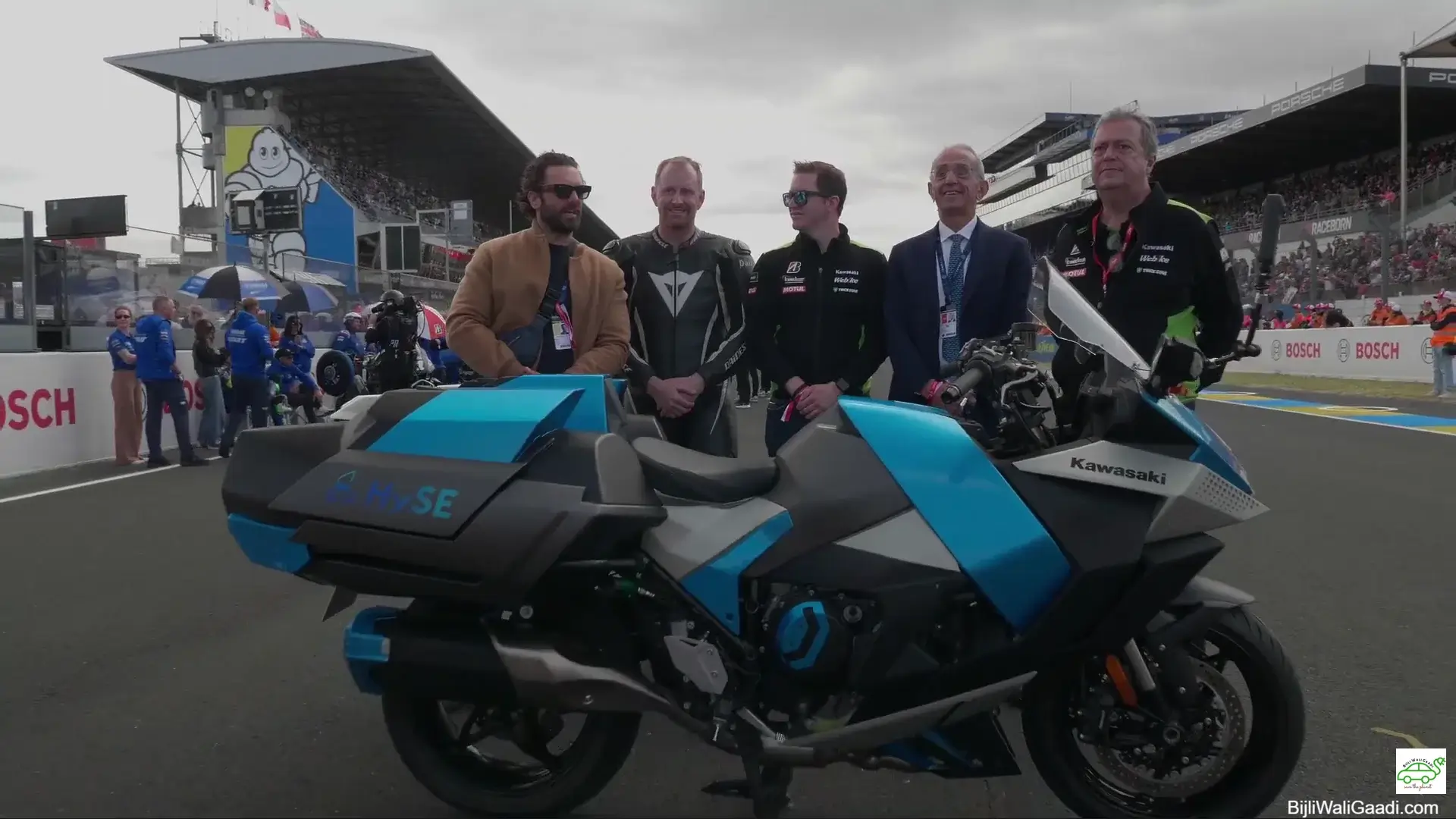
At Le Mans in April 2025, the HySE prototype appeared at the invitation of race organiser ASO, whose H24 strategy is building toward a 24-hour endurance race for electric and hydrogen-powered vehicles. Hoeppner left the pit lane roughly 15 minutes before the main race and completed a demonstration lap of the 4.13km circuit in damp conditions, watched by ASO’s Gilles Huttepain and the race’s official starter. He said the bike still gives him a thrill despite his familiarity with it, and that the lap let a large trackside and TV audience see hydrogen power applied to a motorcycle.
What Makes Hydrogen ICE Different From a Petrol Motorcycle?
The core layout stays recognisably Kawasaki; what changes is the fuel and how it’s stored. Hydrogen replaces petrol in injection and combustion, and storage moves from a conventional tank to pressurised canisters. Refuelling and fuel handling differ entirely from petrol and aren’t consumer-ready yet.
Hydrogen ICE vs Battery EV vs Fuel Cell: What Is the Difference?
| Aspect | Hydrogen ICE | Battery EV (BEV) | Hydrogen Fuel Cell (FCEV) |
| Power source | Combustion of hydrogen gas in an engine | Stored electricity in a battery | Electricity generated from hydrogen via a fuel cell |
| Drivetrain feel | Retains combustion-engine mechanics and sound | Electric motor, near-silent | Electric motor, near-silent |
| Primary emissions | Primarily water, with very small CO2 from engine-oil combustion and potential NOx | None at tailpipe | Primarily water at the tailpipe |
| Refuelling/charging | Hydrogen refuelling (infrastructure limited) | Electric charging | Hydrogen refuelling (infrastructure limited) |
| Maturity for motorcycles | Prototype/demonstration stage | Commercially available | Very limited two-wheel development |
Kawasaki’s project is explicitly hydrogen ICE, not a fuel cell — it burns hydrogen mechanically rather than converting it to electricity, and shouldn’t be described as an FCEV.
What Are the Biggest Challenges for Hydrogen Motorcycles?
Packaging pressurised hydrogen tanks within a motorcycle’s limited chassis space is a persistent constraint, and refuelling infrastructure remains sparse compared with petrol or EV charging. Hydrogen production, storage and transport add cost, engineers must manage NOx formation and component durability, and regulators still need to define onboard storage and safety standards.
Could Hydrogen ICE Motorcycles Reach Production?
Not yet. What exists today is a research prototype that has completed public demonstration runs, not a production-ready motorcycle. Kawasaki describes Suzuka and Le Mans as demonstrations tied to ongoing HySE research, with a stated ambition — not a guarantee — of a functioning hydrogen ICE motorcycle for riders in the early 2030s. There’s no confirmed pricing, specification sheet or sale date.
What This Means for the Future of Hydrogen-Powered Motorcycles
Kawasaki’s demonstrations show a hydrogen-fueled ICE motorcycle can run on a public circuit and retain a recognisable combustion character while emitting mainly water vapour — a meaningful technical proof point, not a commercial product. Refuelling networks, tank packaging, NOx management and regulation remain unresolved. For now, the HySE prototype is best understood as evidence that hydrogen combustion remains a live option for two-wheeled mobility.
FAQ
Stay connected via Google 'Electric Vehicle' News
Follow BijliWaliGaadi | India's Trusted EV Insights Portal
source on Google