Simple Ultra Review: Does Its 400 km Range Claim Hold Up In The Real World?
Stay connected via Google 'Electric Vehicle' News
Follow BijliWaliGaadi | India's Trusted EV Insights Portal
source on Google
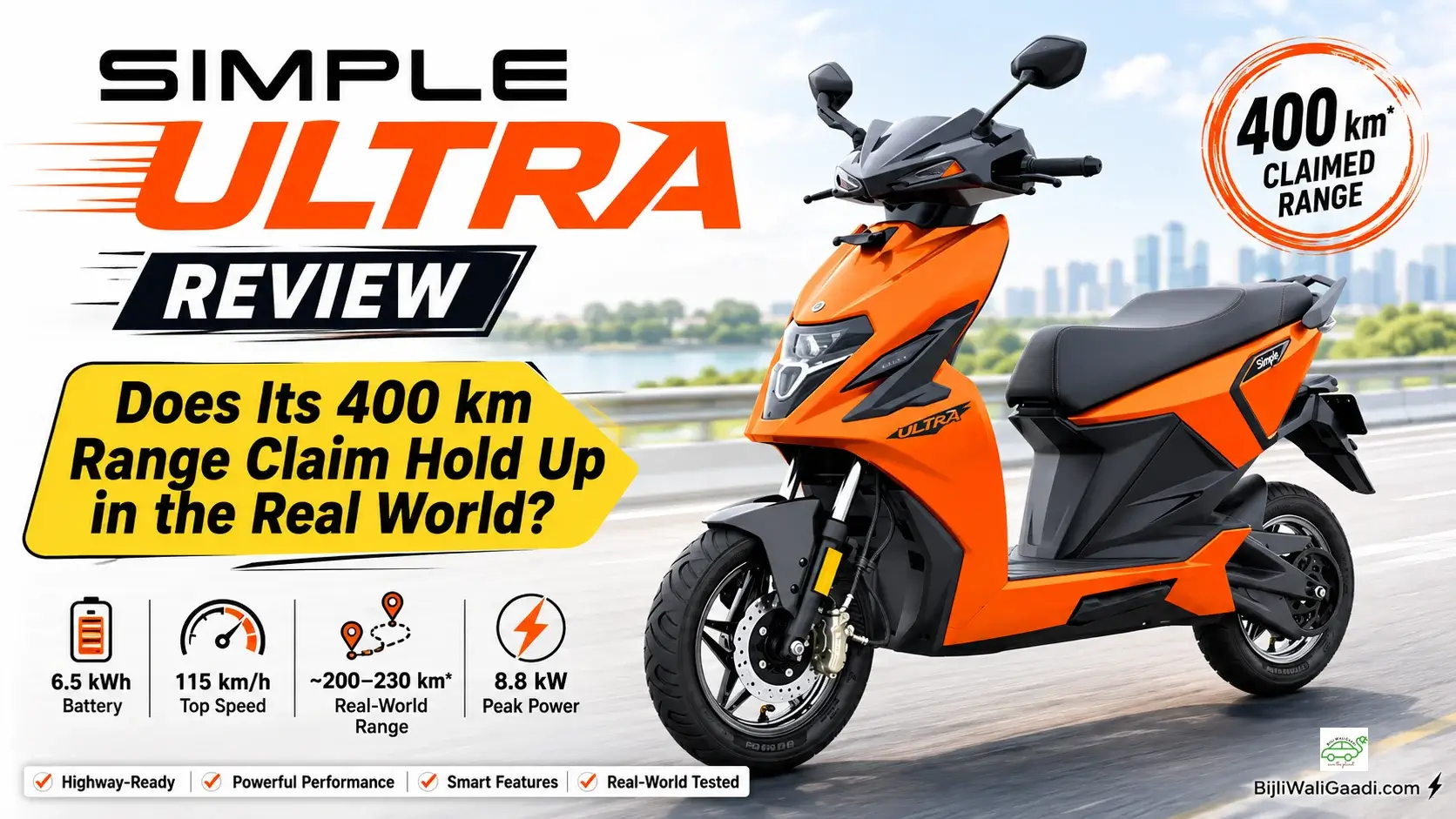
Simple Energy‘s claim of a 400 km range for the Simple Ultra made headlines the moment it was announced, and the figure immediately became the centre of attention around this scooter. The real question a buyer needs answered isn’t whether 400 km sounds impressive; it’s what the Simple Ultra actually delivers once it’s out of the lab and into Indian traffic. That gap between the claimed figure and practical reality is where this review spends most of its time.
The Simple Ultra is Simple Energy’s flagship electric scooter, positioned above the Simple One Gen 2, and built around one central idea: a genuinely large battery pack paired with strong performance, aimed at riders who want range security without giving up highway capability.
Simple Ultra Specifications At A Glance
- Battery: 6.5 kWh, dual-battery setup (5 kWh + 1.5 kWh, fixed)
- Motor: PMSM, 4.5 kW continuous power, 8.8 kW peak power
- Torque: 72 Nm
- Top speed: 115 km/h
- Acceleration: 0–40 km/h in 2.77 seconds
- Claimed range: 400 km IDC
- Practical maximum real-world range: approximately 200–230 km, based on independent user/reviewer feedback under efficient riding conditions
- Seat height: 780 mm
- Kerb weight: 139 kg
- Ground clearance: 172 mm
- Boot space: 26 litres (plus 1-litre front storage)
- Charging: 750W portable charger; 0–80% fast charging in 2 hours 15 minutes
- Price: ₹2,34,999, ex-showroom
Simple Ultra Design And Build Quality
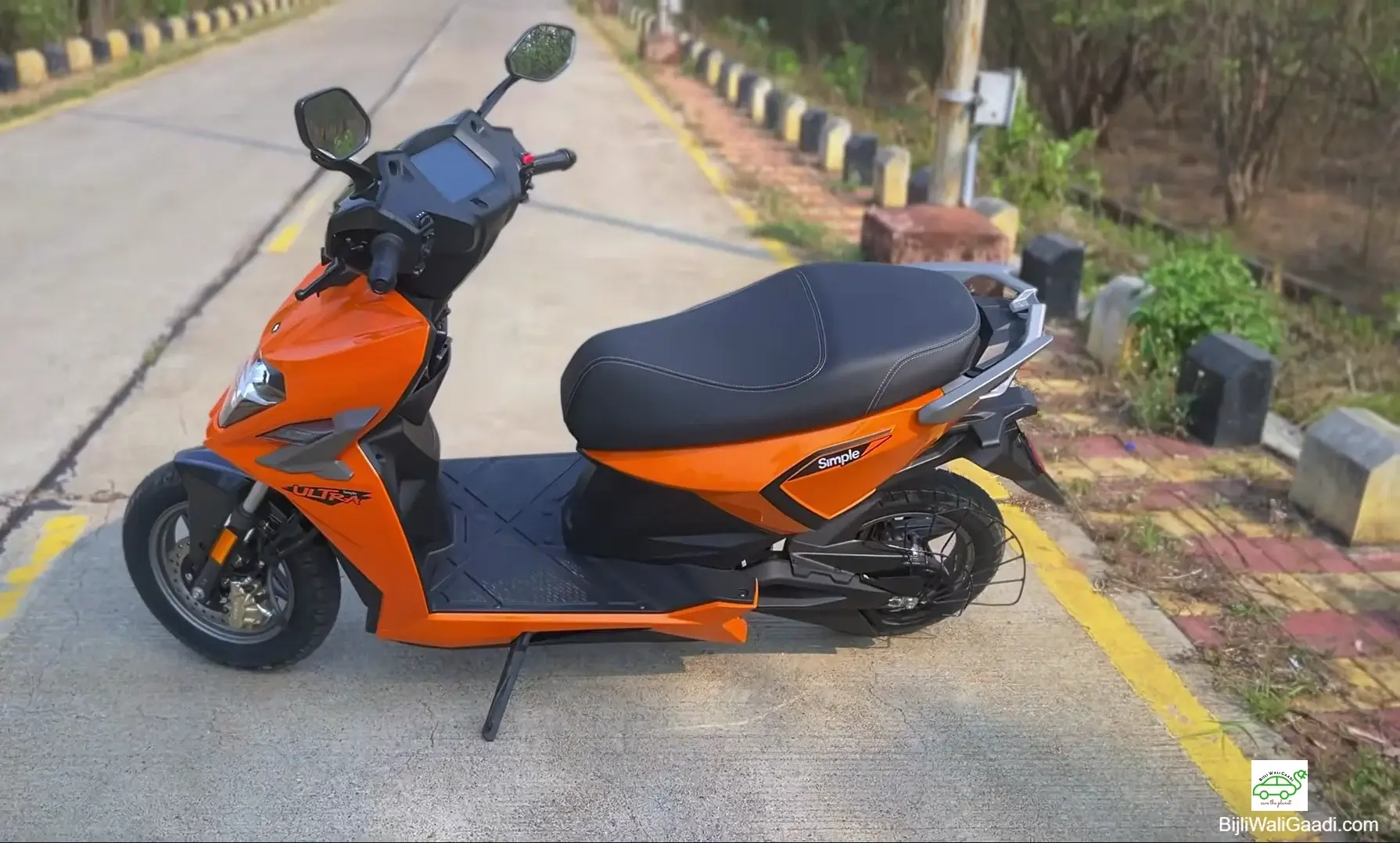
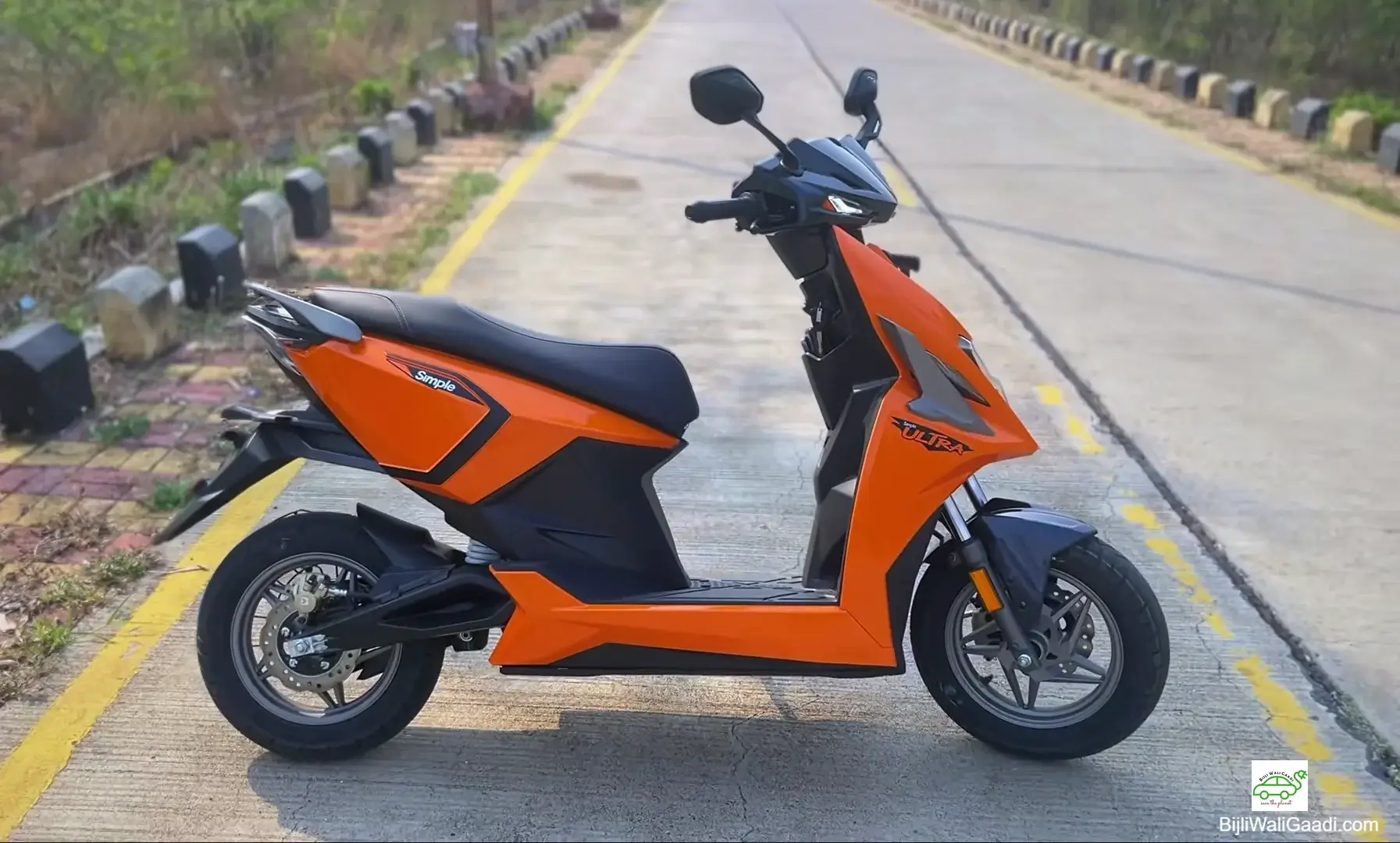
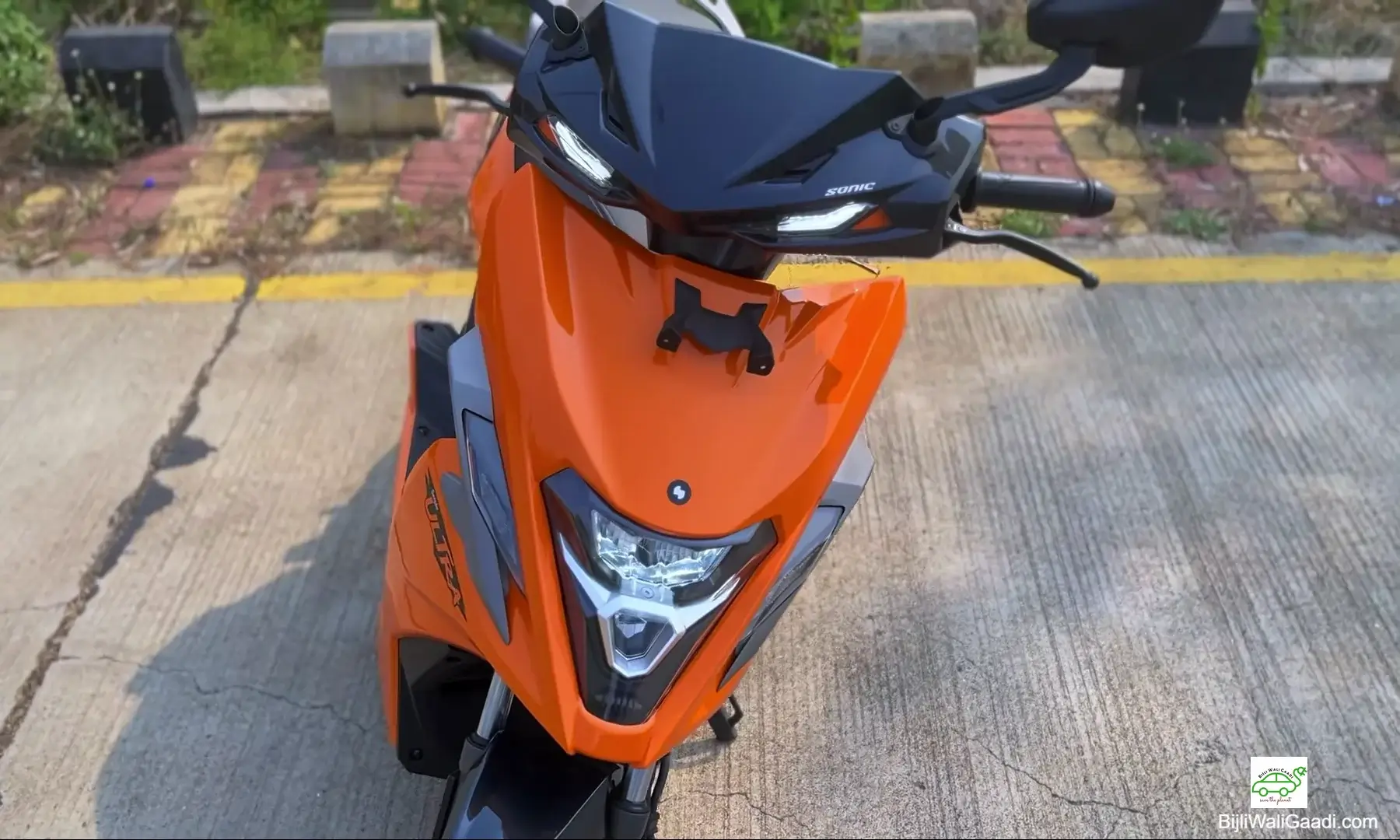
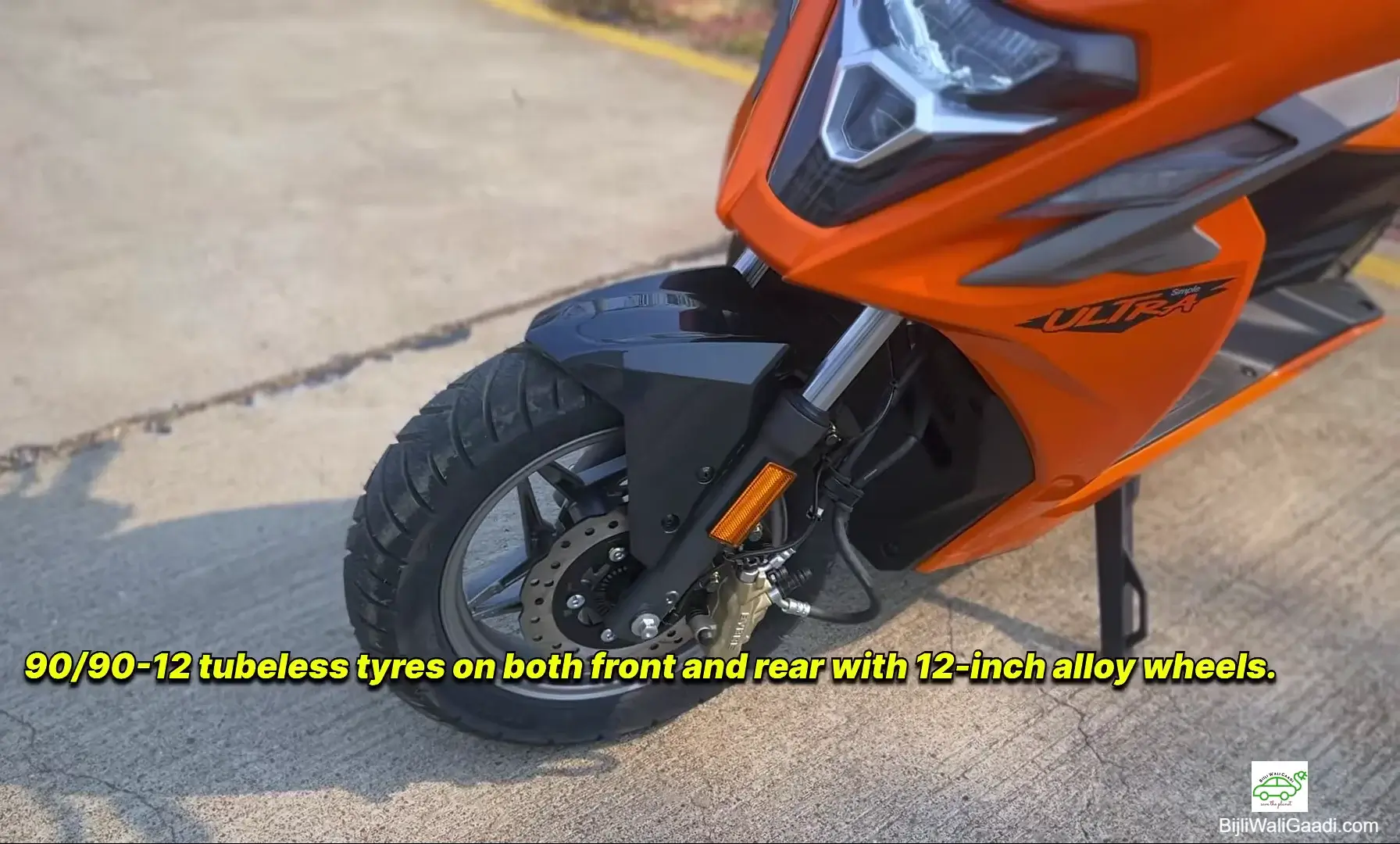
Park the Ultra next to a Simple One Gen 2 and, colour aside, the two look nearly identical — the Ultra follows the Simple One’s familiar design language, with Simple Energy’s engineering effort focused heavily on the larger battery and performance. What does stand out is the deep copper-orange paint, applied in three layers so it reads like liquid metal in daylight and takes on a warmer glow after dark.
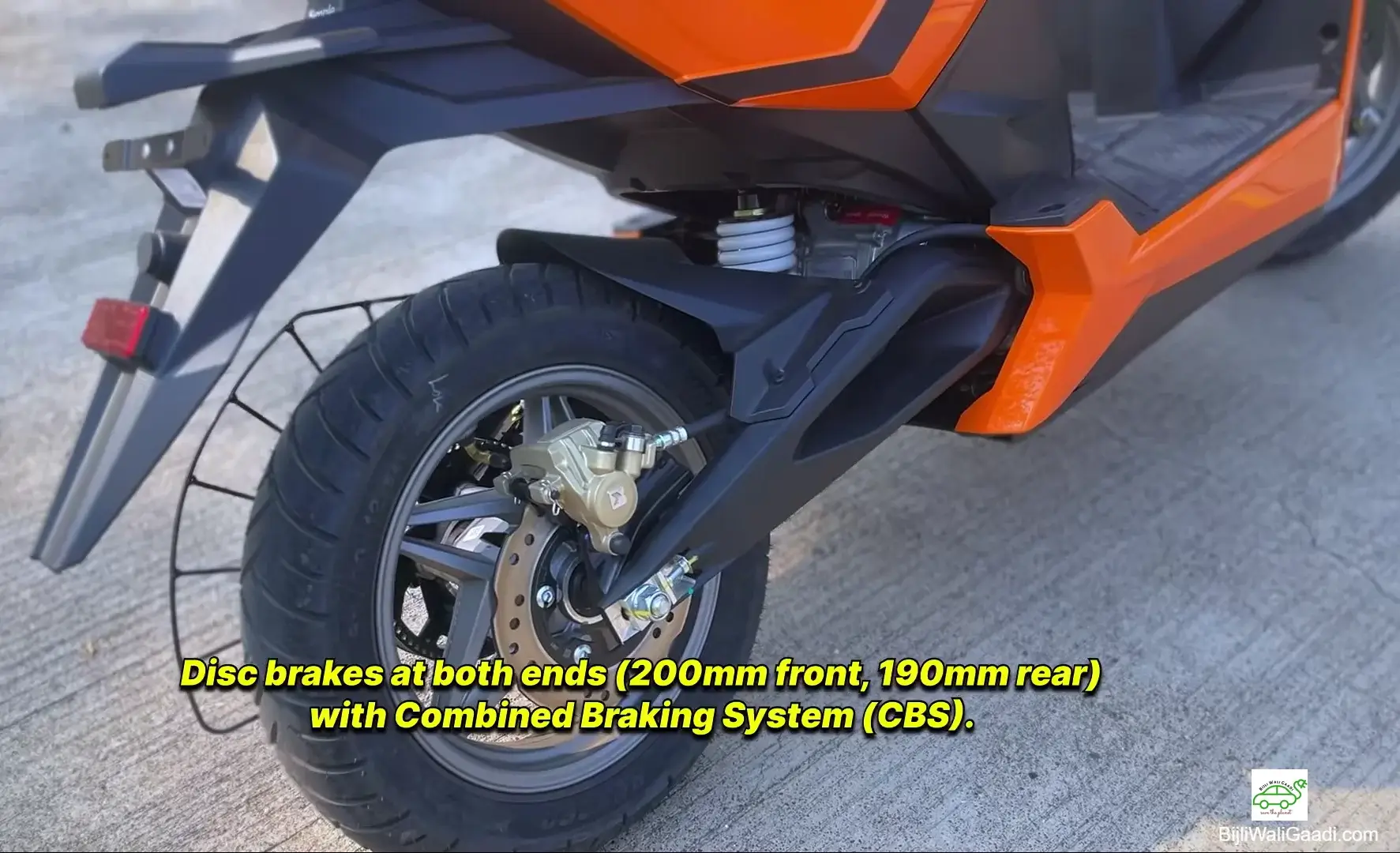
Underneath, the Ultra gets telescopic front forks, a rear monoshock, 12-inch wheels at both ends, 200 mm front and 190 mm rear disc brakes with combined braking, and a steel tubular chassis designed around a low, centred frame for stability and control. Seat height is set at 780 mm, which should help shorter riders plant a foot down confidently, and ground clearance of 172 mm offers a reasonable buffer against potholes and speed breakers.
Storage is a mixed bag. The 26-litre under-seat boot is generous on paper, but independent feedback suggests its shape is deep rather than wide, making a full-face helmet a tight fit — a half-face lid or a small bag sits far more comfortably. A separate 1-litre front cubby is a useful addition, handy for keeping a phone on charge during a ride. Build quality has generally held up well, with no obvious panel gaps or cheap-feeling plastics reported.
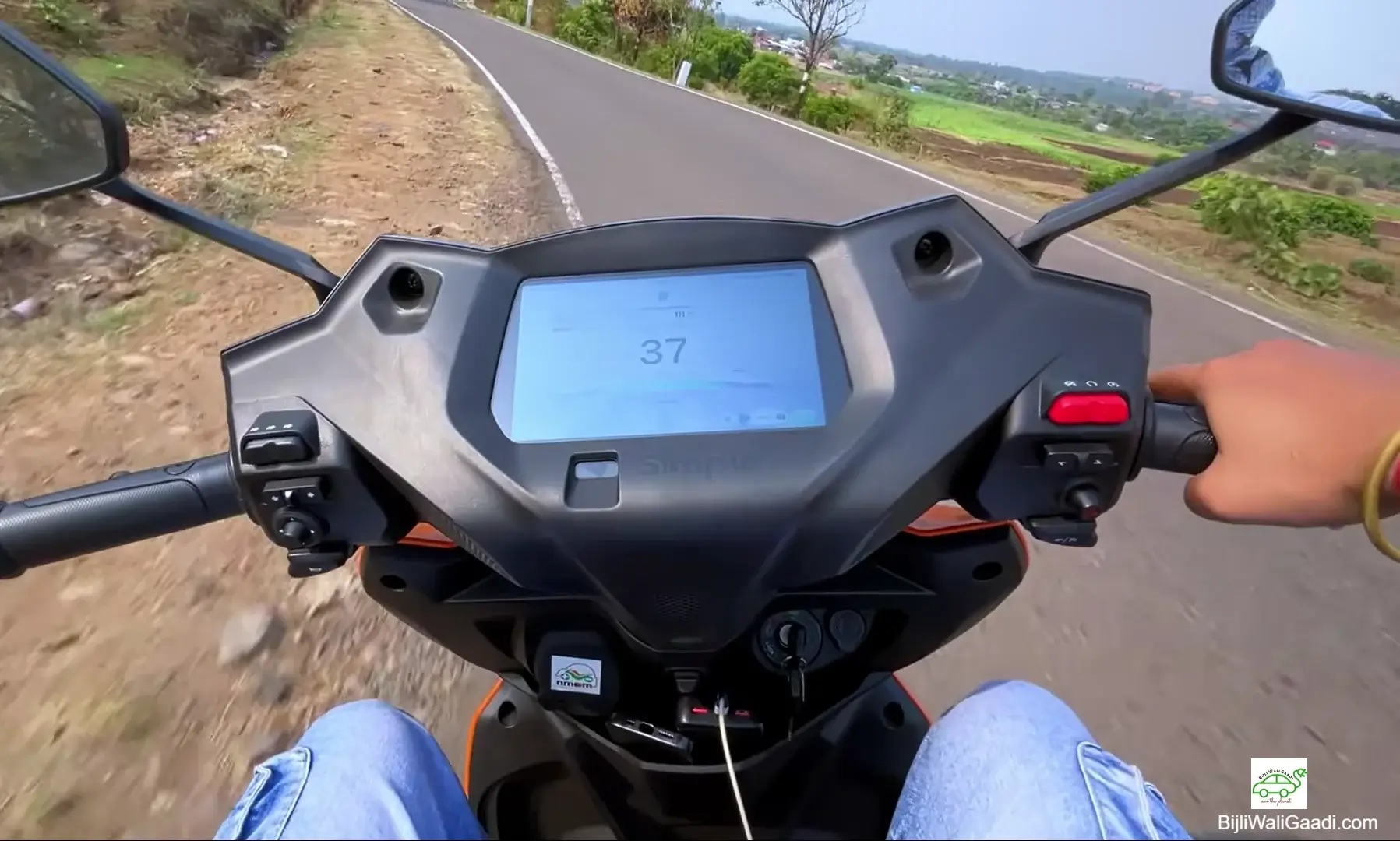
One recurring criticism from user feedback concerns the handlebar switchgear. With the headlamp switch, indicator stalk, joystick, horn, ignition, mode button, hazard switch, reverse and cruise control all clustered close together, some users report reaching for the joystick instead of the indicator, or triggering the hazard lights while trying to switch riding modes. It’s worth spending a few extra minutes with the controls on a test ride before you decide this isn’t an issue for you.
Simple Ultra Real-World Range: What Can You Actually Expect?
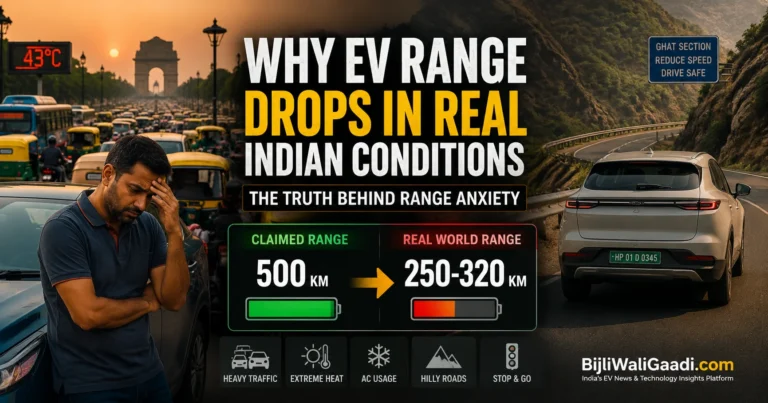
Simple Energy claims a 400 km IDC range for the Ultra. IDC (Indian Driving Cycle) is a standardised lab test used to compare scooters on paper — it isn’t a promise of what you’ll see on your commute.
Independent user and reviewer feedback indicates a practical maximum real-world range of approximately 200–230 km under efficient, normal riding conditions. That’s a meaningful figure in its own right, but it shouldn’t be mistaken for a guarantee — actual range on any given day will depend on your speed, the riding mode you use, traffic conditions, rider and pillion load, road surface, and weather. Aggressive use of the higher-speed riding modes will pull that number down noticeably.
The takeaway for a buyer is straightforward: treat 400 km as Simple Energy’s official claimed figure, and treat roughly 200–230 km as the more realistic ceiling to plan your ownership around.
Simple Ultra Performance: 115 km/h Top Speed And 8.8 kW Power
The Ultra’s PMSM motor produces 4.5 kW of continuous power, with a peak of 8.8 kW and 72 Nm of torque — enough for a 115 km/h top speed and a 0–40 km/h sprint of 2.77 seconds. Six riding modes — Eco X, Eco, Ride, Air, Sonic and Sonic X — let you dial performance up or down depending on where you’re riding.
In city traffic, the lower modes keep things manageable and predictable, with review feedback describing the throttle response as smooth and easy to modulate. Push into the higher modes and the character shifts noticeably — the scooter feels quicker and lighter on its feet, closer to a performance vehicle than a typical commuter scooter, helped along by that peak power and torque. The independent feedback suggests the Ultra gets to 80 km/h quickly, while acceleration becomes less urgent as speed rises beyond that point.
Simple Ultra Ride, Handling And Braking
At 139 kg, the Ultra is on the heavier side for a scooter, largely a consequence of its bigger battery pack. Despite that, user feedback suggests it manoeuvres through traffic without much drama, aided by the low, centred frame and a reasonable turning radius. Suspension — telescopic forks up front, a monoshock at the rear — has been reported to absorb rough roads and potholes well, with pillion comfort called out as a particular strength.
Braking performance is more nuanced. At lower speeds, the combined braking system pulls the Ultra up quickly and confidently. At higher speeds — above 60 km/h — some independent observations note it takes noticeably longer to stop under normal braking effort, which is worth factoring in given the scooter’s genuine highway capability. Four levels of regenerative braking help recover energy, and four traction modes — Rain, Road, Rally and Track — are available for varying surface conditions.
Simple Ultra Features And Technology
The 7-inch TFT touchscreen runs on Android 12, backed by a 64-bit quad-core processor and 2 GB RAM. Built-in MapMyIndia navigation removes the need for a phone for turn-by-turn directions, while the Simple Connect app adds Find My Scooter, Ping My Scooter, push navigation, and OTA updates.
A few features stand out for genuine everyday use rather than being brochure filler. Super Hold keeps the scooter stationary on an incline without needing the brakes applied — useful on slopes and ramps — and cruise control is a genuine convenience on longer highway stretches. Drop Safe cuts motor power instantly if the scooter falls, and theft/tow alerts notify the owner if the scooter is moved without authorisation.
Simple Ultra Charging And Warranty
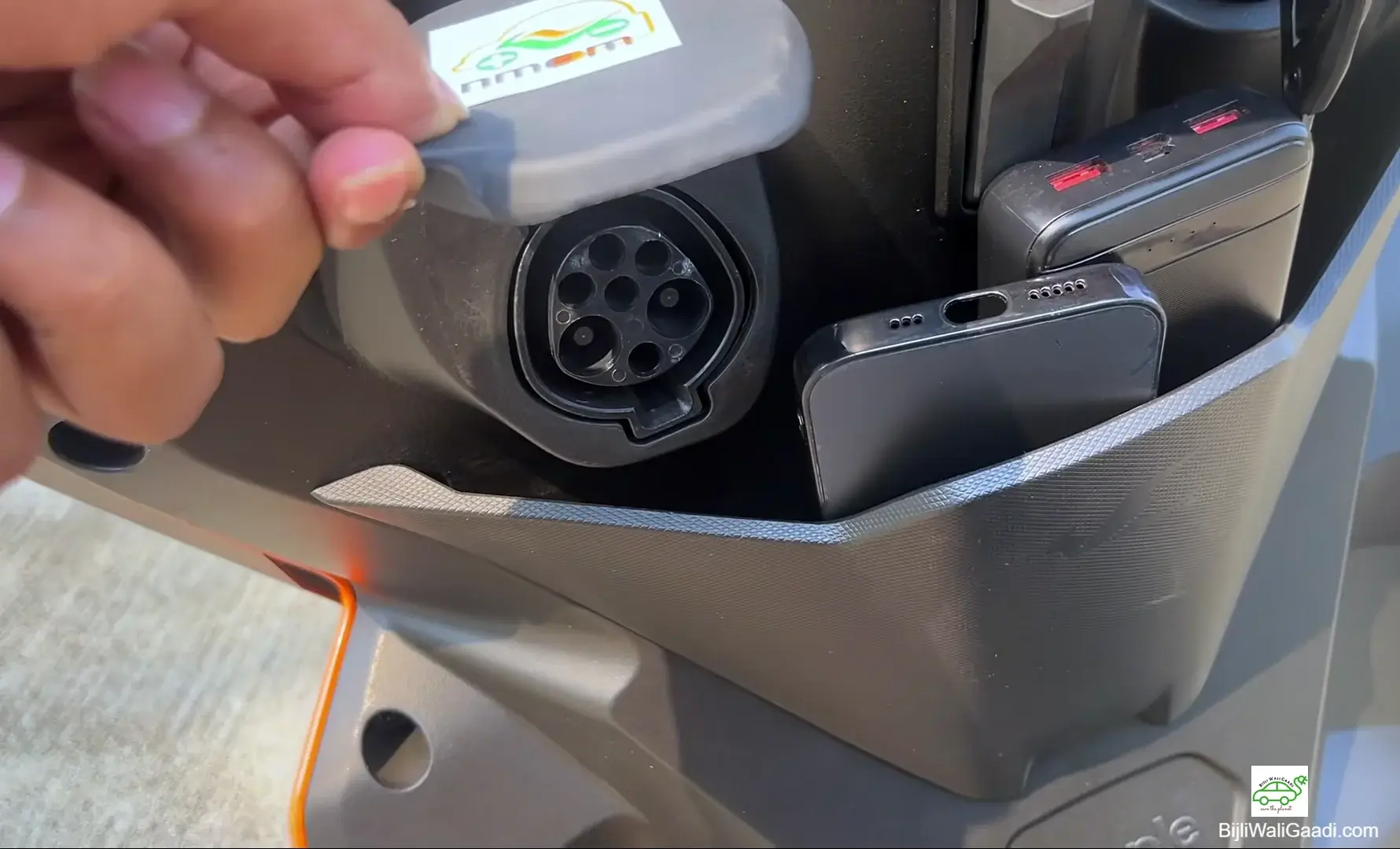
Home charging uses a 750W portable charger. Fast charging through Simple’s charging network takes the Ultra from 0–80% in 2 hours 15 minutes, with Simple Energy’s network now spanning 250+ charging points across 110+ cities.
On warranty, Simple Energy’s official coverage includes a base vehicle warranty of 3 years or 30,000 km, with extended options — Simple Protect (5 years/50,000 km) and Simple Super Protect (8 years/80,000 km) — covering the battery and motor, plus a 3-year/20,000 km warranty on the portable charger, all whichever comes first and subject to conditions in the owner’s manual.
Simple Ultra Price: Is ₹2,34,999 Worth It?
The Simple Ultra is priced at ₹2,34,999, ex-showroom. That’s a significant sum for a scooter, and it places the Ultra firmly in premium territory rather than the budget or mass-market segment.
Its value case rests on the combination of a large battery, genuinely usable range, strong performance, highway capability and an extensive connected-feature package. For a buyer who will actually use that range and performance, the price is easier to justify. For someone who only needs basic city transport, the Ultra’s capabilities — and cost — go well beyond what’s necessary.
Who Should Buy The Simple Ultra?
The Ultra suits long-distance commuters, riders who regularly cover highway stretches, and buyers who want genuine highway-capable performance rather than a scooter limited to city speeds. It also appeals to riders concerned about range anxiety on longer trips, and to technology-focused buyers who’ll make use of the connected app features.
Who Should Avoid The Simple Ultra?
Riders whose usage is limited to short, local trips are unlikely to need the Ultra’s range or performance headroom. Buyers working with a tighter budget, or those who prefer a lighter, more flickable scooter, may find better value and easier daily handling elsewhere.
Simple Ultra Final Verdict
The 400 km figure Simple Energy quotes for the Ultra is an IDC claim, not a daily-use number. Independent feedback points to roughly 200–230 km as a more realistic practical maximum under efficient riding, which is still a genuinely useful figure for a rider planning around it. Performance, battery capacity and the connected-technology package are clear strengths. The kerb weight, handlebar switchgear layout, and braking at higher speeds are areas a buyer should weigh carefully before deciding.
At ₹2,34,999 ex-showroom, the Simple Ultra is a premium purchase that makes the most sense for riders who will genuinely use its range and performance — not simply admire the number on the spec sheet.
Stay connected via Google 'Electric Vehicle' News
Follow BijliWaliGaadi | India's Trusted EV Insights Portal
source on Google