Volvo’s Astonishing 80-Tonne Electric Truck Rewrites the Rules of the Road
Stay connected via Google 'Electric Vehicle' News
Follow BijliWaliGaadi | India's Trusted EV Insights Portal
source on Google
Volvo 80-tonne electric truck | Volvo FH Electric, Volvo electric truck range | Volvo electric truck specifications | Megawatt charging truck | 640 kWh electric truck battery | Zero-emission heavy transport
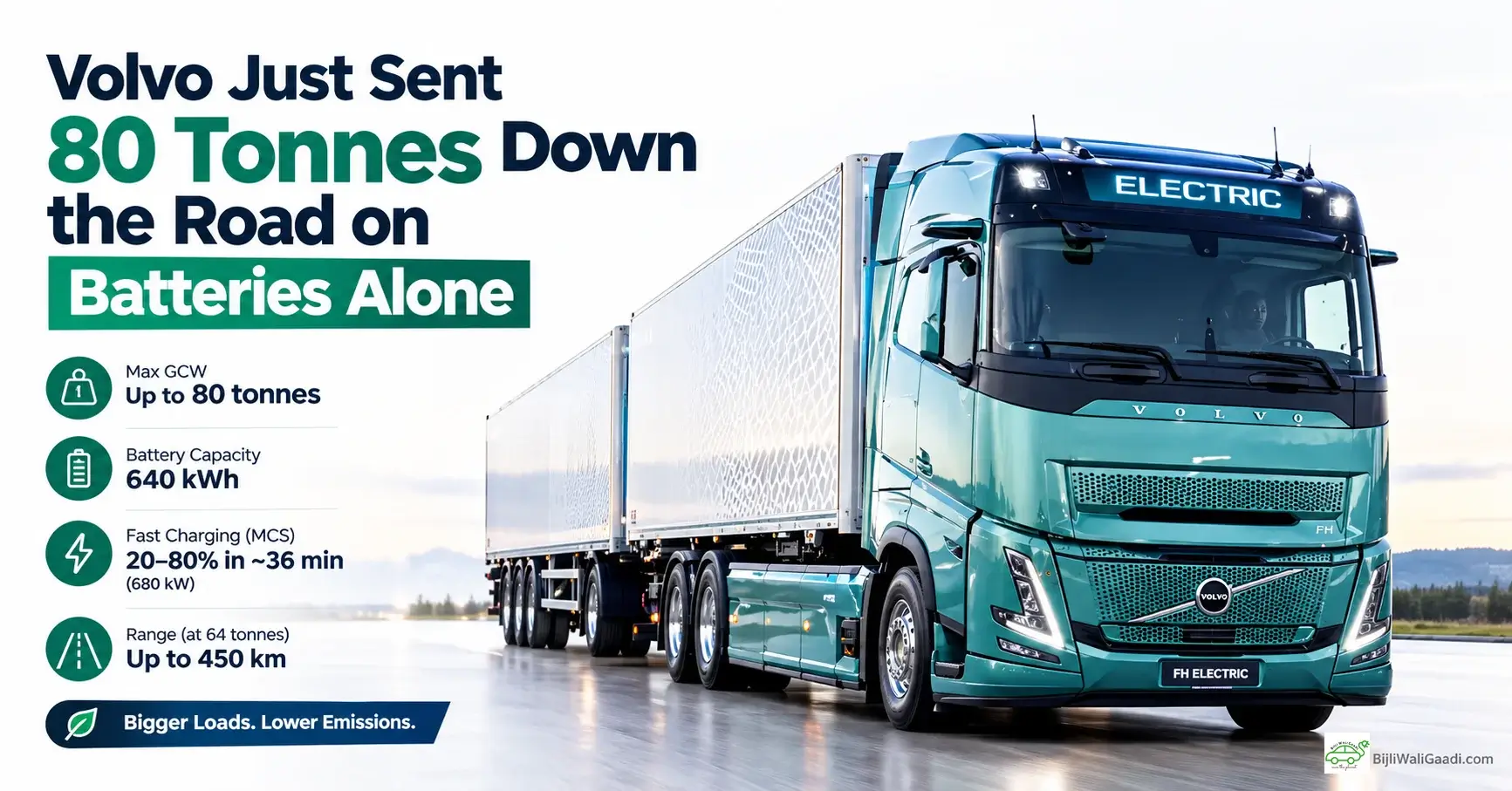
Can a battery-powered truck really haul 80 tonnes? On September 14, 2026, Volvo Trucks answered with a yes. The company launched an electric truck-and-trailer combination rated for a gross combination weight of up to 80 tonnes — a new benchmark for heavy electric transport.
This isn’t a concept. It’s a production truck, and deliveries begin in early 2027.
Meet the Electric Heavyweight Volvo Just Set Loose on Europe’s Roads
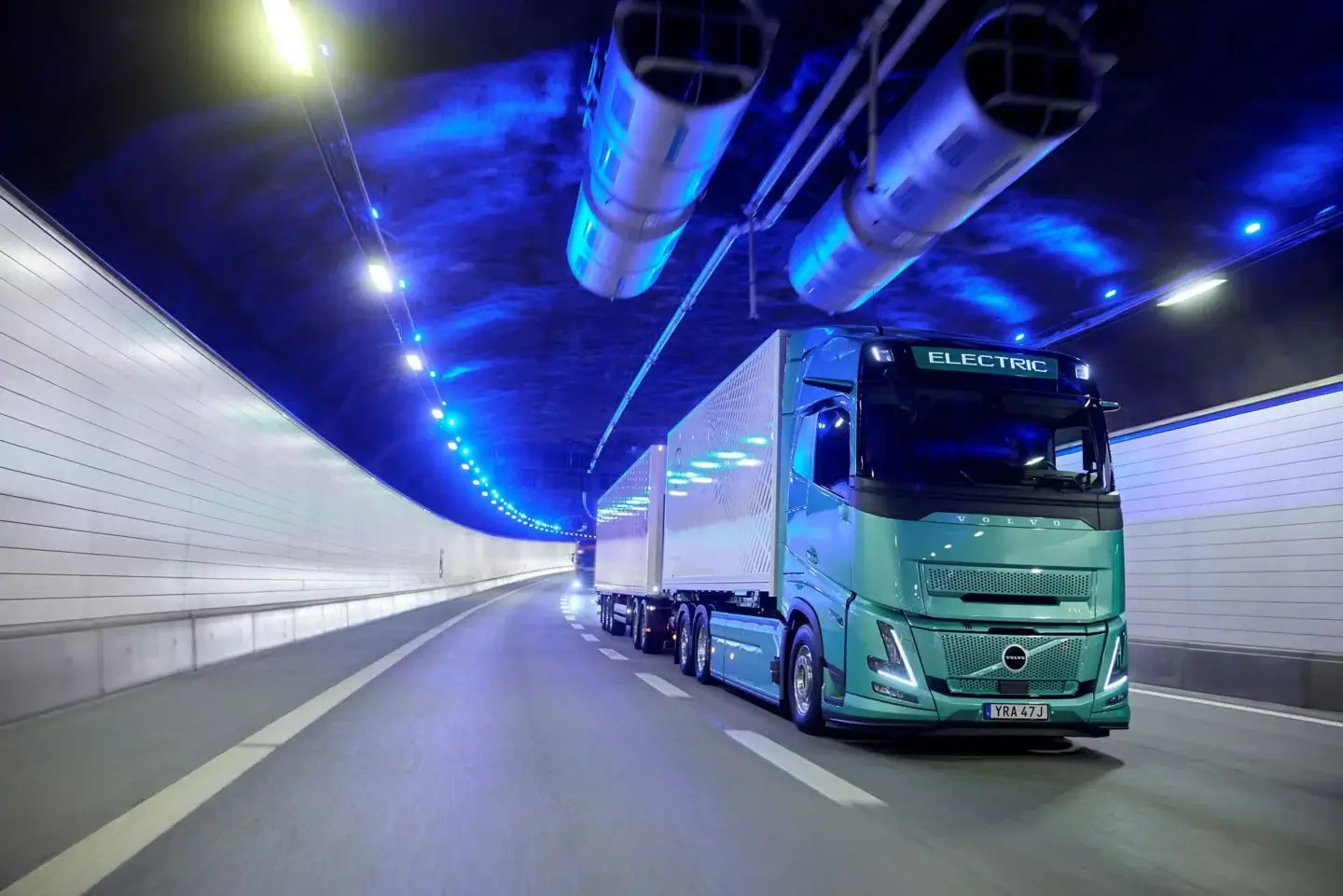
The truck is a Volvo FH Electric (or FH Aero Electric) rigid truck paired with a trailer. A rigid truck means a single chassis with a fixed body, such as a box body, crane, refuse compactor, or concrete mixer, rather than a separate tractor-trailer unit.
Volvo built it for markets that legally allow heavier loads than the European average. Sweden and Finland, for instance, permit combinations of up to 74 and 76 tonnes respectively.
Sales begin in Sweden, Norway, Finland, Denmark, the Netherlands, and Switzerland, with a gradual rollout starting in early 2027.
Inside the Numbers: What This Electric Giant Is Actually Packing
| Specification | Details |
| Model | Volvo FH Electric / FH Aero Electric (rigid truck) |
| Max gross combination weight | Up to 80 tonnes |
| Range at 64 tonnes GCW | Up to 450 km |
| Range at 74–76 tonnes GCW | Up to 420 km |
| Usable battery capacity | 640 kWh |
| MCS charging | 680 kW, 20–80% in ~36 minutes |
| CCS2 charging | 360 kW, 20–80% in ~70 minutes |
| Transmission | 8-speed, developed for electric motors |
| Axles | Hub-reduction axles |
| Auxiliary power | Electric power take-off (e-PTO) |
| Cab options | All Volvo FH cabs except XXL; standard and Aero versions |
| Launch markets | Sweden, Norway, Finland, Denmark, Netherlands, Switzerland |
| Rollout | Gradual, starting early 2027 |
The Weight-vs-Range Trade-Off: How Far Can This Truck Really Go?
Range depends directly on how much weight the truck is carrying.
At 64 tonnes, a common heavy-transport weight, Volvo rates the truck for up to 450 km per charge. At 74 to 76 tonnes — the legal maximums in Sweden and Finland — range drops to up to 420 km.
Volvo has not published a specific range figure at the truck’s maximum 80-tonne rating. The company also notes that real-world range depends on weather, wind resistance, total load, and driving style.
From Empty to 80 Percent Before Your Coffee Break Ends
The truck supports two charging standards, giving fleets flexibility depending on their depot infrastructure.
| Charging standard | Power | 20–80% charge time |
| MCS (Megawatt Charging System) | 680 kW | Approx. 36 minutes |
| CCS2 (Combined Charging System) | 360 kW | Approx. 70 minutes |
Both options draw from the same 640 kWh usable battery pack, which Volvo says benefits from an updated monitoring system and improved cold-climate insulation for more consistent performance.

The Engine Room: What’s Really Driving This Beast Forward
The truck shares its core powertrain with Volvo’s next-generation electric FH, FM, and FMX trucks, launched in April 2026. It pairs this with an 8-speed transmission built specifically for electric motors.
A new addition here is the electric power take-off (e-PTO), which runs auxiliary equipment like refrigeration units directly off the truck’s battery. This removes the need for a separate diesel generator, cutting both emissions and maintenance.
The Small Engineering Detail That Lets This Truck Go Off the Beaten Path
Volvo is introducing hub-reduction axles on this combination for the first time in its electric range.
These axles improve ground clearance and startability, which helps on uneven terrain such as construction sites or forestry roads. On smoother roads, the higher technical load rating also allows for greater payload capacity — useful for operators trying to maximize each trip.
Why This Truck Is a Bigger Deal Than Its Spec Sheet Suggests
Jan Hjelmgren, Senior Vice President of Product Management at Volvo Trucks, said heavier loads lower both transport costs and environmental impact per tonne moved — and electrifying those heavier loads takes that benefit further.
That’s the real significance here. Electric trucks have made strong progress in short-haul and urban delivery, where lighter loads suit current battery technology. Heavy, long-distance transport — timber, construction materials, bulk goods — has remained the hardest segment to electrify.
Volvo’s 80-tonne truck doesn’t skip past that challenge. It tackles it directly, with a bigger battery, faster charging, and axles built for real heavy-duty work.
The Road Ahead: Where and When You’ll See This Truck in Action
Volvo hasn’t announced pricing. Deliveries begin gradually from early 2027 across the six launch markets, with no confirmed timeline yet for expansion beyond them.
For now, this truck stands as proof that battery power can handle serious weight — not just city deliveries, but the heavy transport jobs that keep entire industries moving.

–
Stay connected via Google 'Electric Vehicle' News
Follow BijliWaliGaadi | India's Trusted EV Insights Portal
source on Google