Volkswagen Mission Efficiency: How VW Built the World’s Most Efficient Near-Production Electric Car
Stay connected via Google 'Electric Vehicle' News
Follow BijliWaliGaadi | India's Trusted EV Insights Portal
source on Google
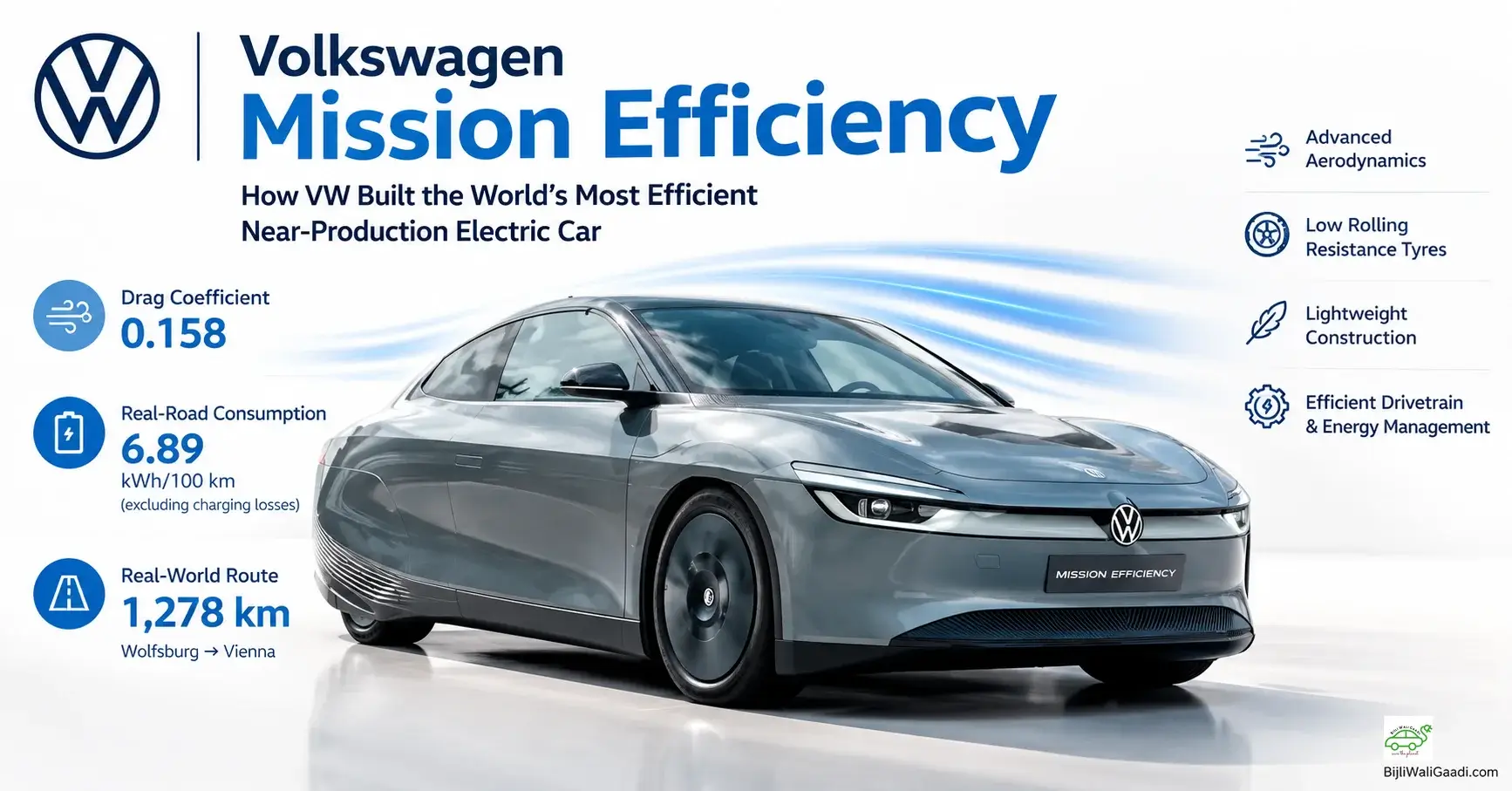
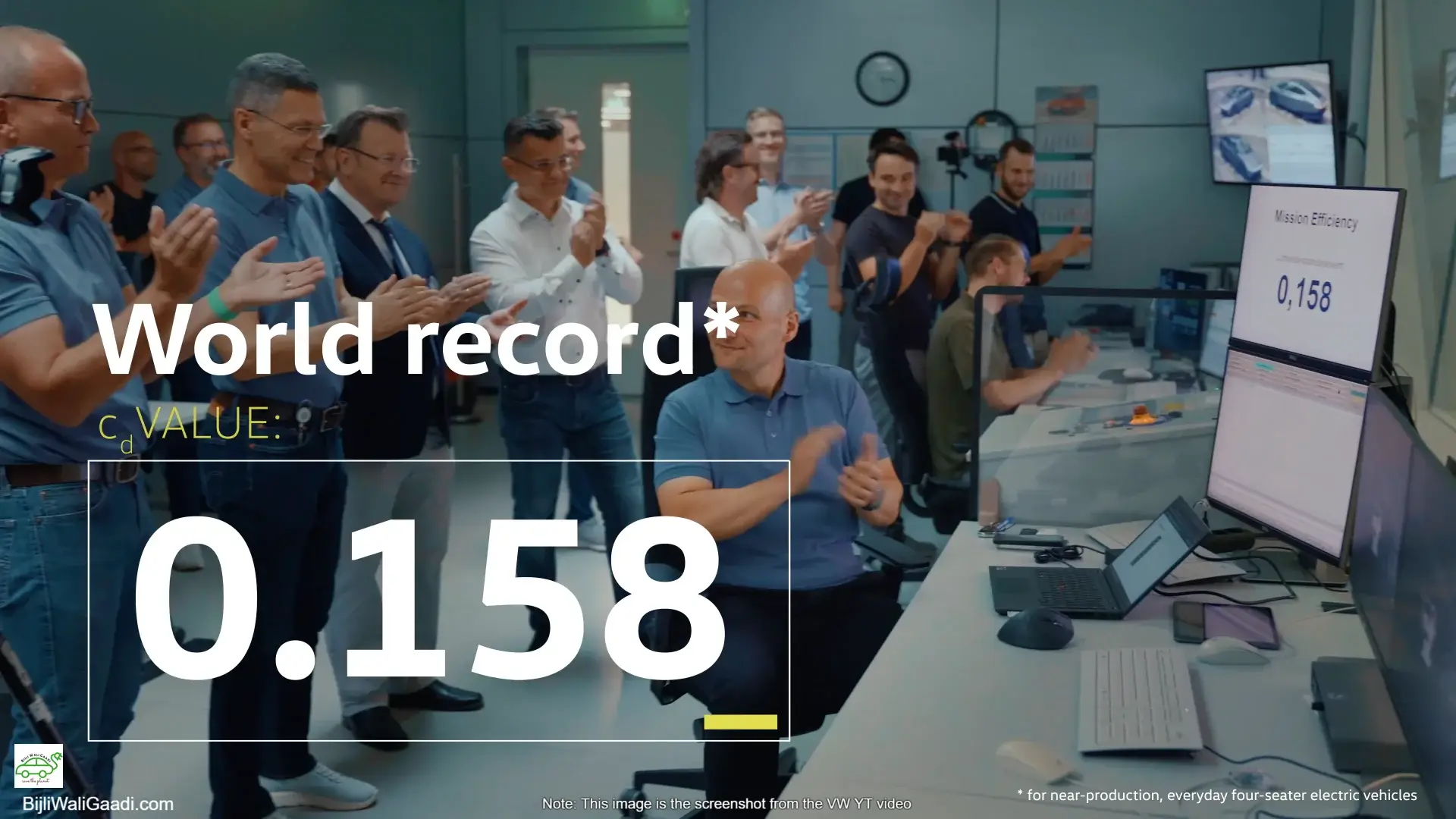
Volkswagen Mission Efficiency is a near-production electric concept that Volkswagen presents as the world’s most efficient near-production electric car. It is based largely on production technology from Volkswagen’s MEB+ platform used by the electric ID. Polo. Instead of fitting a larger battery, the team attacked the energy the car needs per kilometre: a 0.158 drag coefficient, and 6.89 kWh/100 km over a documented 1,278.36 km drive from Wolfsburg to Vienna.
Volkswagen Mission Efficiency: What Has Been Revealed
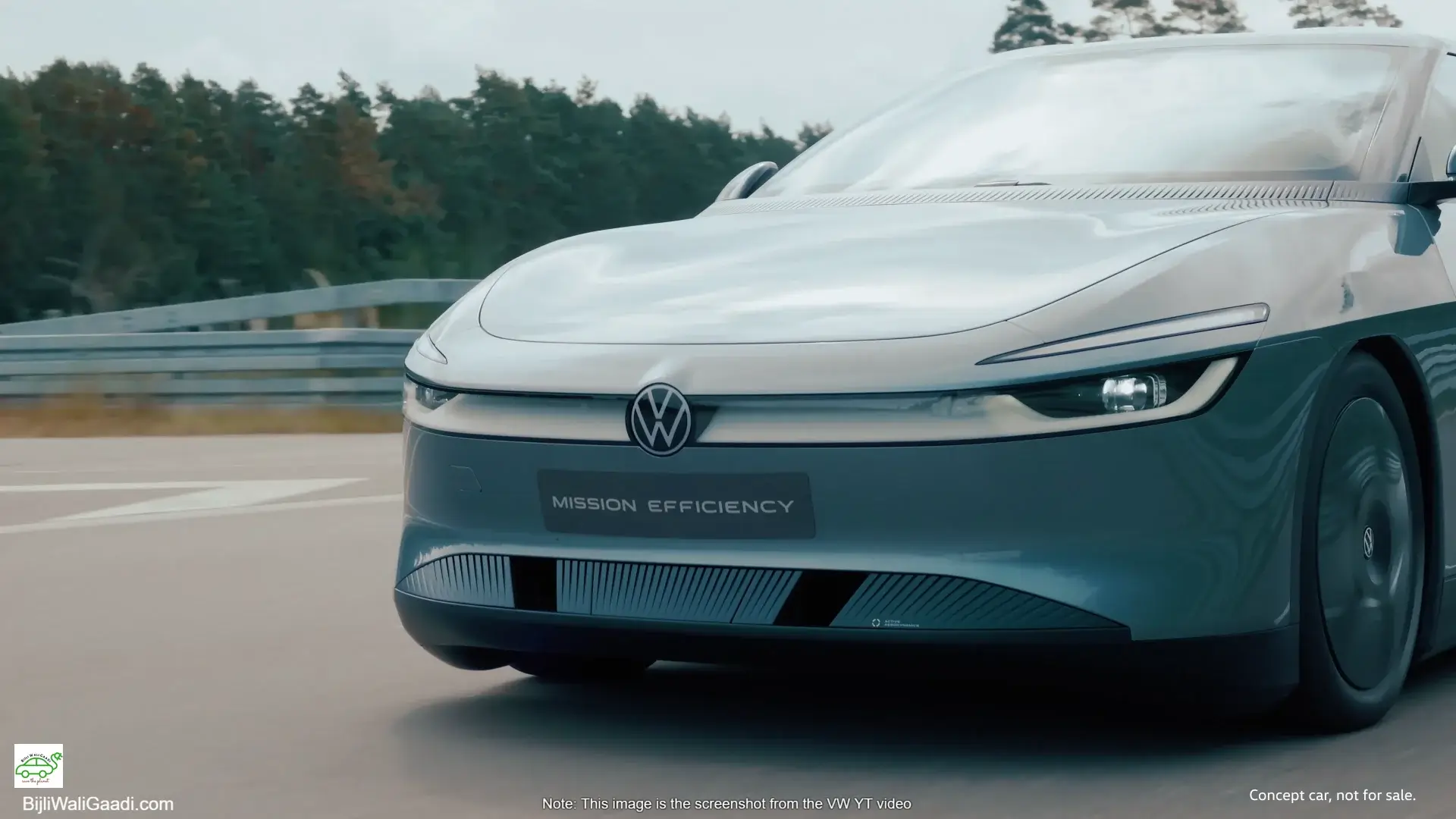
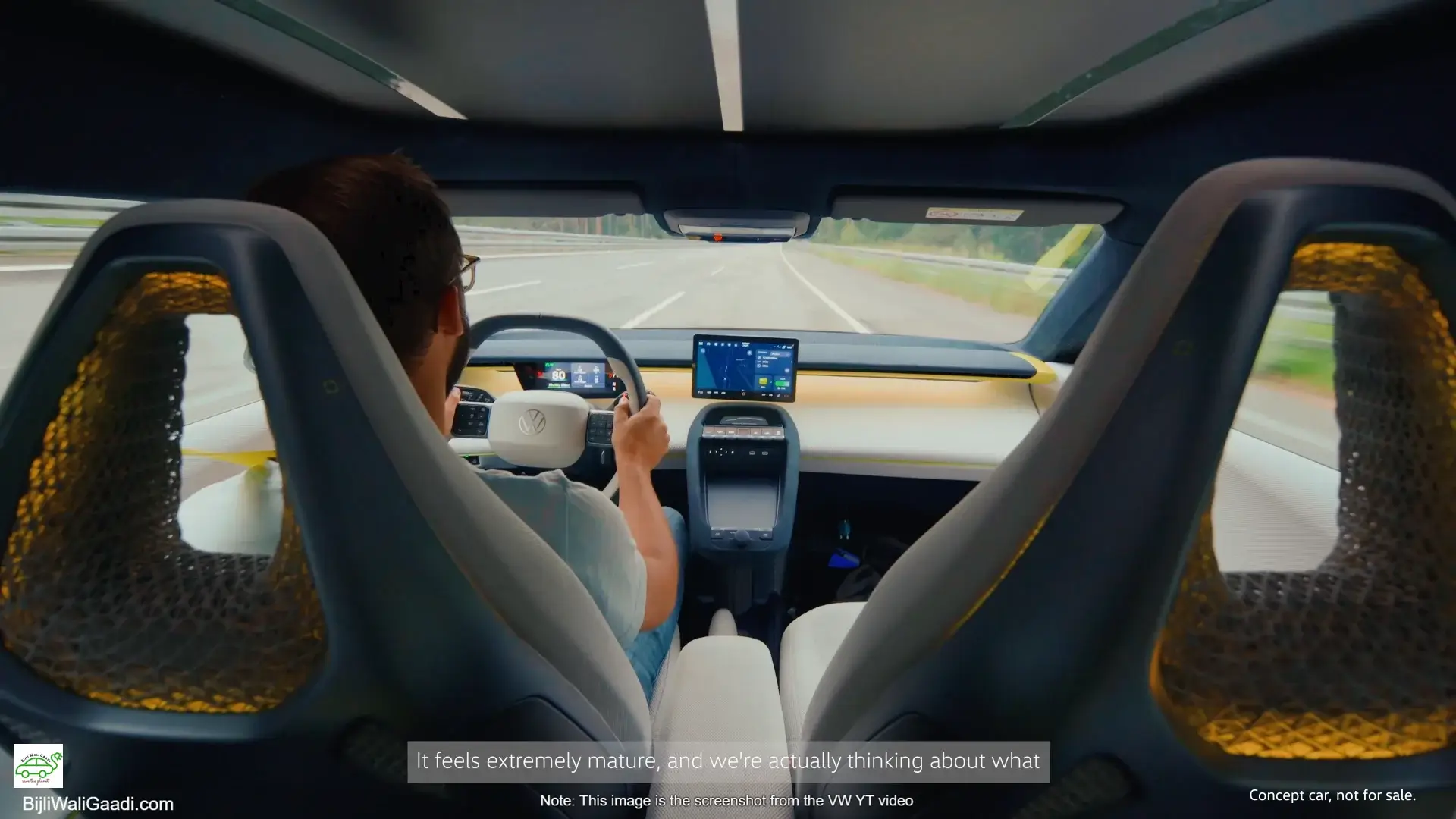
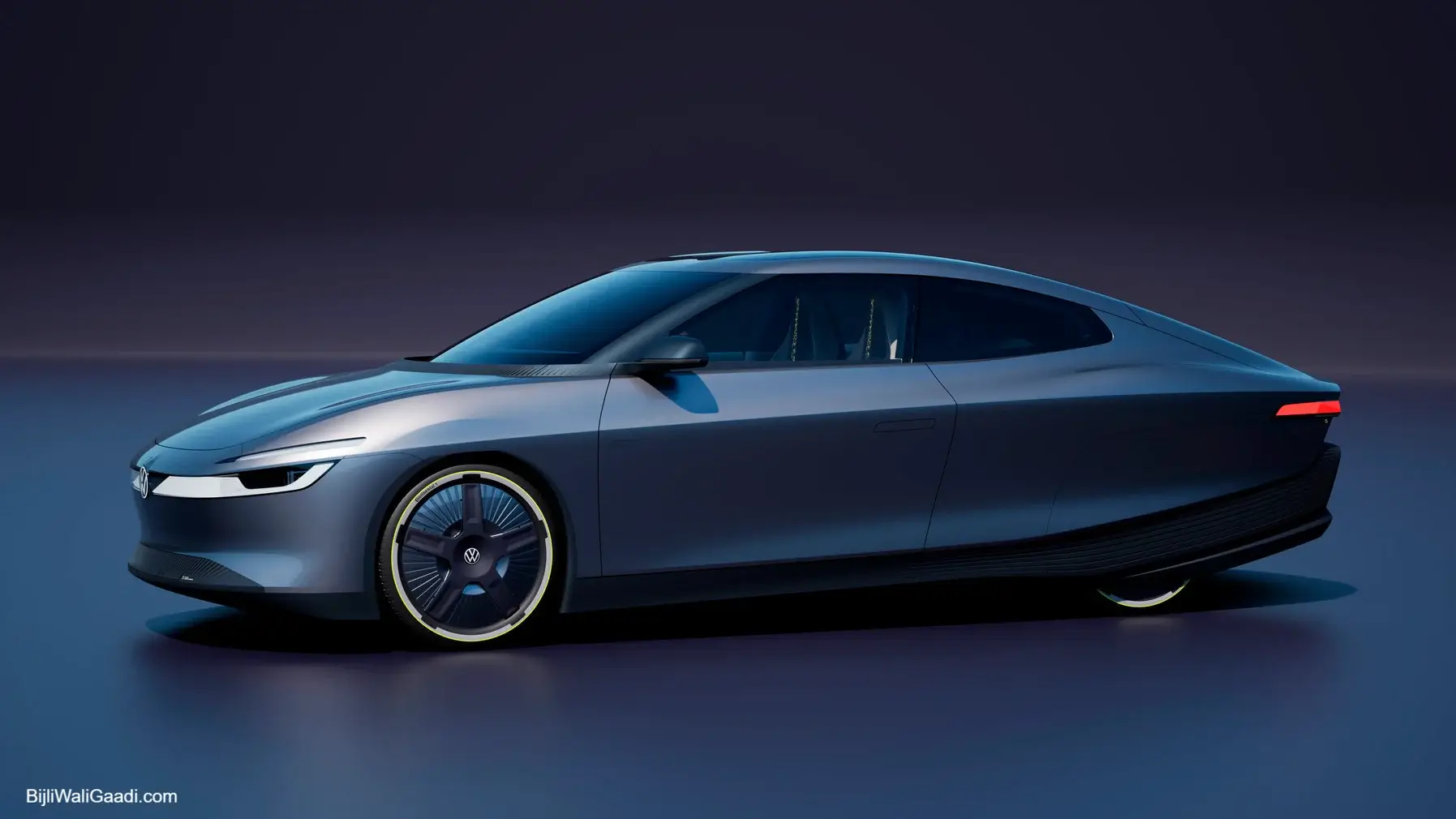
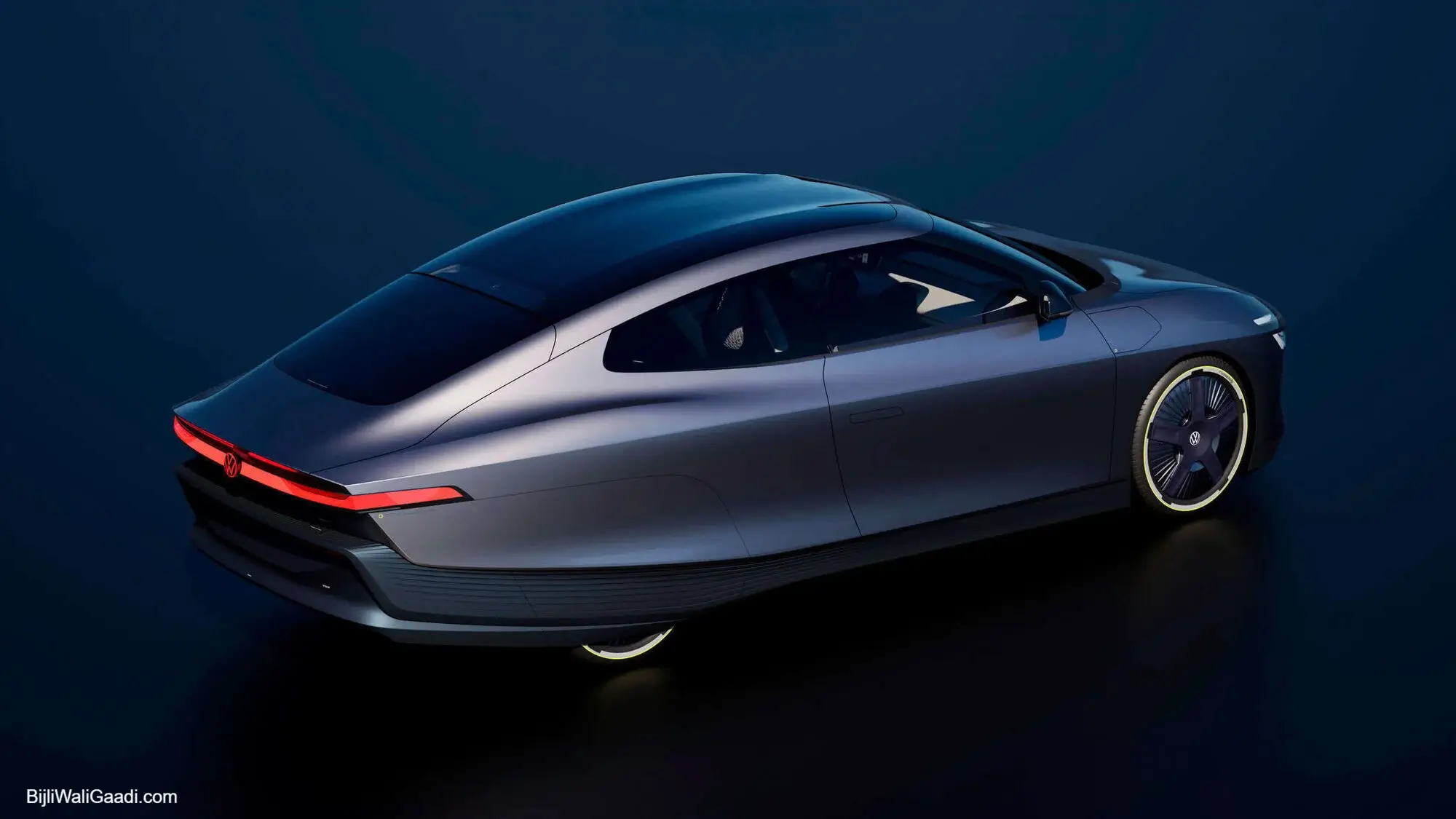
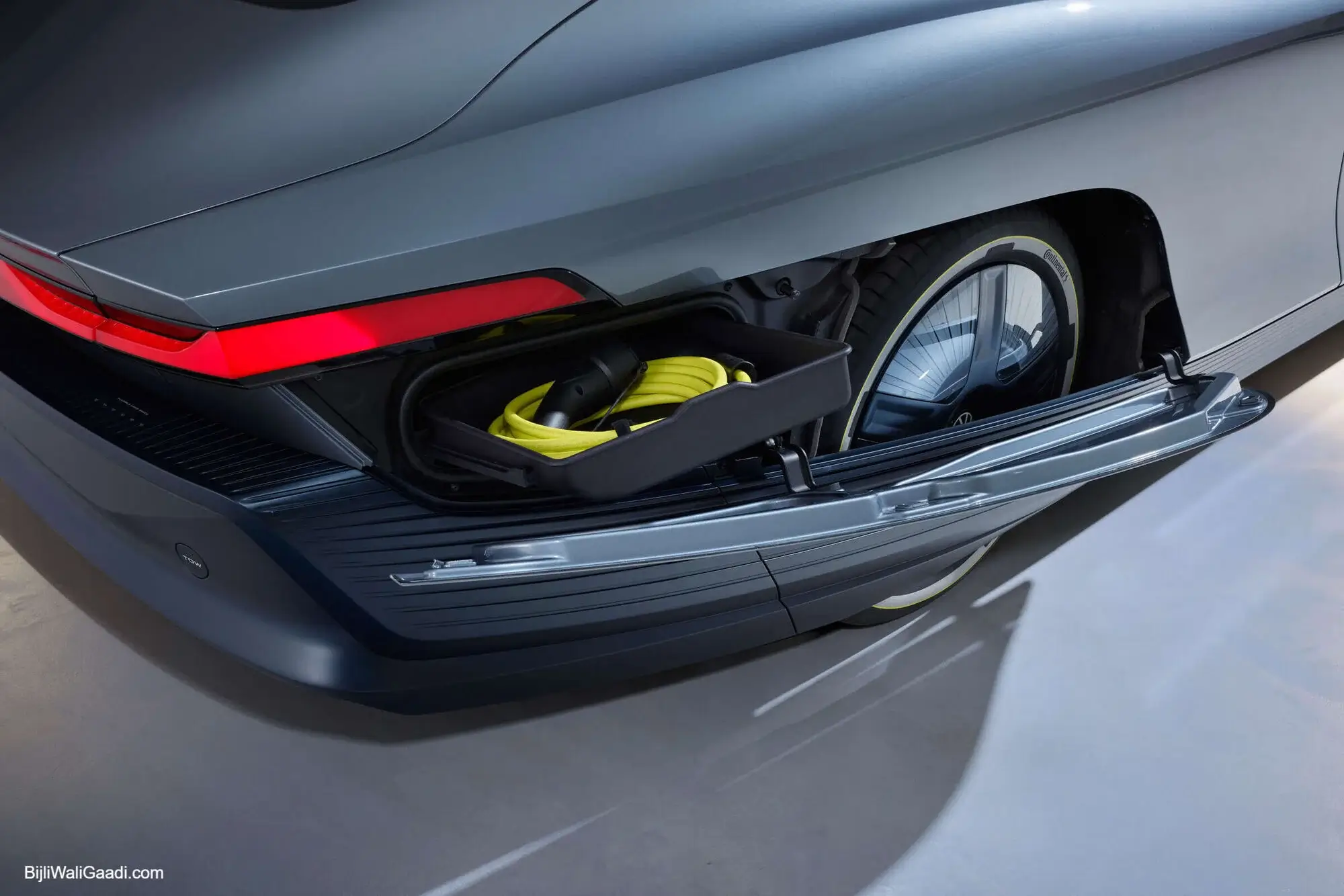
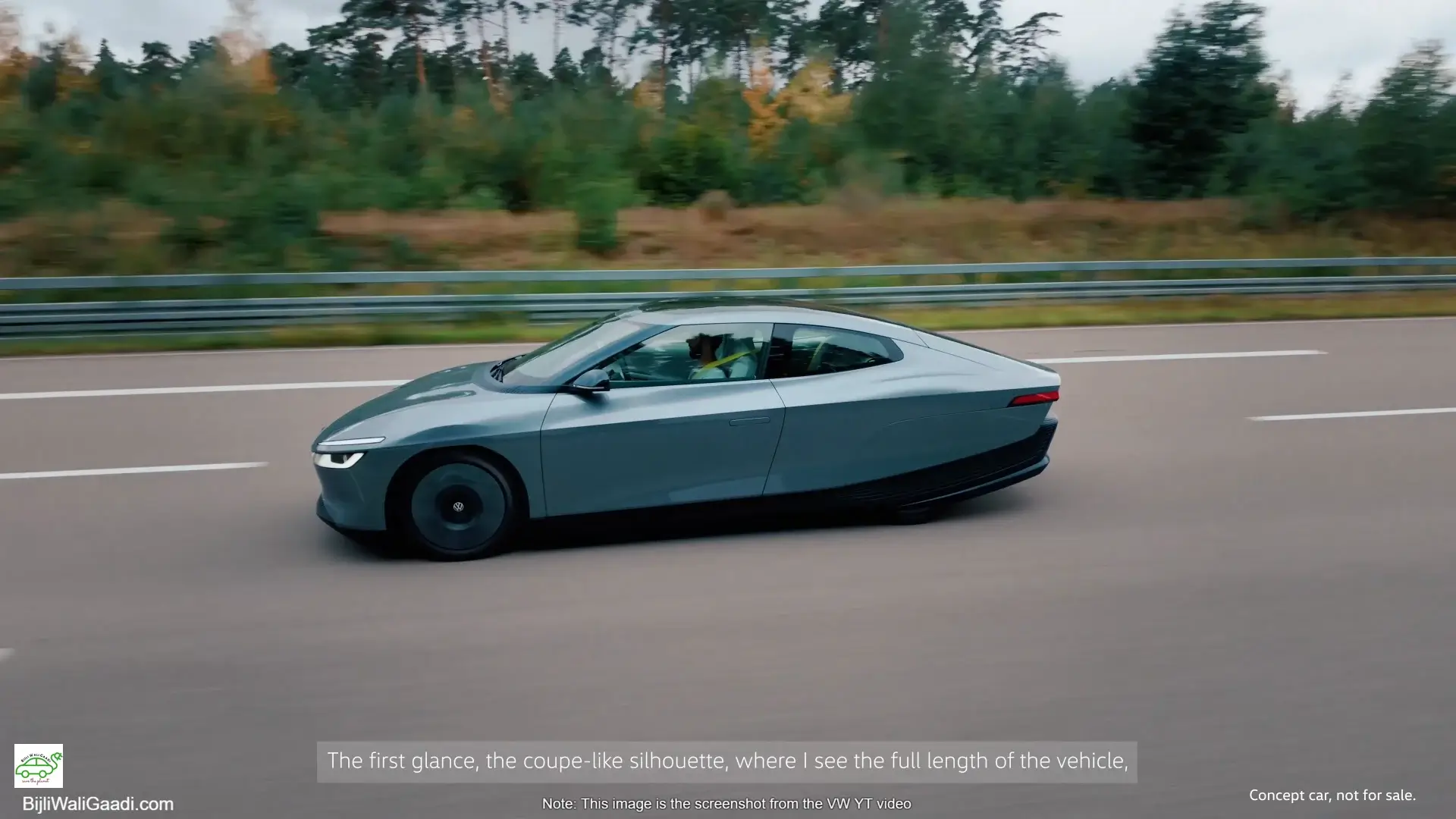
Mission Efficiency is a two-door 2+2 coupé developed by Volkswagen‘s technical development organisation in Wolfsburg. Volkswagen labels it a concept vehicle that is not for sale, though the prototype holds EU road approval and meets crash and structural requirements.
Volkswagen states three records in the Record Institute Germany (RID) category “near-production four-seater electric vehicle suitable for everyday use”: the 0.158 Cd, described as a record for road-approved cars; 6.48 kWh/100 km on an “ideal drive” at a constant 68 km/h with no gradients and auxiliaries such as air conditioning off; and the real-road consumption to Vienna.
These are Volkswagen’s own measurements and claims within a defined category, not independent rankings.
Volkswagen Mission Efficiency’s 6.89 kWh/100 km Real-Road Result
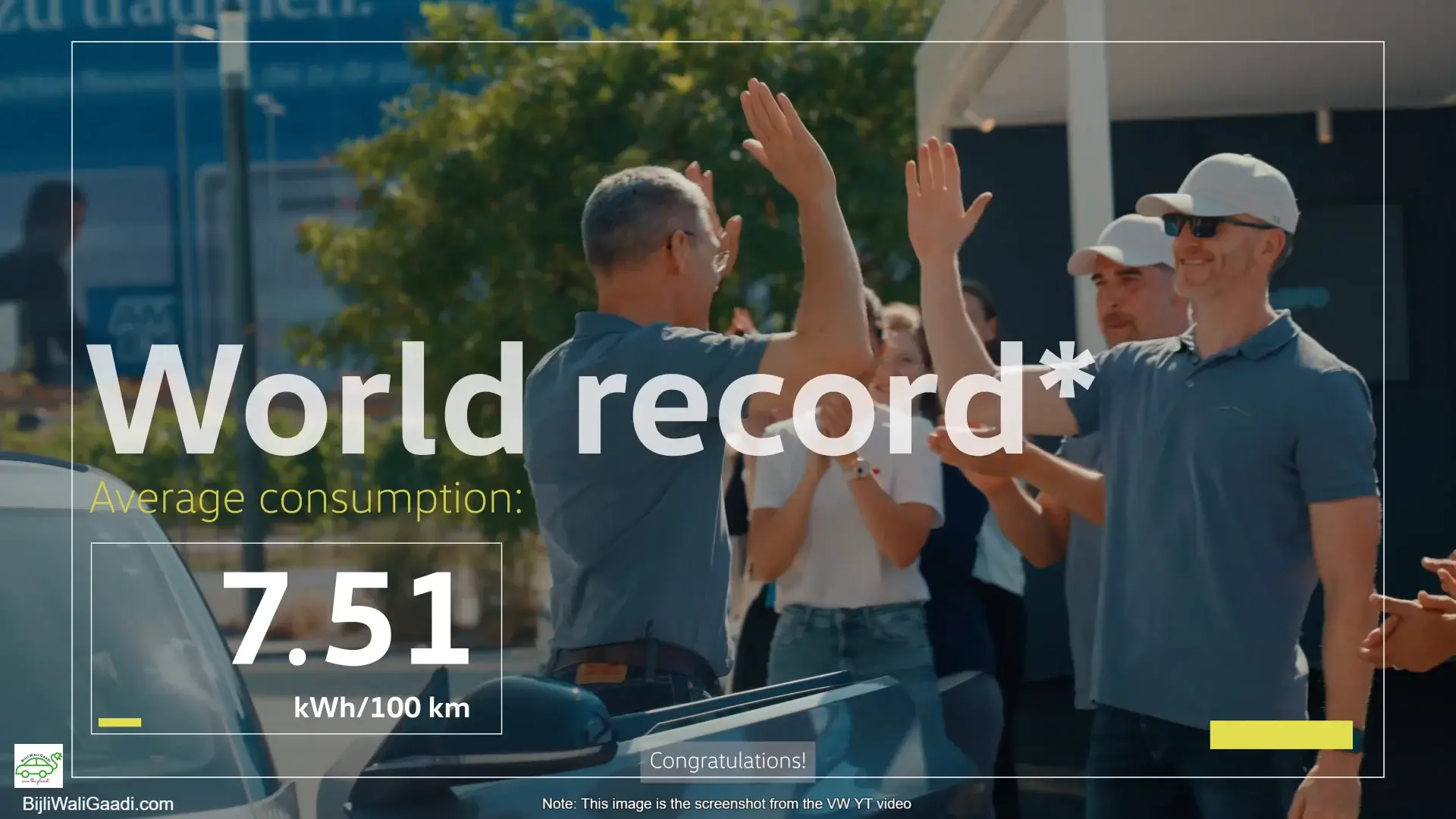
The route ran from Wolfsburg via Poznań and Olomouc to Vienna: 1,278.36 km at an average of 67.72 km/h, top speed 138 km/h. The 54.9 kWh net battery was charged once, and 164 km of range remained on arrival. Mission Efficiency recorded 6.89 kWh/100 km excluding charging losses, 7.51 kWh/100 km including them.
The conditions are what make the figure interesting. In the official Volkswagen video, the team describes a genuine up-and-down journey over country roads and motorway, with climbs and descents, and says the car ran well above 130 km/h at times — anything but crawling, in their words. The original internal target had been 10 kWh/100 km.
How Volkswagen Made Mission Efficiency So Efficient
Aerodynamics
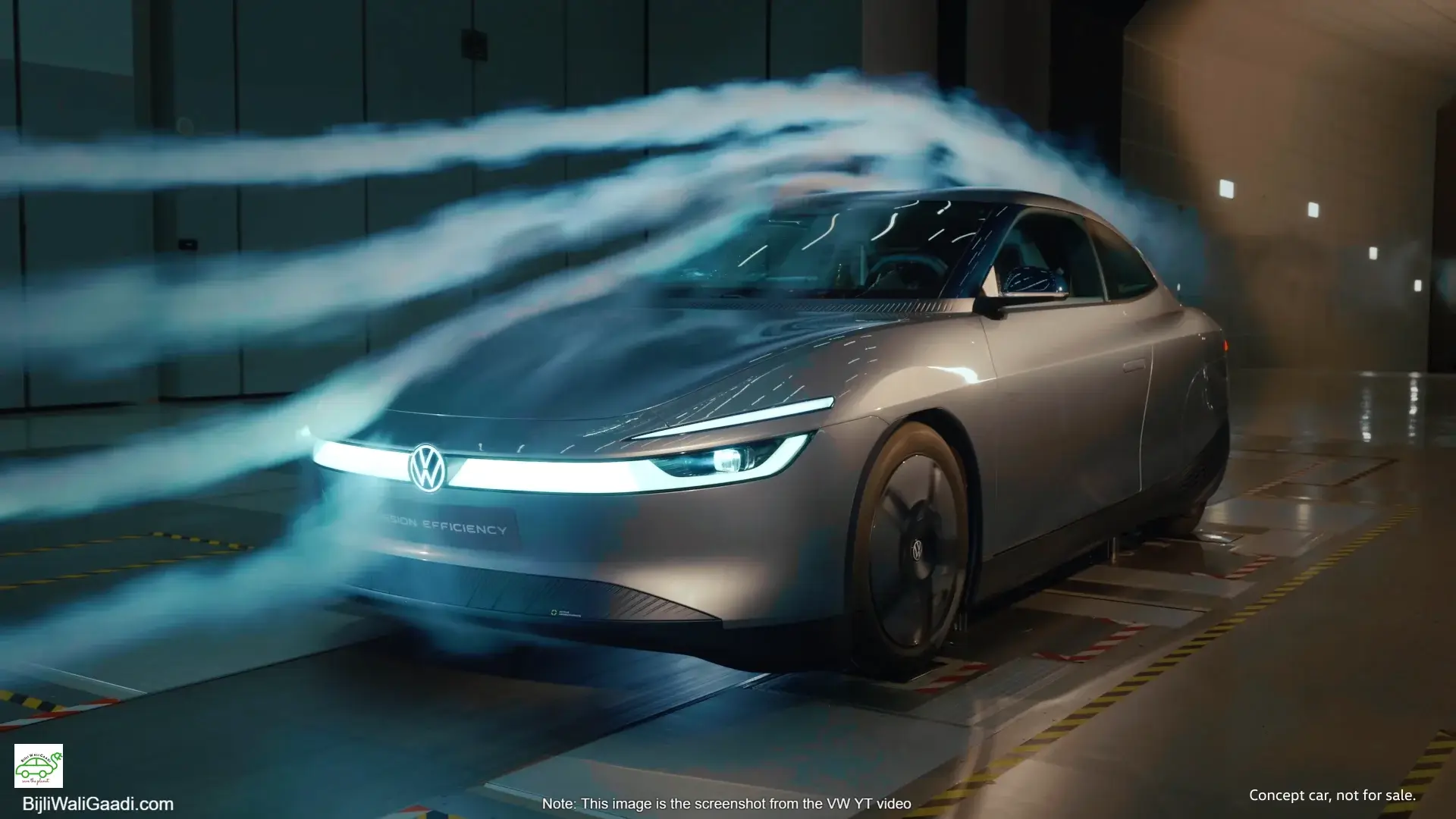
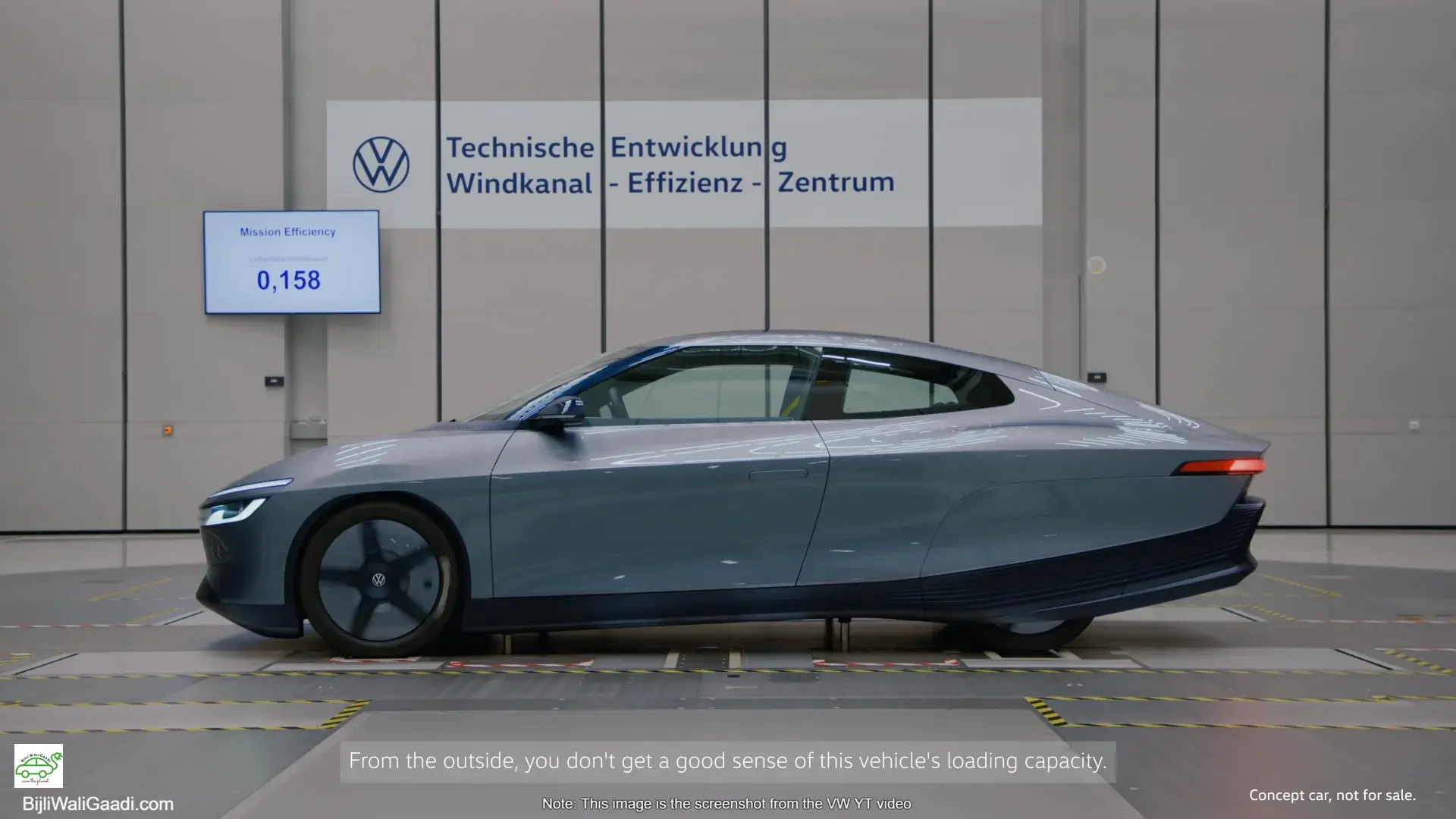
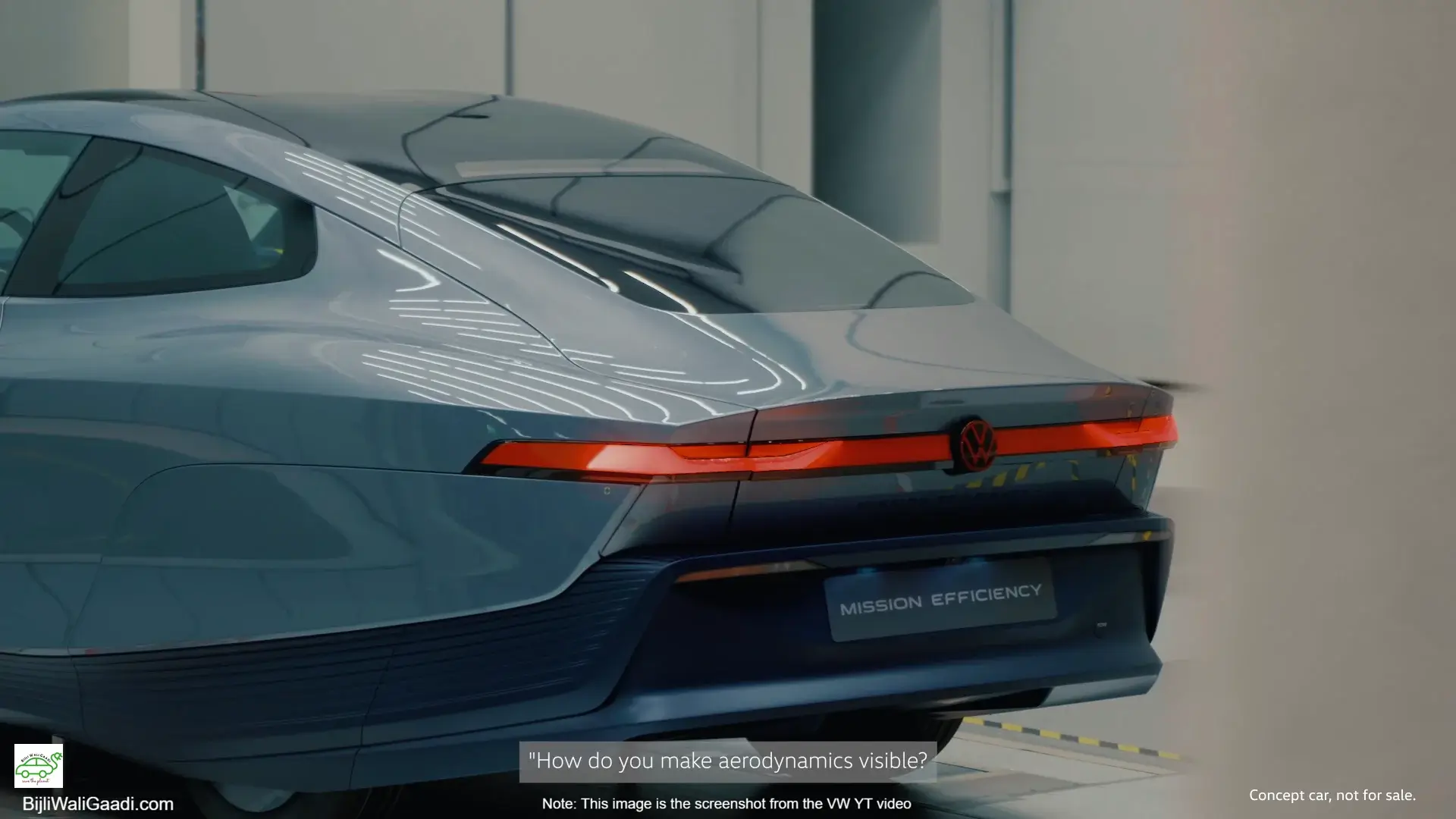
As speed rises, aerodynamic resistance becomes a larger share of road load, and drag grows roughly with the square of speed.
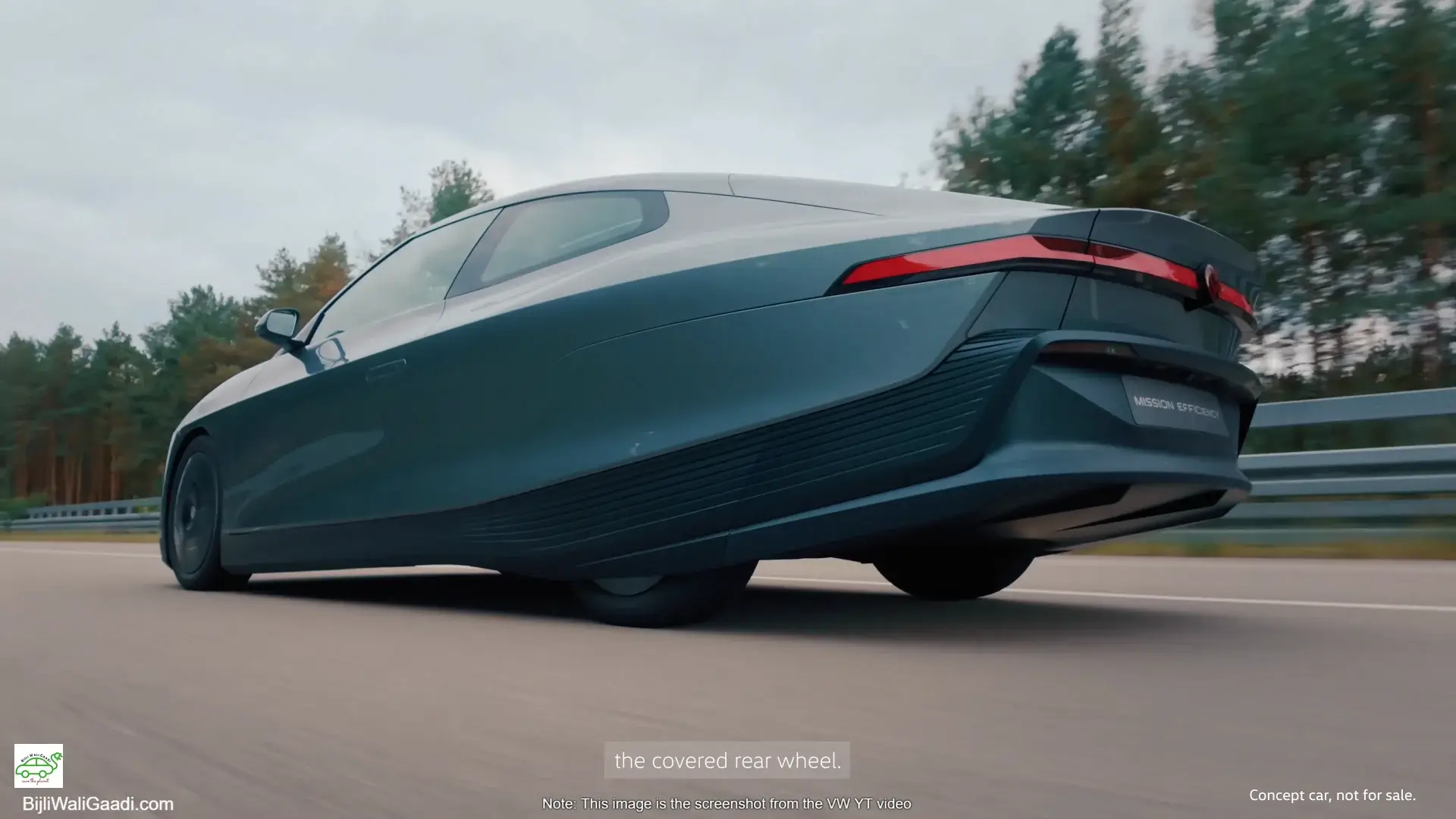
Volkswagen’s aerodynamicists say the most important factor is the basic body shape. The 4,775 mm long, 1,392 mm tall coupé tapers sharply inwards at the rear — boat-like, in the video’s description — to keep the rear small and limit the turbulent wake. The rear wheels are covered, the underbody fully clad, the windows frameless and the door handles set into the body surface. A variable front air intake with active cooling flaps shuts off airflow when cooling isn’t needed.
Frontal area counts alongside Cd, and at 2.08 m² it is small. Volkswagen states that above 80 km/h consumption is more than 30 per cent lower than a standard ID. Polo, and that at 140 km/h the concept needs about what an ID. Polo needs at 100 km/h.
Wheels and Rolling Resistance
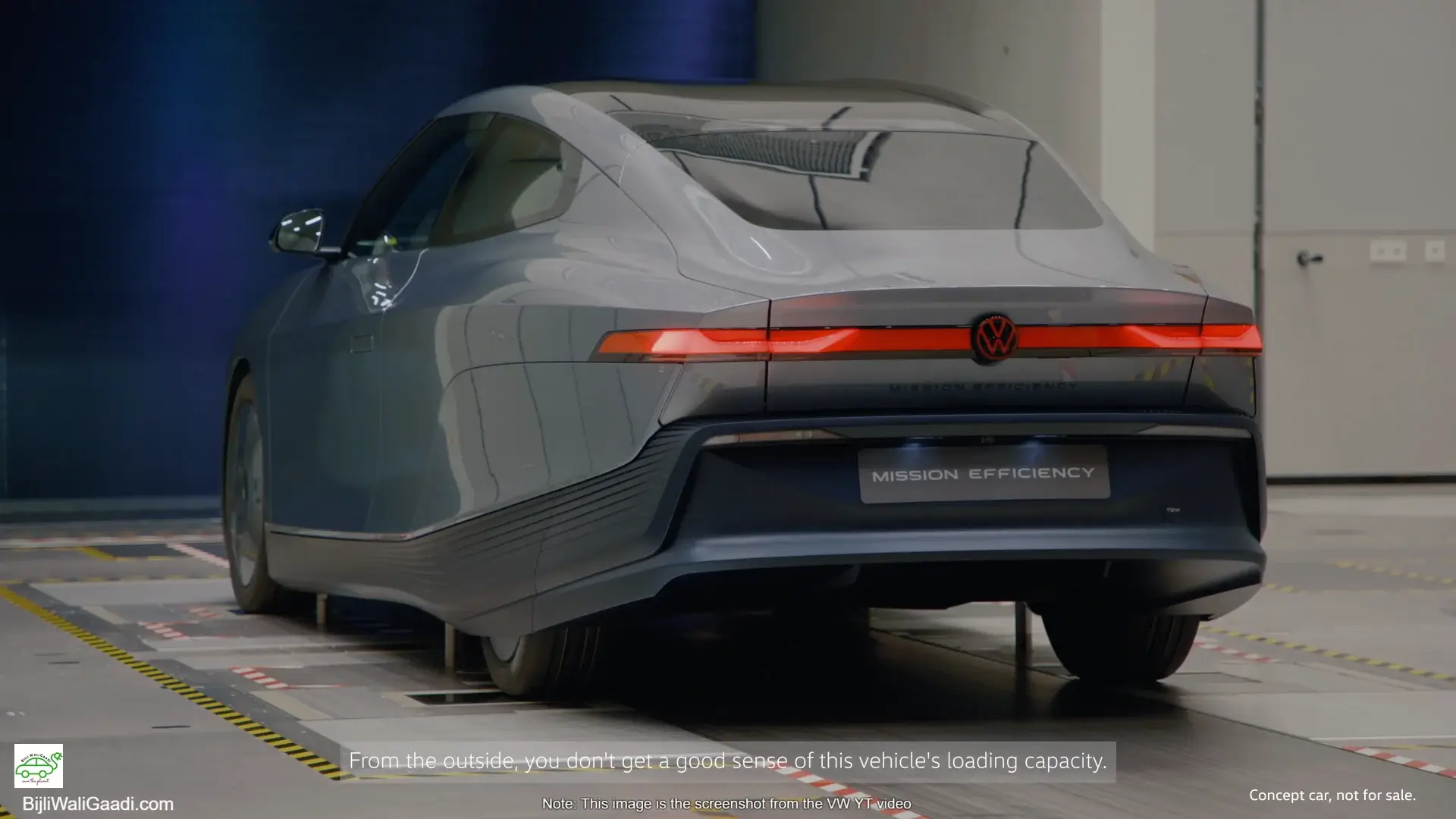
Volkswagen notes that wheels account for 25 to 30 per cent of a car’s aerodynamic drag. Front wheel arches sit tightly around the tyre radius, and patented deflectors inside all wheels prevent air entering the rims.
Volkswagen also developed a concept tyre with Continental based on the EcoContact 7, with rolling resistance of 4.9 kg per tonne — about 25 per cent below the threshold for the EU’s best tyre label class A. As aerodynamic drag falls at lower speeds, rolling resistance becomes a larger share of road-load demand, which is why both were tackled.
Lightweight Construction
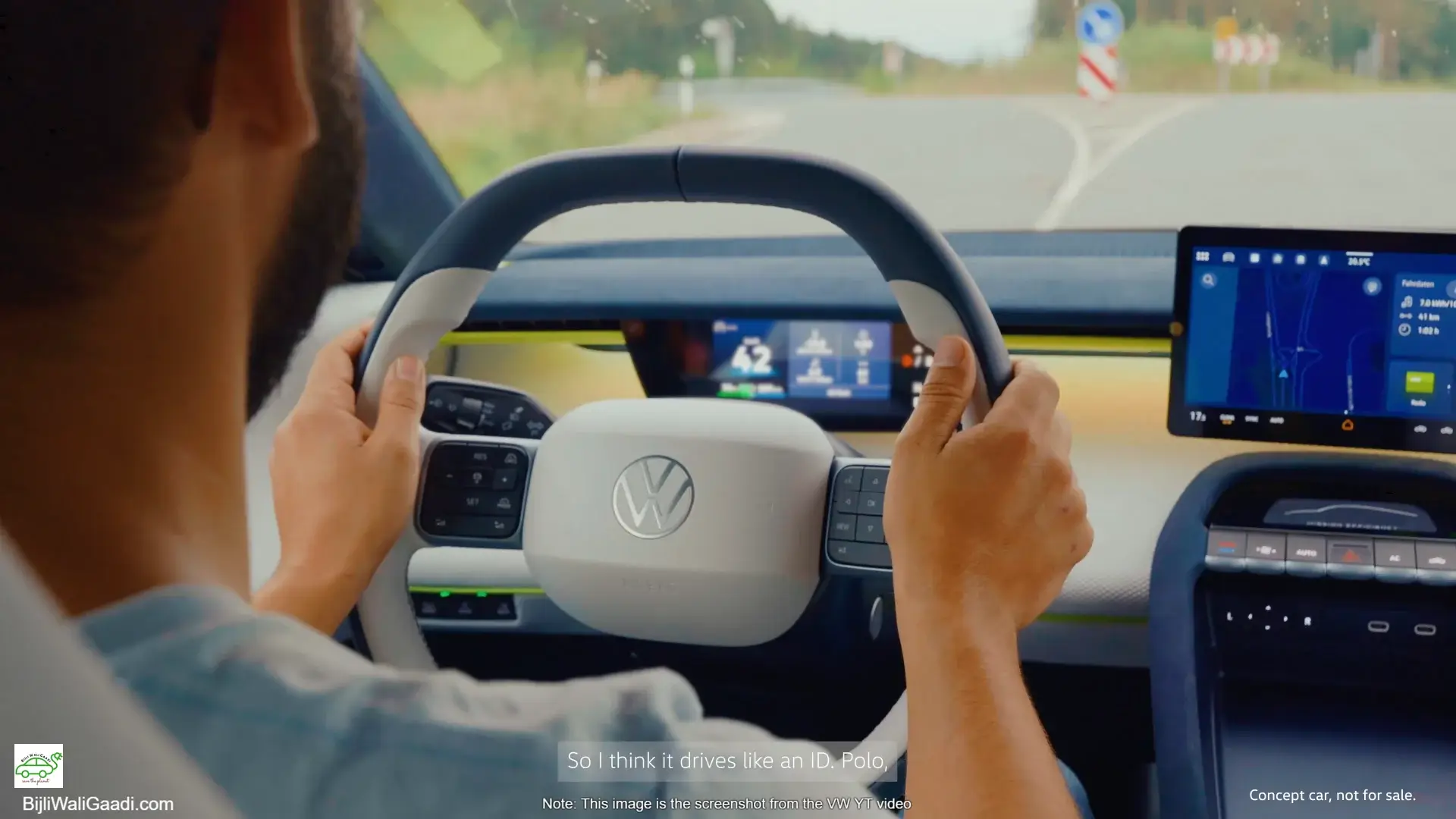
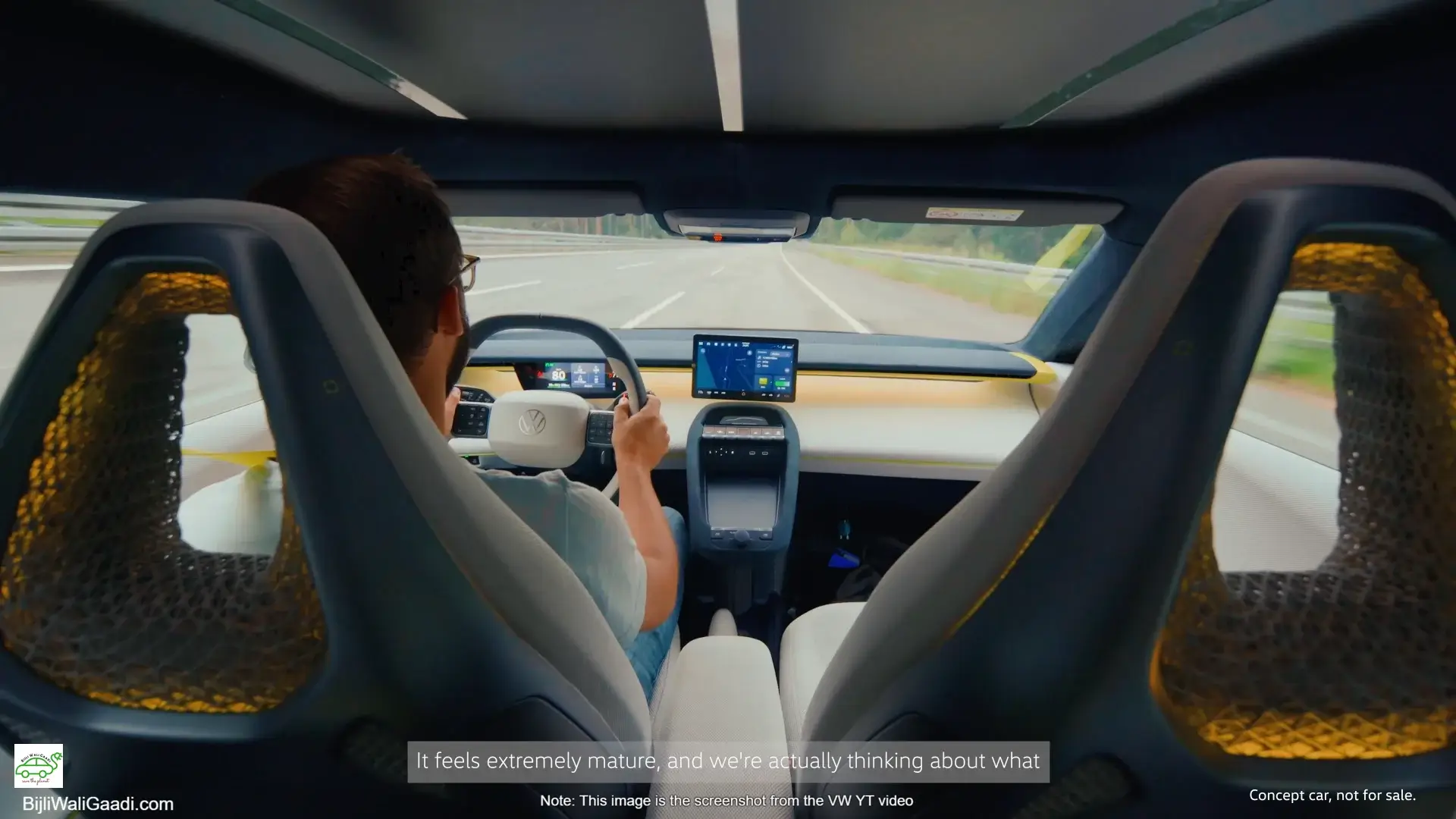
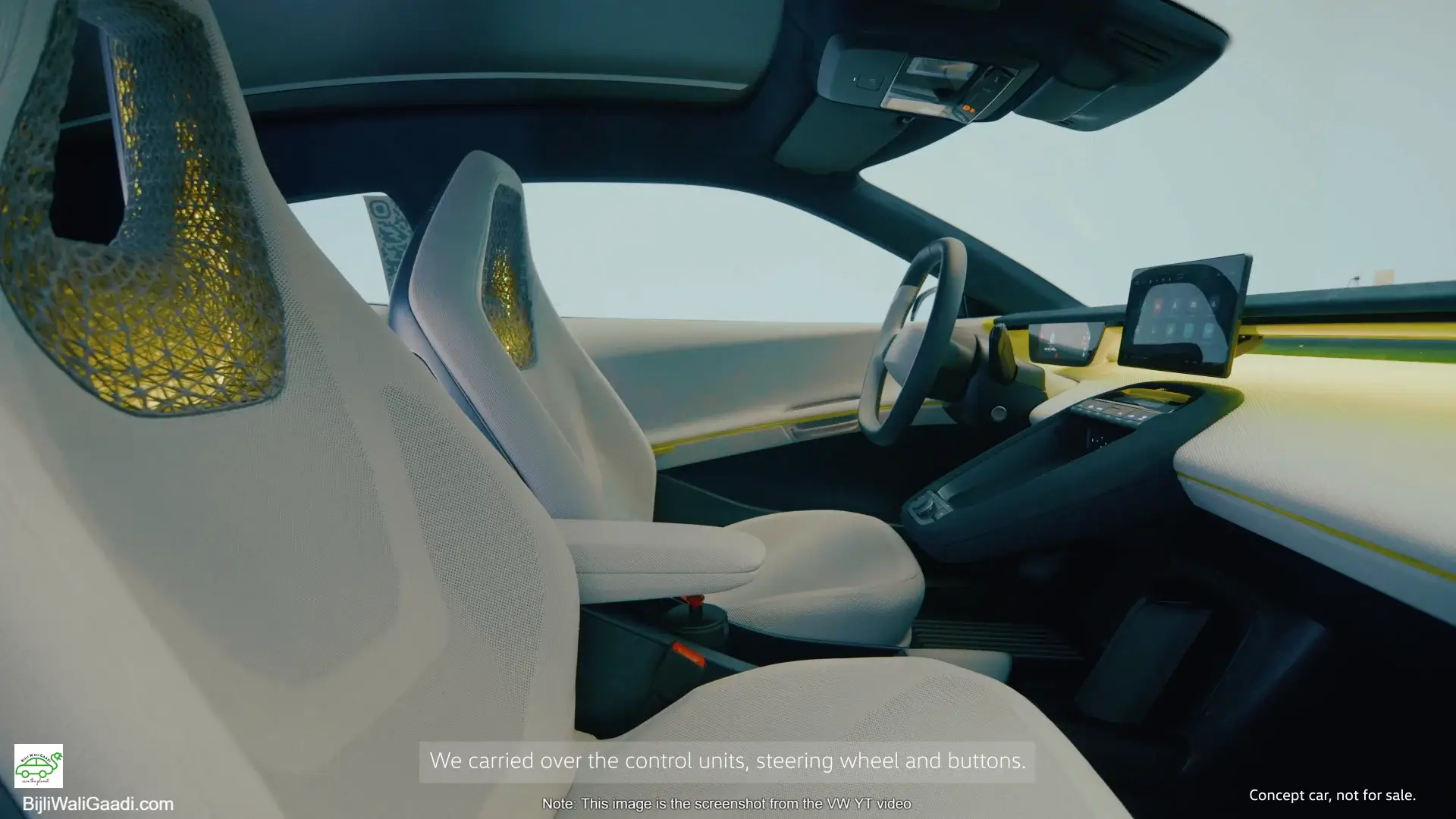
The body combines ID. Polo components with a self-supporting aluminium structure and panels in high-strength carbon-fibre and aramid composite. The interior keeps the ID. Polo’s steering wheel and controls but sheds weight elsewhere: lightweight paneling, a portable Bluetooth box instead of a fixed speaker system, and a “bring your own device” concept in which a phone or tablet replaces built-in displays. Volkswagen has not published a kerb weight.
Efficient Drivetrain and Energy Management
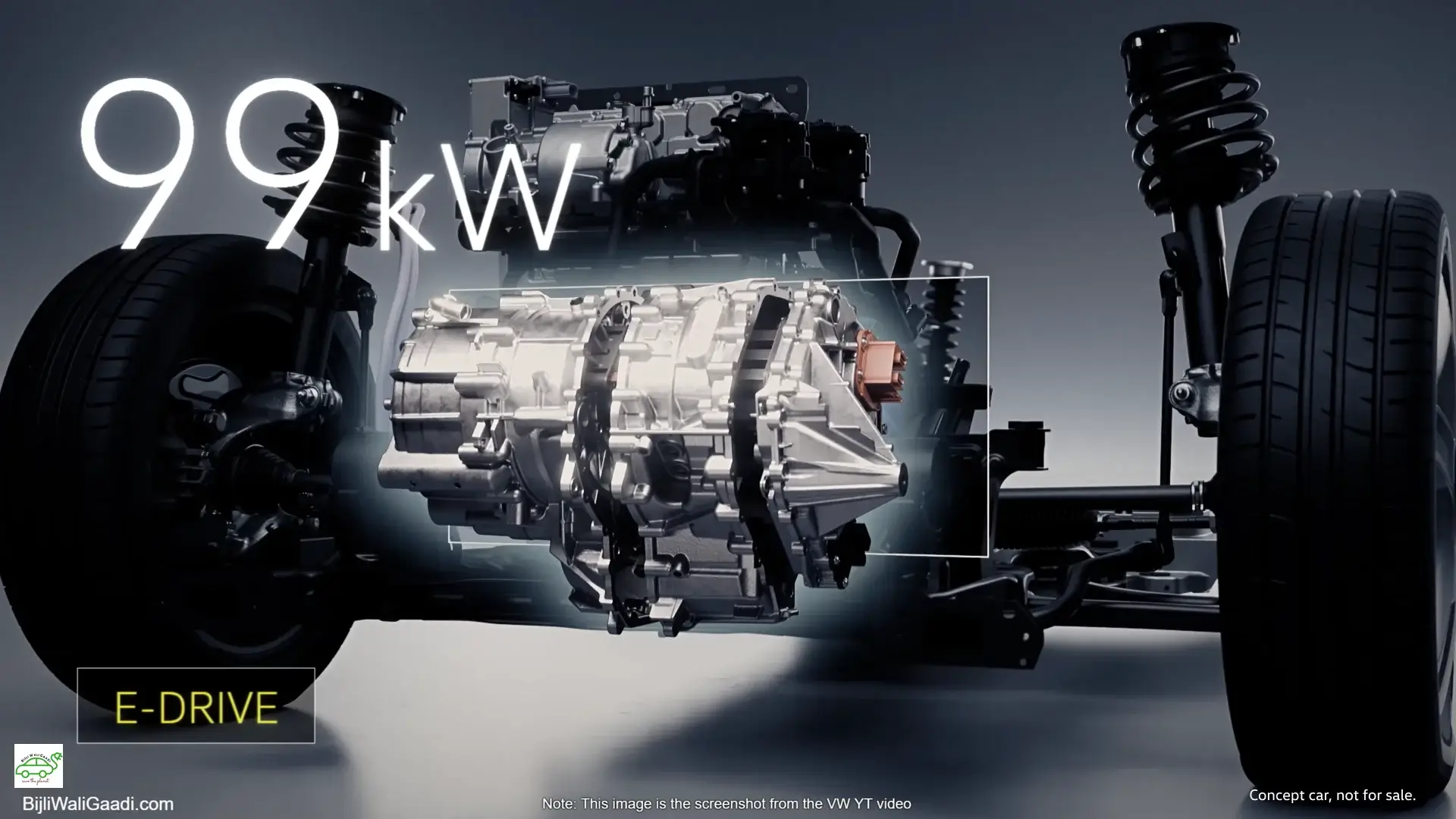
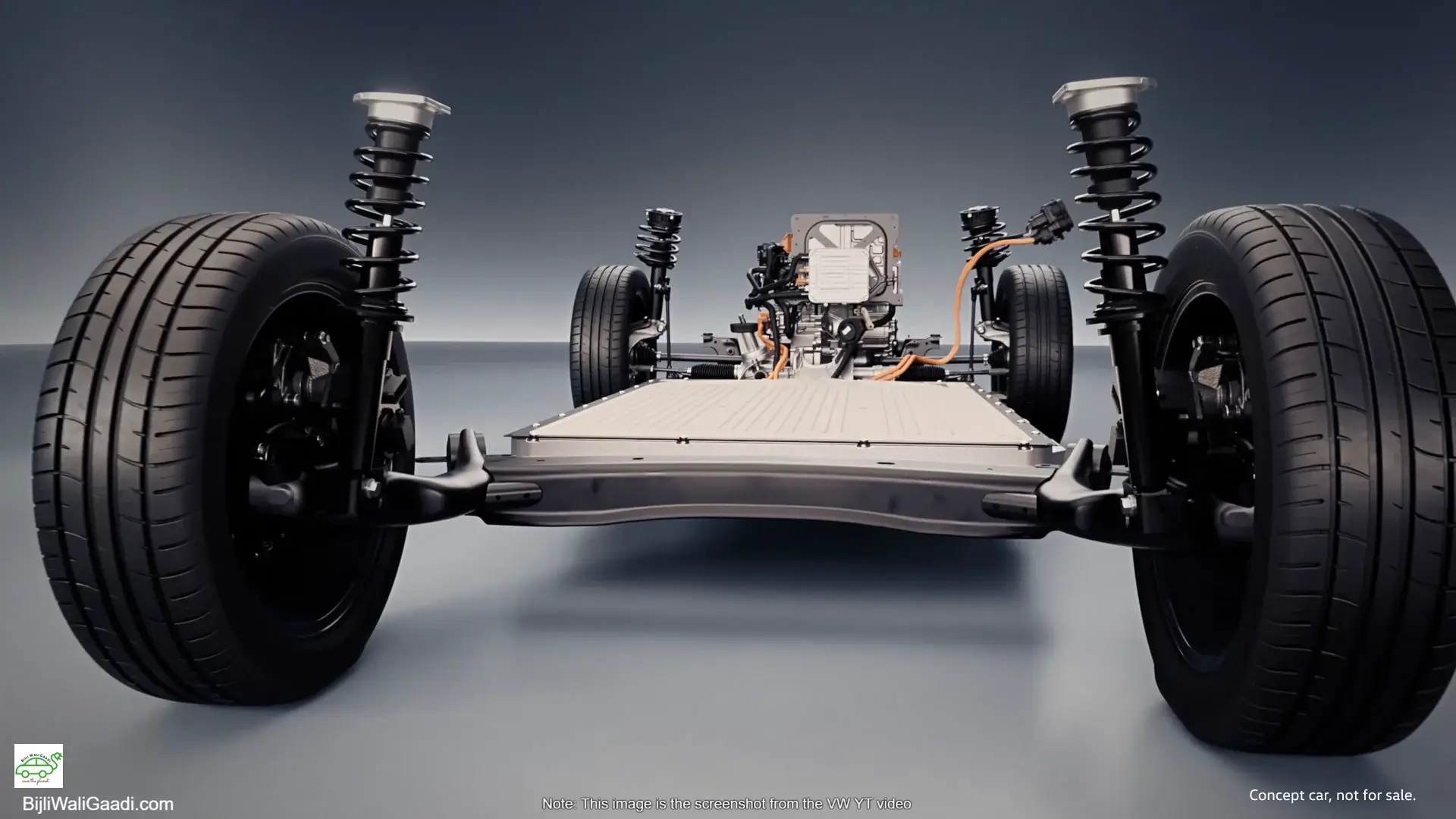
The drivetrain, energy system and platform come from the ID. Polo: the APP290 permanently excited synchronous motor at 99 kW (135 PS) and 264 Nm, plus a 54.9 kWh net lithium-ion NMC battery using cell-to-pack construction, rated at 11 kW AC and 105 kW DC.
A heat pump using R744, a CO₂-based natural refrigerant, cuts the energy needed for cabin heating. A 370 W photovoltaic system in the glass roof and boot lid supplies the on-board electrical system, which Volkswagen estimates can add up to 30 km of range per day depending on season, region and weather — an estimate, not a guarantee.
At the rear axle Volkswagen uses an electromechanical brake for the first time, developed with AUMOVIO; the front keeps the ID. Polo’s hydraulic brake. Volkswagen says the rear system reduces friction losses, saves lines and brake fluid, and supports variable brake force distribution, improving recuperation.
Volkswagen Mission Efficiency: Key Numbers at a Glance
| Specification | Volkswagen Mission Efficiency |
| Vehicle type | Near-production electric concept; not for sale |
| Platform | MEB+, front-wheel drive |
| Motor | APP290 PSM, 99 kW (135 PS), 264 Nm |
| Battery | 54.9 kWh net, lithium-ion NMC, cell-to-pack |
| Charging | 11 kW AC / 105 kW DC |
| Drag coefficient | Cd 0.158 |
| Frontal area | 2.08 m² |
| Real-road consumption | 6.89 kWh/100 km (7.51 incl. charging losses) |
| Ideal-drive consumption | 6.48 kWh/100 km at constant 68 km/h |
| WLTP consumption | 8.4 kWh/100 km |
| Record drive | 1,278.36 km, one charging stop, 164 km remaining |
| Dimensions | 4,775 × 1,744 × 1,392 mm; 2,700 mm wheelbase |
| Performance | 160 km/h top speed; 0–100 km/h in 9.0 seconds |
| Seating / boot | 2+2; 481 litres |
| Solar | 370 W photovoltaic roof and boot lid |
Volkswagen Mission Efficiency: Consumption Figures Under Different Conditions
Four measurements of one vehicle under different conditions — not four vehicles, and not interchangeable. WLTP ratings cannot be compared directly with EPA or NEDC figures (kWh/100 km).
WLTP rating 8.4 ████████████████████████████████████
Real road (incl. losses) 7.51 ████████████████████████████████
Real road (excl. losses) 6.89 █████████████████████████████
Ideal drive 6.48 ███████████████████████████
What Mission Efficiency Means for Volkswagen’s Future EVs
Production-derived: the MEB+ platform, drivetrain and energy system come from the ID. Polo — Volkswagen’s point being that the records were set with affordable large-scale production hardware.
Demonstrated only: the rim deflectors, variable air intake, electromechanical rear brake, solar roof and carbon-aramid panels appear on this concept, not a production model.
Volkswagen is currently considering what a production car based on this one could look like. That is consideration, not a production programme or timeline. No model, market or price has been announced.
Volkswagen’s team describes it as driving like an ID. Polo, slightly firmer.
FAQ
–
Stay connected via Google 'Electric Vehicle' News
Follow BijliWaliGaadi | India's Trusted EV Insights Portal
source on Google