2027 Nissan Rogue Hybrid e-POWER: 225-HP Series Hybrid, Price and Specs
Stay connected via Google 'Electric Vehicle' News
Follow BijliWaliGaadi | India's Trusted EV Insights Portal
source on Google
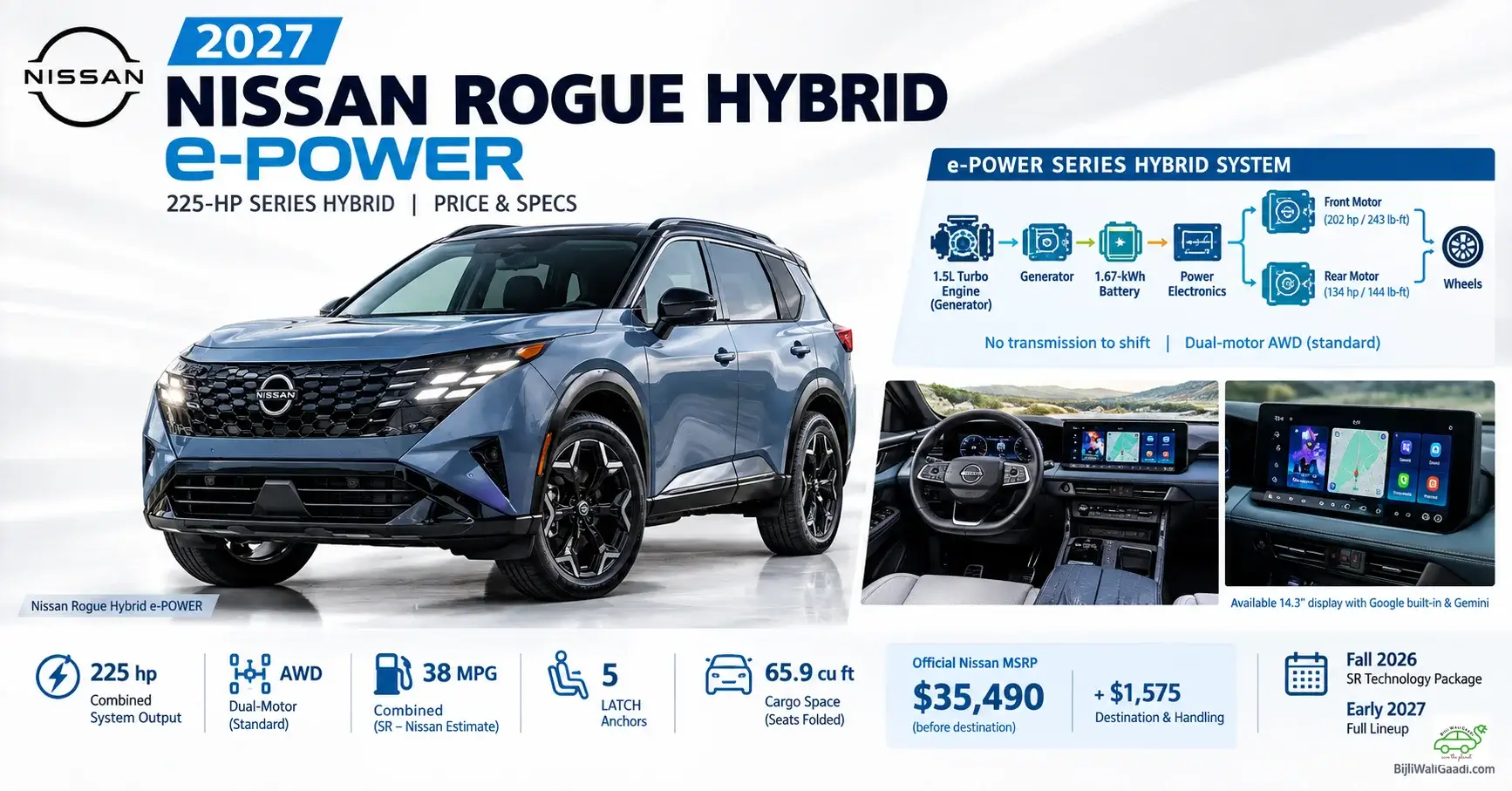
Nissan has officially revealed the 2027 Rogue Hybrid, its first U.S. model built on third-generation e-POWER, a series-hybrid system in which electric motors alone drive the wheels. The SR AWD with SR Technology Package arrives at dealers in fall 2026, with the full SV, SR and Platinum lineup following in early 2027. MSRP starts at $35,490 before destination and handling.
What Makes the 2027 Nissan Rogue Hybrid Different
Most U.S. hybrids, including the Toyota RAV4 Hybrid and Honda CR-V Hybrid, let the gasoline engine mechanically drive the wheels at least part of the time. Nissan’s e-POWER system does not: the wheels are powered only by electric motors, while the engine’s sole job is generating electricity. Nissan calls this a segment-first configuration for the class, built on three generations and nearly 2 million global e-POWER sales since 2016. Every Rogue Hybrid trim also gets dual-motor AWD as standard, which Nissan notes the RAV4 Hybrid and Tucson Hybrid don’t offer.
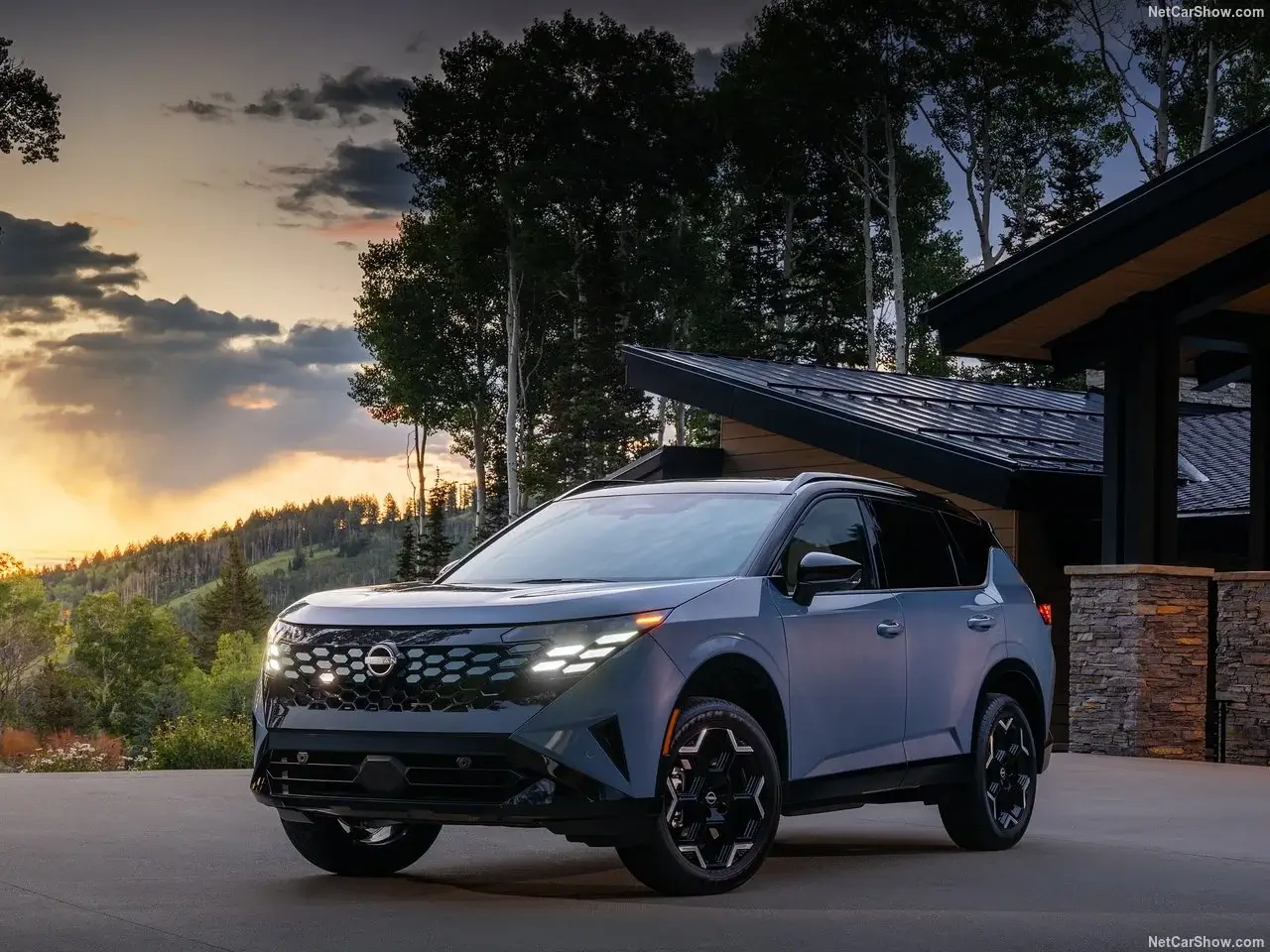
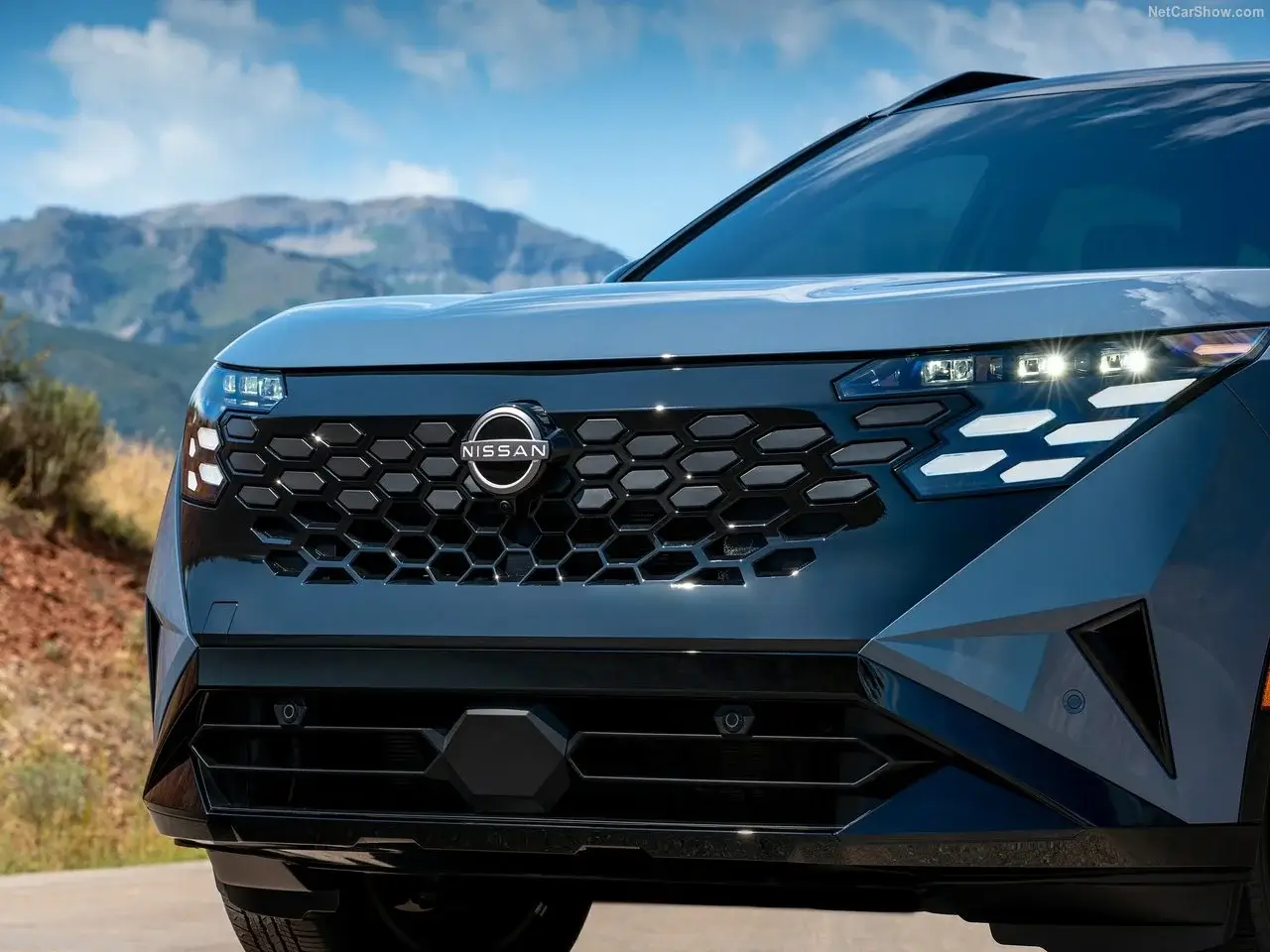
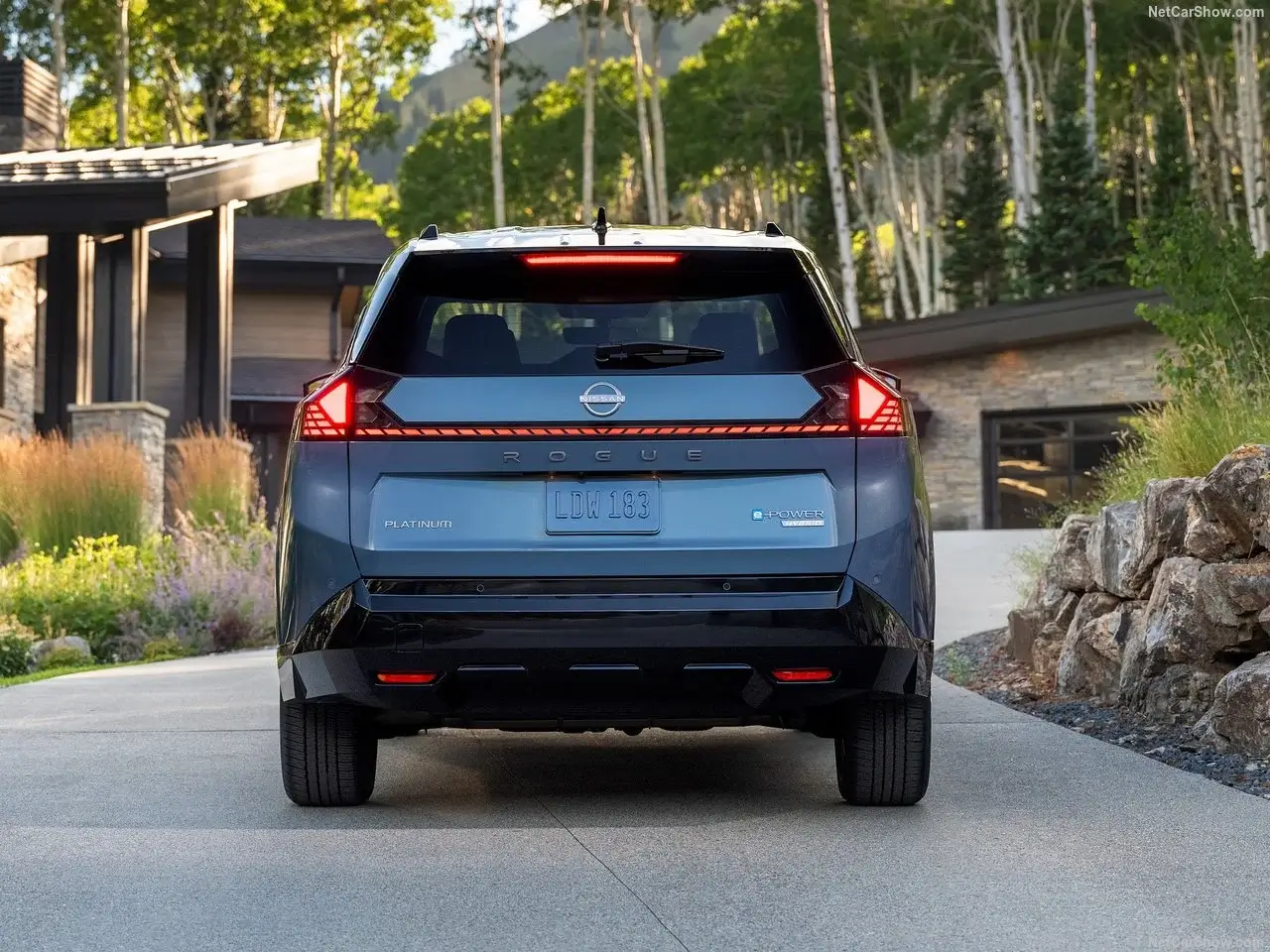
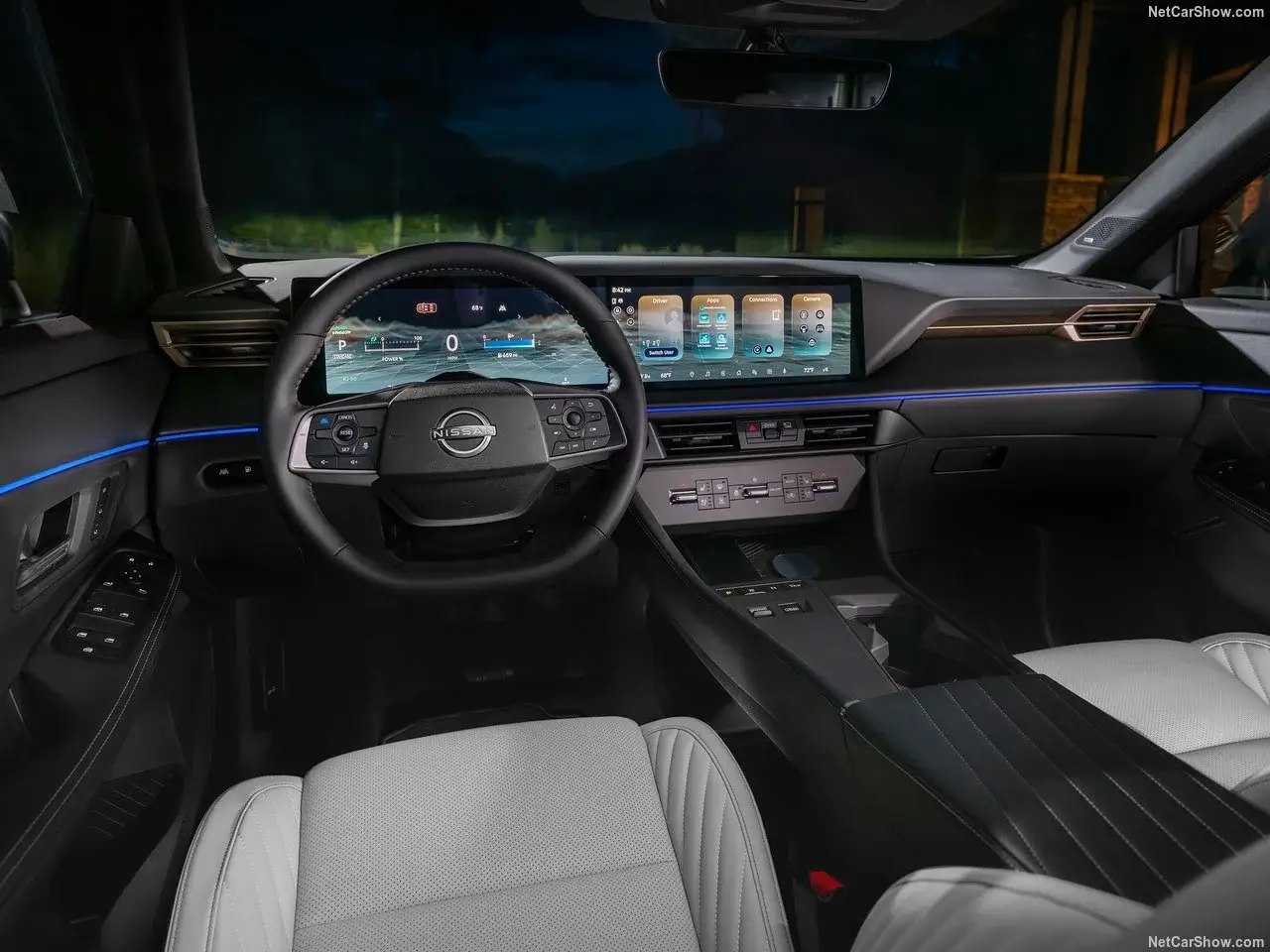
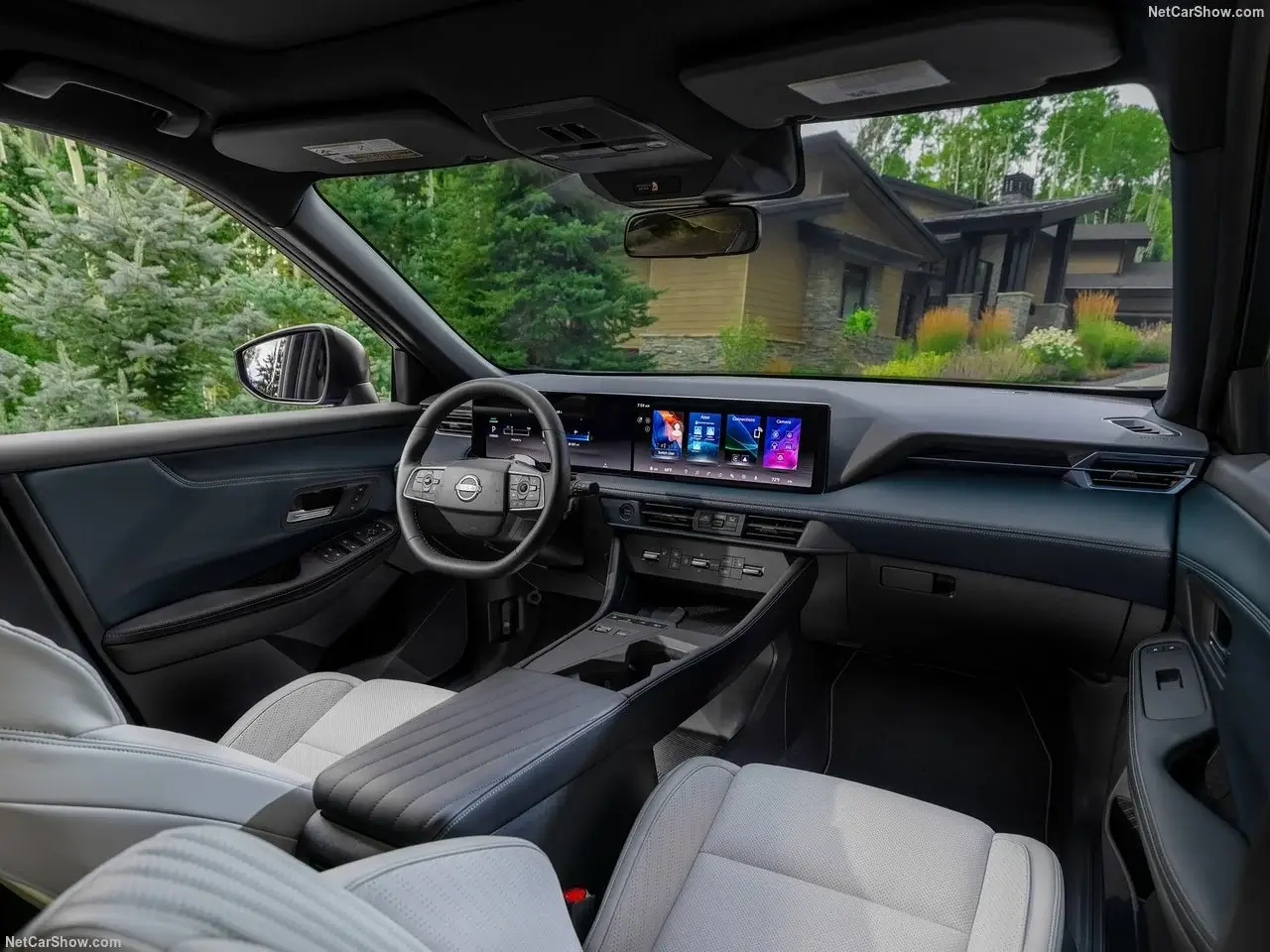
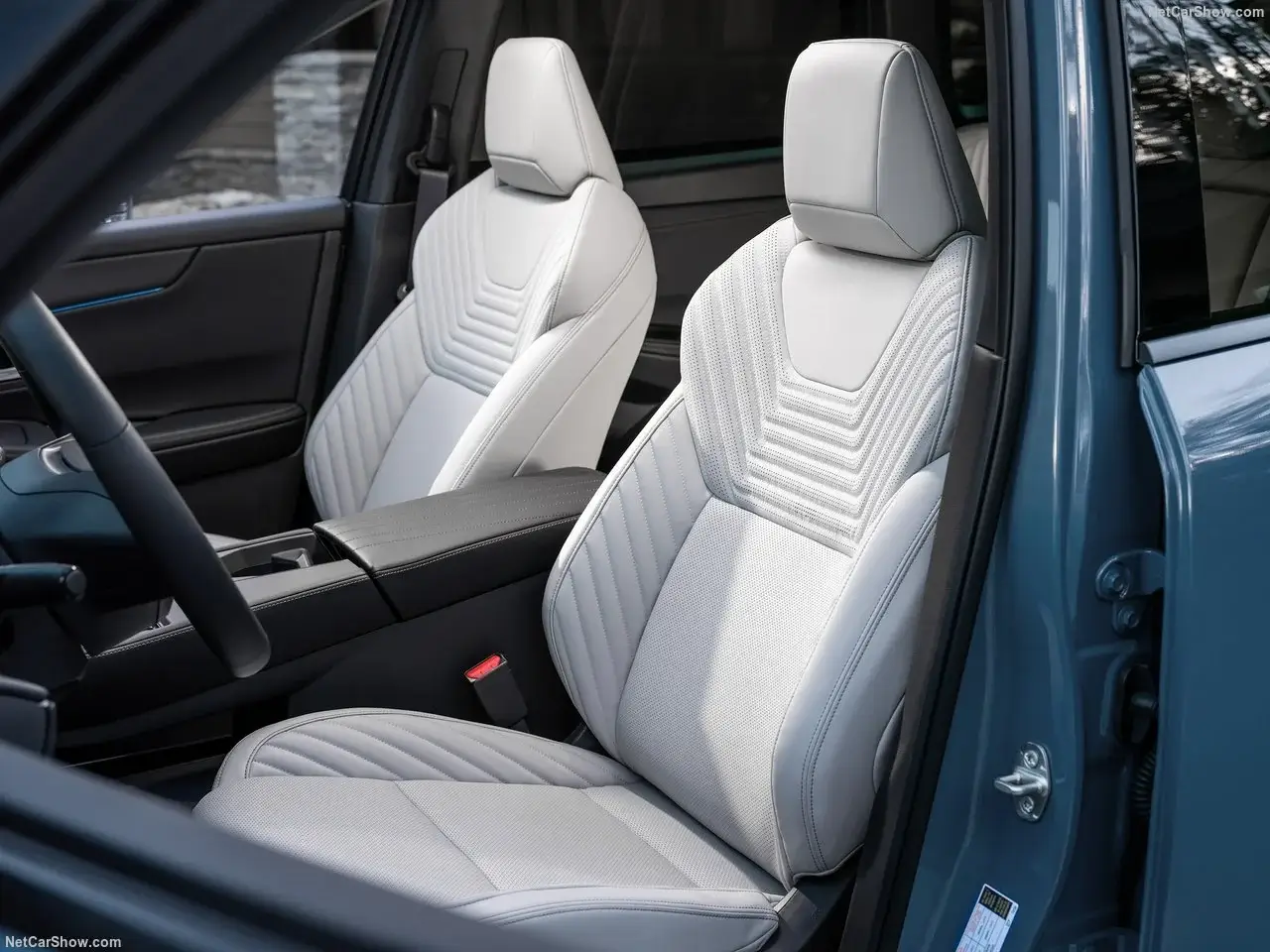
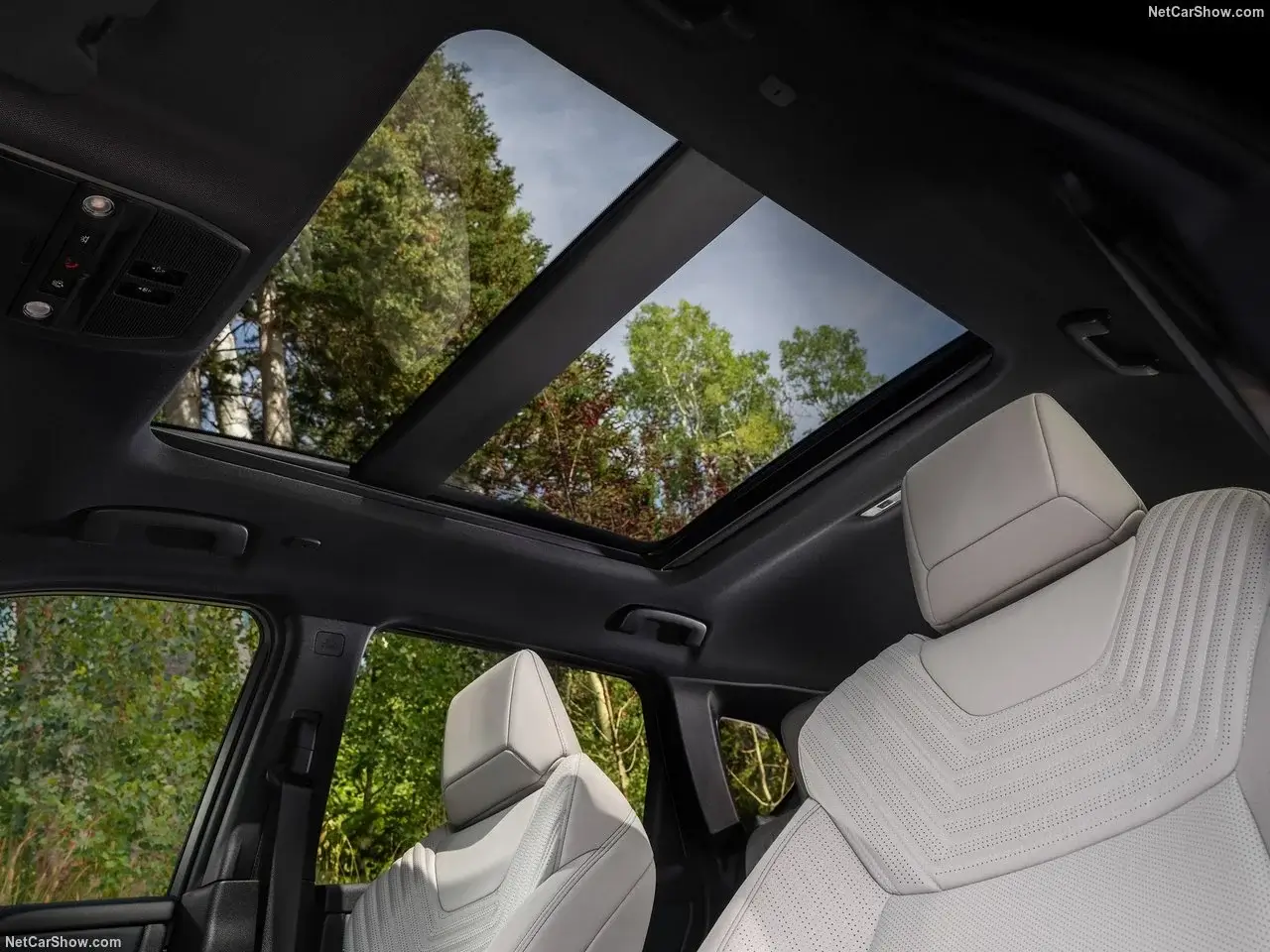
Image credit: Images shown above are sourced from the Nissan Rogue Hybrid (2027) – pictures, information & specs
How Nissan’s e-POWER Series Hybrid Works
In a series hybrid, energy passes through more stages than in a conventional design: gasoline powers the engine, which turns a generator, feeding electricity through the power electronics to the battery and inverter, which power the two drive motors. A parallel or series-parallel hybrid can instead route some mechanical engine power more directly to the wheels.
That extra conversion step doesn’t automatically make e-POWER more efficient in every scenario. What it provides is separation between how the engine runs and how fast the wheels turn. Because the engine never has to match road speed, it has more freedom to operate in efficient regions of its range, and it shuts off once the battery holds sufficient charge. Nissan describes this as smoother, quieter, more responsive acceleration with no conventional transmission to shift — though each motor still sends power to its axle through a fixed reduction and final-drive ratio, not zero gearing at all.

1.5-Liter Generator Engine and 1.67-kWh Battery
The generator engine is a 1.5-liter turbocharged three-cylinder (ZR15DDTe), producing 148 hp at 5,000 rpm and 171 lb-ft at 3,600 rpm, with a 13.0:1 compression ratio and 42% thermal efficiency. It never connects mechanically to the wheels. Electricity flows to a 1.67-kWh lithium-ion battery, which buffers power between the generator and drive motors, smoothing delivery during acceleration.
Dual Electric Motors and 225-HP AWD System
Propulsion comes from two AC synchronous permanent-magnet motors: front, 202 hp / 243 lb-ft; rear, 134 hp / 144 lb-ft. Nissan states combined system output at 225 hp. The individual motor ratings don’t simply add to that figure — system output reflects the limits of the complete battery, inverter and motor package operating together, not a sum of each motor’s peak rating. Nissan has not published an official 0-60 mph time.
e-Pedal, Smooth Stop and e-4ORCE AWD
Nissan’s e-Pedal is a one-pedal regenerative-braking feature that can bring the Rogue Hybrid to a full stop without the brake pedal. Smooth Stop is a separate, complementary system that automatically modulates brake pressure near the end of a stop to reduce head-toss. Standard dual-motor AWD continuously adjusts torque between the front and rear motors and can apply light braking to inside wheels for cornering stability, per Nissan.
Interior Technology and ProPILOT Assist
A 12.3-inch touchscreen with wireless Apple CarPlay and Android Auto is standard. A 14.3-inch touchscreen with Google built-in, including Google Maps, Play Store and Google Gemini, is optional on SR and standard on Platinum, with a matching 14.3-inch digital cluster. A 15-watt Qi2 wireless charging pad is standard on SV and SR; Platinum adds a second pad and a 10-speaker Bose audio system.
The updated ProPILOT Assist adds a wider-field front camera and new radar sensor. Auto Lane Change and Hands-Off Traffic Jam Support are available on SR Technology Package and Platinum. Driver-assistance features have limitations, and the driver remains responsible for vehicle control at all times.
Rear doors open to nearly 90 degrees, and five LATCH anchors allow a car seat in the second-row center position. Cargo volume is 65.9 cubic feet with the rear seats folded.
2027 Rogue Hybrid Price, Trims and Availability
Nissan’s official MSRP starts at $35,490 before destination and handling, or $37,065 including the $1,575 destination charge. Dealers set final pricing.
| Configuration | Official MSRP | + Destination/Handling* | Availability |
| SV AWD | $35,490 | $37,065 | Early 2027 |
| SV AWD + SV Premium Package | $37,590 | $39,165 | Early 2027 |
| SR AWD | $37,490 | $39,065 | Early 2027 |
| SR AWD + SR Technology Package | $41,490 | $43,065 | Fall 2026 |
| Platinum AWD | $43,490 | $45,065 | Early 2027 |
*MSRP plus destination/handling; excludes tax, title, license and options.
Fuel Economy: What Nissan Has Estimated So Far
Nissan estimates 40 mpg city, 36 mpg highway and 38 mpg combined for the SR grade, based on internal testing rather than final EPA certification. Fuel economy for SV and Platinum is listed as TBD in Nissan’s published specifications. Confirm final figures against official EPA window-sticker ratings once certified. Nissan’s rationale is that a series-hybrid layout can suit stop-and-go city driving, but that’s a design rationale, not a demonstrated outcome versus rated competitors like the RAV4 Hybrid.
e-POWER vs. Conventional Hybrid Systems
| Feature | 2027 Rogue Hybrid | Conventional Hybrid Approach |
| Engine mechanically drives wheels | No | Depends on system |
| Wheel propulsion | Electric motors only | Engine + electric motor(s), varies by architecture |
| Plug required | No | No |
| AWD architecture | Dual electric motors, standard | Varies by model |
| Gear shifting for propulsion | No conventional shifting transmission | Depends on system |
What the e-POWER Architecture Means for Drivers
The series-hybrid layout brings specific engineering advantages: electric-motor propulsion at both axles, no conventional transmission to shift, standard dual-motor AWD, and a generator engine with more freedom to run in efficient ranges since it’s decoupled from wheel speed.
It also carries trade-offs: it still requires gasoline and cannot be charged externally, the generator-to-battery-to-motor path adds conversion steps a direct mechanical link wouldn’t need, highway efficiency depends on the full system and conditions, and the 1.67-kWh battery is far smaller than a battery-electric vehicle’s. Final real-world and EPA figures aren’t yet certified.
2027 Nissan Rogue Hybrid: Key Specifications
| Specification | 2027 Nissan Rogue Hybrid |
| Powertrain | e-POWER series hybrid |
| Engine | 1.5L turbocharged 3-cylinder (ZR15DDTe) |
| Engine output | 148 hp @ 5,000 rpm |
| Engine torque | 171 lb-ft @ 3,600 rpm |
| Front motor | 202 hp / 243 lb-ft |
| Rear motor | 134 hp / 144 lb-ft |
| Combined system output | 225 hp |
| Hybrid battery | 1.67 kWh lithium-ion |
| Drive | Standard dual-motor AWD |
| Transmission | No conventional shifting transmission; fixed reduction/final-drive gearing per motor |
| e-Pedal | Standard |
| Smooth Stop | Standard |
| Fuel economy (SR) | Nissan-estimated 40 city / 36 hwy / 38 combined mpg; SV/Platinum TBD |
| Cargo capacity | 65.9 cu ft, seats folded |
| Starting MSRP | $35,490 before destination |
| Destination/handling | $1,575 |
| Launch | SR Technology Package, fall 2026; full lineup, early 2027 |

Frequently Asked Questions
–
Stay connected via Google 'Electric Vehicle' News
Follow BijliWaliGaadi | India's Trusted EV Insights Portal
source on Google