Is the 2026 Nissan Micra EV the Ultimate City Hatchback? 408 km Range & Specs Uncovered!
Stay connected via Google 'Electric Vehicle' News
Follow BijliWaliGaadi | India's Trusted EV Insights Portal
source on Google
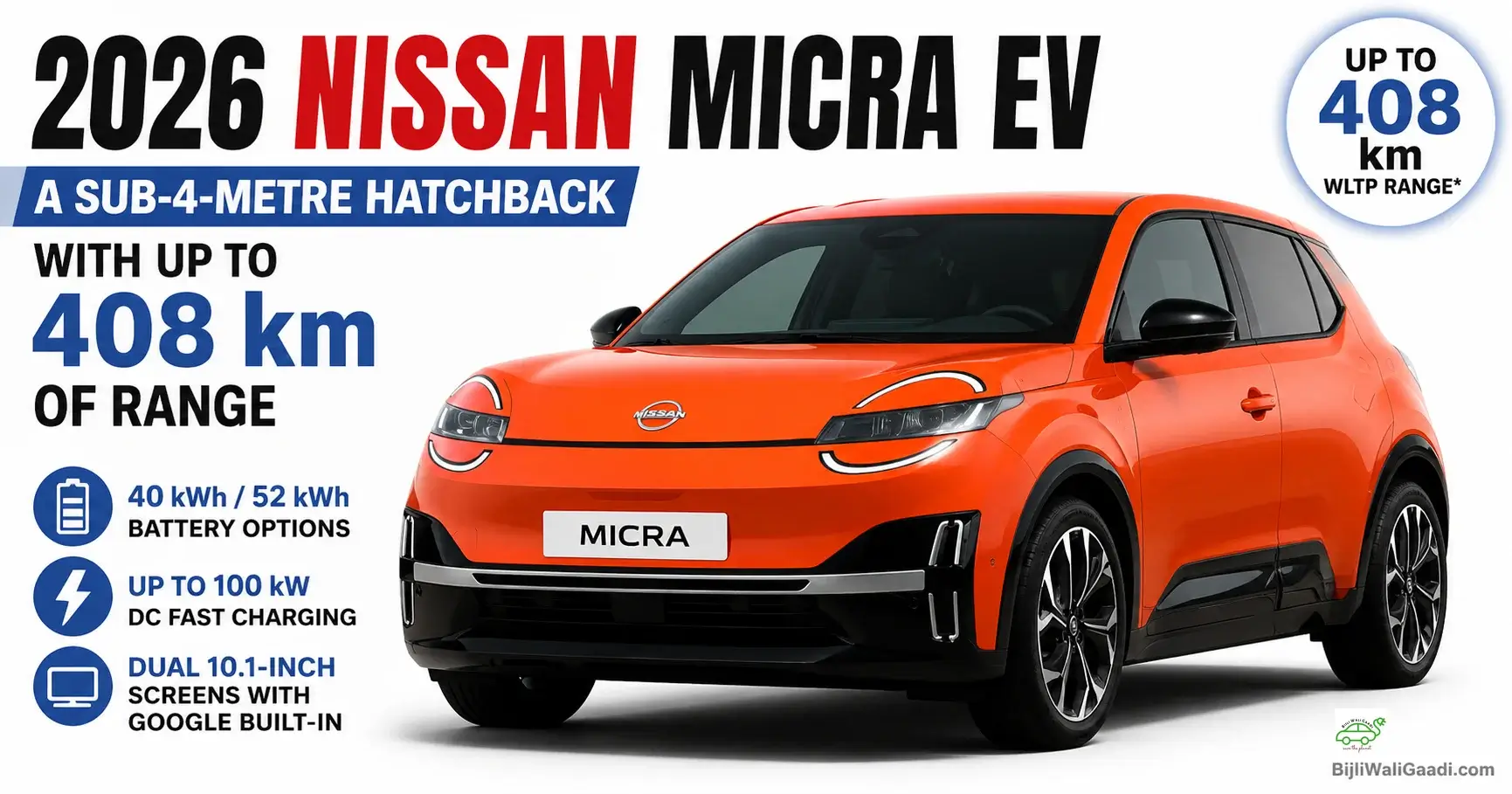
Nissan has turned its smallest nameplate into a fully electric sixth-generation hatchback, and the numbers attached to it are more interesting than they first appear. A car under four metres long now offers a battery option good for a homologated 408 km, DC charging up to 100 kW, and a cabin built around two 10.1-inch screens with Google built-in. For a segment that has often meant compromise, that’s worth a closer look.
Design: A Small EV With a Much Bigger Presence
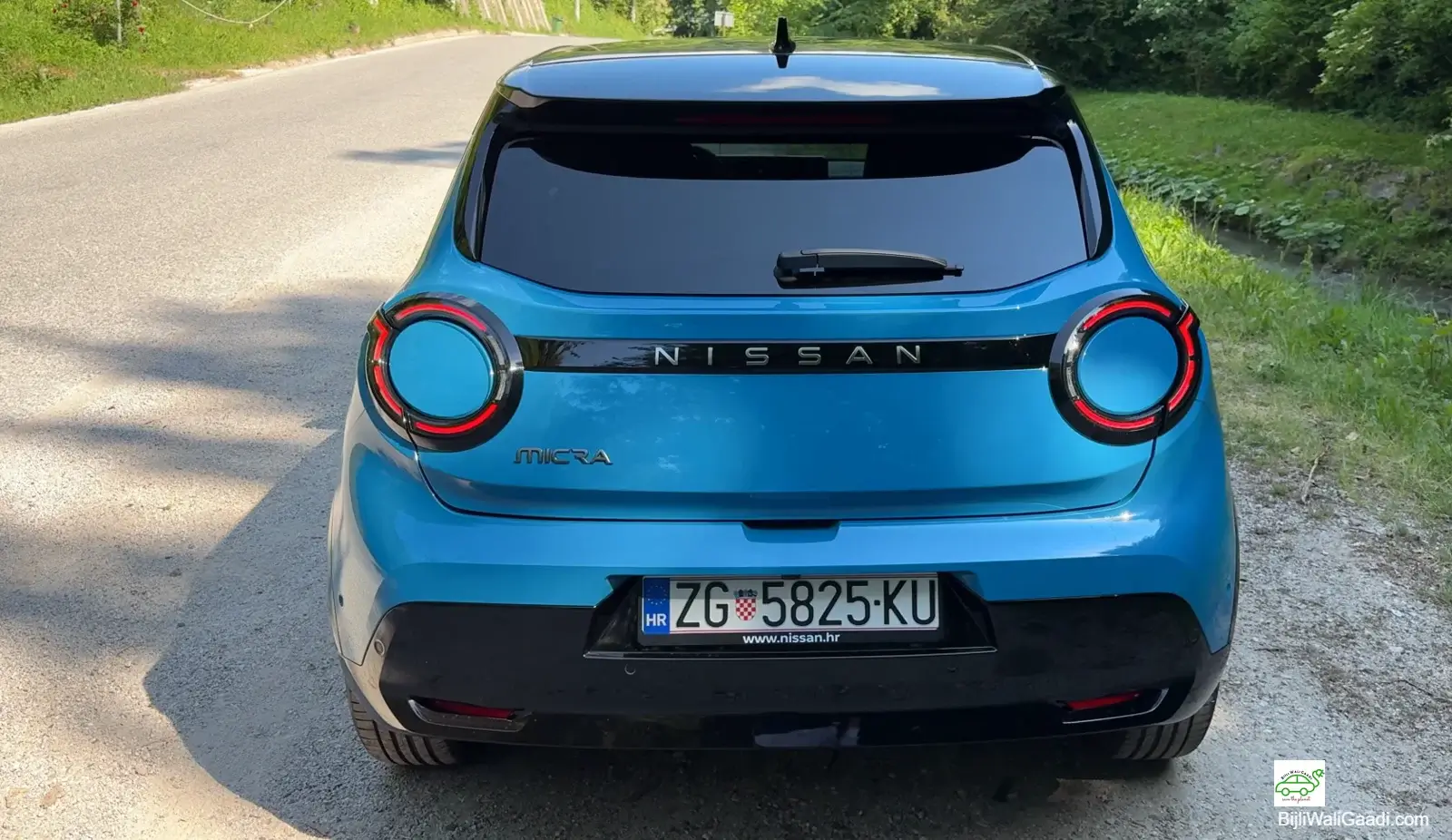
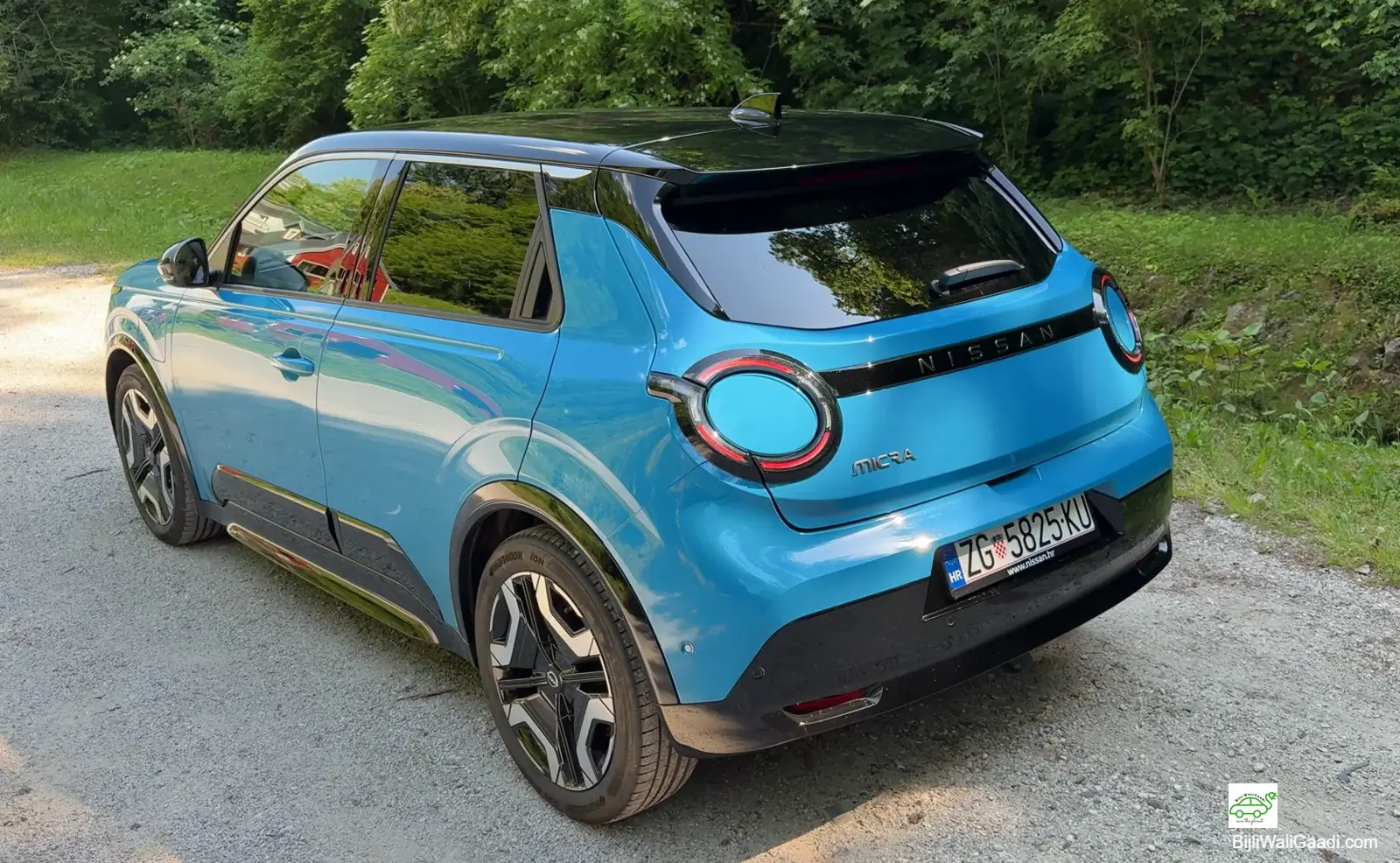
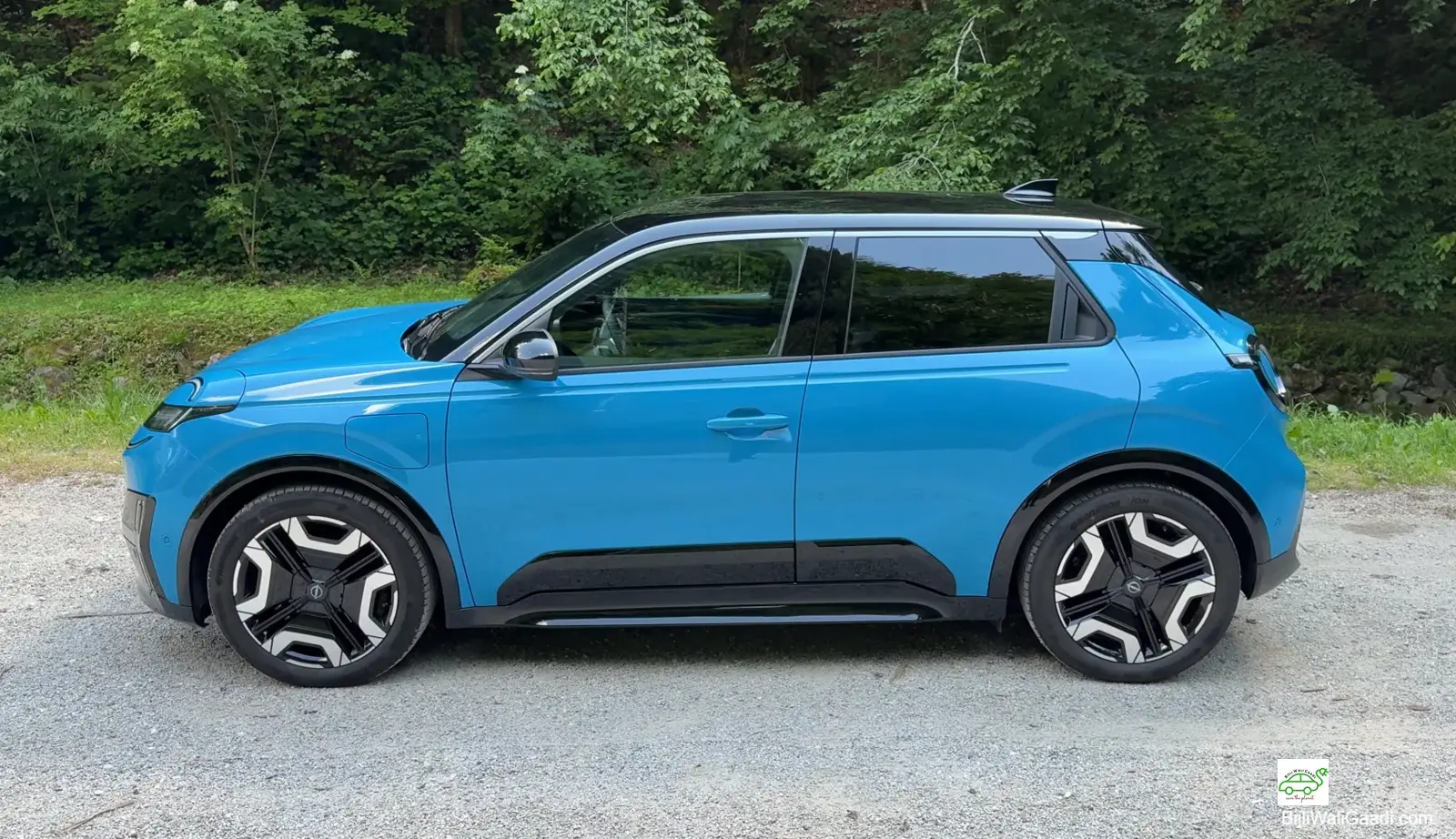
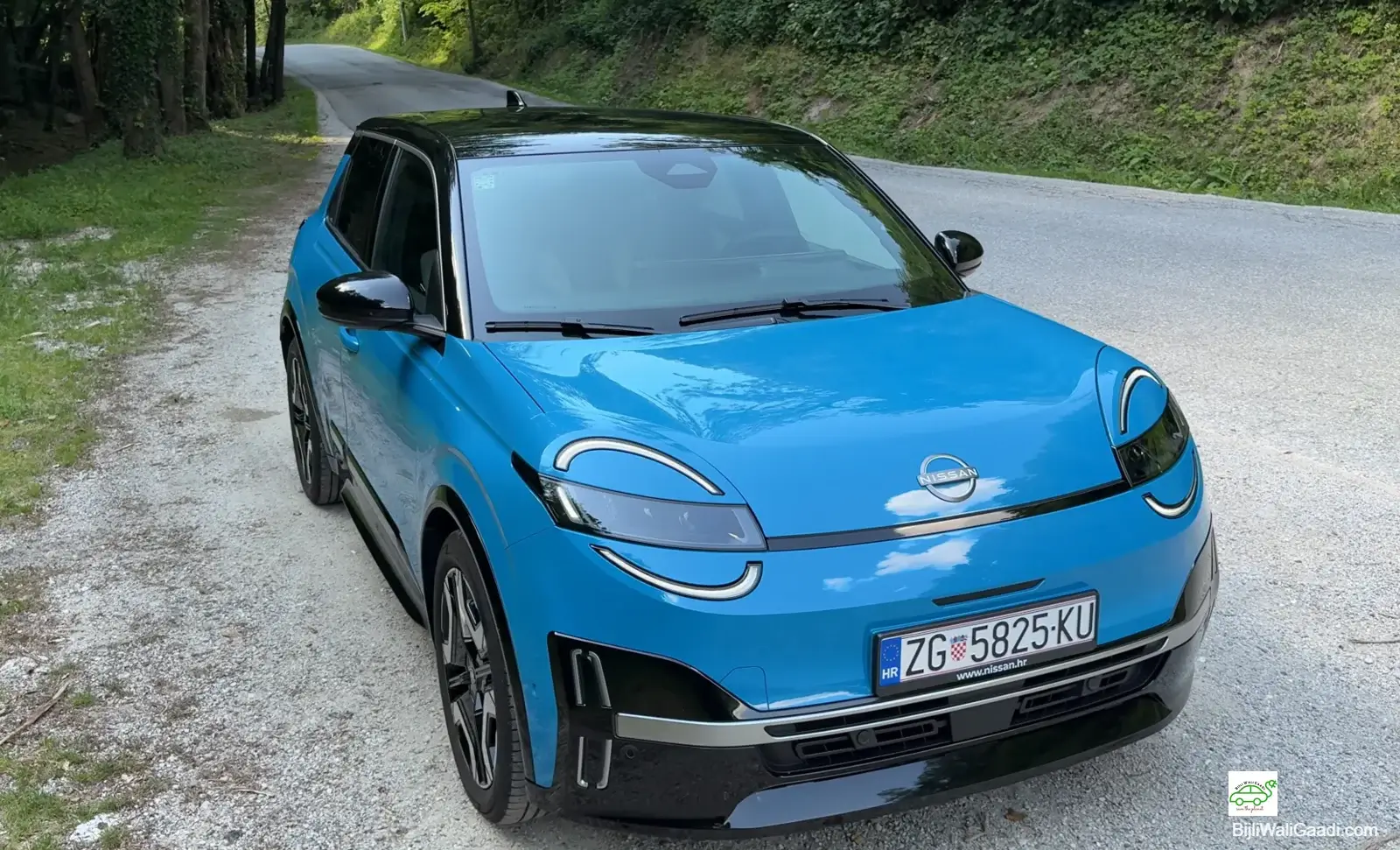
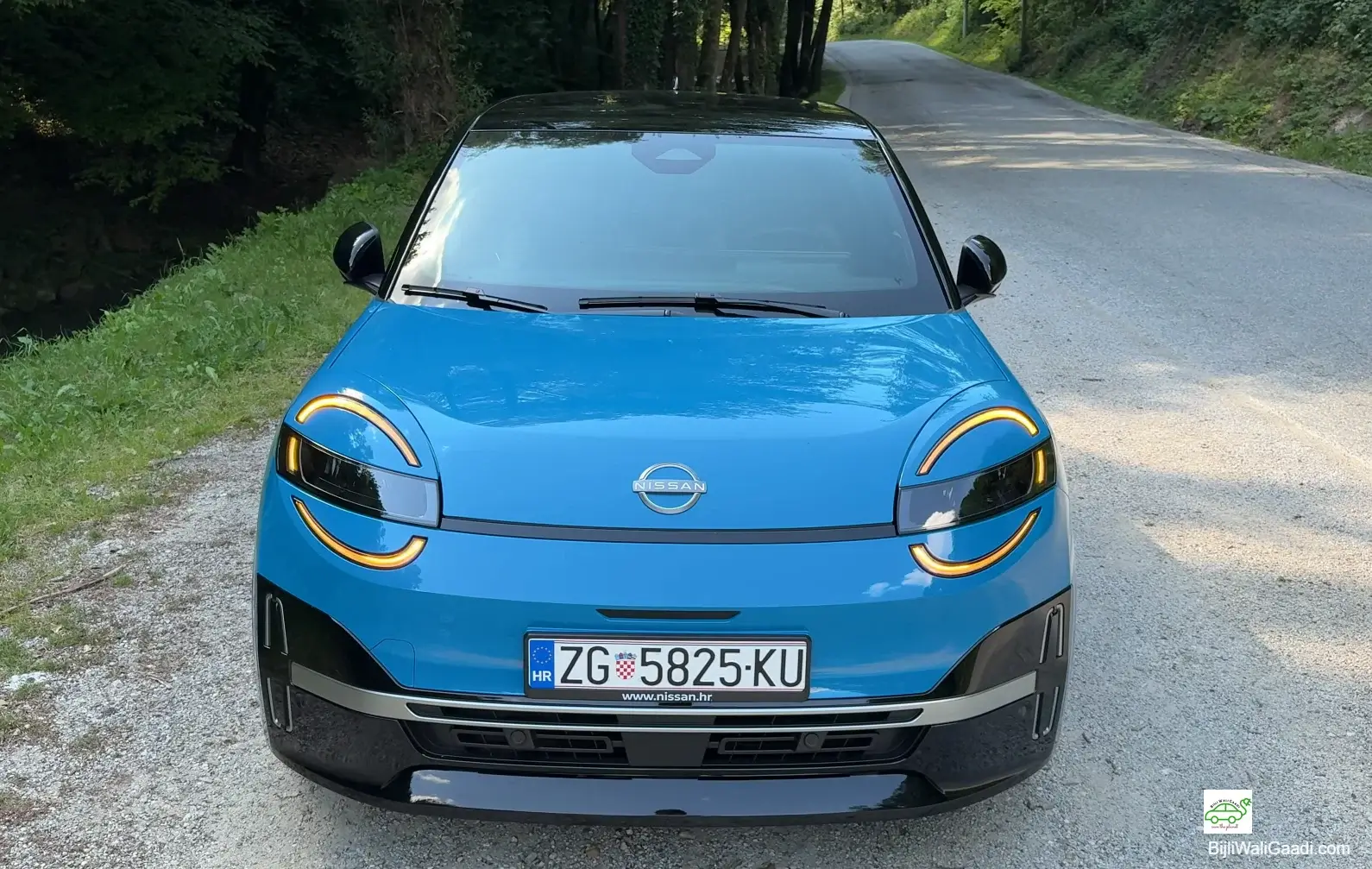
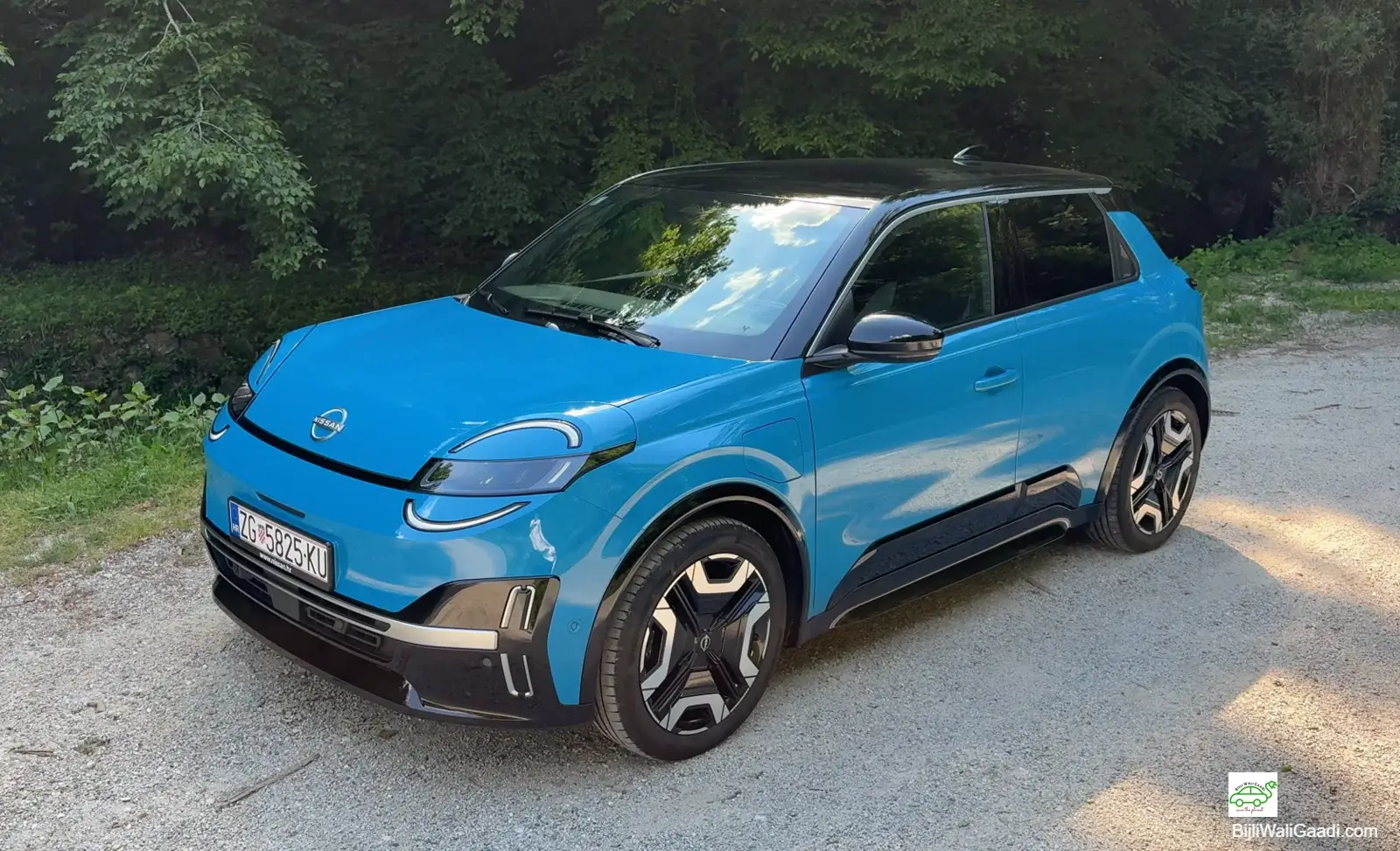
The 2026 Micra EV goes on sale in Europe as a pure-electric model only, with two battery packs offering distinct trade-offs — a choice that defines who the car suits more than any single spec. The sixth-generation Micra sits on Nissan and Renault’s shared AmpR small-EV platform, leaning into its city-car dimensions rather than disguising them. Nissan states the car is under four metres long and under 1.8 metres wide; wheelbase — pushing the wheels toward the corners for a stance more substantial than the footprint suggests.
The headlights taper into a distinctive daytime running signature, and Nissan describes a scripted “welcome wink” as the car unlocks. Round LED tail-lights are joined by a gloss-black rear panel. 18-inch wheels are available, in the top-spec car wearing diamond-cut alloys and 195/55 R18 tyres; lower grades use different designs.
Buyers get 14 exterior colour combinations, including two-tone finishes pairing body colour with a black or grey roof depending on grade. Nissan quotes 326 litres of boot space, expandable to 1,106 litres with the rear seats folded, accessed via a wide tailgate with shopping-bag hooks built in.
Interior and Technology: Small Car, Serious Digital Ambition
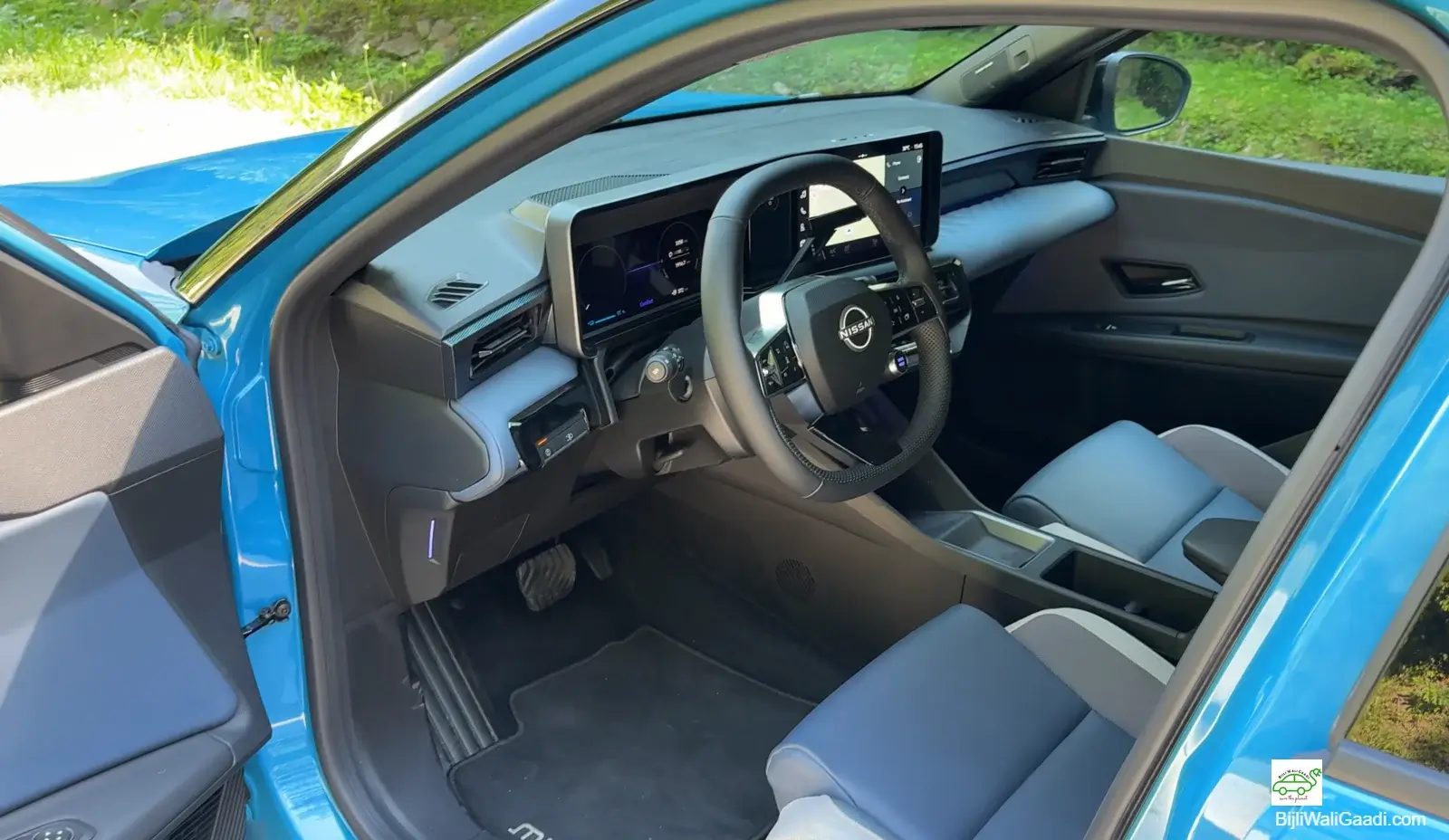
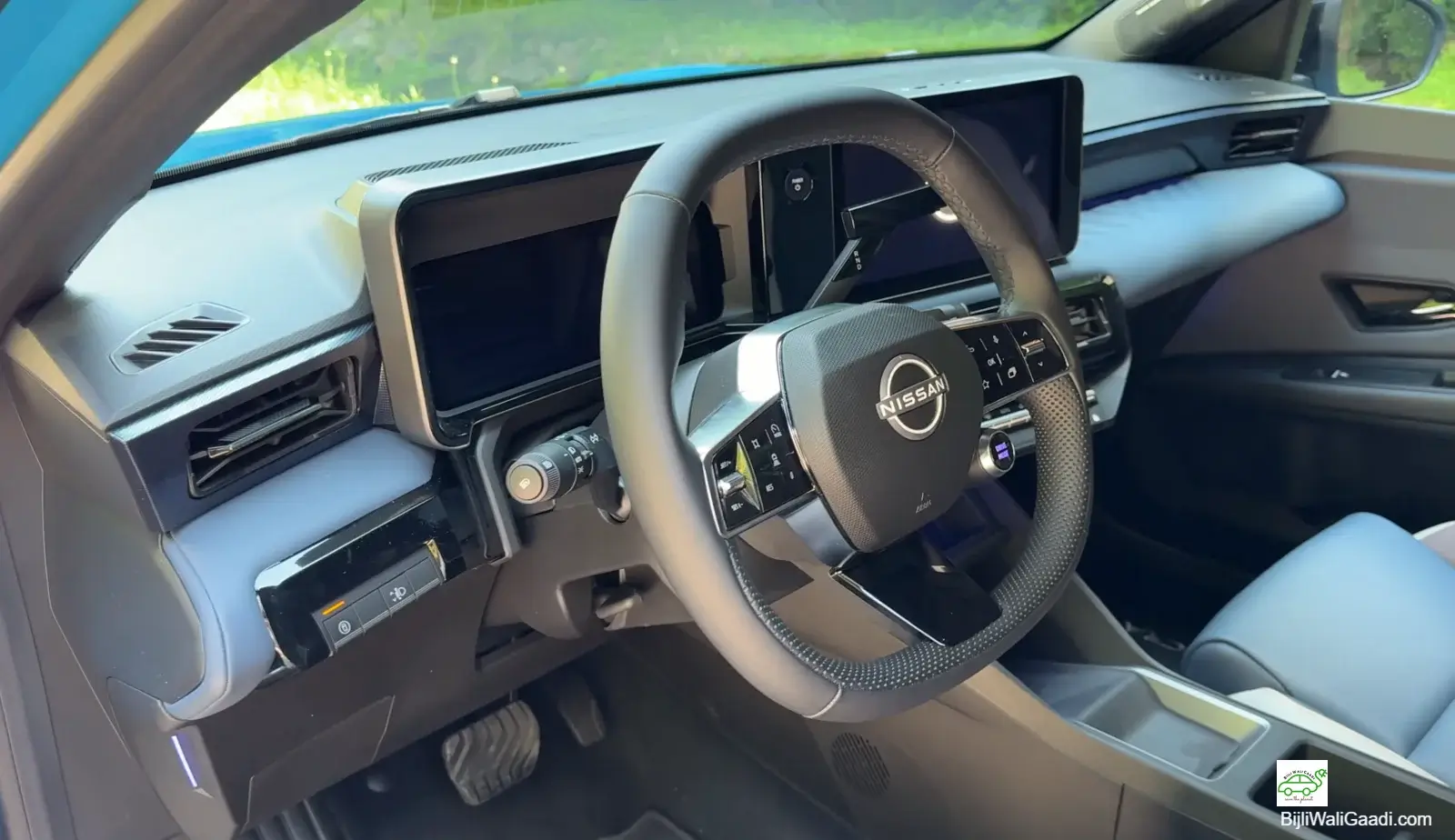
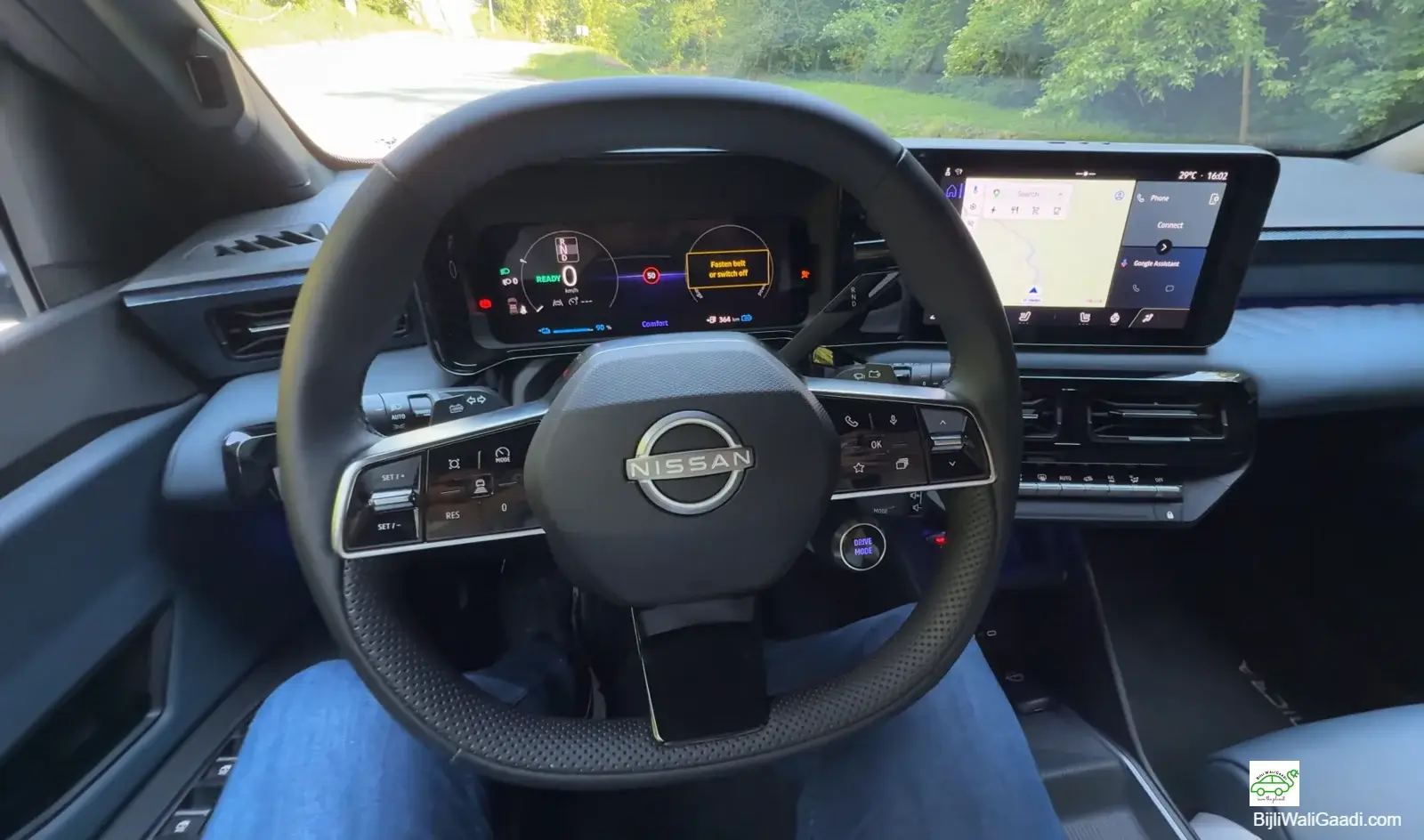
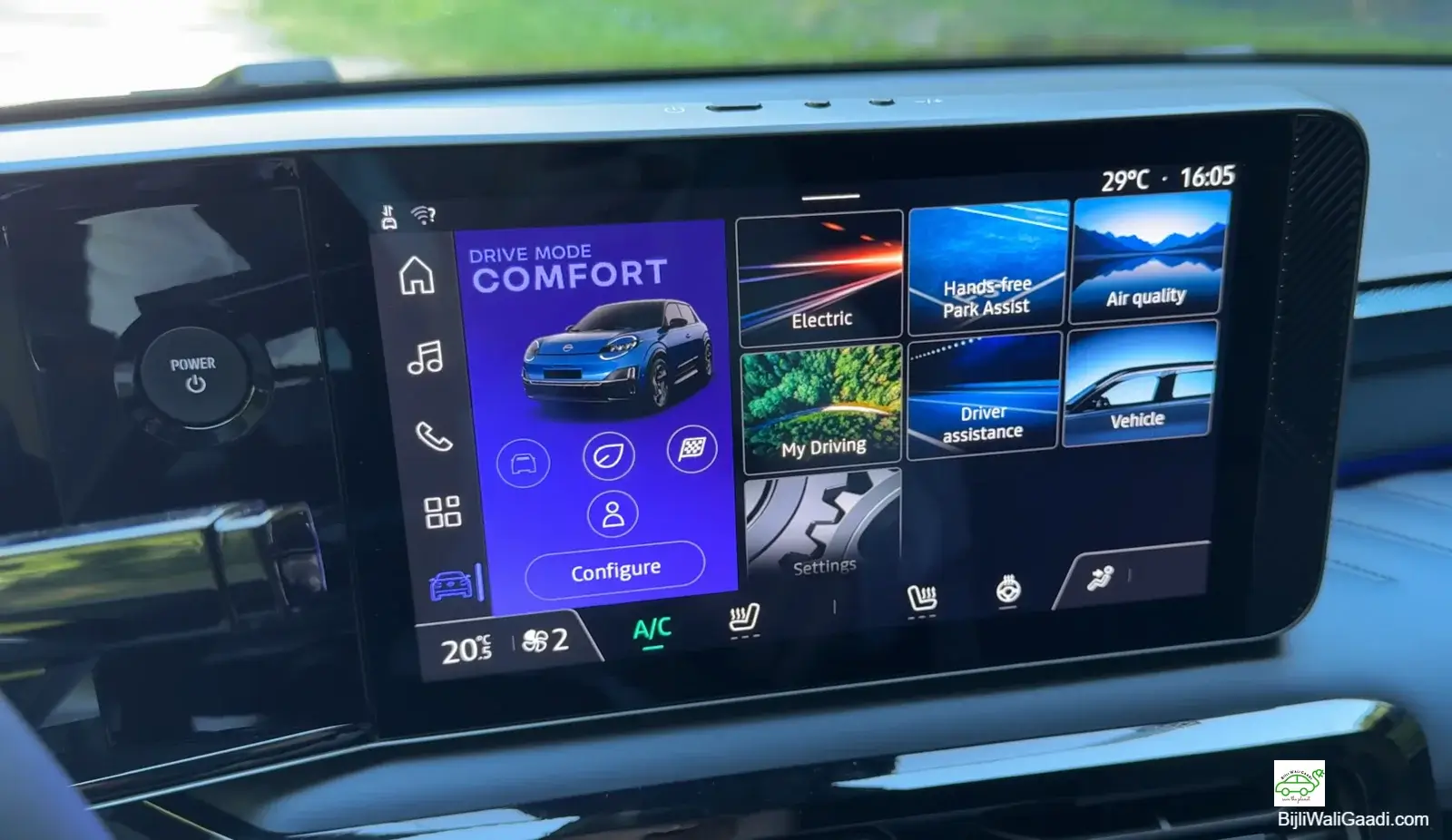
Step inside and the Micra EV doesn’t feel like it’s apologising for being small. The dashboard is dominated by two 10.1-inch displays — a configurable instrument cluster and a touchscreen angled toward the driver — running NissanConnect with Google built-in: native Google Maps, Google Assistant and Google Play access without relying on a paired phone, plus Apple CarPlay and Android Auto for those preferring to mirror their own device.
What matters isn’t the spec sheet but what it changes day to day. Native Google Maps lets the system plan a route around the car’s charge level and propose charging stops if a destination is out of range — useful given the smaller battery’s real limits. Physical climate controls sit below the main screen, alongside a wireless charging pad and USB-C ports, so basic functions don’t need touchscreen menus.
Drive modes — Eco, Comfort, Sport and a configurable Perso setting — adjust throttle response, steering weight, ambient lighting and screen colour, selectable from 48 hues. Regenerative braking is adjustable via paddles behind the wheel, and the car includes Nissan’s e-Pedal one-pedal system, able to bring it to a full stop. Driver-assistance ranges from standard AEB and Lane Departure Warning up to an available ProPilot Assist package with adaptive cruise control, plus hands-free park assist for tight spaces.
Nissan Micra EV 40 kWh vs 52 kWh: What’s the Difference?
| Specification | Micra EV 40 kWh | Micra EV 52 kWh |
| Battery capacity | 40 kWh | 52 kWh |
| Motor output | 90 kW | 110 kW |
| Approx. output (PS) | ~122 PS | ~150 PS |
| Maximum torque | 225 Nm | 245 Nm |
| WLTP range | 310 km | 408 km |
| Kerb weight | 1,400 kg | 1,524 kg |
| Maximum DC charging | 80 kW | 100 kW |
| AC charging | Up to 11 kW | Up to 11 kW |
| Best suited to | Primarily urban/suburban driving | Urban use plus regular longer trips |
*PS is a metric-horsepower conversion from Nissan’s stated kW output (1 kW ≈ 1.36 PS); Nissan confirms roughly 150 PS for the 110 kW motor.
Range and Charging: Which Micra EV Makes More Sense?
For predominantly urban and suburban drivers who don’t regularly need the extra range of the 52 kWh version, the 40 kWh version should be sufficient. Its lower kerb weight (1,400 kg versus 1,524 kg) may give it a modest advantage in responsiveness and energy consumption, although the difference should not be overstated. Its 80 kW DC ceiling is adequate rather than remarkable, but Nissan officially states both versions can charge from 15% to 80% in around 30 minutes at their maximum DC rates — a claimed figure, with real-world times depending on battery temperature, charger output and conditions.
The 52 kWh version’s case is straightforward: nearly 100 km more range and a 100 kW DC ceiling suit anyone who regularly leaves city limits, or wants a wider margin before range anxiety sets in. AC charging tops out at 11 kW on both — fine for home charging, but DC separates urban duty from occasional longer runs.
Practicality: Can a Small EV Work as a Daily Car?
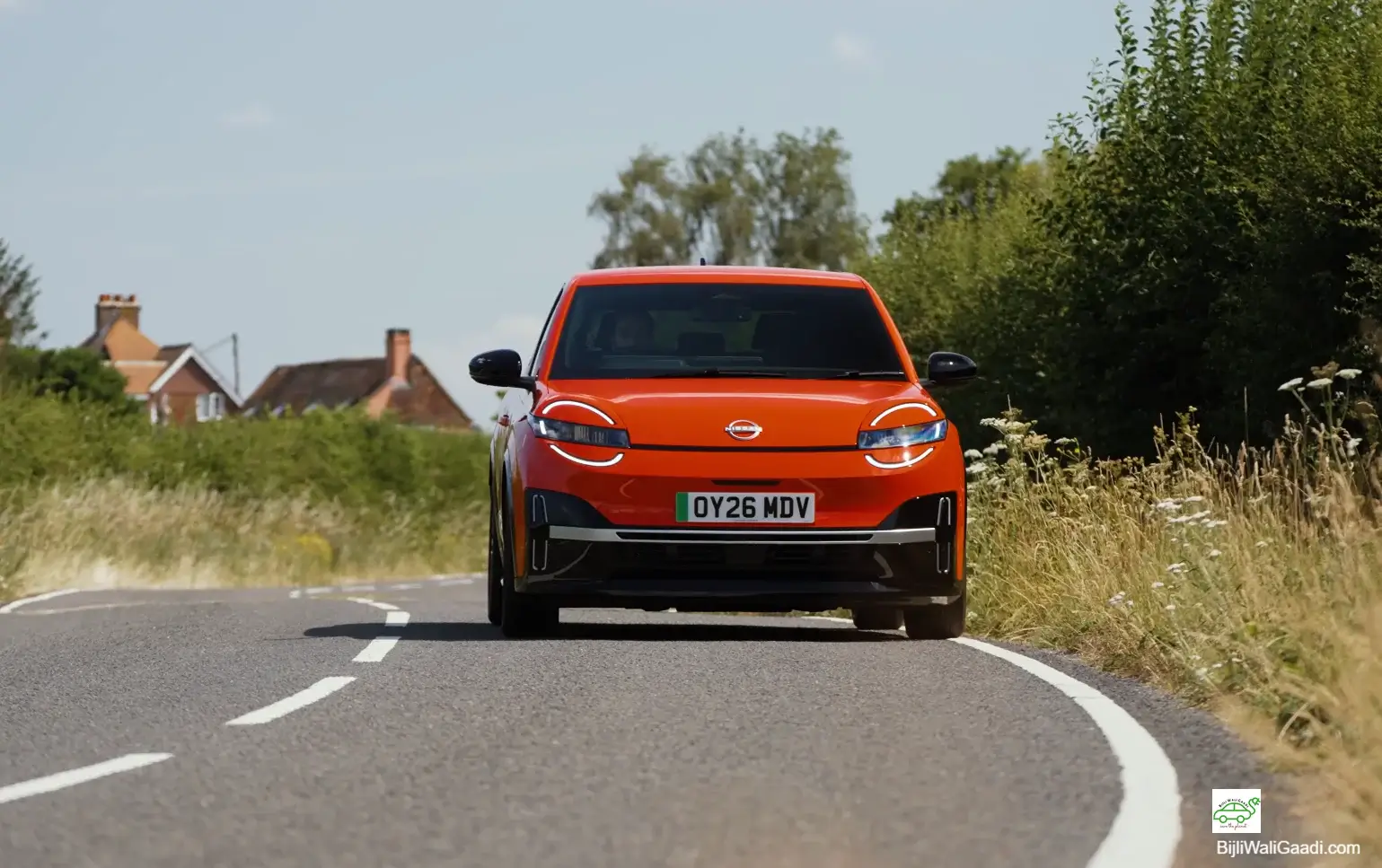
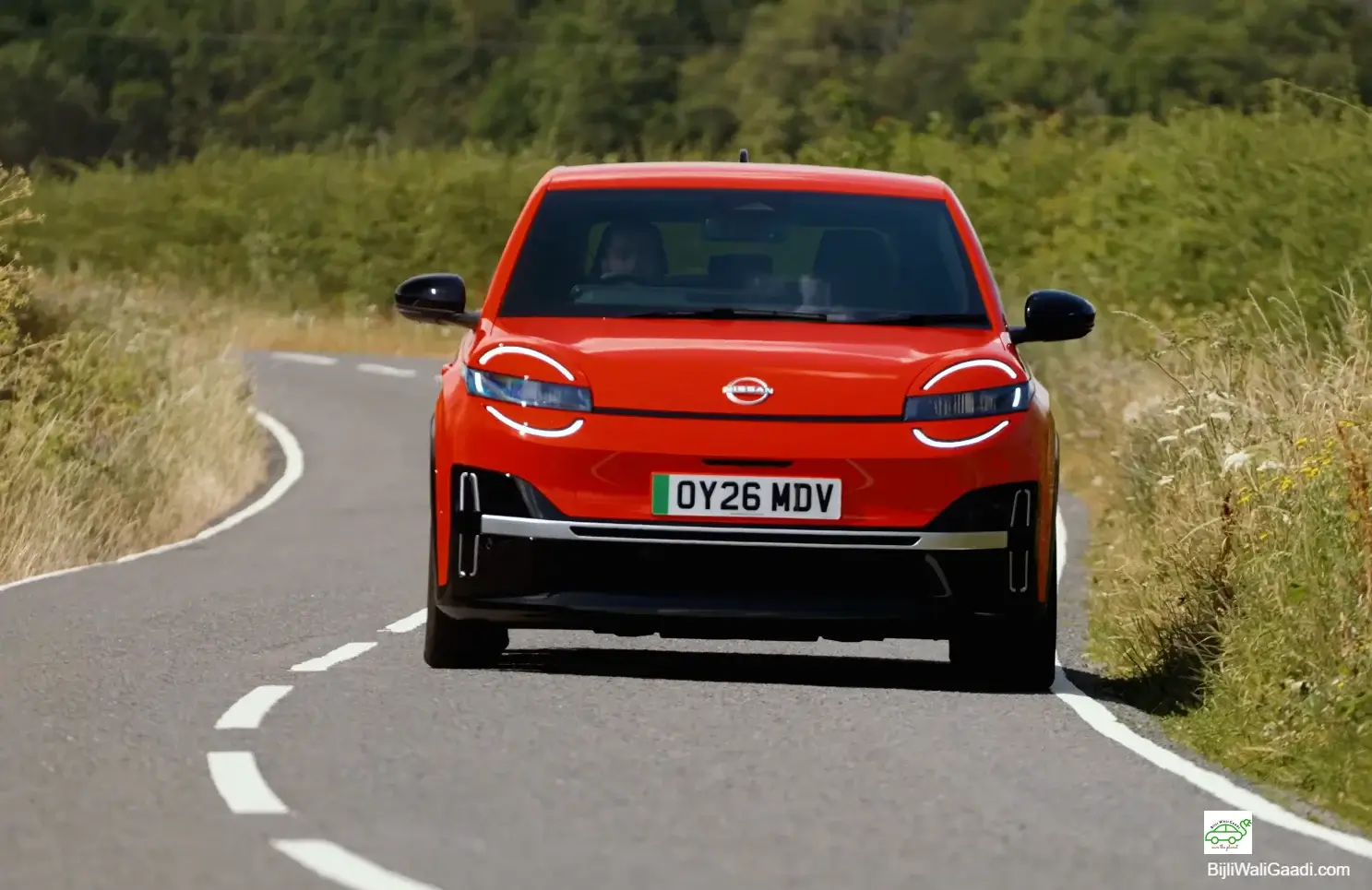
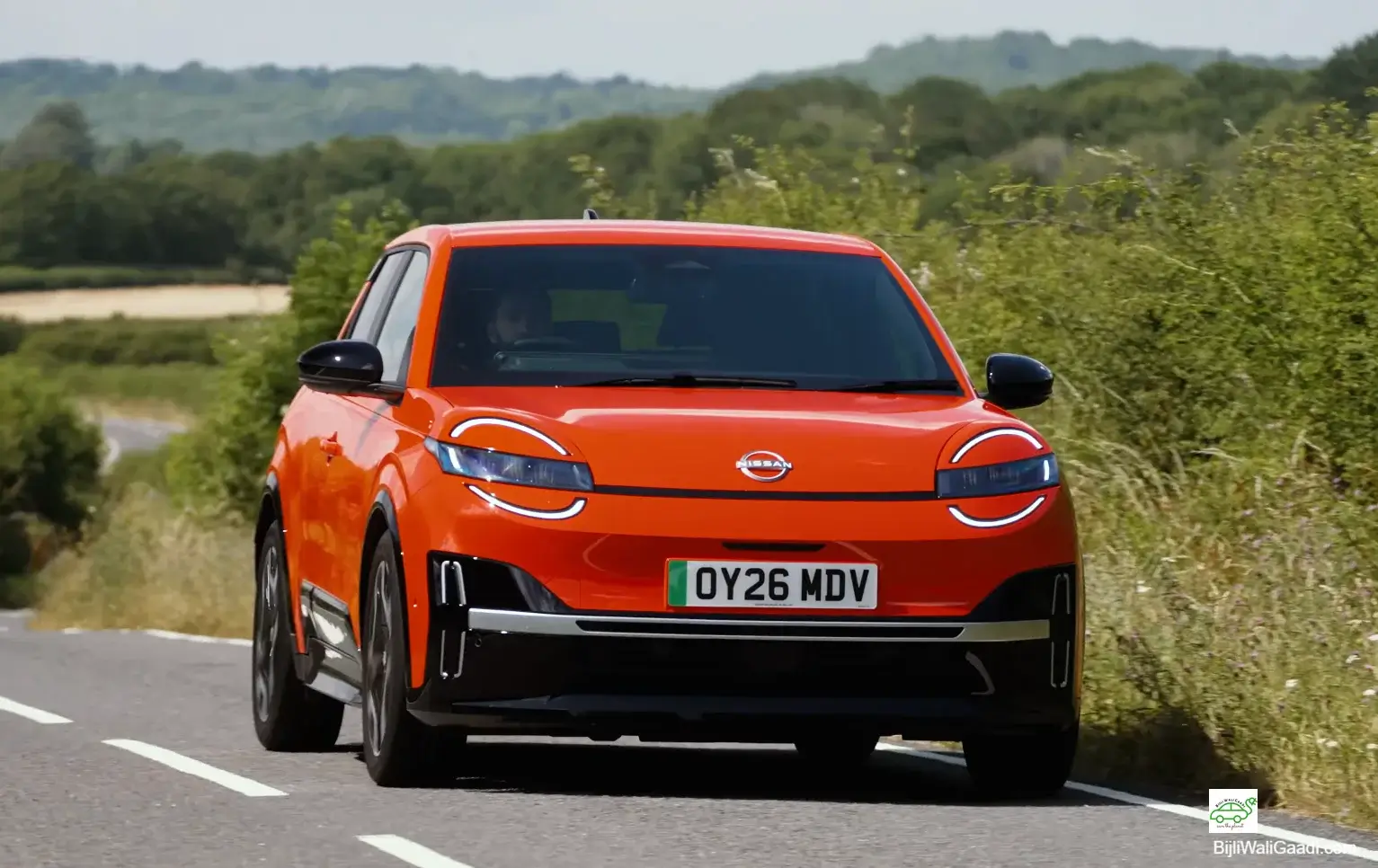
At under four metres, manoeuvring and parking are clear strengths, helped by hands-free park assist for tight spaces. The 326-litre boot is generous for a car of this size, and front-seat space benefits from the long wheelbase pushing the wheels outward.
Rear-seat space is more of a mixed bag. For a person over 6 feet tall, the rear seats can feel a bit cramped on longer journeys, with only limited headroom and legroom available. That’s a firsthand impression based on one body type, not a universal verdict. Shorter adults and children should find the space more accommodating, but taller passengers are the most likely to notice the cabin’s limitations during extended trips.
Verdict: Which 2026 Nissan Micra EV Should You Choose?
The Micra EV’s strongest case is its combination of serious digital technology and a compact footprint — a compelling combination in this segment. Native Google integration, configurable drive characteristics and a boot that’s generous for the size are real advantages, not marketing flourishes.
Buyers whose driving is predominantly urban or suburban should consider the 40 kWh option, while the 52 kWh version makes more sense for drivers who regularly travel beyond the city, or who simply want a wider safety margin, since it pairs meaningfully more range with faster DC charging.
The compromises are inherent to any sub-4-metre EV: rear-seat space favouring shorter occupants, and range figures that, while competitive for the segment, trail larger and pricier EVs. With pricing varying by European market and independent testing still providing the final real-world benchmark, the Micra EV presents a credible, technologically focused interpretation of the modern small electric hatchback.
Image credit: Images used in this articles are snapshots from the YT video by crospotter13 and CarGurus UK
Stay connected via Google 'Electric Vehicle' News
Follow BijliWaliGaadi | India's Trusted EV Insights Portal
source on Google