Forget the SUV: These 2 Adorable Retro EVs Are Turning Heads in European City Centers
Stay connected via Google 'Electric Vehicle' News
Follow BijliWaliGaadi | India's Trusted EV Insights Portal
source on Google
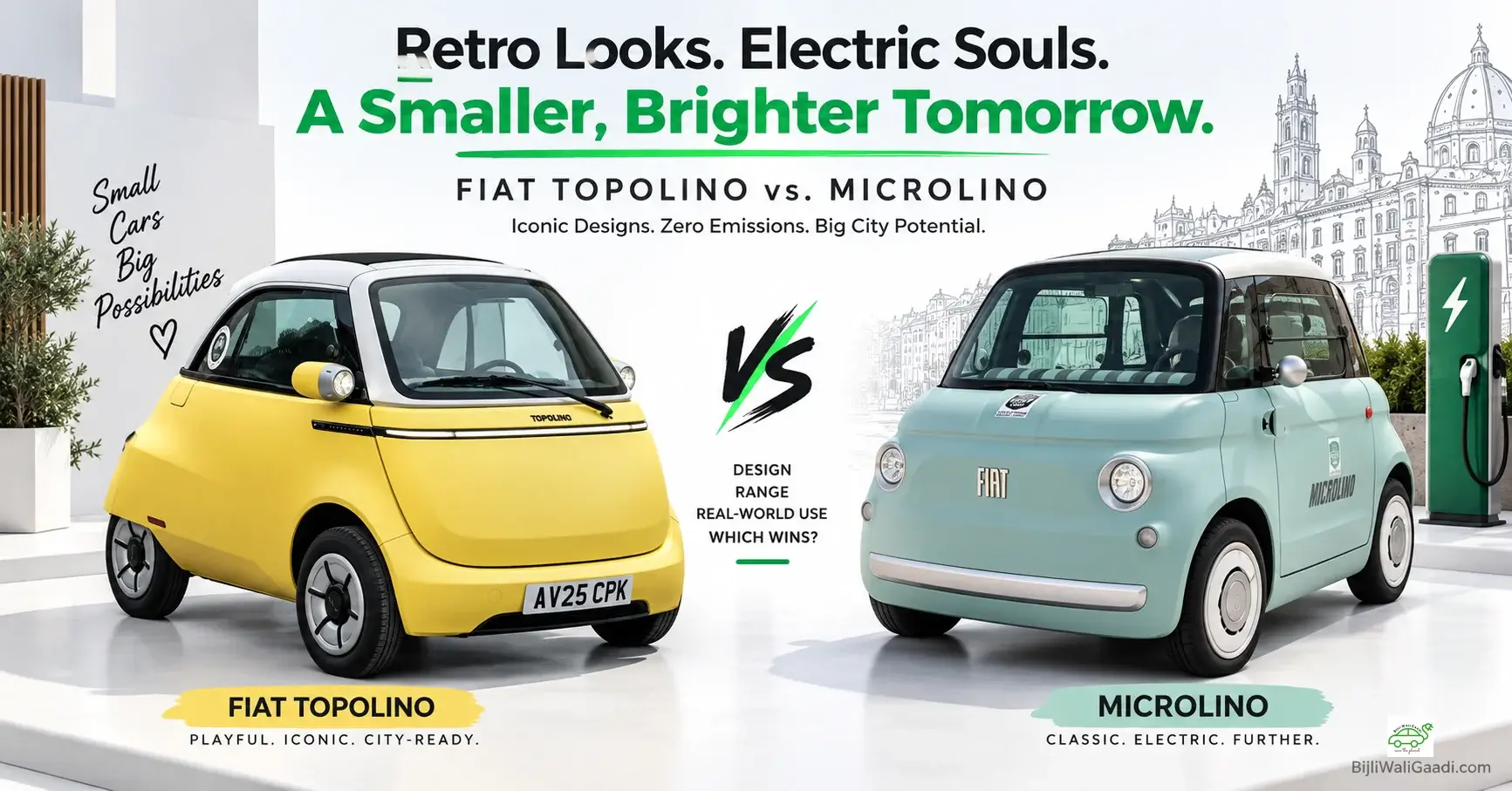
Forget the SUV. Forget the oversized crossover clogging up narrow European lanes. Two tiny retro electric microcars are increasingly turning heads in European cities — unapologetically retro machines that look like they drove straight out of a 1950s postcard and into 2026.
The Fiat Topolino, styled after the beloved mid-century Fiat 500, and the Microlino, a modern reincarnation of the iconic Iso Isetta “bubble car,” are proving that nostalgia and zero-emission mobility aren’t opposites — they’re a genuinely compelling combination. Both are small enough to exploit tight urban parking spaces that would be difficult for a conventional car, both are drawing double-takes from pedestrians, and both are quietly redefining what a stylish, design-led city runabout looks like in the EV era.
For lifestyle-focused EV buyers and urban design enthusiasts tracking where compact retro electric microcars are heading in 2026, this head-to-head is the one to read.
What Are Retro Electric Microcars?
Retro electric microcars combine iconic mid-20th-century automotive design with zero-emission electric powertrains, packaged into compact quadricycles designed for dense urban environments. They typically fall under EU L6e or L7e vehicle classifications, prioritizing style, maneuverability, and low running costs over speed or long-distance range.
The Fiat Topolino and Microlino sit at opposite ends of this category — one leaning into playful, open-air beach styling, the other into faithful bubble-car engineering with genuinely usable performance.
Meet the Two Design Icons
Fiat Topolino / Topolino Dolcevita — Italian Beach-Cruiser Charm
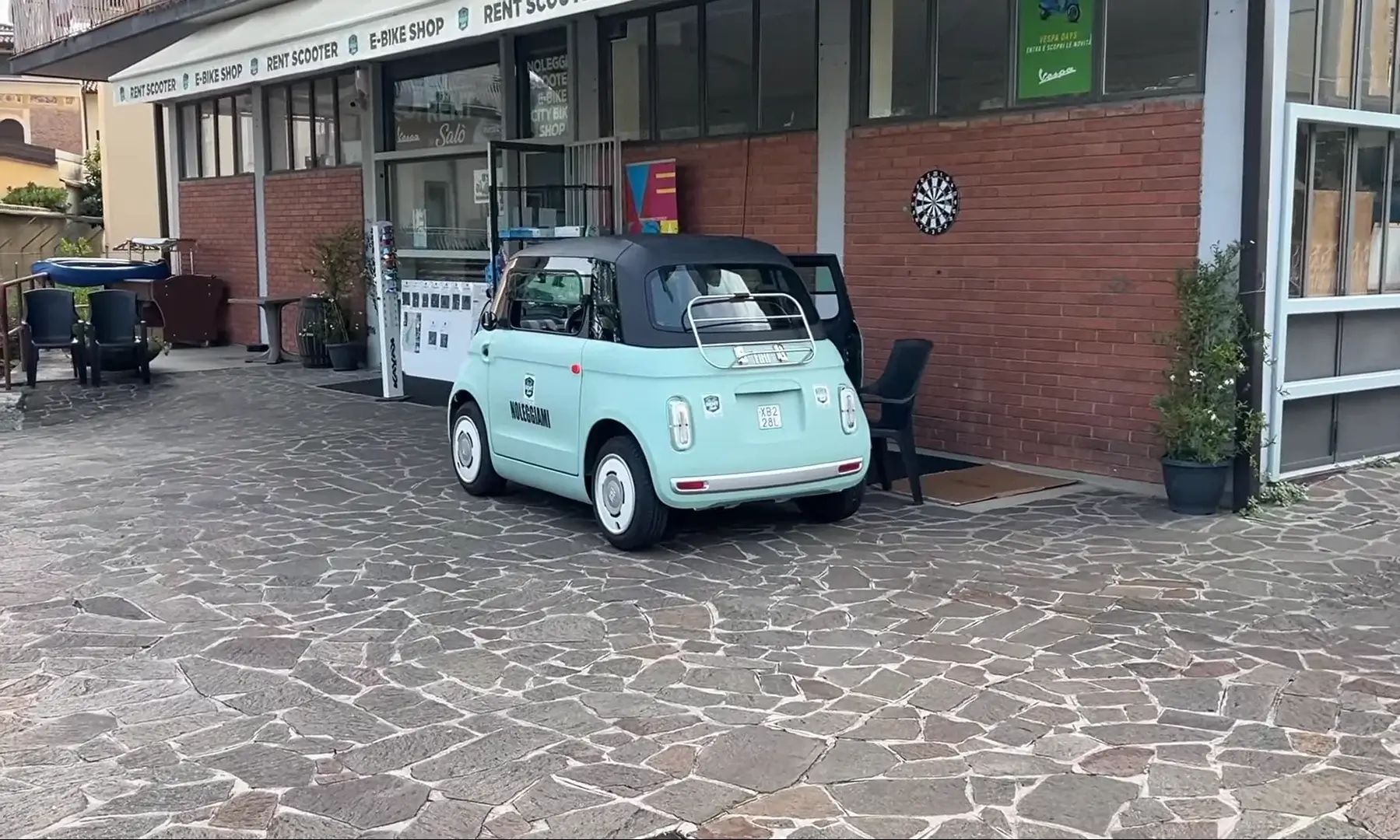
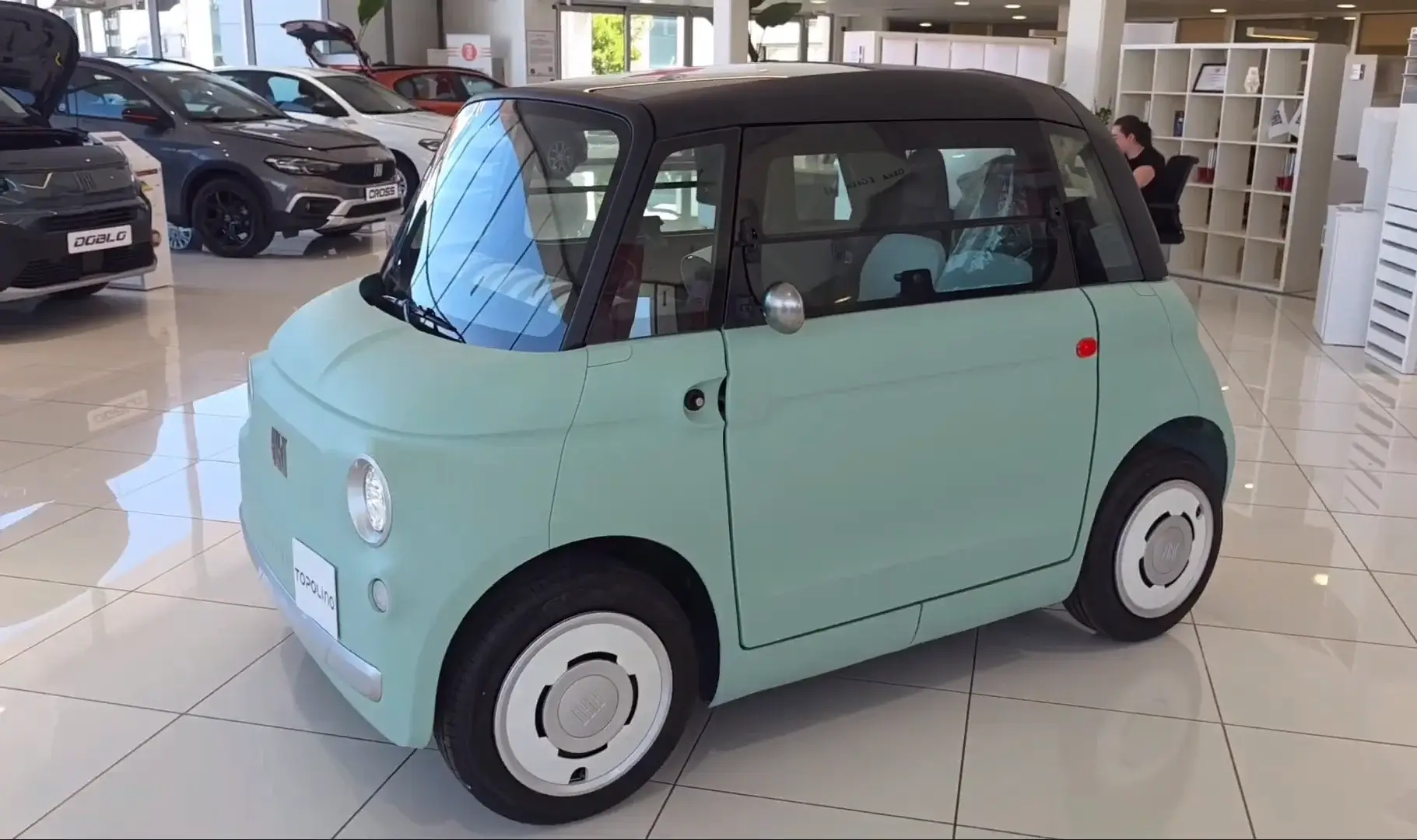
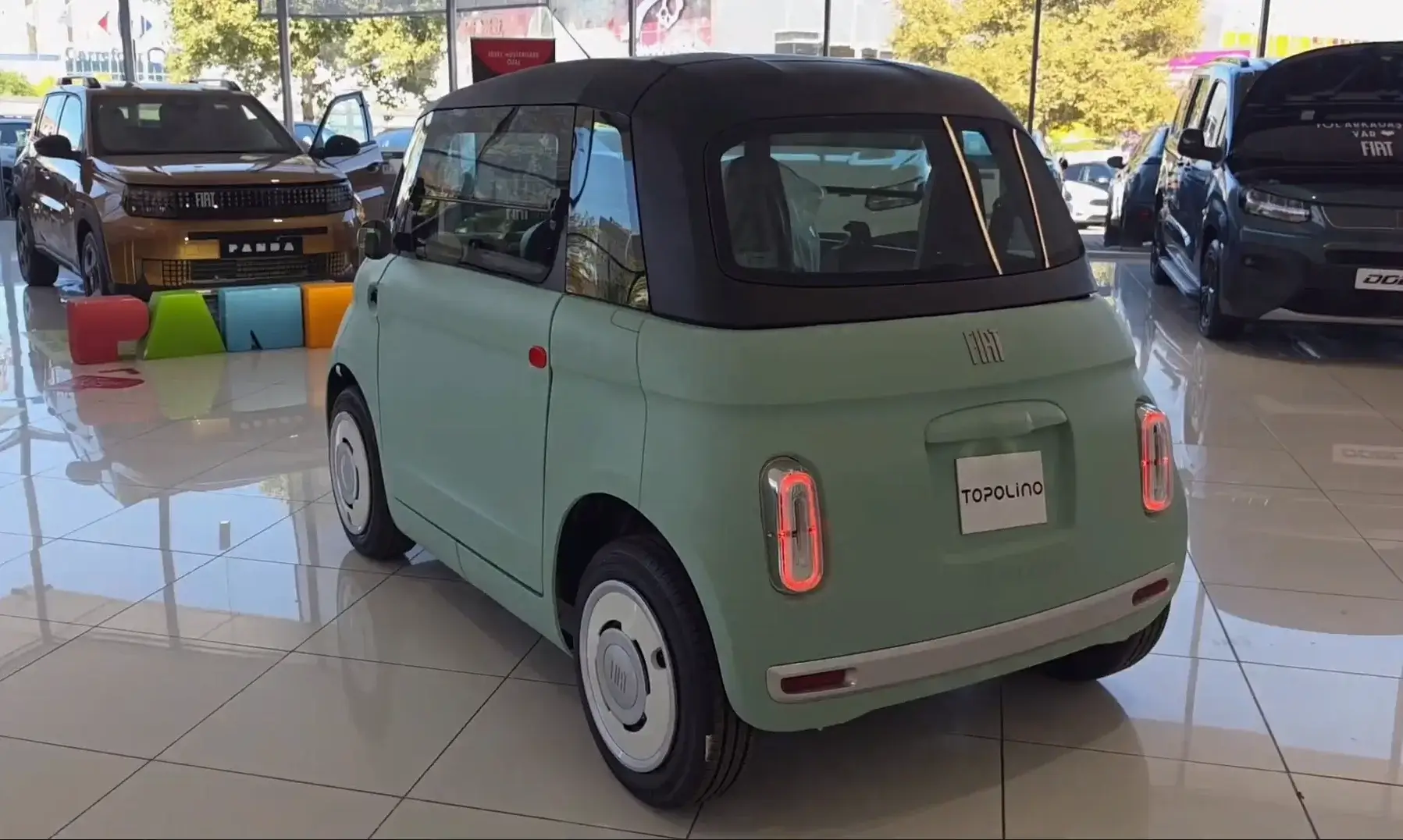
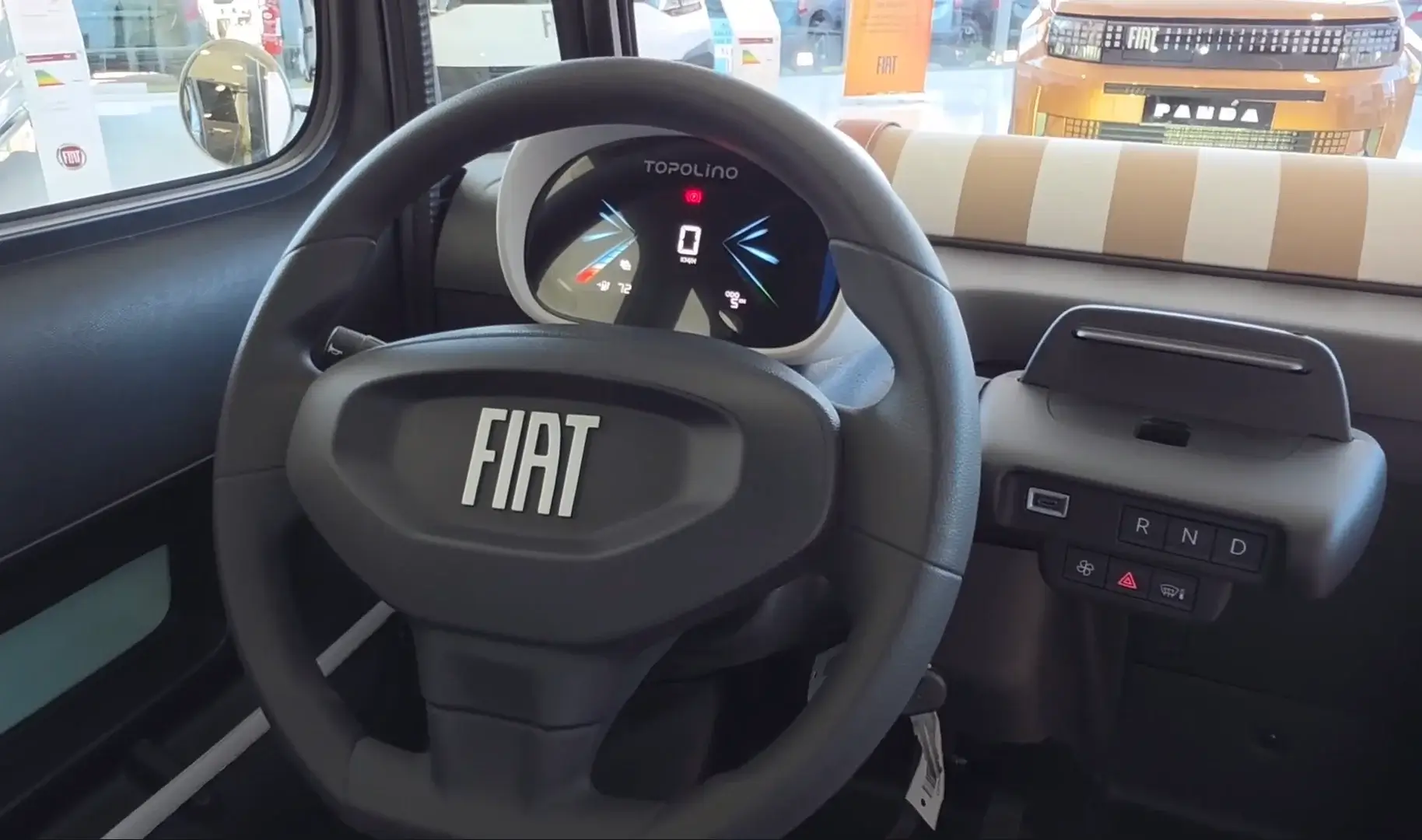
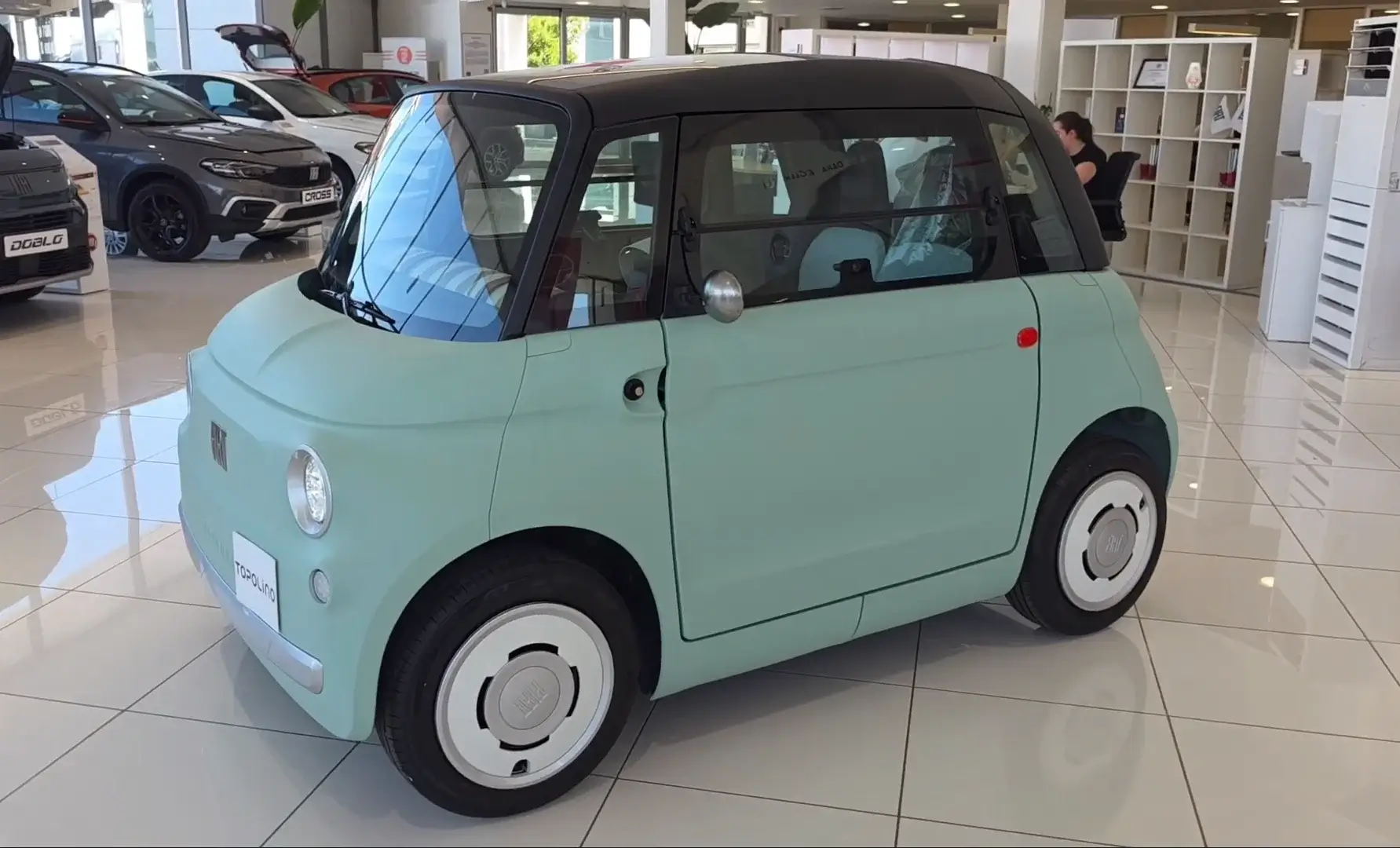
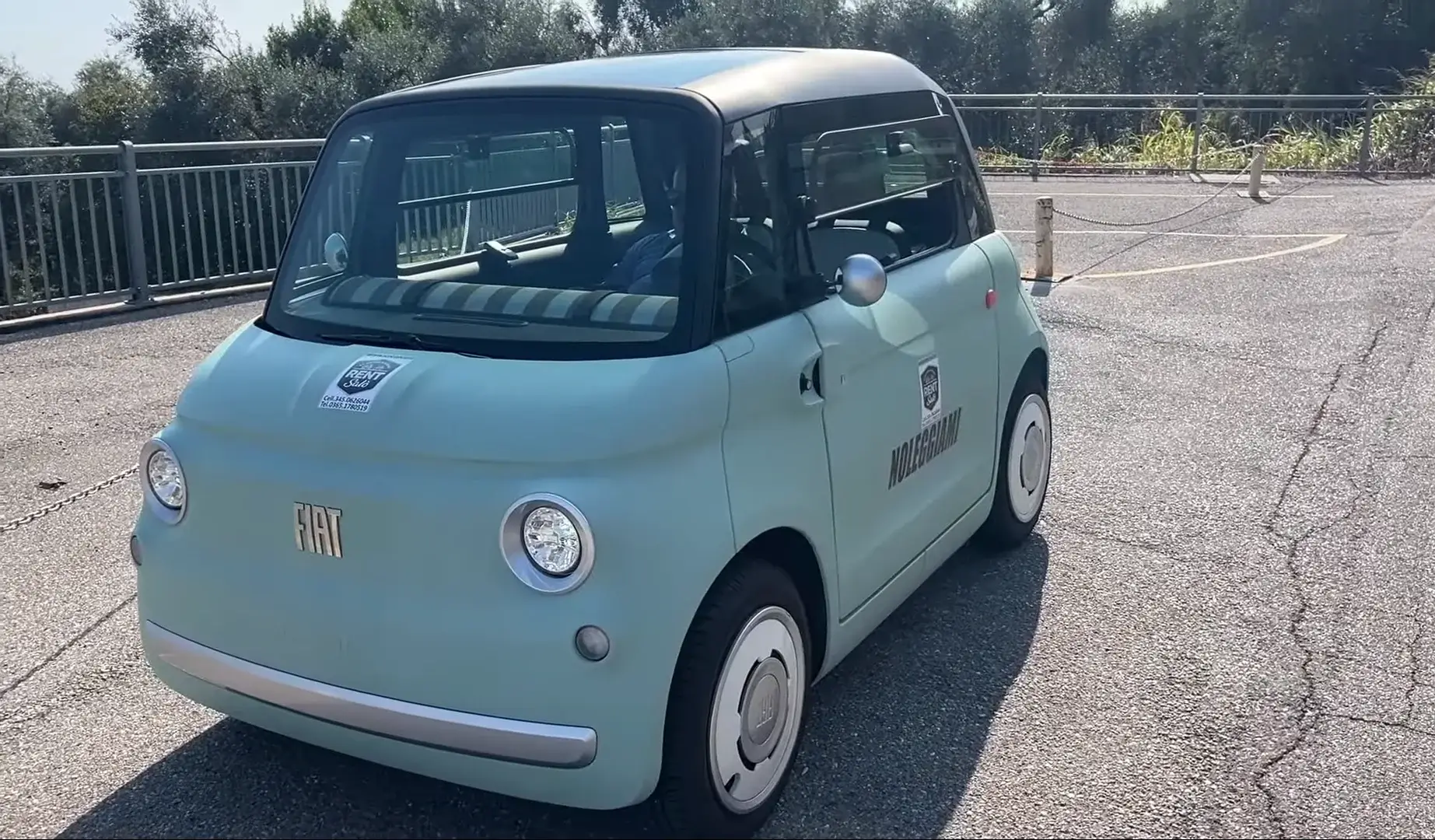
Built by Fiat (Stellantis) in Italy, the Topolino is priced from around €9,990, market-specific (~₹9.0 Lakh, approximate conversion) and is homologated as an EU L6e light quadricycle — the same “license-free” category covered in our Citroën Ami guide (ART-001), capped at a 45 km/h maximum design speed. European pricing varies by country, trim, promotion, tax and equipment.
Key Specs
- Battery: 5.4 kWh lithium-ion
- Motor: 6 kW, front-wheel drive
- Official WMTC range: up to 75 km — actual range varies with speed, weather, payload and driving style
- Charging: approximately 4 hours from a household socket
- Dimensions: 2,535 mm (L) x 1,400 mm (W) x 1,530 mm (H), 1,730 mm wheelbase
- Published vehicle mass: ~562 kg, according to the market/manufacturer convention cited. Because manufacturers may publish vehicle mass using a different convention, this figure should not be compared directly with the EU L6e 425-kg mass-in-running-order limit.
The Topolino Dolcevita/open-air configuration, where offered, leans hard into open-air, beach-lifestyle design: fabric rope pulls stand in for conventional door handles, the cabin has an airy, sun-drenched feel, and this edition even offers an outdoor shower/USB accessory kit for post-swim, post-beach cleanups. It’s less a “car” in the conventional sense and more a design object that happens to be road-legal — playful, slow, and entirely unbothered about it.
Microlino — The Isetta Bubble Car, Reborn as a 90 km/h EV
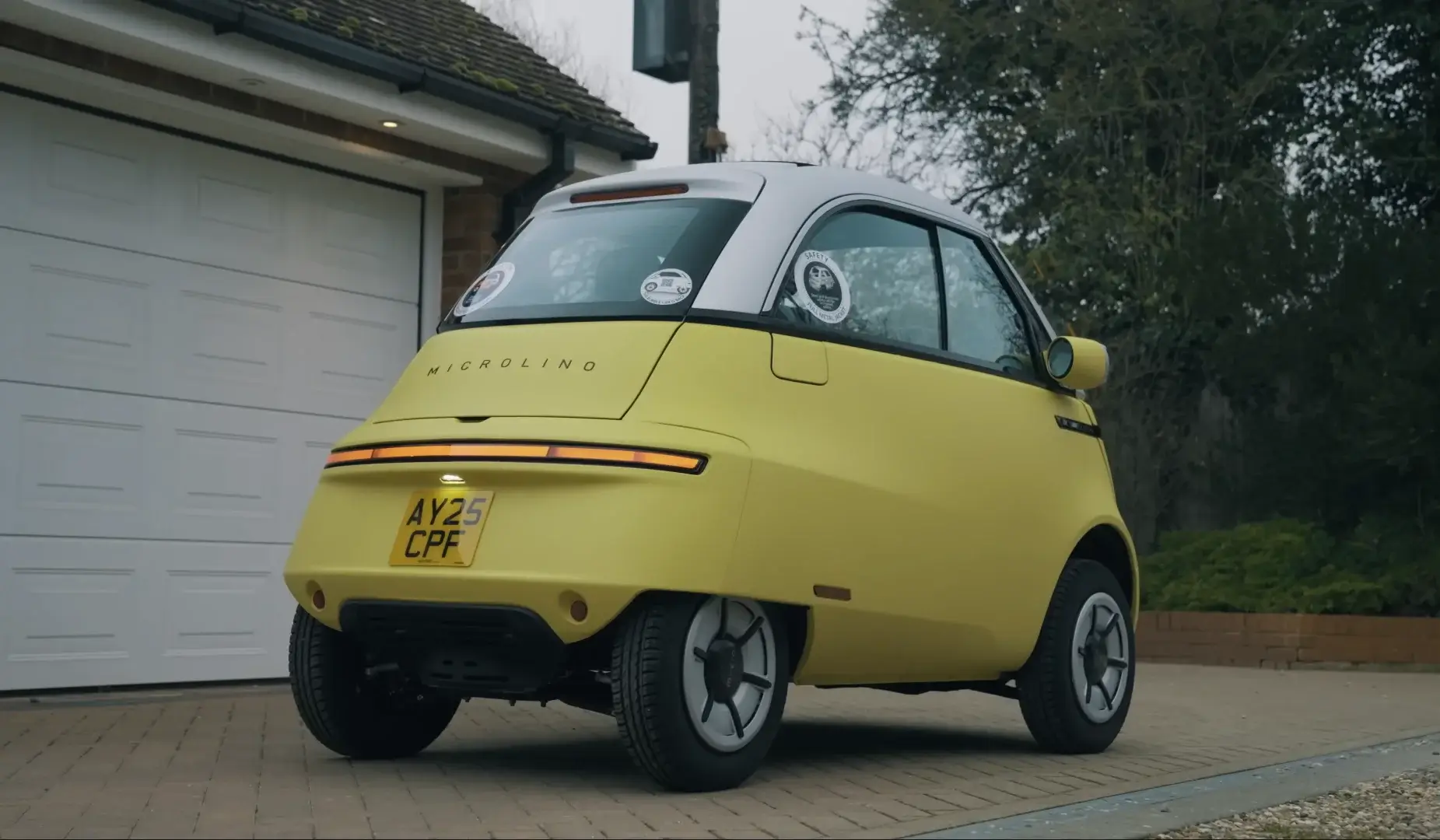
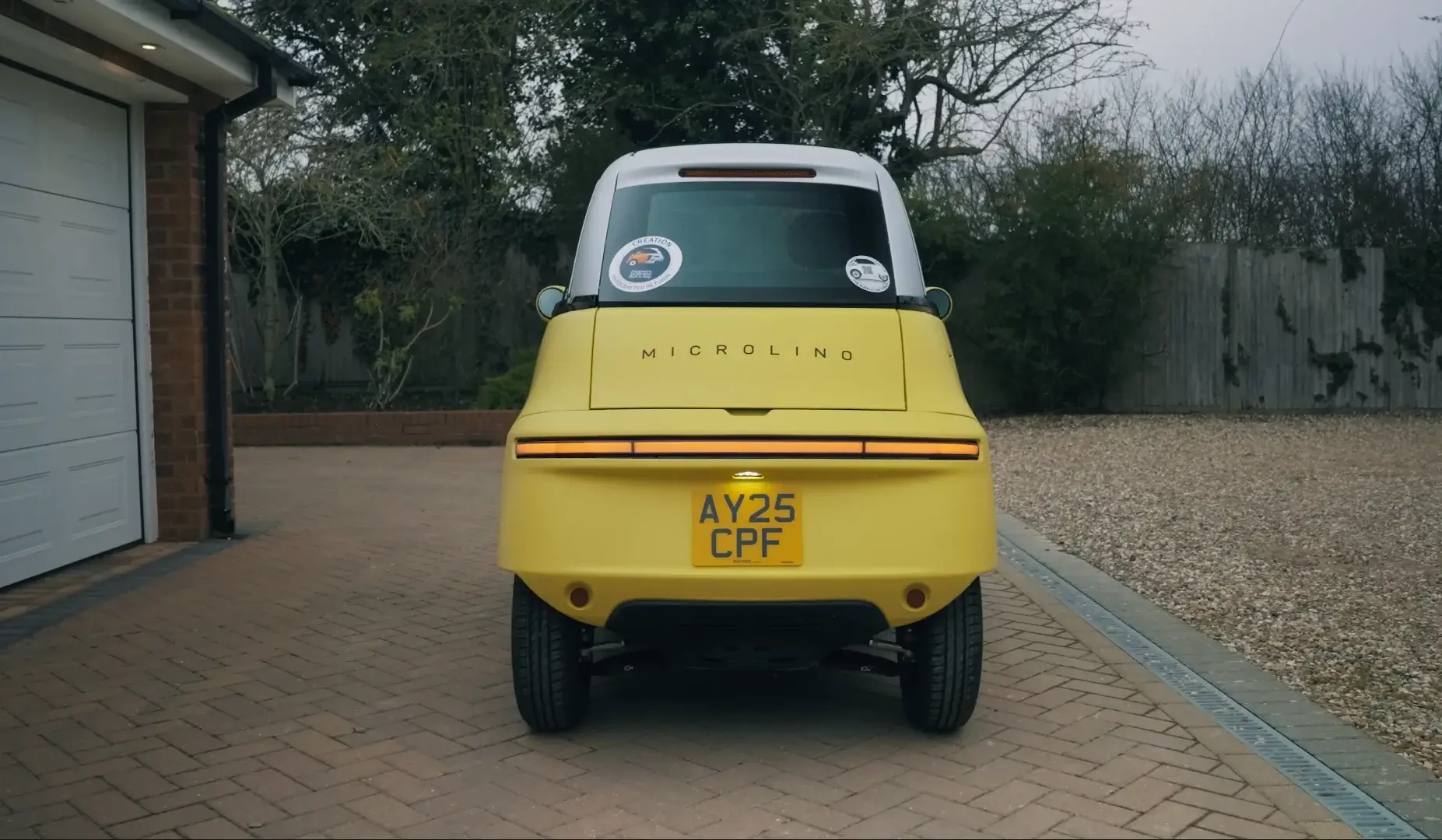
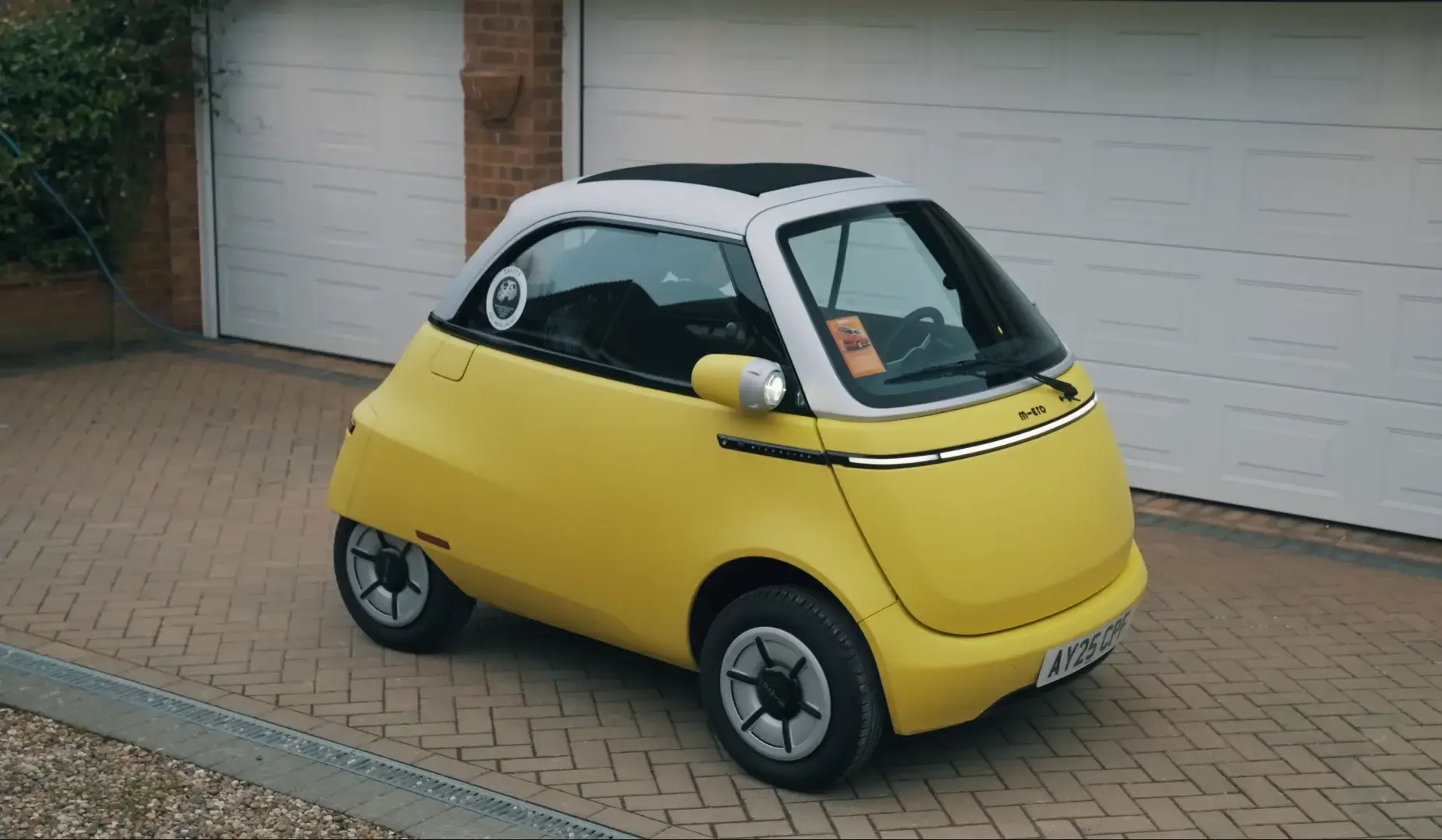
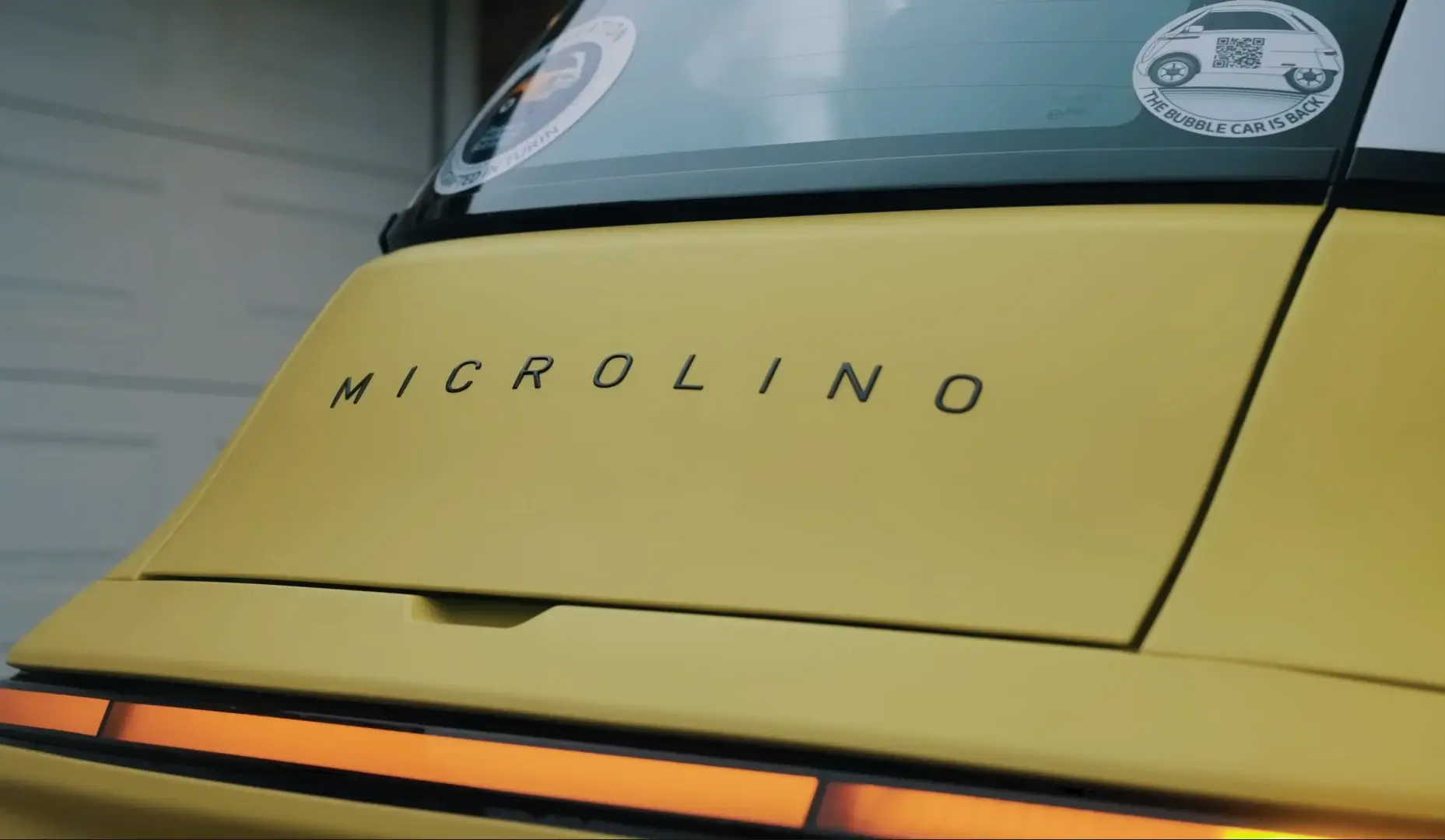
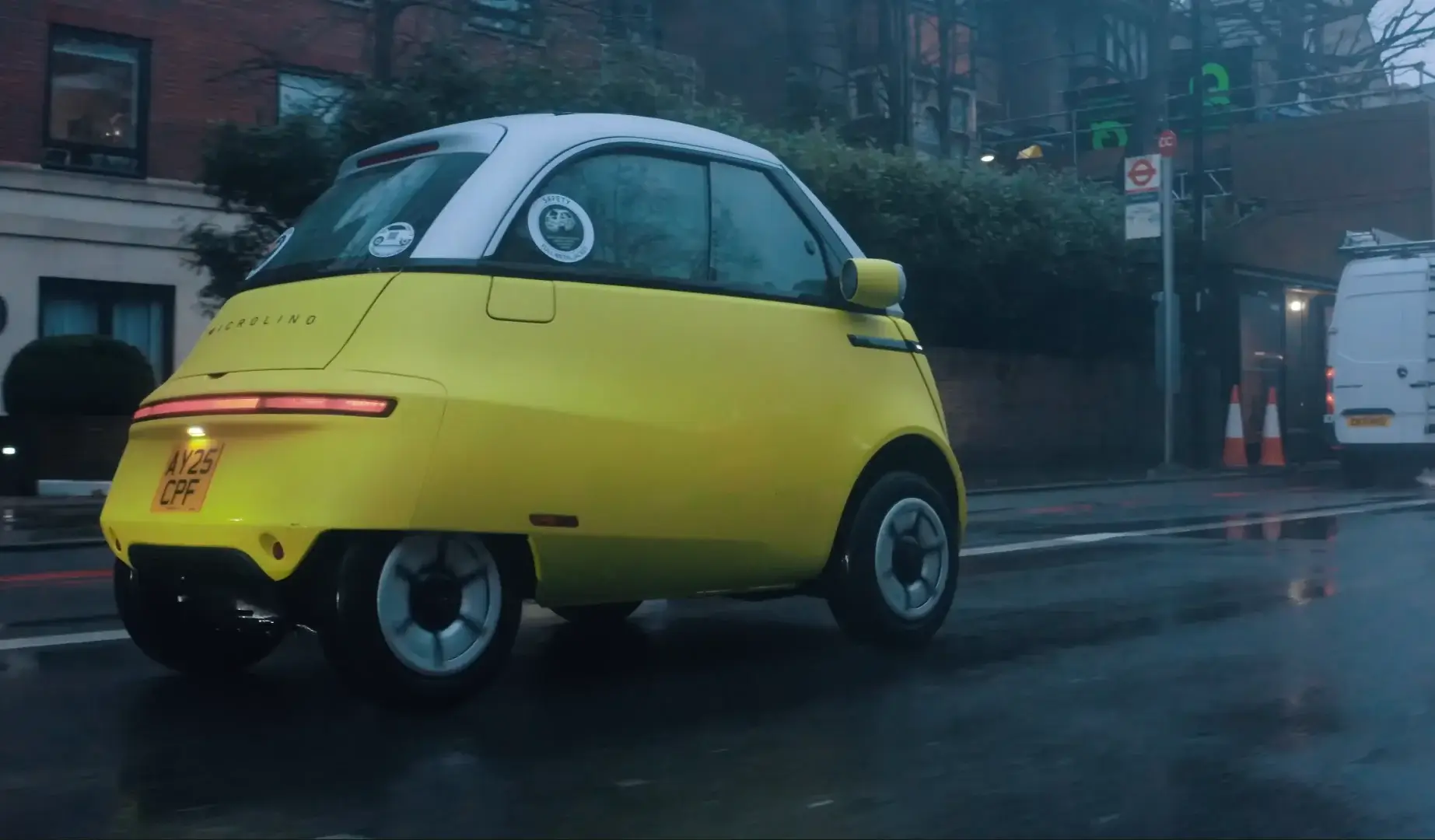
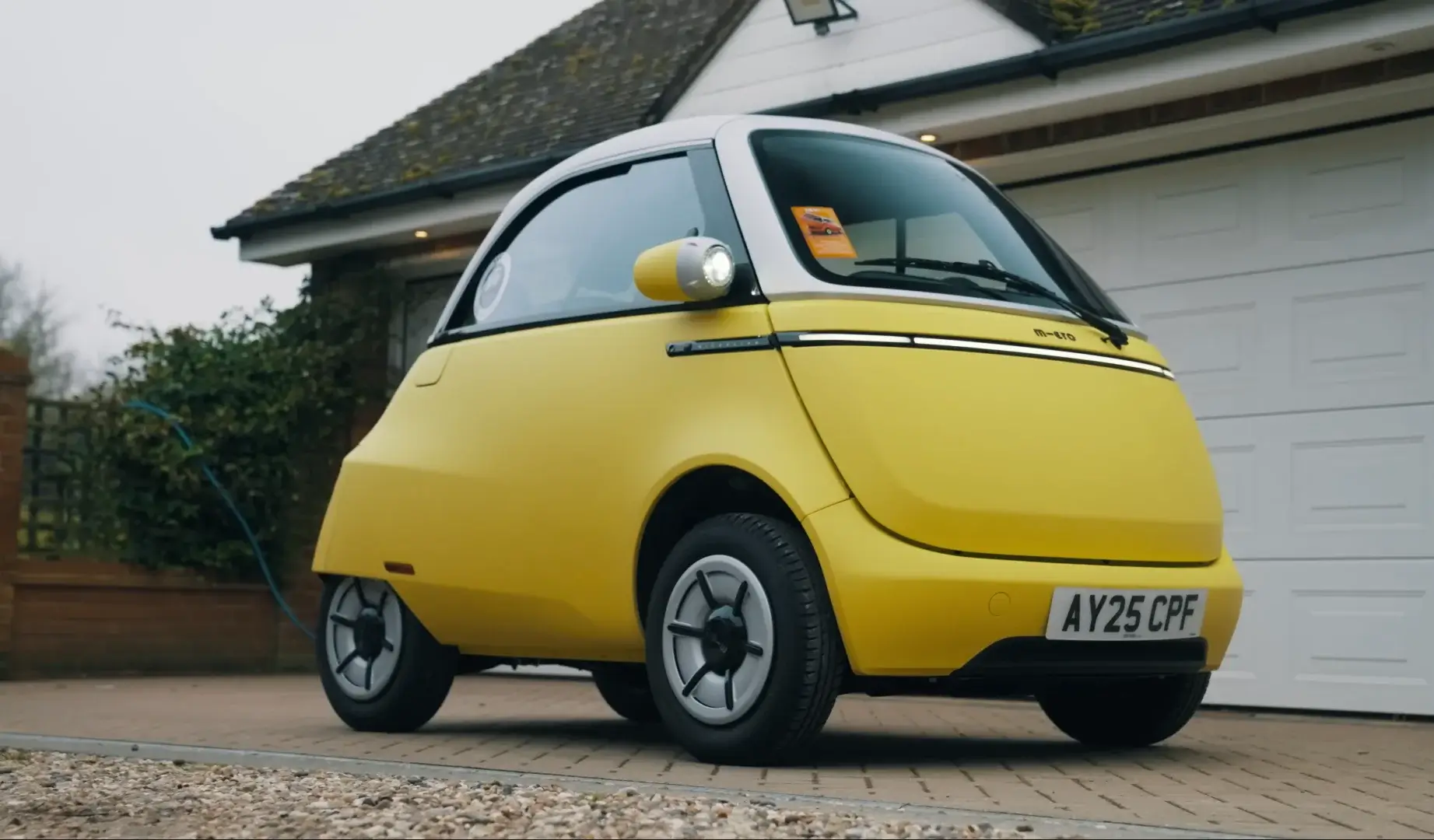
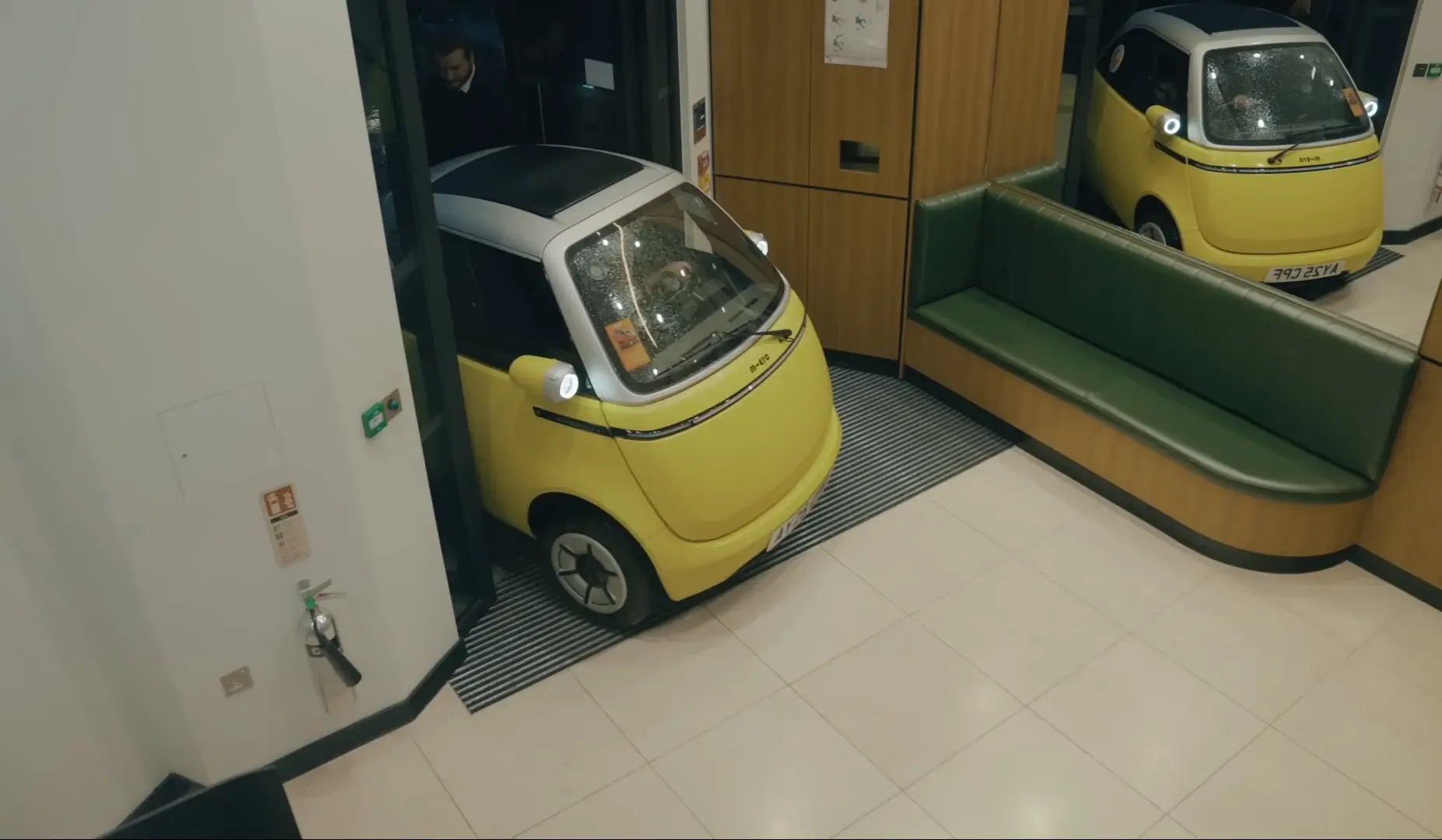
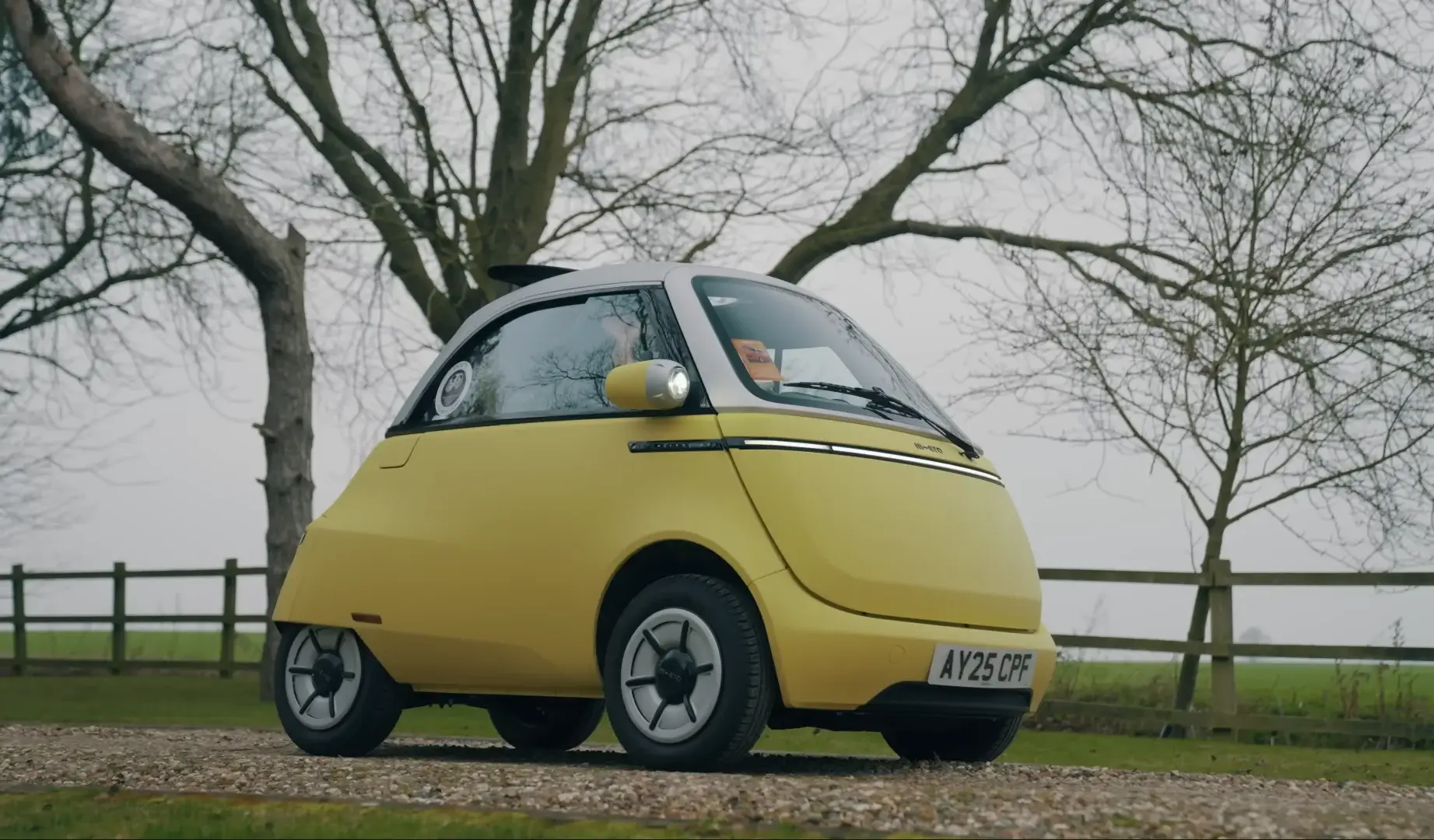
Built by Micro Mobility Systems (Switzerland/Italy), the Microlino — originally launched as “Microlino 2.0” in its early production years — is a different proposition entirely from the Topolino. This comparison uses the higher-performance 90 km/h Microlino with the 10.5-kWh battery, homologated as an EU L7e heavy quadricycle — a distinctly different category from L6e, permitting higher power, higher mass, and much higher speed, though also carrying different licensing requirements depending on the market. The 90-km/h L7e Microlino starts at around €19,990 in some European markets, while the 10.5-kWh/177-km configuration used for this comparison can cost more depending on market, trim, taxes and equipment (~₹18 Lakh, approximate conversion, not an Indian retail price).
Key Specs
- Battery: 10.5 kWh lithium-ion (NMC/NCA)
- Motor: 12.4 kW (about 17 HP), rear-wheel drive
- Official WMTC range: up to 177 km with the 10.5-kWh battery — actual range varies with speed, weather, payload and driving style
- Charging: approximately 4 hours to 80% via the 2.2-kW onboard AC charger
- Dimensions: 2,519 mm (L) x 1,473 mm (W) x 1,501 mm (H), approximately 1,566 mm wheelbase
- Published vehicle weight: approximately 513 kg for this 10.5-kWh configuration — a manufacturer-published curb-weight figure, not the EU L7e mass-in-running-order limit, and the two should not be compared directly
The Microlino’s signature engineering party trick is its faithful recreation of the original Isetta’s front-opening single door — the entire nose of the car swings open, steering wheel and all, so you step directly onto the pavement rather than squeezing out sideways. It rides on a self-supporting steel body with aluminium outer/body panels, and with a 90 km/h top speed, it is substantially better suited to suburban roads and faster urban routes than a 45 km/h L6e microcar, subject to local road-access and speed-limit rules.
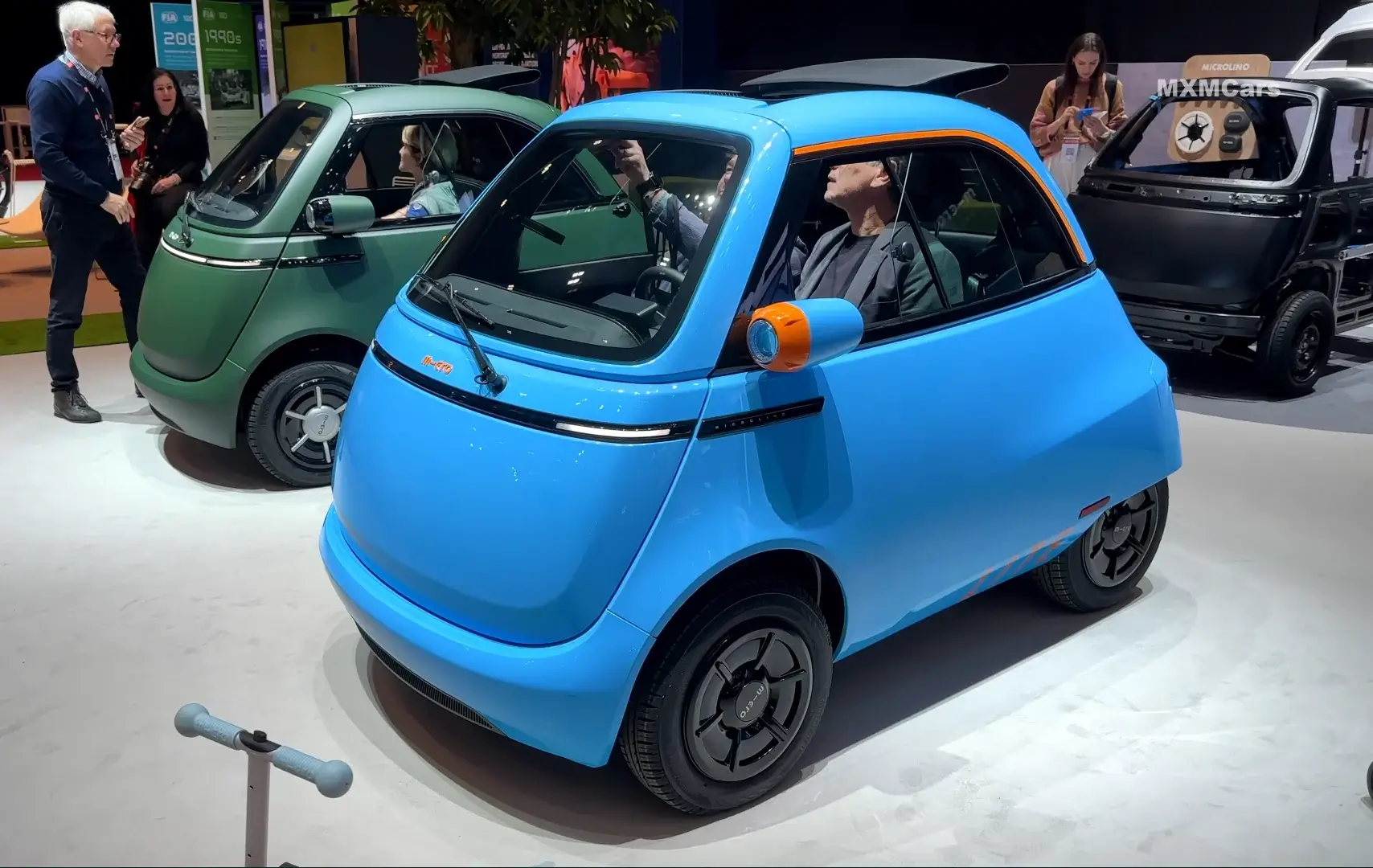
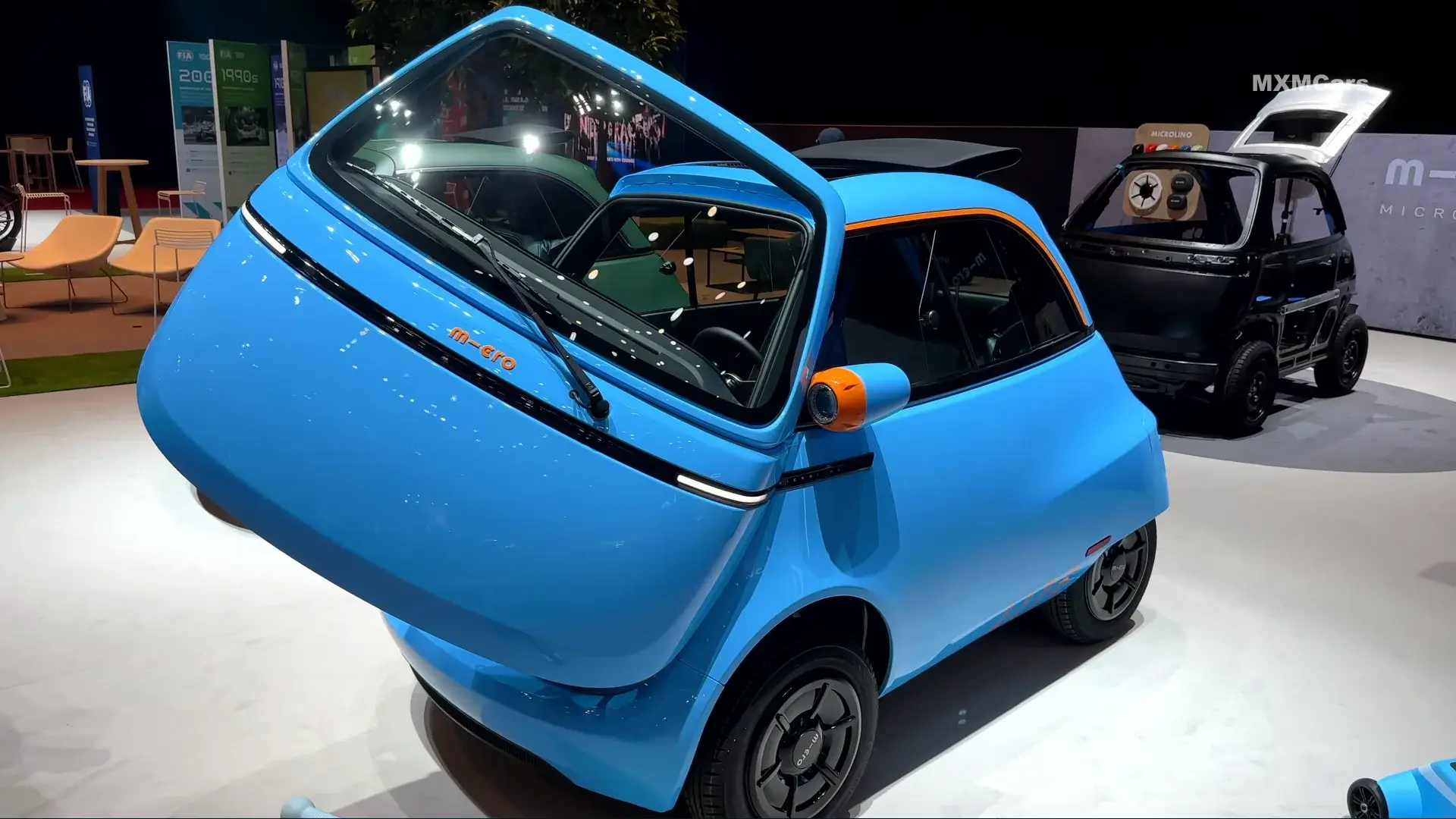
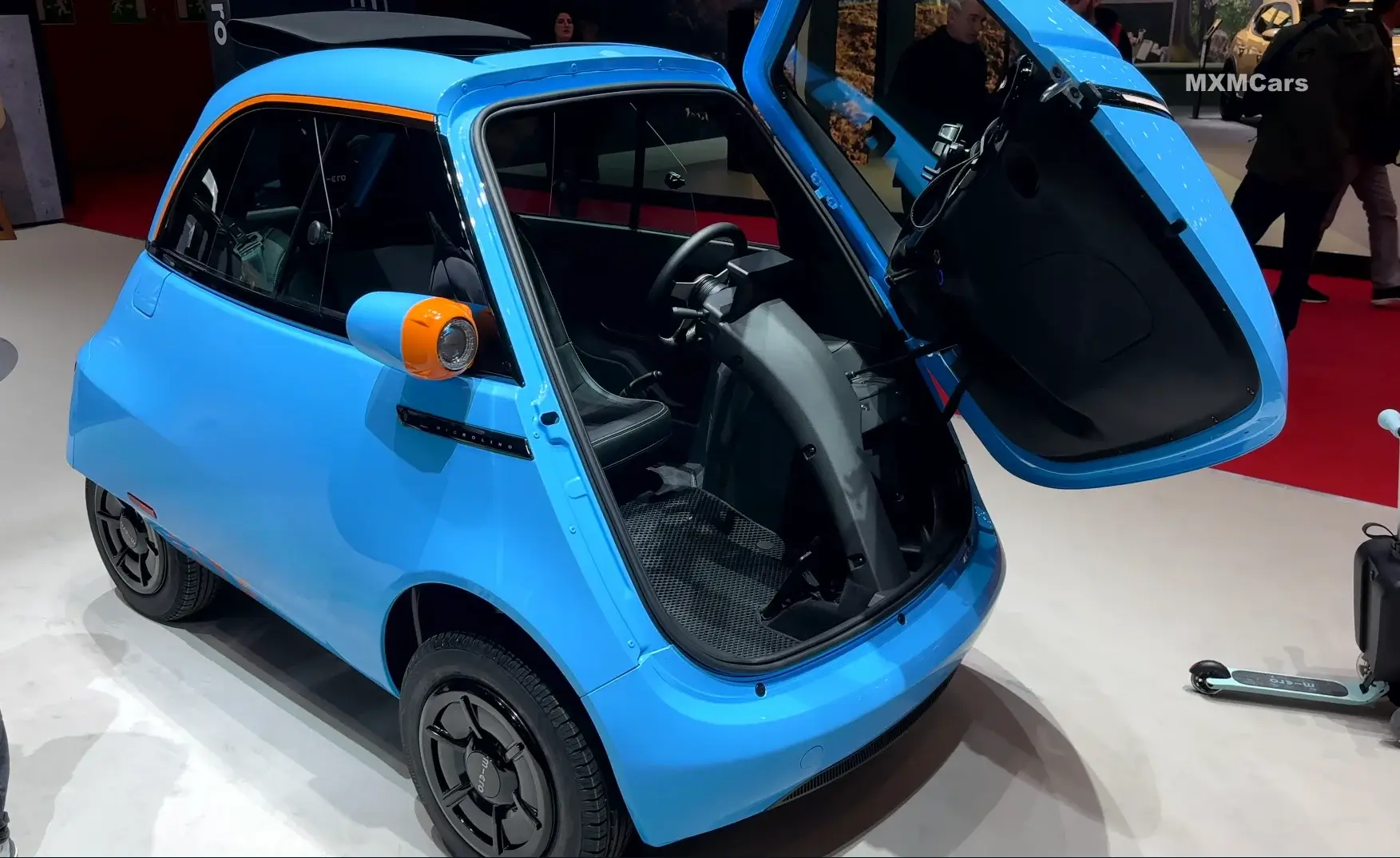
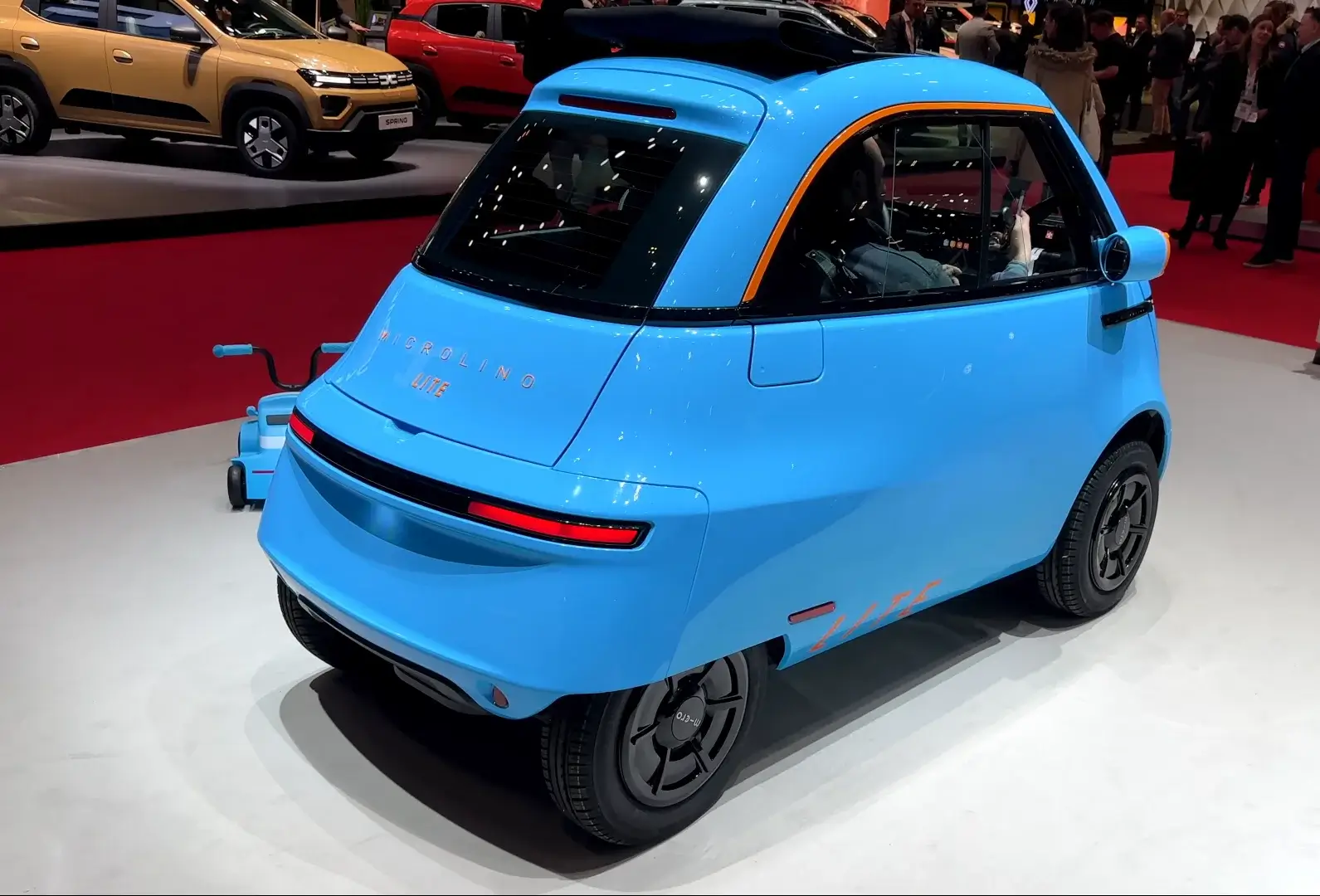
Variant note: Microlino is offered in both L6e and L7e configurations depending on market. The 45-km/h L6e Microlino Lite is not the same vehicle specification as the 90-km/h L7e Microlino used for this comparison. Battery size, range, weight and price therefore need to be read together rather than mixed across versions.
Technical & Design Head-to-Head (Fiat Topolino vs Microlino)
| Specfication | Fiat Topolino / Dolcevita | Microlino Lite | Microlino 10.5 kWh L7e |
| EU Category | L6e (Light Quadricycle) | L6e (Light Quadricycle) | L7e (Heavy Quadricycle) |
| Starting price / market-specific | From around €9,990, market-specific (~₹10.0 Lakh) | From ~€17,990 / CHF 17,990 market-dependent (~₹18 Lakh) | From ~€19,990 in some markets; 10.5-kWh version priced higher in some markets (~₹20 Lakh) |
| Dimensions (L x W x H) | 2,535 x 1,400 x 1,530 mm | 2,519 x 1,473 x 1,501 mm | 2,519 x 1,473 x 1,501 mm |
| Wheelbase | 1,730 mm | ~1,566 mm | ~1,566 mm |
| Power Output | 6 kW | 6 kW nominal (9 kW peak) | 12.4 kW |
| Battery Chemistry & Size | Lithium-ion, 5.4 kWh | Lithium-ion, 5.5 kWh (standard) / 11 kWh (optional) | Lithium-ion (NMC/NCA), 10.5 kWh |
| Official Range | Up to 75 km (WMTC) | Up to 93 km (5.5 kWh) / up to 177 km (11 kWh) | Up to 177 km (WMTC) |
| Top Speed | 45 km/h | 45 km/h | 90 km/h |
| Published vehicle mass | ~562 kg, with measurement-convention caveat | ~571 kg (5.5 kWh) / ~600 kg (11 kWh) | ~513 kg for 10.5-kWh configuration |
| Drive | FWD | RWD | RWD |
| Charging Time | ~4 hrs, household socket | ~2 hrs (0-80%, 2 kW AC) | ~4 hrs to 80%, 2.2-kW AC |
| Seats | 2 | 2 | 2 |
| Door/Entry Design | Open-sided cabin, rope-pull handles | Front-hinged single door (Isetta-style) | Front-hinged single door (Isetta-style) |
| Vibe | Open-air beach cruiser | Iconic bubble-car style in an L6e “moped-class” package | Faithful bubble-car engineering, genuinely road-capable |
Prices and specifications vary by market, taxes and equipment level. All INR figures are approximate conversions and are not Indian retail prices, as neither model is currently sold in India. Where measurement conventions differ between manufacturers, figures are labelled as published rather than presented as directly interchangeable.
Note: Manufacturer-published vehicle-weight figures use different conventions and should not be treated as equivalent to the EU L-category “mass in running order”. Under Regulation (EU) No 168/2013, the mass in running order excludes the driver and, for pure-electric vehicles, the propulsion battery.
The core trade-off: the Topolino is a cheaper, simpler L6e design statement built for tight city cores and short hops, while this Microlino configuration is a higher-performance L7e machine that can realistically handle suburban commuting alongside regular traffic — reflecting a genuinely different regulatory category, not just a spec upgrade.
Could Lifestyle Microcars Work as Premium Second Cars in Indian Metros?
This is where the conversation gets genuinely interesting for Indian buyers. Mumbai, Delhi, and Bengaluru all share the exact traffic conditions these microcars were designed to solve: chronic parking shortages, stop-start congestion, and short average daily commute distances for a large segment of urban professionals.
Where the case is strong:
- Compact footprint: At around 1.4–1.5 metres wide, their compact footprints could make them easier to accommodate in tight urban parking spaces than conventional hatchbacks, a genuine advantage in space-starved metros.
- Design-led appeal: India’s premium EV buyers increasingly treat their second vehicle as a lifestyle statement rather than pure utility — the same instinct that’s driving demand for retro-styled scooters and boutique cycling gear could plausibly extend to a design-forward microcar as a weekend or short-commute second vehicle for high-income urban households.
- Low running costs: Small battery packs charging on household or onboard AC power align well with urban Indian apartment/villa charging setups.
Where the friction is real:
- Regulatory mismatch: Neither the L6e nor L7e EU classification maps directly onto India’s own quadricycle framework, which specifies its own weight, power, and speed limits and doesn’t include an equivalent open lifestyle-microcar segment.
- Speed and safety context: The Topolino’s 45 km/h cap would struggle on most Indian arterial roads. Any Indian-market version of either car would need to satisfy India’s applicable type-approval, safety and registration requirements — consumer crash-test ratings such as NCAP are a separate matter from the legal homologation process, and neither should be assumed automatically.
- Price positioning: At the equivalent of ₹10–20 Lakh, these cars would need to compete against fully-loaded hatchbacks, compact SUVs, and ultra-compact EVs such as the MG Comet EV, which offers four seats and is a very different type of vehicle from an EU L6e/L7e quadricycle, but already gives Indian buyers more conventional practicality and an established service network.
- Import and homologation costs: Neither model is currently homologated for sale in India, and bringing either vehicle to market would require compliance with India’s applicable type-approval, safety, registration and other regulatory requirements, alongside the added cost of import duties on fully-built low-volume EVs.
Bottom line for India: The design language and space-saving logic of both cars are genuinely relevant to Indian metro commuting patterns. Neither model currently has an established India-market homologation or sales program, so an Indian launch would require substantial regulatory, commercial and pricing work. They’re best understood, for now, as aspirational European lifestyle products that Indian urban mobility conversations can learn from — rather than vehicles Indian buyers should expect to see in showrooms soon.
Final Verdict (Fiat Topolino vs Microlino)
Ranking these two on where they excel — while recognising this is not a fully like-for-like regulatory comparison, since the two vehicles sit in different EU categories:
1. Microlino — Best Overall Retro EV Microcar
The Microlino is the more capable vehicle largely because it occupies a higher-performance L7e category: more than twice the official test-cycle range, double the top speed, and a genuinely clever front-opening door mechanism that’s more than a styling gimmick. For buyers who want a design icon that can also function as an everyday city-and-suburb runabout, this is the more complete package — at a meaningfully higher price and within a different regulatory class. The Microlino Lite can be considered if L6e category is the main preference
2. Fiat Topolino / Dolcevita — Best Budget-Friendly Design Statement
At roughly half the starting price of the Microlino range, the Topolino trades outright capability for pure, unfiltered charm within the simpler L6e category. It’s the better choice for buyers who want the retro-EV aesthetic primarily for short city hops, weekend beach runs, or as a striking design object rather than a workhorse commuter.
Neither car is “better” in an absolute sense — the right pick depends on whether you’re prioritizing everyday usability within a higher-performance category (Microlino) or maximum style-per-euro in the simpler L6e class (Topolino).
Frequently Asked Questions
Stay connected via Google 'Electric Vehicle' News
Follow BijliWaliGaadi | India's Trusted EV Insights Portal
source on Google