This Ford Festiva Was Cut in Half to Become One of the World’s Thinnest EVs
Stay connected via Google 'Electric Vehicle' News
Follow BijliWaliGaadi | India's Trusted EV Insights Portal
source on Google
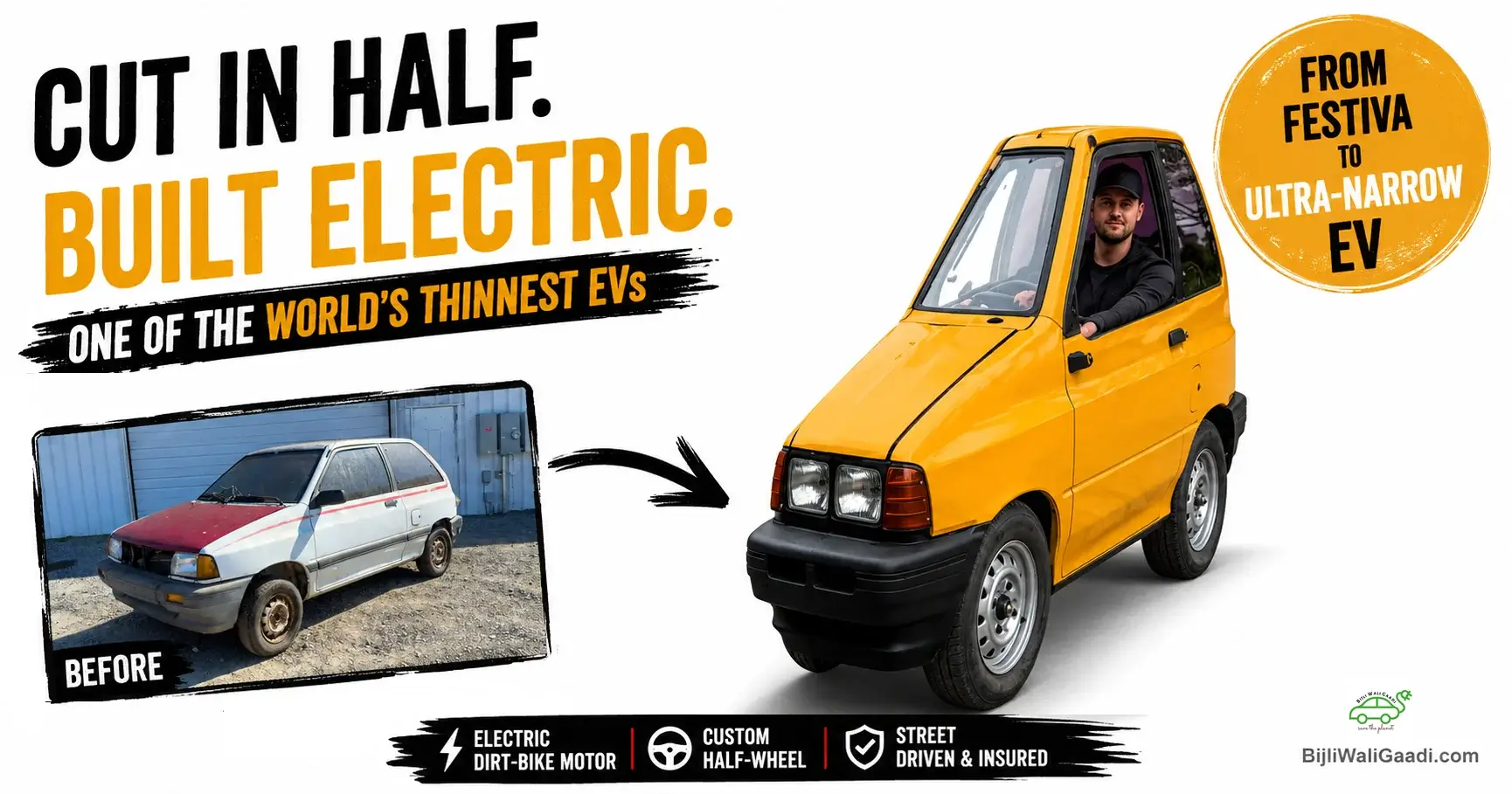
Tyler Fever wanted to make the world’s “most pathetic car” even more absurd. What he ended up building was one of the world’s thinnest street-driven electric vehicles: a 1988 Ford Festiva sliced down its centerline with an industrial laser, narrowed to roughly the width of a shopping cart, and rebuilt around an electric dirt-bike motor. The Tennessee-based creator behind the YouTube channel Prop Department then drove the finished machine through the streets of Nashville.
In precise automotive terms, “thin” undersells what actually happened here. The Festiva wasn’t flattened or lowered — it was made extraordinarily narrow, its body compressed inward until the cabin could barely fit a driver, let alone a conventional set of pedals and a full-width steering wheel. That distinction matters, because the story of how Fever’s team pulled it off, and kept the thing driveable, is where the real engineering intrigue lives.
Why the Ford Festiva Was the Perfect Donor Car
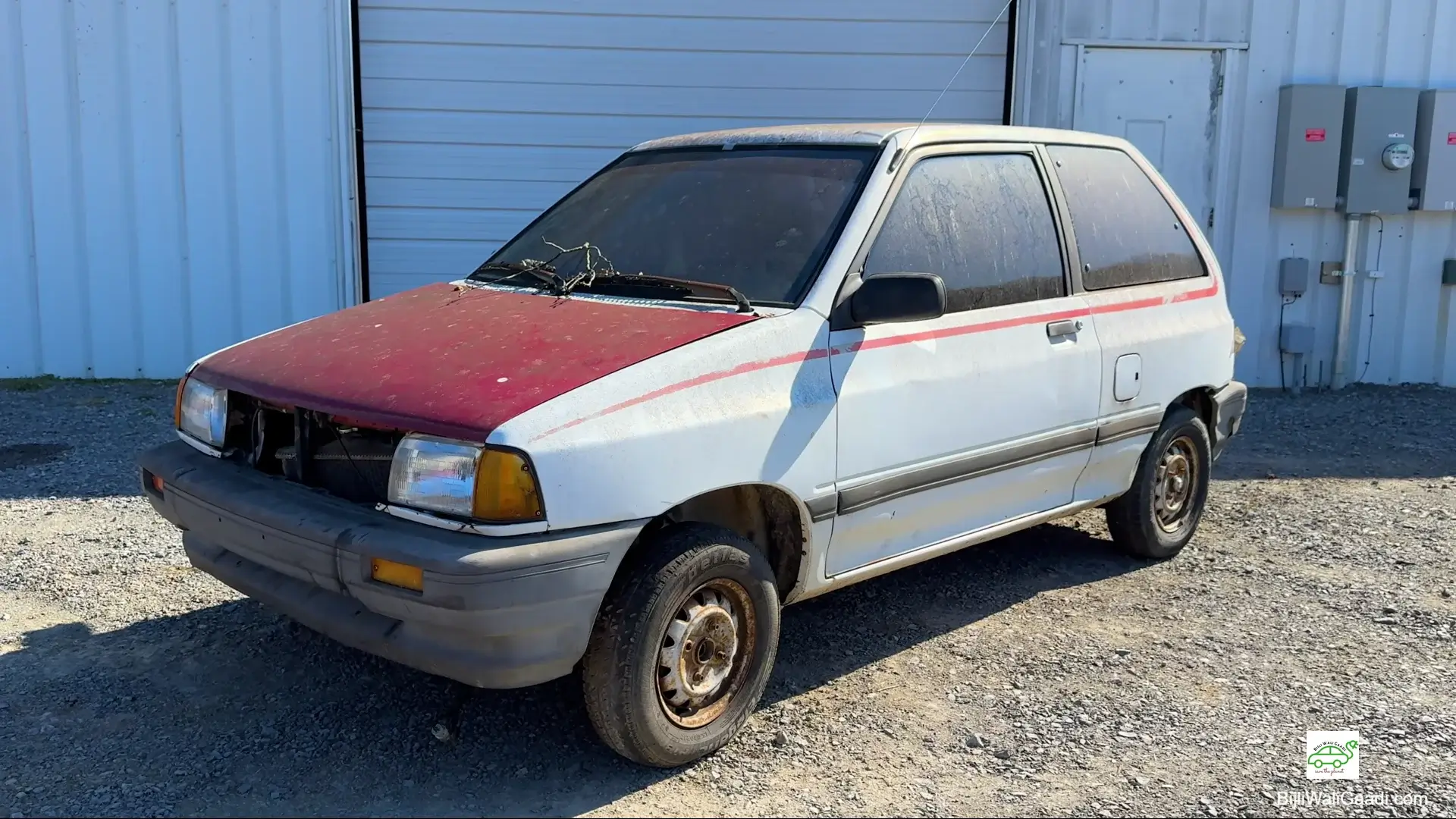
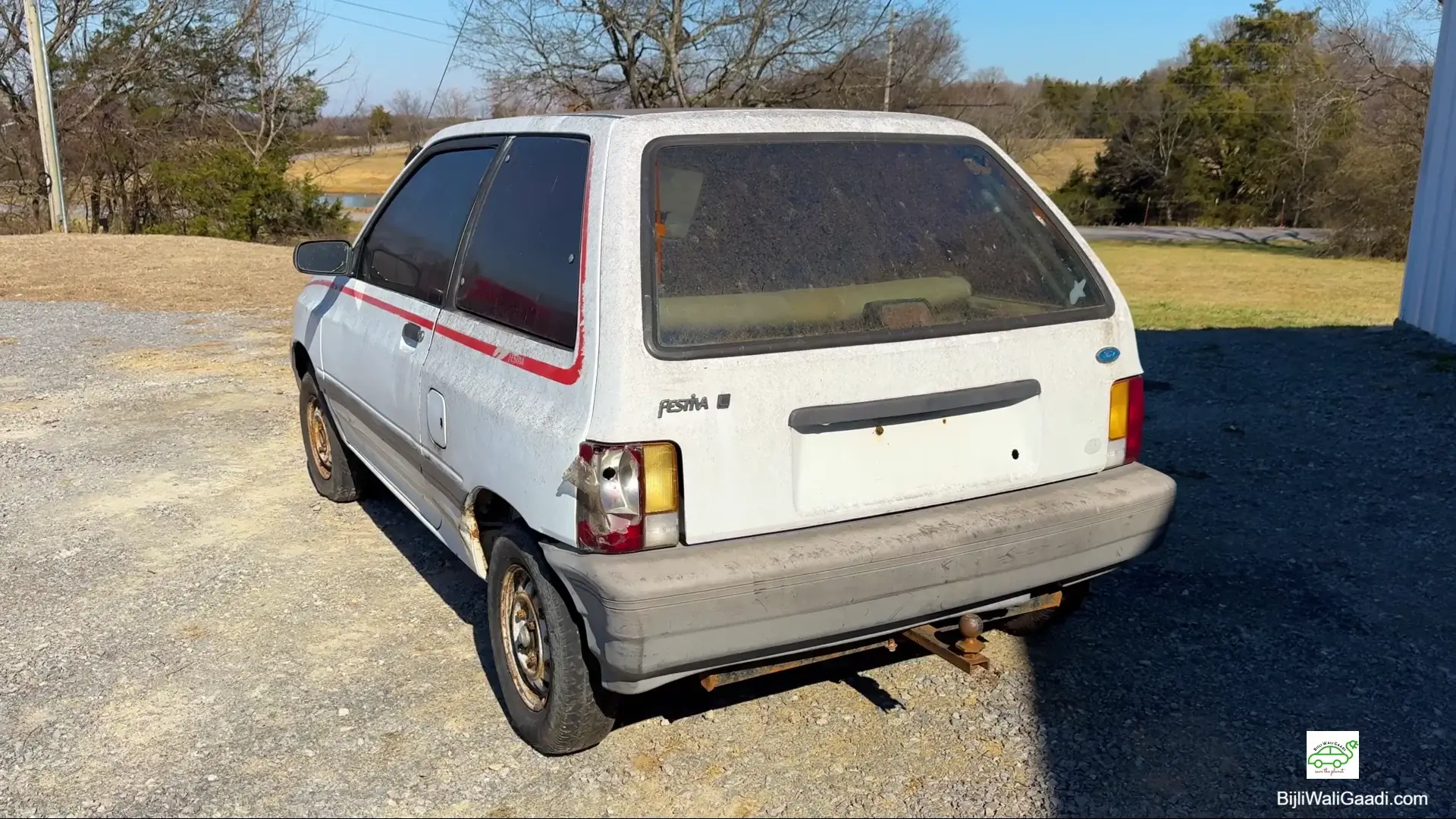
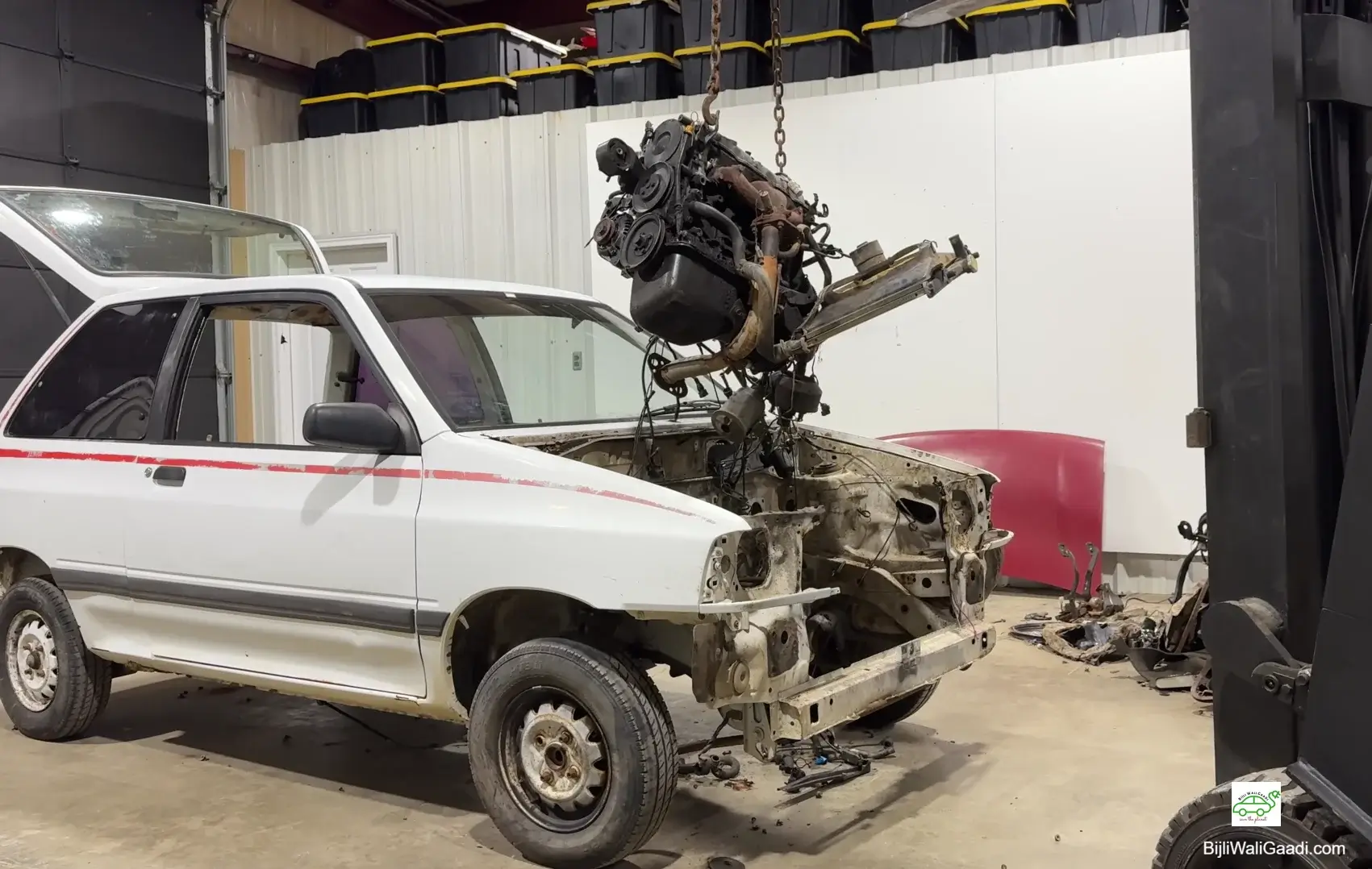
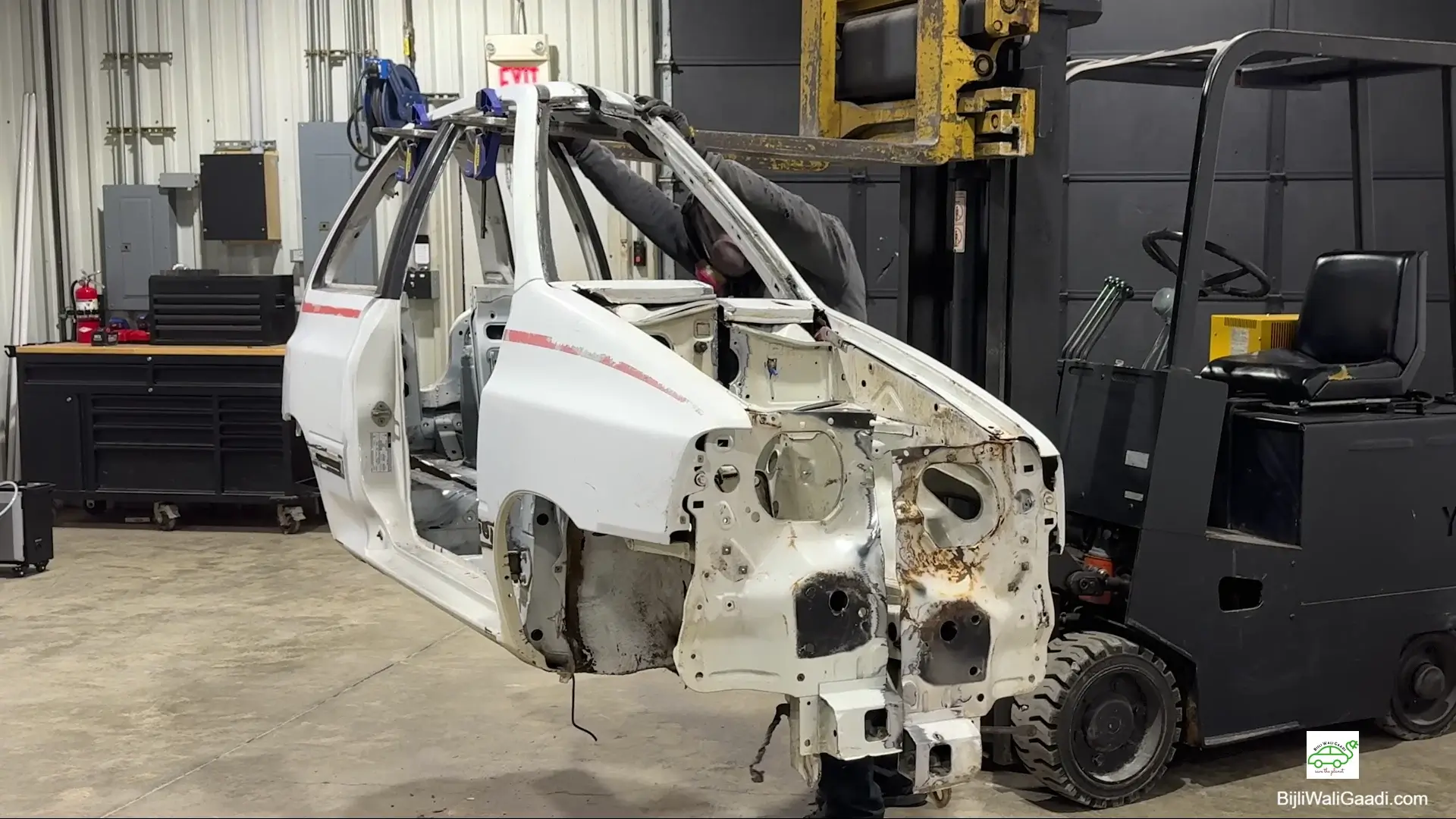
The Ford Festiva was already an unusually small car when it launched in the mid-1980s, one of the smallest mass-produced hatchbacks sold in the United States before it was discontinued domestically in the early 1990s. That inherent compactness made it a logical starting point for a project built around extreme narrowing: small enough that the transformation felt achievable, but still a genuine production car with a real chassis, real body panels, and real running gear to modify rather than fabricate from nothing.
Fever has framed the project as an extension of the Festiva’s already humble reputation — an attempt to push an unglamorous economy car to a more exaggerated, almost cartoonish extreme, while still keeping it functional enough to drive on public roads.
How Laser Cutting Turned the Festiva Into an Ultra-Narrow EV
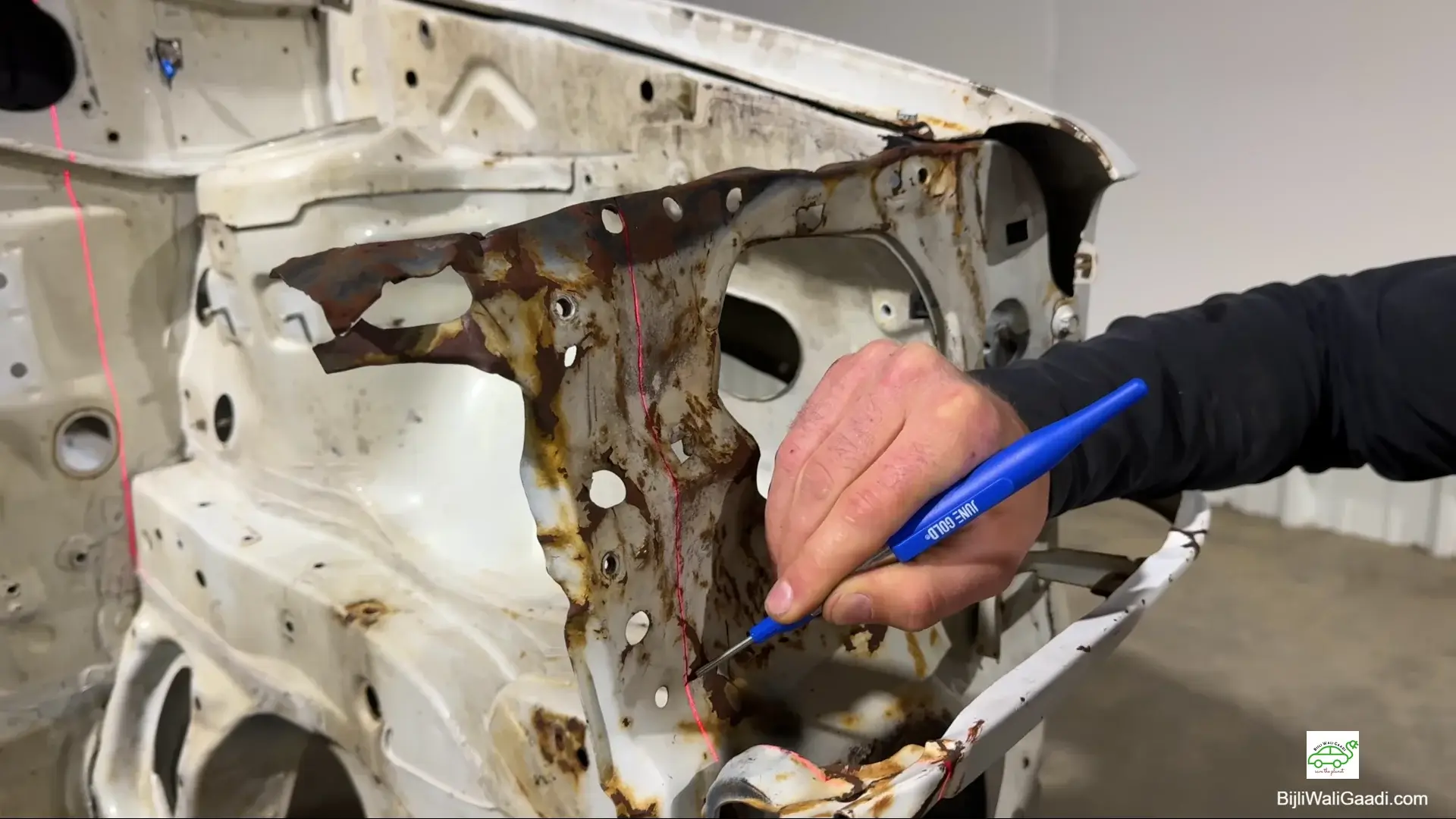
The transformation began with demolition. Fever’s team stripped the Festiva down to a bare shell, gutting the interior entirely. Liquid nitrogen was used to freeze stubborn fasteners and trim pieces, making them brittle enough to snap off cleanly during teardown.
With the shell prepared, the team used a high-powered metal-cutting laser alongside a CNC cutter to slice the car directly down its centerline — the defining moment of the build. Fever says the laser was powerful enough to cut straight through the metal and continue into the ground beneath the vehicle, a detail that says as much about the equipment involved as it does about why this isn’t a driveway project. From there, the two halves of the body were drawn inward and rejoined, compressing the Festiva’s width dramatically while keeping enough of the original structure intact to hold together as a functioning vehicle.
Why an Electric Dirt-Bike Motor Replaced the Original Engine
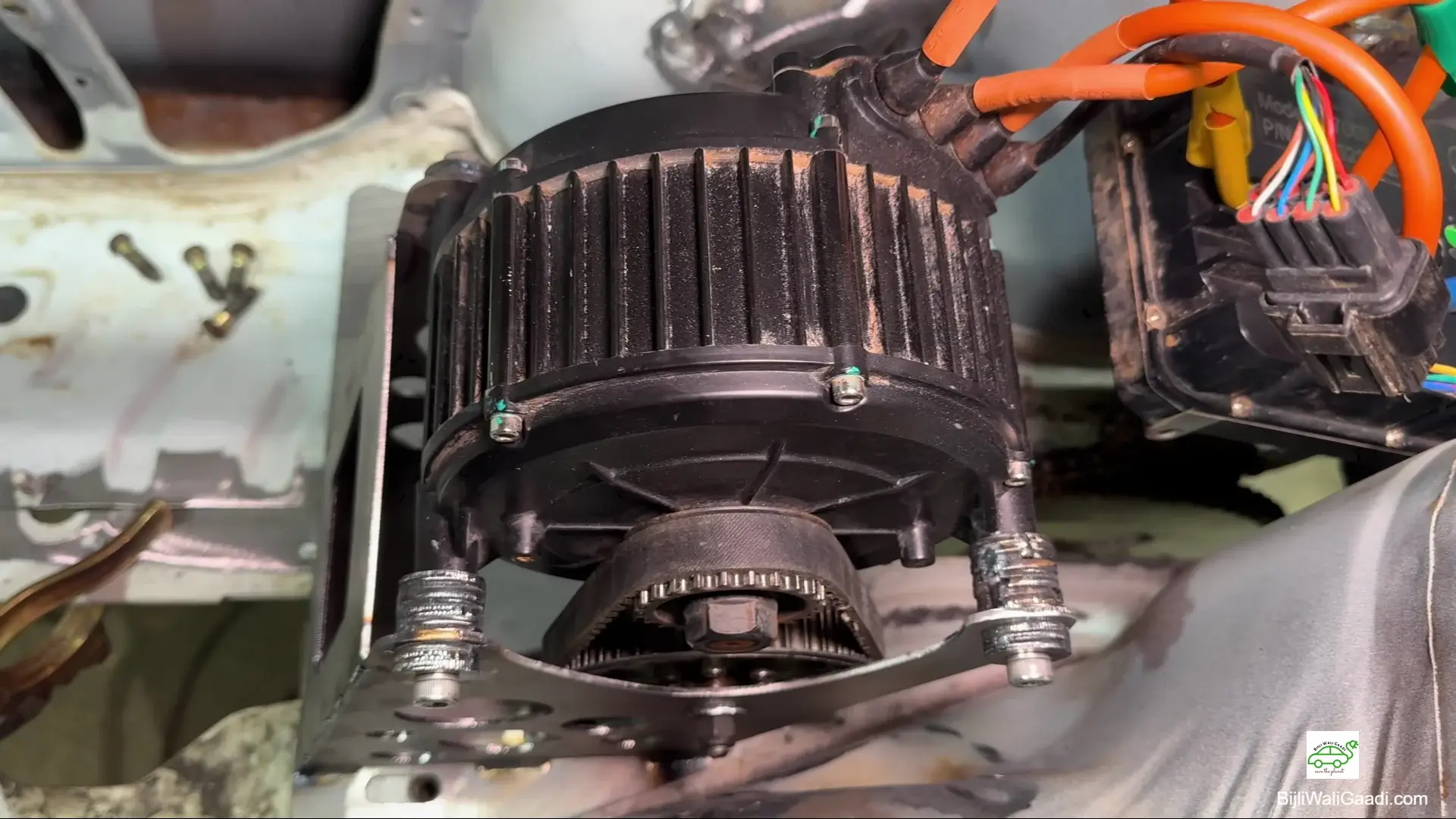
Narrowing the body created an immediate packaging problem: the Festiva’s factory engine simply no longer fit inside the reshaped frame. Rather than trying to force a combustion engine into a space it was never designed for, Fever removed it entirely and installed a motor from an electric dirt bike instead.
The swap did two things at once. It solved the space constraint, since a compact electric motor takes up a fraction of the room a piston engine and its supporting hardware would need. And it gave the finished car a rechargeable, battery-electric drivetrain in place of its original gasoline engine — turning a conventional 1980s economy car into a heavily modified micro EV. A separate 12-volt battery was wired in to run the lighting, horn, and a pair of phone chargers, covering the basic electrical needs of a car meant to be driven on real streets.
How Extreme Narrowing Created a Steering Problem
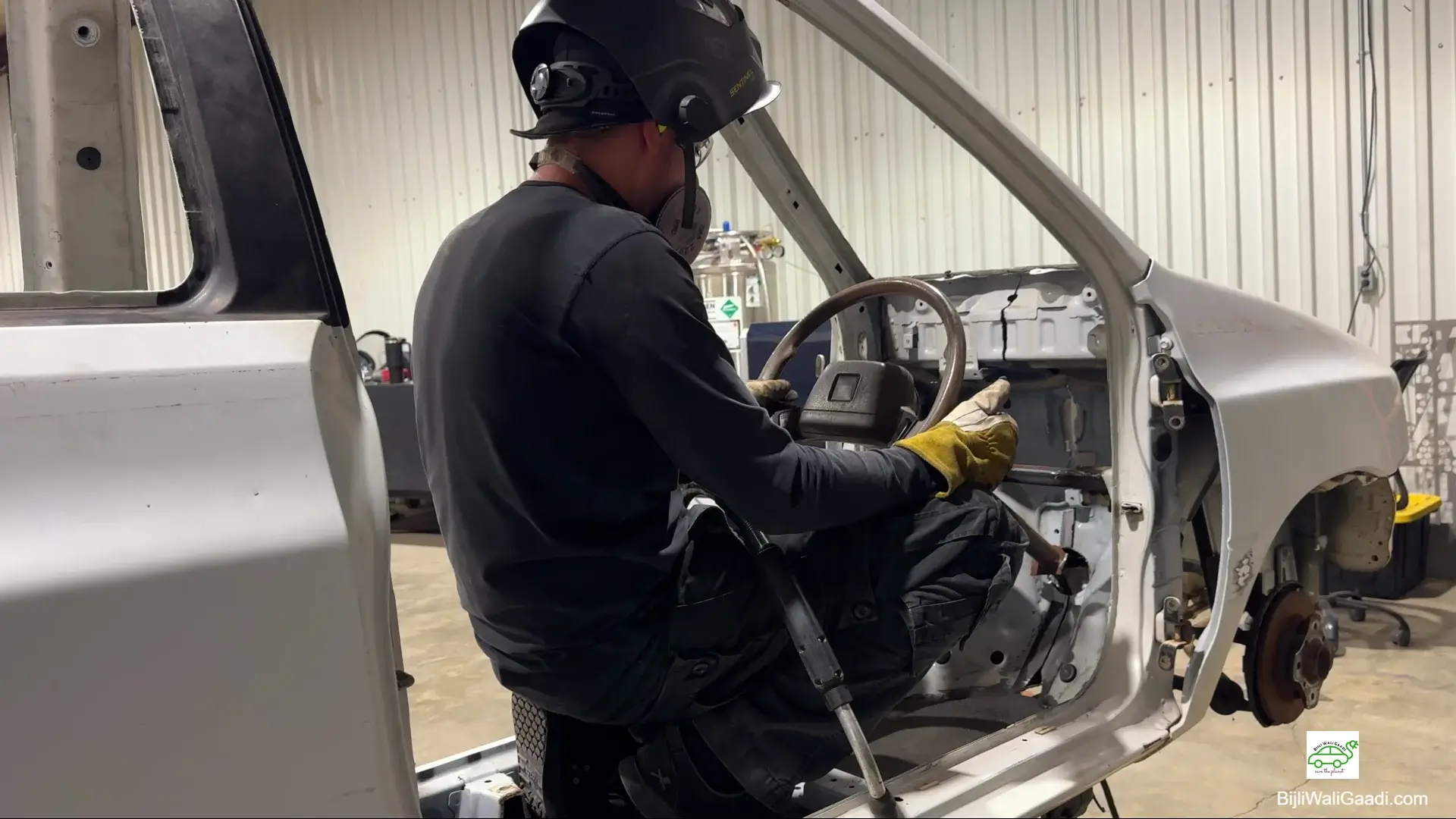
Compressing a car’s width doesn’t just shrink the cabin — it rearranges every relationship between driver, controls, and pedals. In Fever’s Festiva, the full-size steering wheel ended up physically blocking access to the brake pedal in the narrowed footwell.
The fix was blunt and effective: Fever cut the steering wheel in half with a saw, leaving a compact half-wheel to work the front axle. The resulting shape happens to resemble the yoke-style steering used in some modern Tesla models, though here it was a packaging fix born of necessity rather than a deliberate styling choice. Even with the modified wheel, Fever says driving the car still requires shifting his body and ducking slightly to complete a turn.
How the Modified Festiva Was Prepared for Public-Road Driving
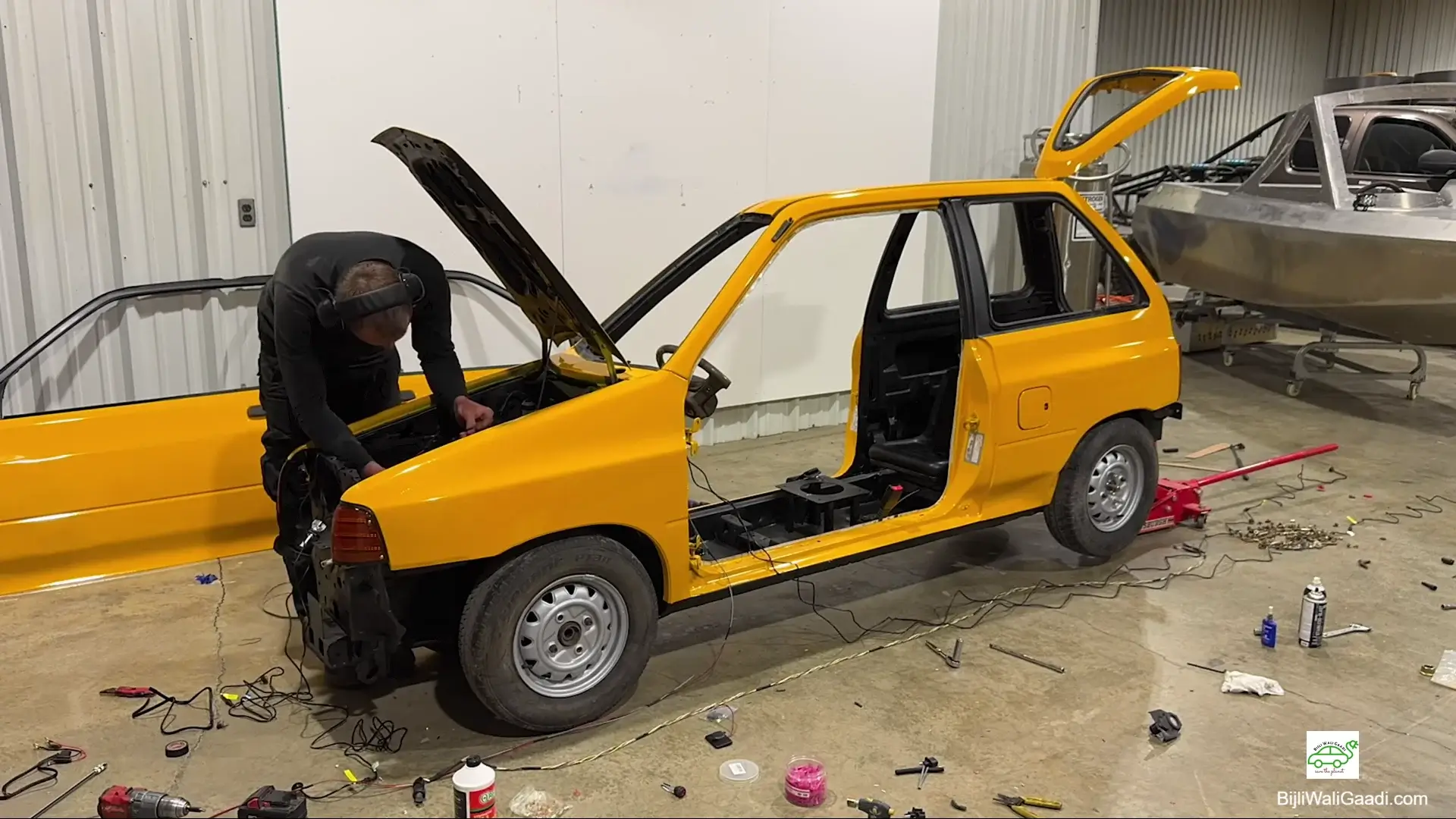
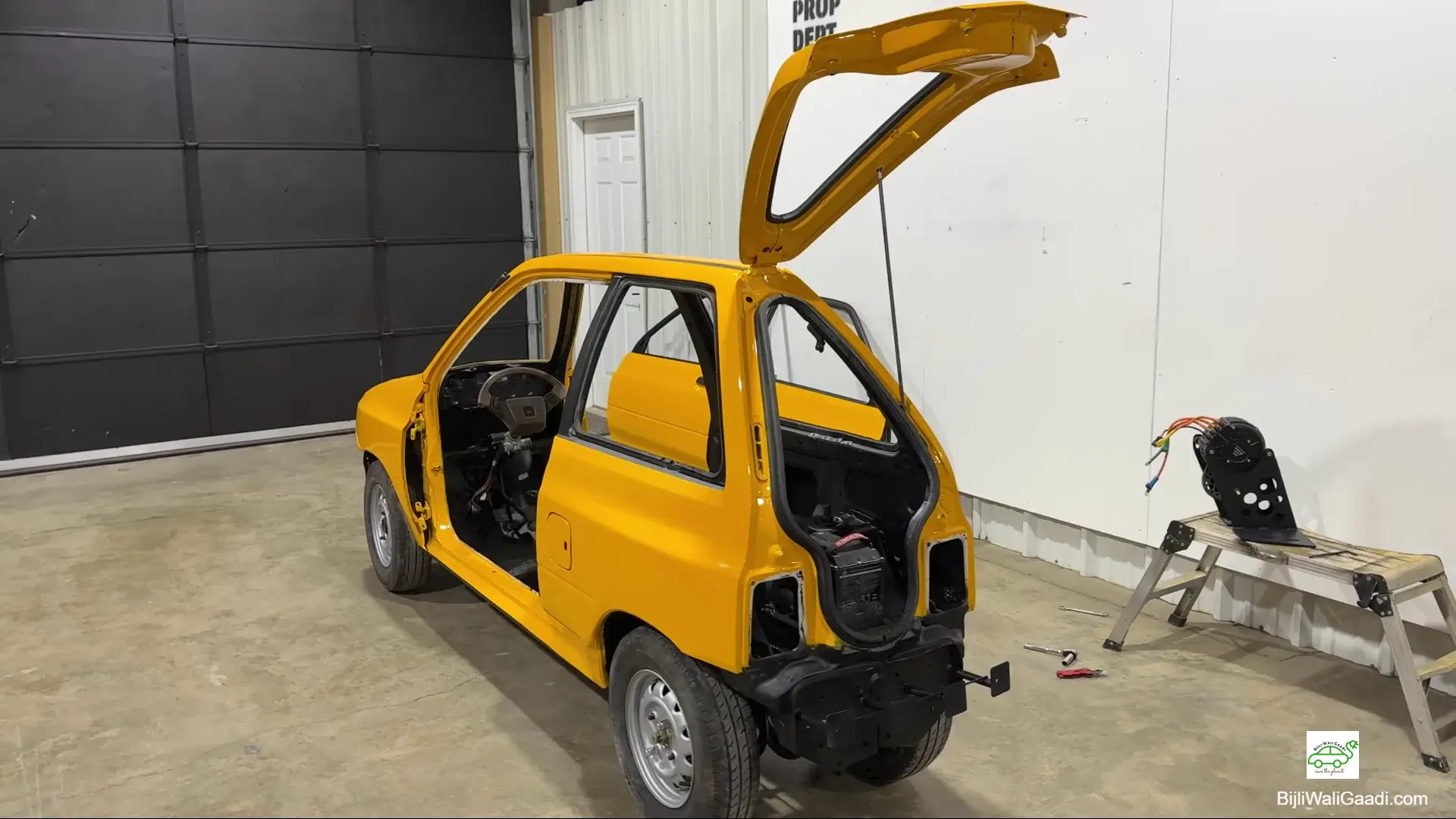
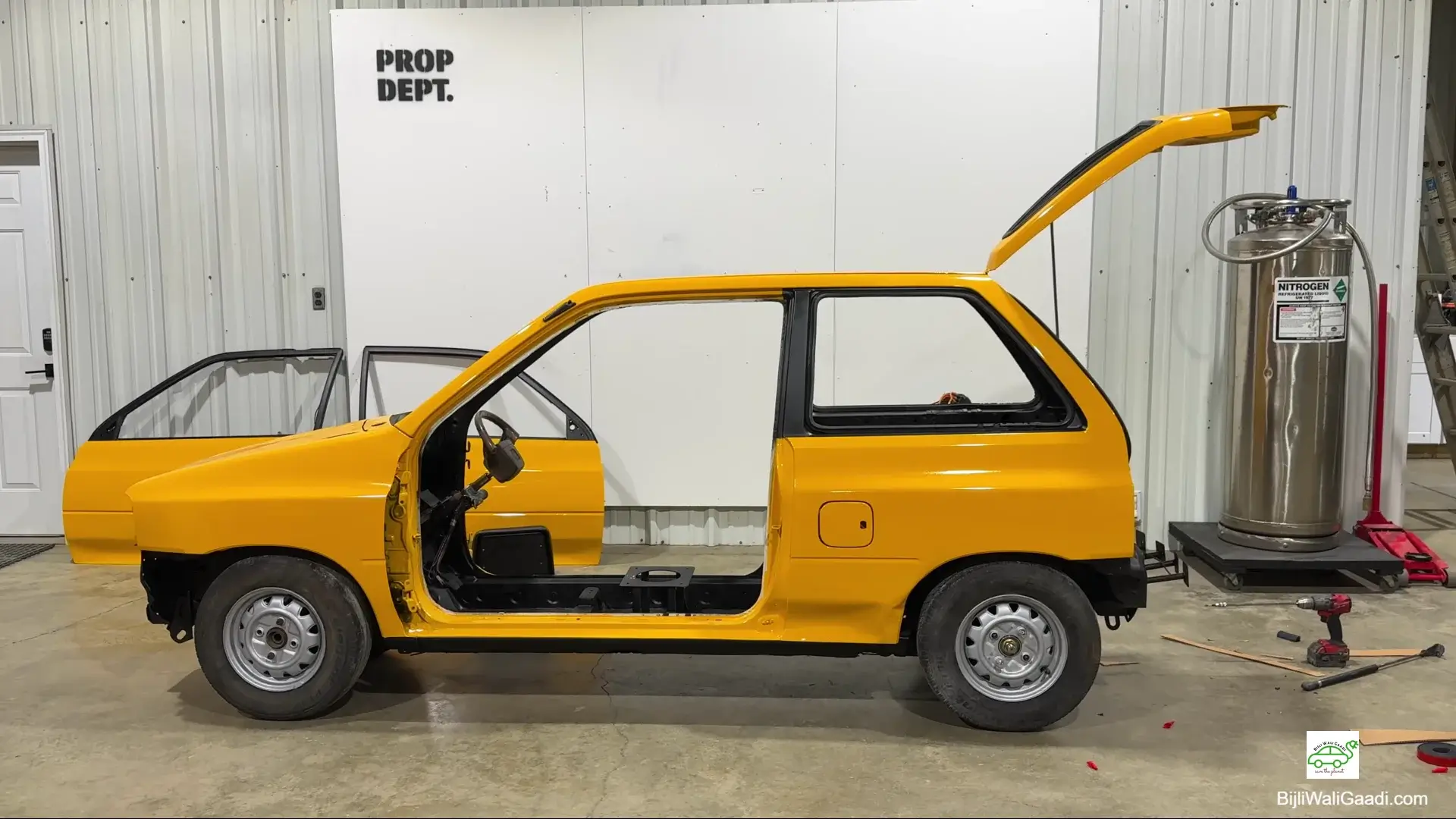
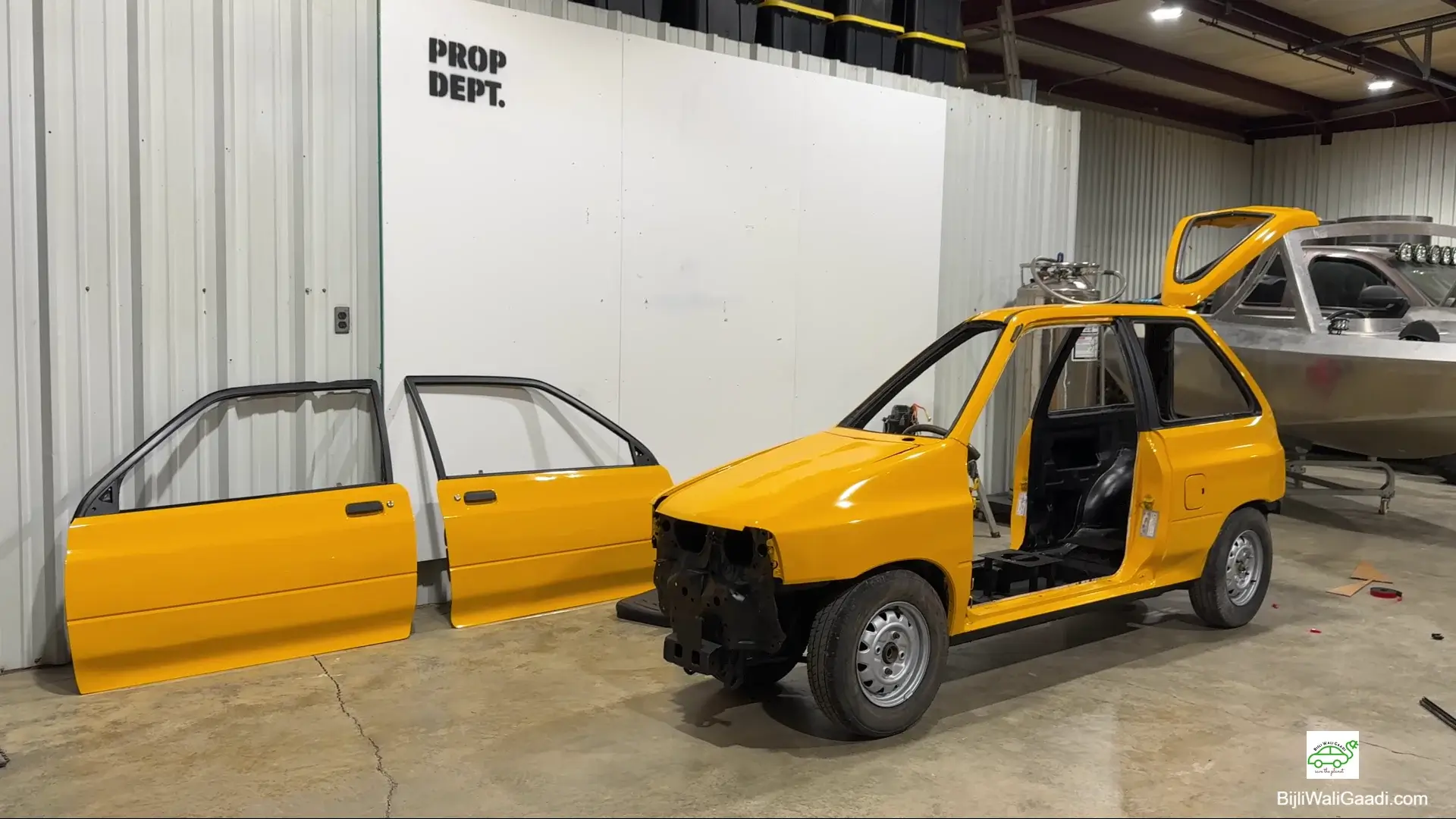
Beyond the drivetrain and steering, Fever’s team had to rebuild the parts of the car that regulators and common sense require for road use. The dashboard was reworked, and custom 3D-printed brackets were fabricated to mount headlights, mirrors, and other safety equipment onto the narrowed body — components the 12-volt electrical system was built to support.
Fever has also said the finished vehicle is insured, adding a layer of real-world credibility to what might otherwise read as a pure workshop stunt.
What It Is Like to Drive One of the World’s Thinnest EVs
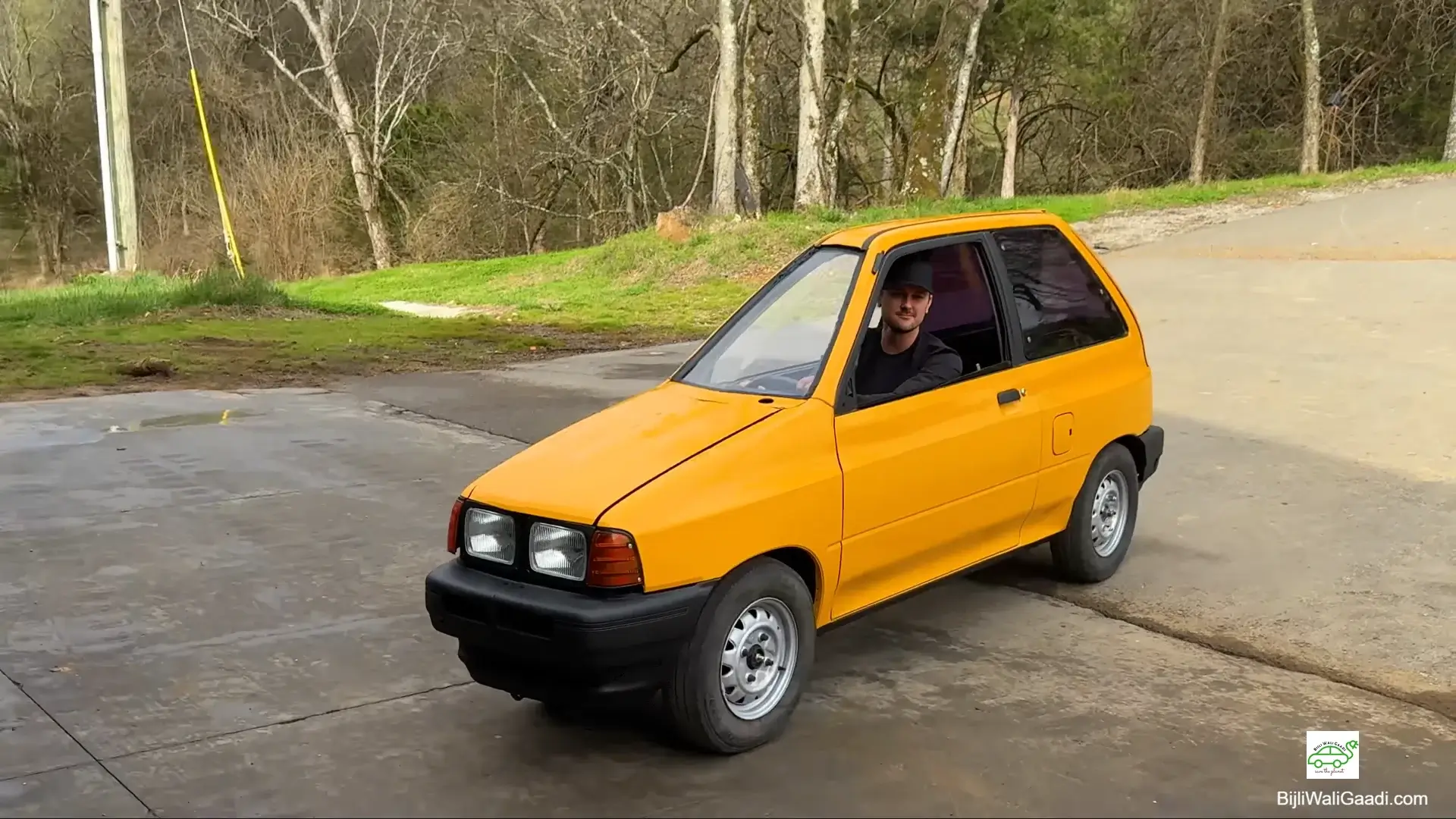
The build reportedly still fits two people. The driver sits up front, while a passenger can crouch in a narrow space directly behind the seat — a spot occupied by Fever’s cameraman during test runs. It is not a comfortable arrangement, and entry, exit, and the driving position all demand real physical effort. Fever has been candid that this is not a practical daily driver; it is an engineering exercise pushed to its limit.
Yet the car reportedly held up well once it hit the road. Fever drove it through Nashville, stopped at a gas station, and maneuvered it into a tight parking garage space between a Jeep and a sports car — all within roughly two weeks of the build starting. For a vehicle assembled that quickly around a laser-narrowed body and a repurposed dirt-bike motor, functioning at all outside a workshop is itself the notable result.
Why This Strange Ford Festiva Matters to EV Engineering
Fever’s Festiva isn’t a preview of future production vehicles, and it isn’t presented as one. What it does demonstrate is how adaptable electric propulsion can be when a build demands an unconventional shape. A compact electric motor let the team solve a packaging problem — insufficient space for a traditional engine — that a combustion powertrain would have made far harder to work around. Electric drivetrains, by nature of their smaller, more flexible components, open up architectures that wouldn’t be feasible otherwise.
This remains an independent, one-off creation rather than a verified world record or a manufacturer-backed prototype. But as a demonstration of how far a compact electric motor can be pushed to make an unconventional idea drivable, Tyler Fever’s ultra-narrow Ford Festiva is a genuinely interesting data point at the experimental edge of EV engineering.
Image credit: Images used in this article are screenshots captured from the YouTube channel “Prop Department.”

Stay connected via Google 'Electric Vehicle' News
Follow BijliWaliGaadi | India's Trusted EV Insights Portal
source on Google