Tesla Cybercab NHTSA Investigation: What AQ26002 Means for Driverless Cars
Stay connected via Google 'Electric Vehicle' News
Follow BijliWaliGaadi | India's Trusted EV Insights Portal
source on Google
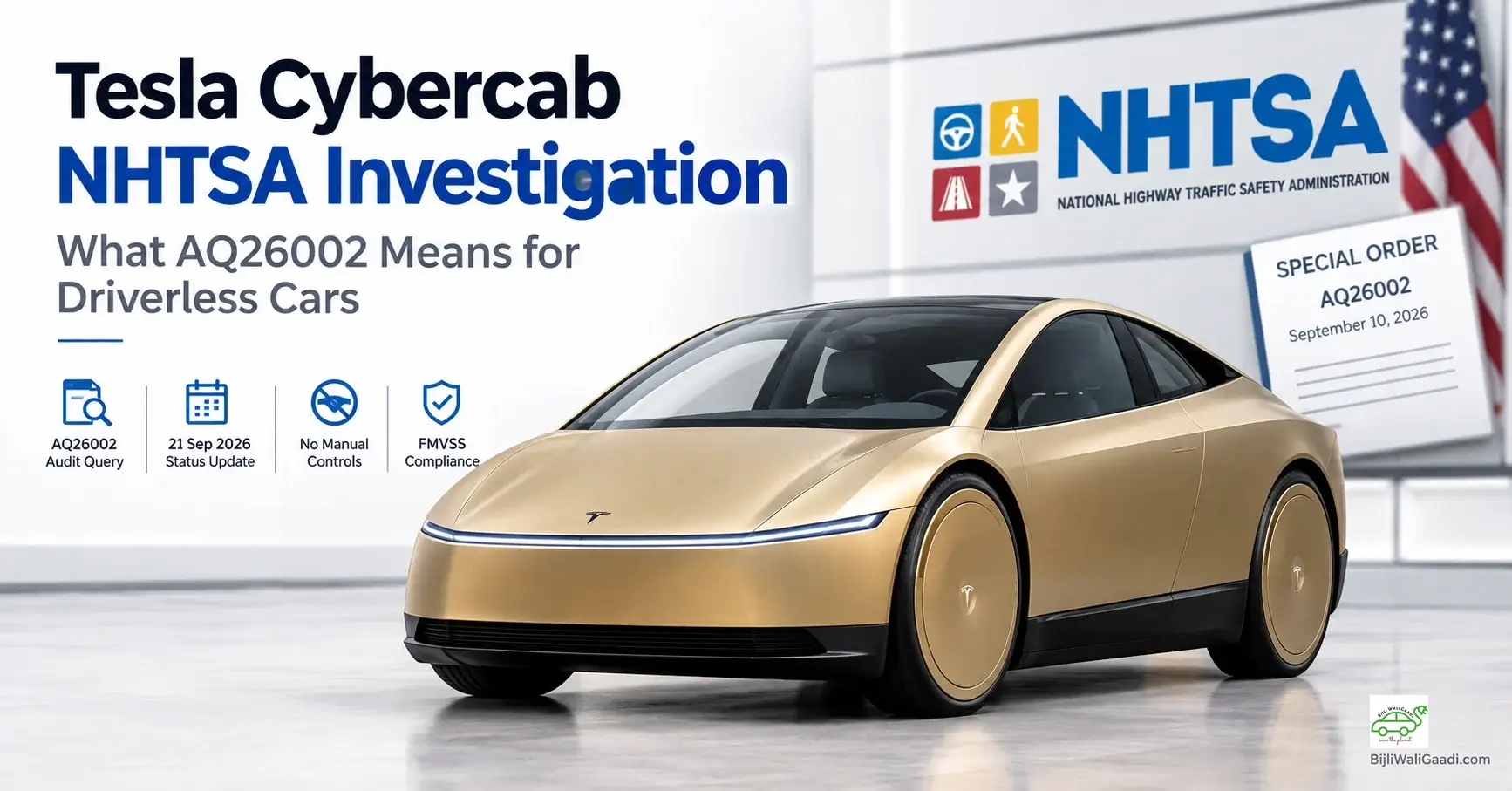
Tesla began commercial Cybercab deployment in Austin on September 3, 2026. Within hours, the National Highway Traffic Safety Administration (NHTSA) opened a formal review of the technical and procedural basis for the two-seat vehicle’s certification. As of September 21, 2026, that review is ongoing, and NHTSA has not announced a final determination on Cybercab’s compliance status.
Key Takeaways
- NHTSA opened Audit Query AQ26002 on September 3, 2026, with an estimated investigation population of approximately 1,000 vehicles — a scope figure describing the inquiry’s record, not a deployment cap or confirmed fleet size.
- On September 10, 2026, NHTSA issued a Special Order requiring Tesla to provide sworn responses to 21 requests concerning the technical and procedural basis for Cybercab’s certification, with a response due September 30, 2026.
- Tesla relied on the federal self-certification framework rather than seeking a Part 555 temporary exemption — the pathway Zoox used to obtain its own exemption, effective July 31, 2026.
- As of September 21, 2026, NHTSA has not announced a final finding that Cybercab fails to comply with applicable Federal Motor Vehicle Safety Standards (FMVSS). AQ26002 remains open and is not itself a defect, non-compliance, or recall determination.
What NHTSA Is Investigating
NHTSA’s opening summary for AQ26002 states that Tesla began commercial deployment with a small number of Cybercab vehicles in Austin on September 3, 2026, and that Tesla notified the agency it had certified those vehicles as compliant with all applicable FMVSS. The audit’s estimated population is approximately 1,000 vehicles — a scope figure tied to the investigation record, not a confirmed count of vehicles already on Austin roads.
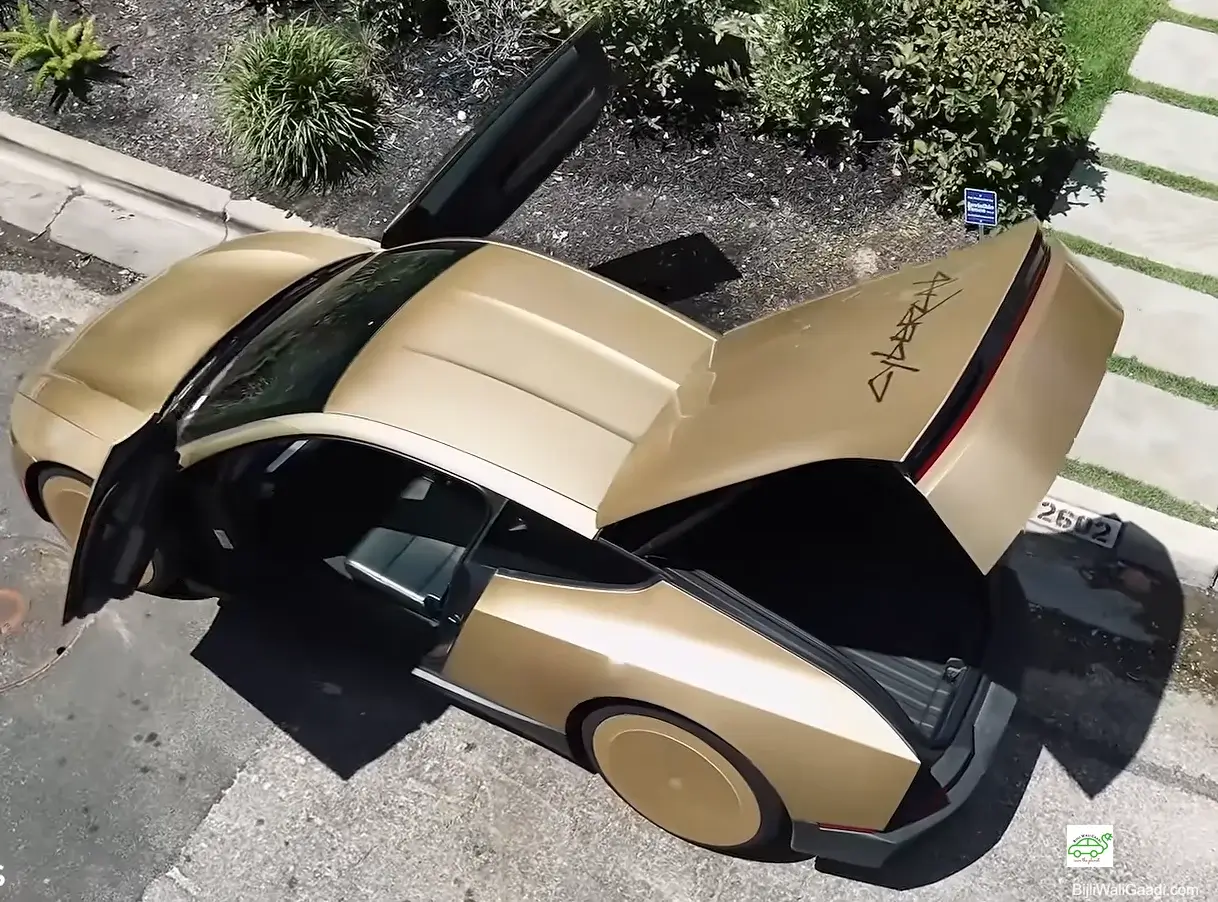
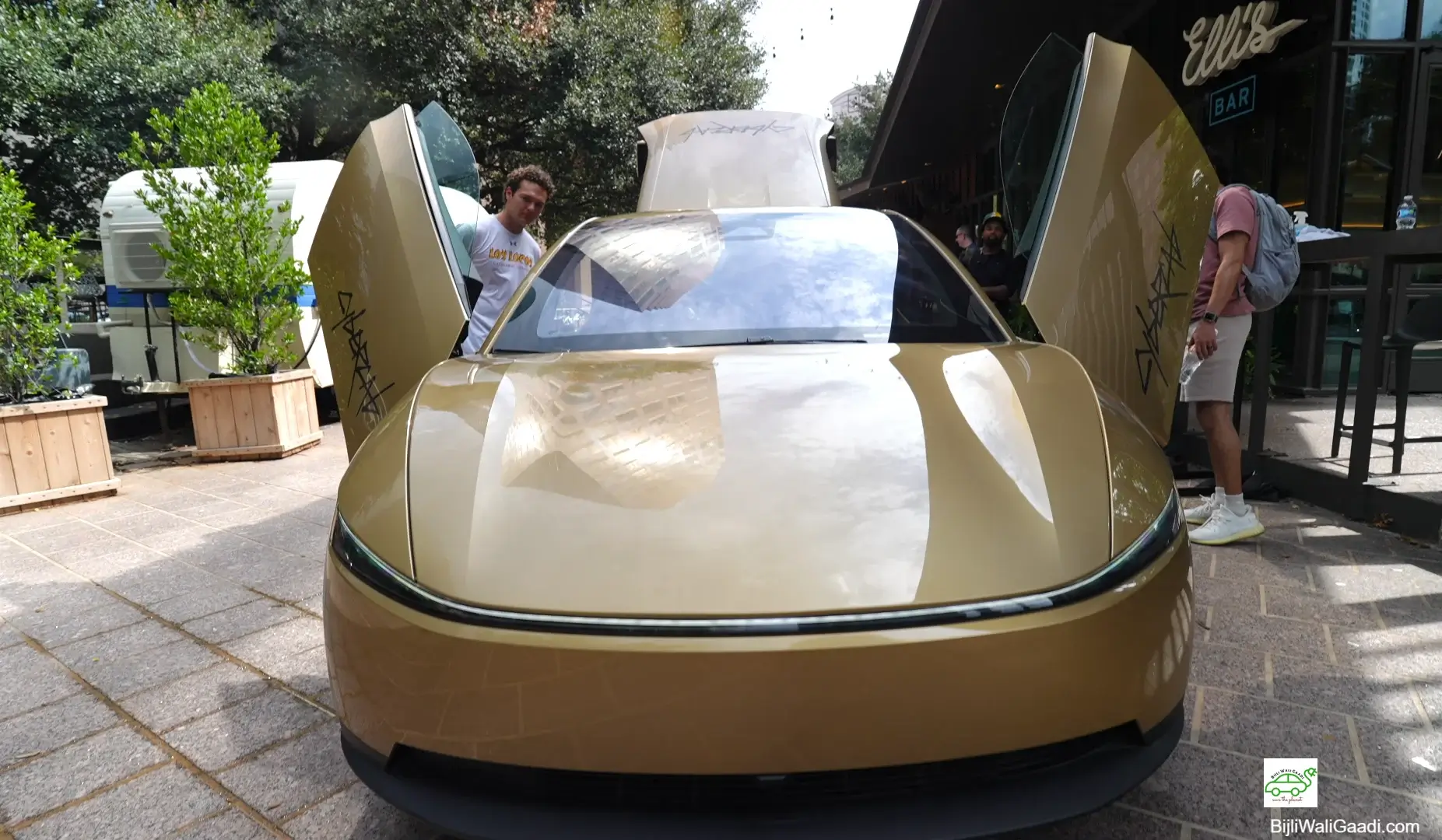
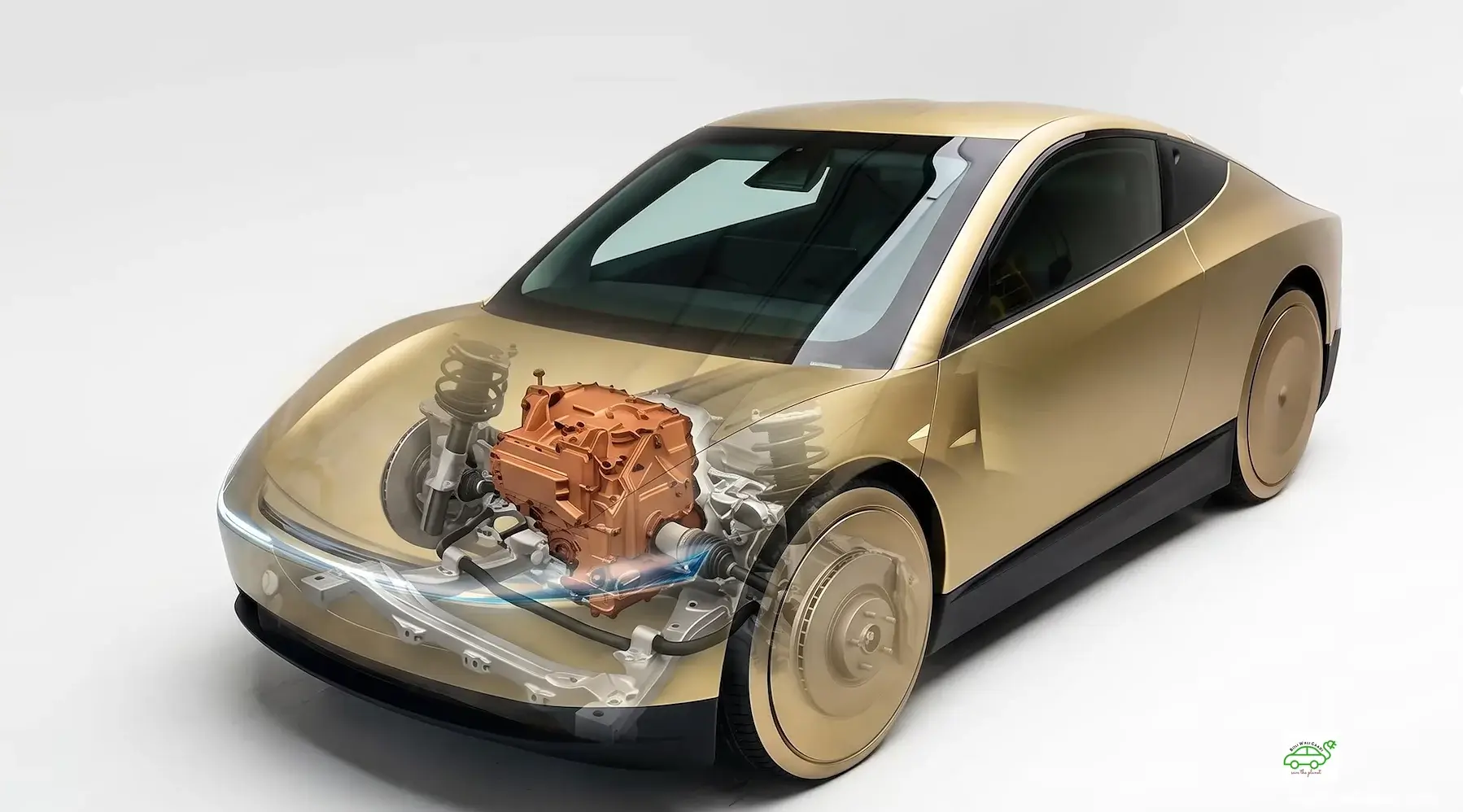
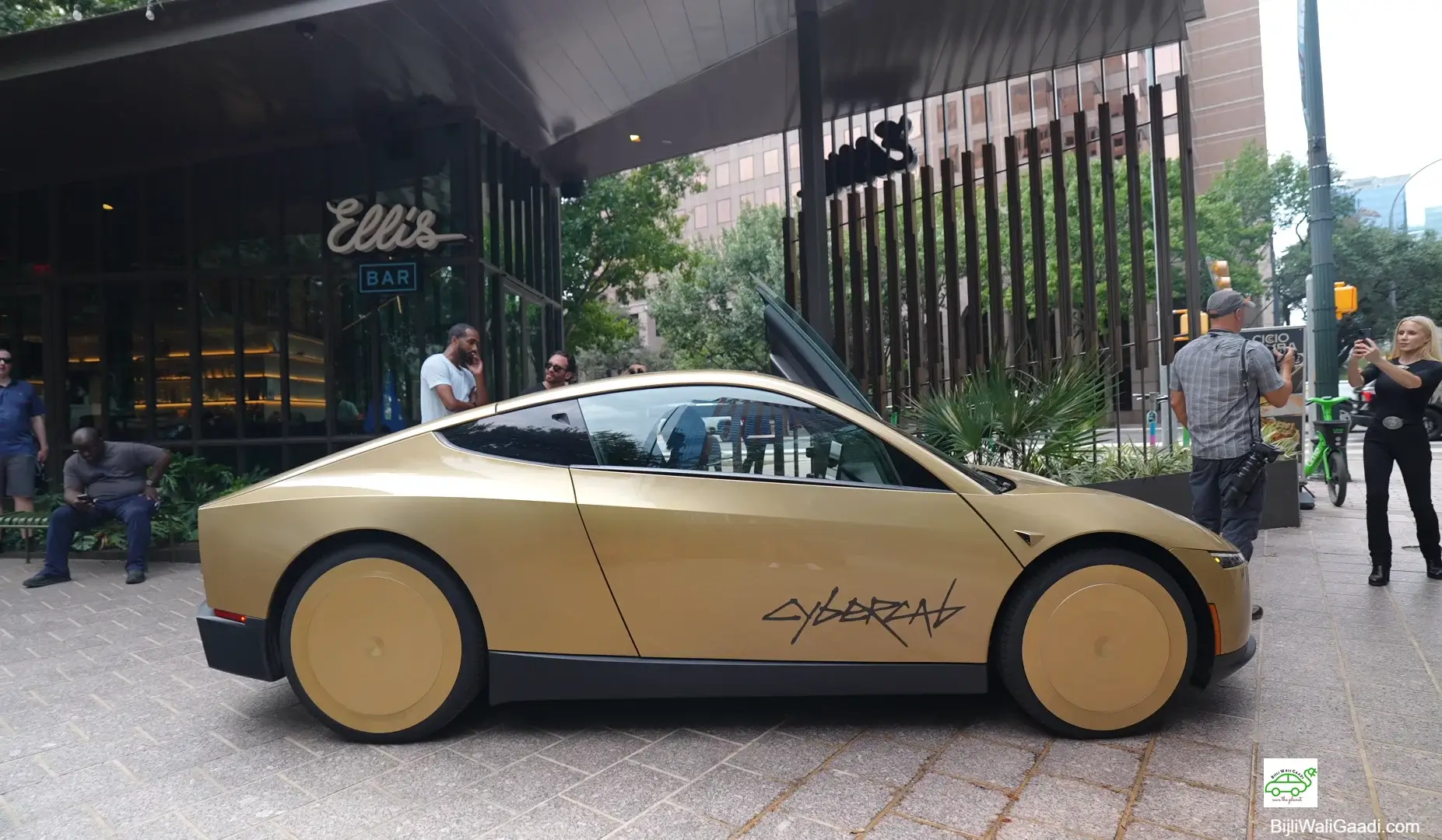
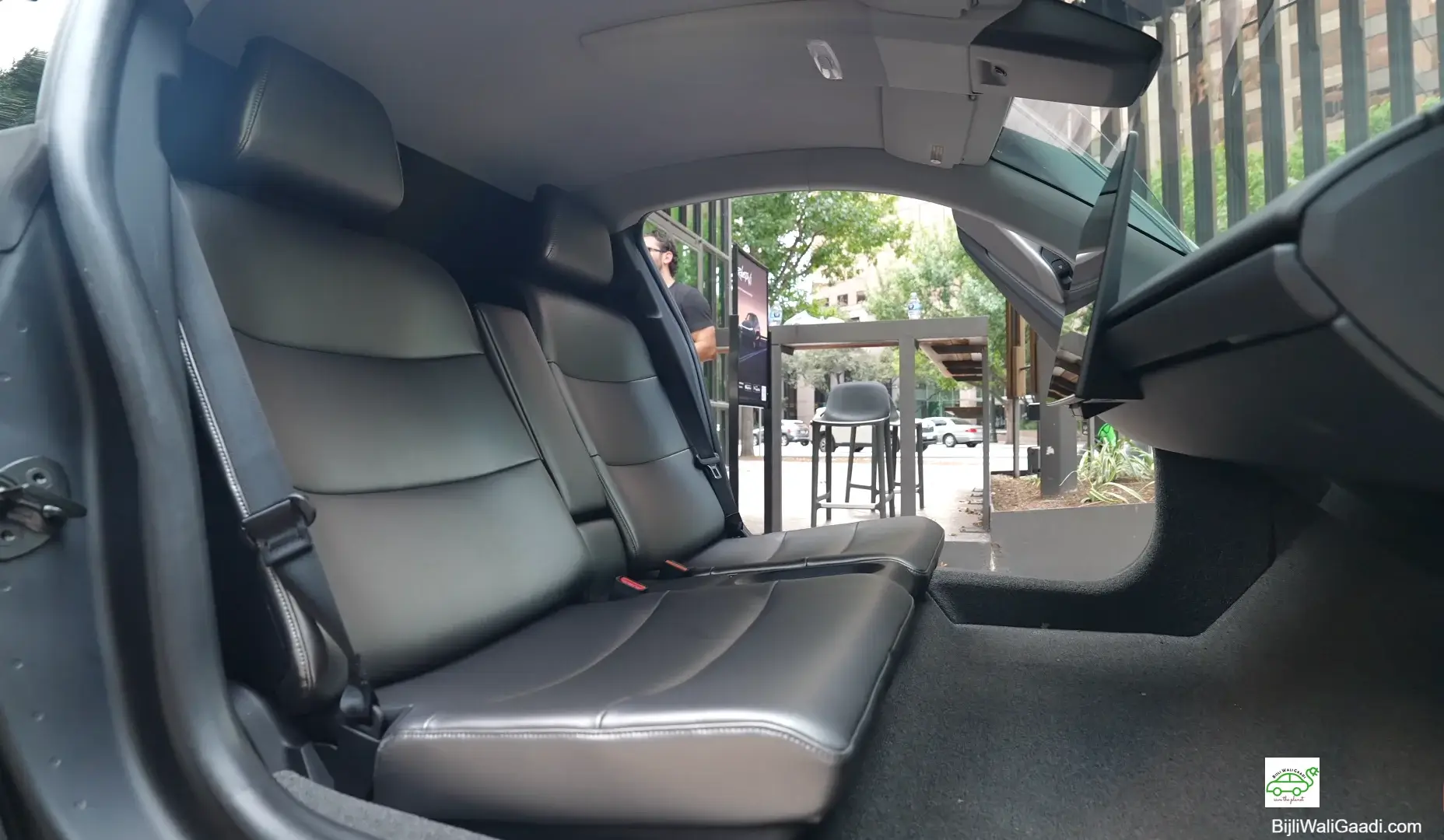
In this case, the Audit Query is an information-gathering investigative step. It is not a defect finding, a recall, or a determination of non-compliance. NHTSA’s stated focus is the process and technical data behind Tesla’s certification — specifically, how Tesla determined which FMVSS provisions apply to a vehicle without permanently attached, conventional manual controls such as a steering wheel, foot pedals, and mirrors.
Why Cybercab’s Self-Certification Matters
The FMVSS are codified at 49 CFR Part 571, but the statutory manufacturer-certification requirement is principally established by 49 U.S.C. § 30115. Under that framework, manufacturers certify their own vehicles’ compliance with applicable FMVSS, and Tesla did not need to obtain general pre-market approval from NHTSA before placing the Cybercab into service. That framework does not eliminate NHTSA’s ability to review certifications after the fact — AQ26002 and the subsequent Special Order are examples of that post-certification oversight in practice.
Section 30115(a) also provides that a person may not issue a certificate of compliance if, exercising reasonable care, that person has reason to know the certificate is false or materially misleading. This “reasonable care” standard is part of why NHTSA’s inquiry carries legal weight. It should not be read as an indication that NHTSA has already determined Tesla violated this requirement — the agency’s current questions concern Tesla’s certification basis, not an established violation. Self-certification itself is the standard statutory compliance mechanism; the unresolved issue is how the applicable FMVSS apply to a vehicle without conventional manual controls.
What NHTSA’s September 10 Special Order Requires
NHTSA’s September 10, 2026 Special Order requires Tesla to provide sworn responses to 21 requests concerning the technical and procedural basis for its Cybercab certification, accompanied by a certification from a responsible Tesla officer. The order cites NHTSA’s statutory authority to compel information in connection with an open investigation. Tesla’s response is due September 30, 2026.
Some requests concern whether the Cybercab can be operated using temporarily attached human controls, and whether such controls played any role in Tesla’s certification. NHTSA has not established that temporary controls were used as part of certification; this is among the matters the order asks Tesla to address, not a confirmed fact.
Failure to comply fully, accurately, and on time with the Special Order can expose a company to statutory civil penalties of up to $27,874 per day, with a maximum of approximately $139,356,994 for a related series of violations. This exposure relates to potential non-compliance with the information demand itself. No such penalty has been imposed on Tesla or Cybercab, and this figure is not a finding that Cybercab violates FMVSS.
Tesla Cybercab vs. Zoox: Two Regulatory Approaches
| Company | Regulatory approach | Manual controls | NHTSA status as of Sept. 21, 2026 | Applicable limit |
| Tesla Cybercab | Self-certification | No permanently attached conventional manual controls | AQ26002 open; Special Order issued Sept. 10 | ~1,000 estimated AQ population; not a deployment cap |
| Zoox | Temporary Part 555 exemption | No conventional manual driving controls | Exemption effective July 31, 2026 | Up to 2,500 exempted vehicles per 12-month period |
NHTSA granted Zoox a temporary exemption, effective July 31, 2026 through July 31, 2028, from specified portions of eight FMVSS, permitting the exempted vehicles to be introduced into interstate commerce subject to the exemption’s conditions. The exemption covers specified provisions of FMVSS No. 103 (windshield defrosting/defogging), No. 104 (windshield wiping/washing), No. 108 (lamps and reflective devices), No. 111 (rear visibility), No. 135 (light vehicle brake systems), No. 201 (occupant protection in interior impact), No. 205 (glazing materials), and No. 208 (occupant crash protection), along with enhanced-oversight reporting conditions. The 2,500-vehicle-per-12-month limit applies specifically to Zoox’s grant; it is not a universal ceiling on every Part 555 exemption.
Which FMVSS Requirements Are at Issue
FMVSS No. 135, § 5.3.1, specifies activation of the service brakes by a foot control, while Cybercab lacks a conventional brake pedal. This is one important issue in the inquiry, though AQ26002’s scope is broader and concerns the overall certification basis and applicability of multiple FMVSS provisions, not FMVSS No. 135 alone.
Separately, NHTSA proposed amending FMVSS No. 135 in an NPRM published June 26, 2026, to distinguish requirements for vehicles with and without manually operated driving controls, while retaining existing stopping-distance performance requirements. NHTSA extended the public comment period, which closed on August 26, 2026. The proposal has not been finalized, so the existing FMVSS No. 135 requirements remain applicable unless an exemption or other lawful regulatory provision applies.
NHTSA’s 2022 final rule updated crashworthiness standards for automated-driving-system (ADS)-equipped vehicles and established the regulatory definition of “manually operated driving controls” at 49 CFR 571.3. That rule also stated that further FMVSS changes would likely be necessary before a vehicle operated solely by an ADS could be manufactured for sale absent a Part 555 exemption. This provides important regulatory context for the current dispute; it is not a 2026 determination that Cybercab requires a Part 555 exemption.
What Remains Unresolved
As of September 21, 2026, several matters remain open: whether Tesla’s certification basis for a vehicle without conventional manual controls satisfies FMVSS No. 135 and related standards as currently written; whether temporary controls factored into certification; and how Tesla’s September 30 response will affect the inquiry. No recall, enforcement order, or compliance finding has been issued. NHTSA has not ruled the Cybercab legal or illegal under applicable FMVSS.
What the Cybercab Investigation Could Mean for Robotaxi Regulation
Possible next steps could include further information requests, a compliance determination, corrective action, enforcement action where legally warranted, or other regulatory measures — including a Part 555 exemption as one possible regulatory route, should circumstances lead Tesla or NHTSA in that direction. These are possibilities under the existing regulatory framework, not predicted outcomes; NHTSA has not indicated which direction the inquiry will take, and it has not signaled whether it will accept or reject Tesla’s certification basis.
Beyond Cybercab, the case runs alongside NHTSA’s ongoing effort to modernize FMVSS provisions — including Nos. 102, 103, 104, and 135 — for vehicles built without human driving controls. The outcome could provide an important regulatory reference point for manufacturers developing future driverless vehicles without conventional manual controls.
FAQs
–
Stay connected via Google 'Electric Vehicle' News
Follow BijliWaliGaadi | India's Trusted EV Insights Portal
source on Google