LG Energy Solution Eyes U.S. Electric Vans With 46-Series Batteries, but the indiGOtech MoU Isn’t a Supply Deal Yet
Stay connected via Google 'Electric Vehicle' News
Follow BijliWaliGaadi | India's Trusted EV Insights Portal
source on Google
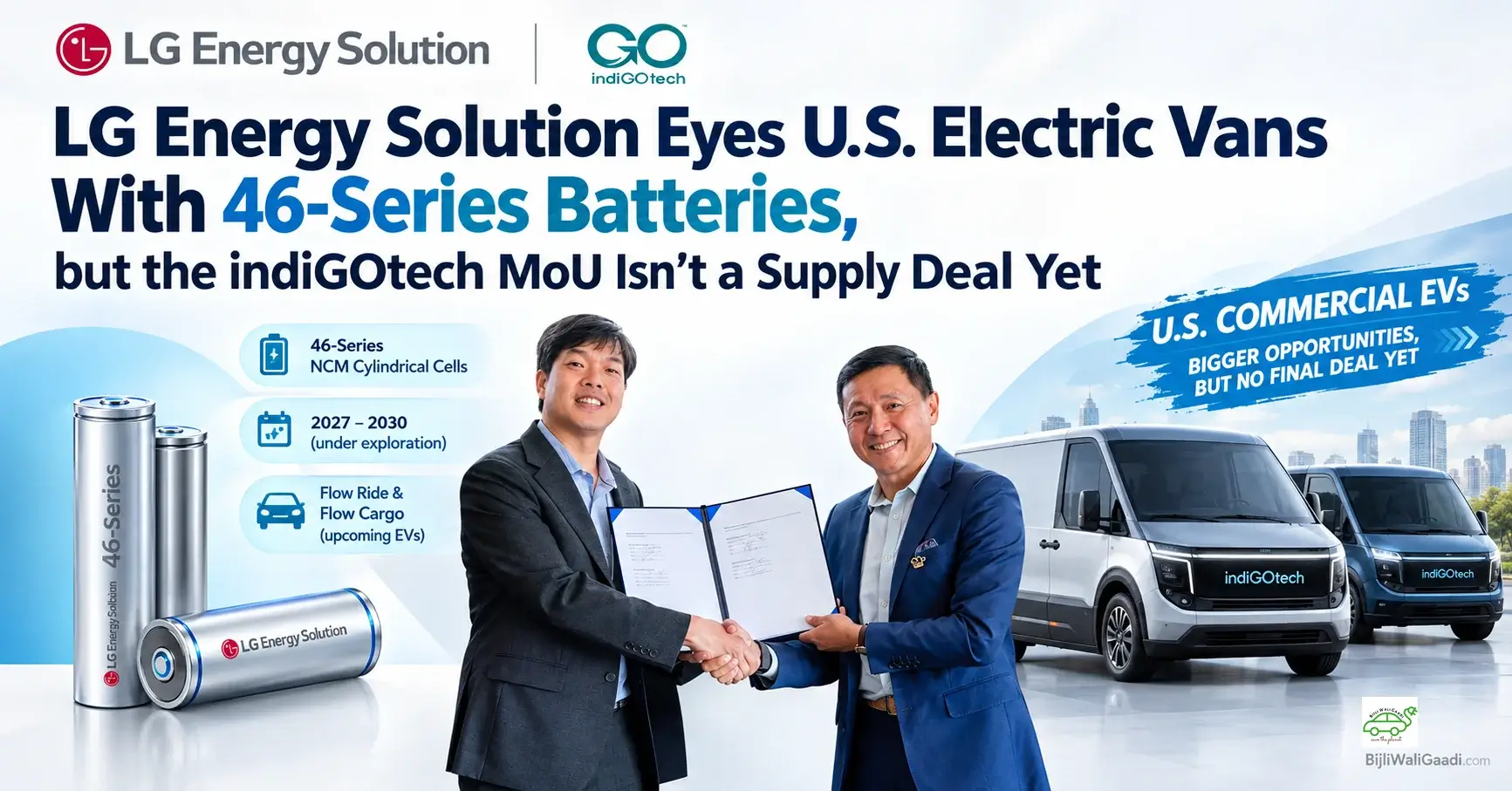
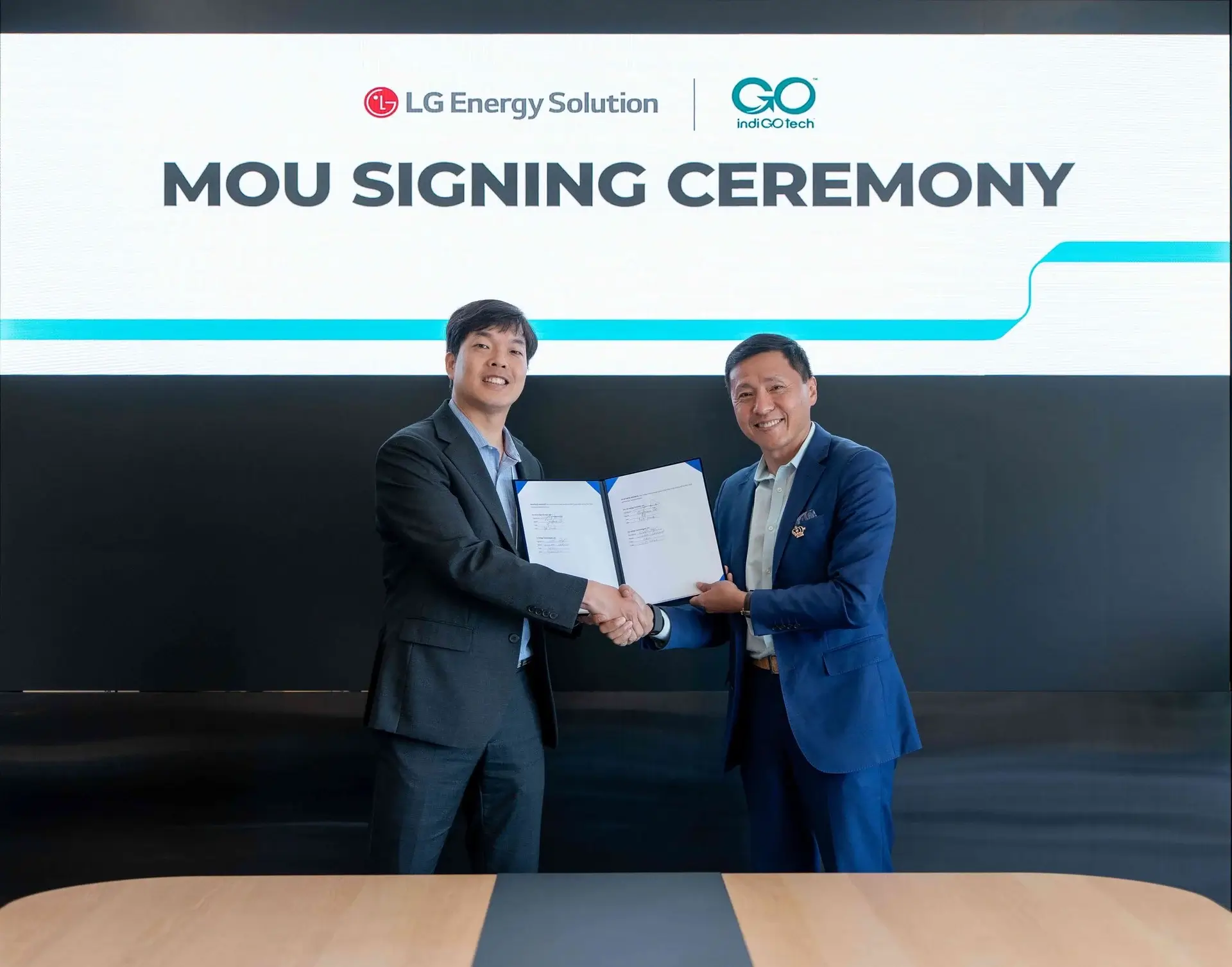
LG Energy Solution has signed a non-binding memorandum of understanding (MoU) with U.S. commercial EV startup indiGOtech to explore battery supply and technological collaboration. The companies will work toward a final agreement under which LG would supply 46-series NCM cylindrical battery cells from 2027 to 2030 for indiGOtech’s upcoming Flow Ride and Flow Cargo electric vehicles. That final agreement has not been signed, and no volumes or financial terms have been disclosed.
LG Energy Solution and indiGOtech MoU at a Glance: Key Facts
LG Energy Solution announced the MoU from Seoul on October 1, 2026. The table lists only what the official release states.
| Key detail | What LG Energy Solution and indiGOtech announced |
|---|---|
| Agreement | Non-binding MoU |
| Companies | LG Energy Solution and indiGOtech |
| Battery technology | 46-series NCM cylindrical cells |
| Potential supply period | 2027–2030 |
| Named vehicles | Flow Ride and Flow Cargo (upcoming EVs) |
| Collaboration | Battery supply exploration, vehicle-battery integration and performance verification |
| Stated intent | Review opportunities to extend driving range and reduce charging times |
| Supply volumes | Not disclosed |
| Financial terms | Not disclosed |
What “Non-Binding” Means for the 2027–2030 Battery Supply Plan
The MoU does not commit either company to a purchase or a delivery. Under it, the partners will work toward a final agreement for LG to supply the cells between 2027 and 2030. Until that agreement exists, the supply period is something the companies are exploring, not a confirmed order.
What Are 46-Series NCM Cylindrical Cells? A Plain-English Explainer
Cylindrical cells are the tube-shaped battery cells that are grouped into modules and packs. “46-series” is the name of the LG cell family named in the MoU. The release does not state its dimensions, capacity or pack design, so none are given here.
NCM stands for nickel-cobalt-manganese, the cathode chemistry of the cells.
Two traits matter for commercial vehicles:
- Energy density is how much energy a cell stores for its size and weight. For a van, that bears on how much range a pack can offer.
- Charging capability determines how quickly a vehicle can get back on the road, which matters for fleets with tight schedules.
LG Energy Solution’s Sunghwan Oh says the 46-series NCM technology has “high energy density and rapid charging capabilities.” These are LG’s own characterizations, not independent test results, and no specific figures were published.
Who Is indiGOtech, the U.S. Startup Named in the MoU?
According to LG’s release, indiGOtech is headquartered in Woburn, Massachusetts, and specializes in electrifying commercial van platforms for the North American market. The release says the company is developing an ecosystem that integrates vehicles, charging infrastructure and digital services.
LG’s Oh described indiGOtech as “successfully building the Transportation-as-a-Service (TaaS) ecosystem in the U.S.” That is LG’s description, not an independently verified assessment. The release gives no information on indiGOtech’s size, production status or market position.
What LG Energy Solution and indiGOtech Plan to Do Together
The partners say they will support joint business development through two efforts: vehicle-battery integration and performance verification. To maximize vehicle performance, both companies intend to review opportunities to extend driving range and reduce charging times.
Those are objectives. No range or charging-time results have been announced.
Why indiGOtech Says Its Commercial EVs Need a Battery Partner
Will Graylin, indiGOtech’s chairman and CEO, argues in the release that urban ride-hail and delivery must electrify and automate at scale. In his view, today’s electric vehicles are not designed for purpose and are severely limited by local charging infrastructure. He says this is why most rides and deliveries are still driven by gasoline vehicles.
Graylin also says that working toward a long-term relationship with LG would combine advanced battery technology to give vehicles, drivers and fleet operators a durable economic advantage. These are his views as quoted by LG, not established findings.
Why LG Energy Solution Wants a Foothold in U.S. Commercial Vehicles
Oh says LG plans, through this partnership, to enter the diverse U.S. commercial vehicle market. He named three segments: logistics, last-mile delivery and ride-hailing.
The release also says LG is strengthening its competitiveness by securing additional customers for its 46-series cylindrical batteries. It reports that cylindrical battery shipments rose 1.5 times year on year as of Q2, supported by stable mass production and expanded 46-series deliveries. This is LG’s own reported figure for its cylindrical shipments. It is not a measure of market share or industry-wide growth.
One Theme Runs Through Both Companies’ Statements: Charging
Graylin points to charging infrastructure limits as a barrier for electric ride-hail and delivery. Oh stresses rapid charging as a strength of LG’s cells. The companies also say they intend to look at ways to reduce charging times.
The announcement does not show that the cells solve the problem Graylin describes. Vehicle-battery integration and performance verification are the stated route to testing that.
What Is Confirmed and What Is Not Yet Finalized
| Confirmed in the announcement | Not disclosed / not finalized |
|---|---|
| Non-binding MoU | Final binding supply agreement |
| 46-series NCM cylindrical battery technology | Battery supply volumes |
| 2027–2030 period being explored | Battery-pack capacity |
| Flow Ride and Flow Cargo named | Vehicle specifications and range |
| Vehicle-battery integration and performance verification | Vehicle pricing |
| Intent to review range and charging-time improvements | Financial terms |
| LG’s stated aim to enter U.S. commercial vehicle segments | Production schedule |
Why the LG–indiGOtech Announcement Matters, and What to Watch
LG is seeking to expand its 46-series cylindrical battery business into the U.S. commercial-vehicle market, and indiGOtech is exploring that technology for its upcoming commercial EVs. The pairing is strategically interesting, but the key milestone is whether this MoU becomes a binding supply agreement. Until it does, important commercial details remain undisclosed.
Frequently Asked Questions (FAQs)
Stay connected via Google 'Electric Vehicle' News
Follow BijliWaliGaadi | India's Trusted EV Insights Portal
source on Google