Toyota Thailand Flood Crisis: 3 Plants Halt Production—Which Models Could Be Affected?
Stay connected via Google 'Electric Vehicle' News
Follow BijliWaliGaadi | India's Trusted EV Insights Portal
source on Google
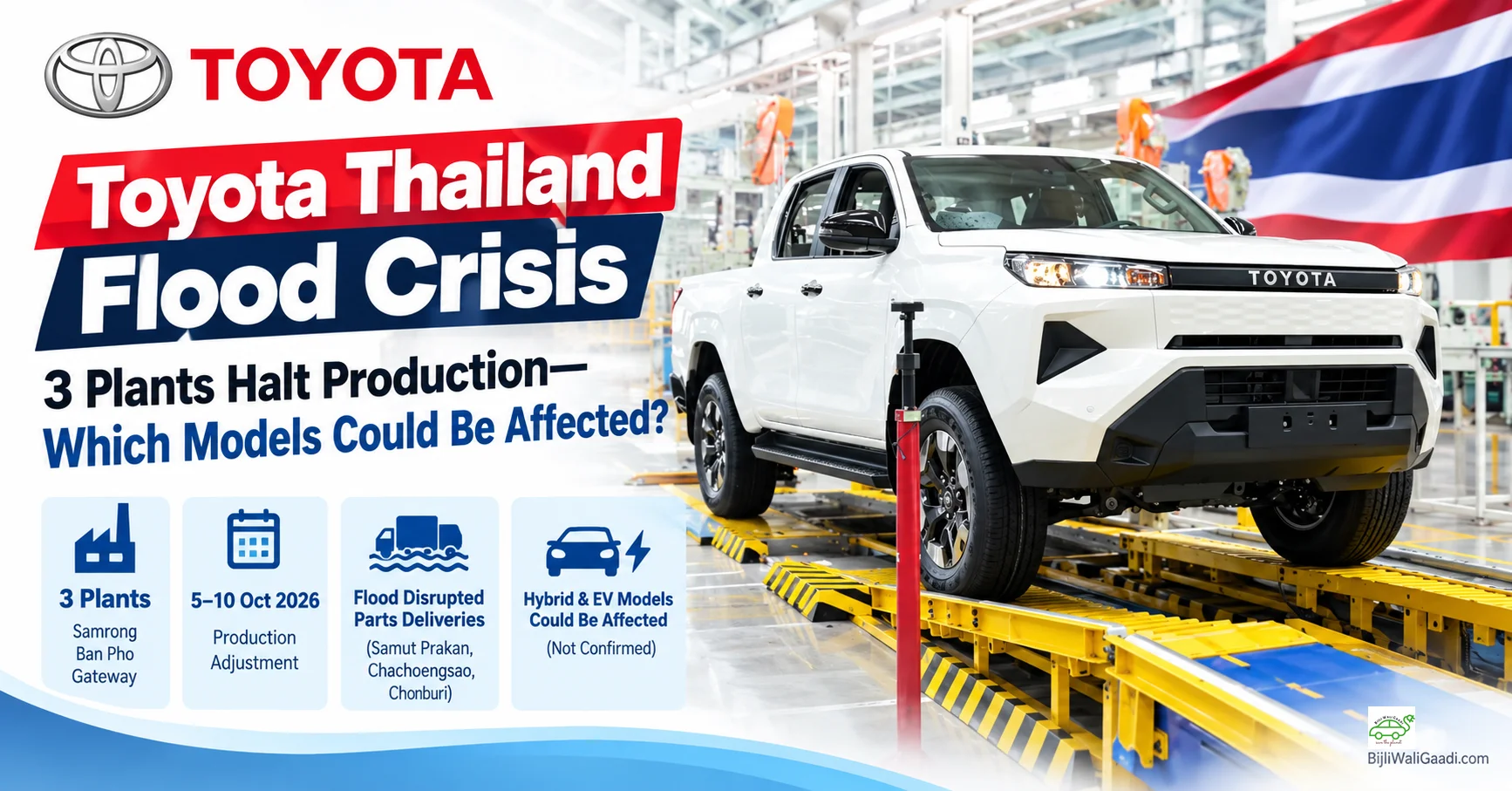
Toyota Motor Thailand has temporarily adjusted production at its Samrong, Ban Pho and Gateway plants from 5 to 10 October 2026, after flooding disrupted parts deliveries in Samut Prakan, Chachoengsao and Chonburi. Toyota said the suspension period may change depending on the situation and the readiness of parts deliveries. The company has not described any physical flooding or damage at the plants themselves.
Quick Note: Why Did Toyota Thailand Stop Production?
- Plants: Samrong, Ban Pho and Gateway.
- Locations: Samut Prakan and Chachoengsao provinces.
- Production adjustment: 5 to 10 October 2026.
- Cause: Flooding disrupted parts deliveries.
- Restart: Timing depends on conditions and parts-delivery readiness.
- Model-specific impact: Toyota has not published a model-by-model impact list.
At a Glance: What Toyota Has Confirmed
| Key Detail | What Toyota Has Confirmed |
| Production plants | Samrong, Ban Pho and Gateway |
| Plant locations | Samut Prakan and Chachoengsao |
| Production adjustment | 5–10 October 2026 |
| Main cause | Flooding disrupted parts deliveries |
| Parts response | Toyota is coordinating with suppliers to restore deliveries |
| Restart | Resumption date to be communicated once confirmed |
| Period flexibility | The 5–10 October period may change depending on conditions |
| Model-level impact | Toyota has not published a model-by-model impact list |
What Is Toyota Doing to Restore Production?
Toyota says it is working to bring parts supply back to normal. The company is closely monitoring the situation and coordinating with parts suppliers to speed up the restoration of deliveries.
- It is managing inventory.
- It is adjusting production and transportation plans to fit current conditions.
- It will communicate the resumption date through appropriate channels once confirmed.
Toyota also said the safety and well-being of its employees and stakeholders is its highest priority.
Toyota’s 3 Thailand Plants: Which Models Are Built Where?
Toyota Motor Thailand operates three assembly plants across two provinces.
| Plant | Location | Stated Annual Capacity | Key Models Reported |
| Samrong | Samut Prakan | 240,000 units | Hilux Revo, Hilux Champ |
| Gateway | Chachoengsao | 300,000 units | Yaris Ativ, Yaris Hatchback, Yaris Cross, Corolla Altis, Corolla Cross, Camry |
| Ban Pho | Chachoengsao | 230,000 units | Hilux Revo, Hilux Travo, Hilux Travo-e, Fortuner, Land Cruiser FJ |
Toyota Motor Thailand’s company information gives the capacity figures, and they add up to a combined stated capacity of 770,000 units per year. These are stated annual production capacities, not actual production and not an estimate of vehicles lost during the October production adjustment.
Which Toyota Hybrids and EVs Could Be Caught in the Production Pause?
Toyota has not published a model-by-model list of vehicles affected by the production adjustment. A model being produced at one of the affected plants does not by itself confirm a production or delivery delay.
The examples below are models built at the three plants and sold with hybrid or electric powertrains in Thailand. Their production could potentially be exposed to the pause.
Gateway plant: hybrid models
- Yaris Ativ HEV: The hybrid version launched in Thailand on 21 August 2025. The Yaris Ativ is among the models built at Gateway.
- Yaris Cross HEV: Toyota Thailand sells the Yaris Cross in hybrid grades. The Yaris Cross is also among Gateway’s models.
- Corolla Cross and Corolla Altis: Hybrid versions of both are sold in Thailand. Both are built at Gateway, but the available information does not say which grades are produced there.
Ban Pho plant: electric pickup
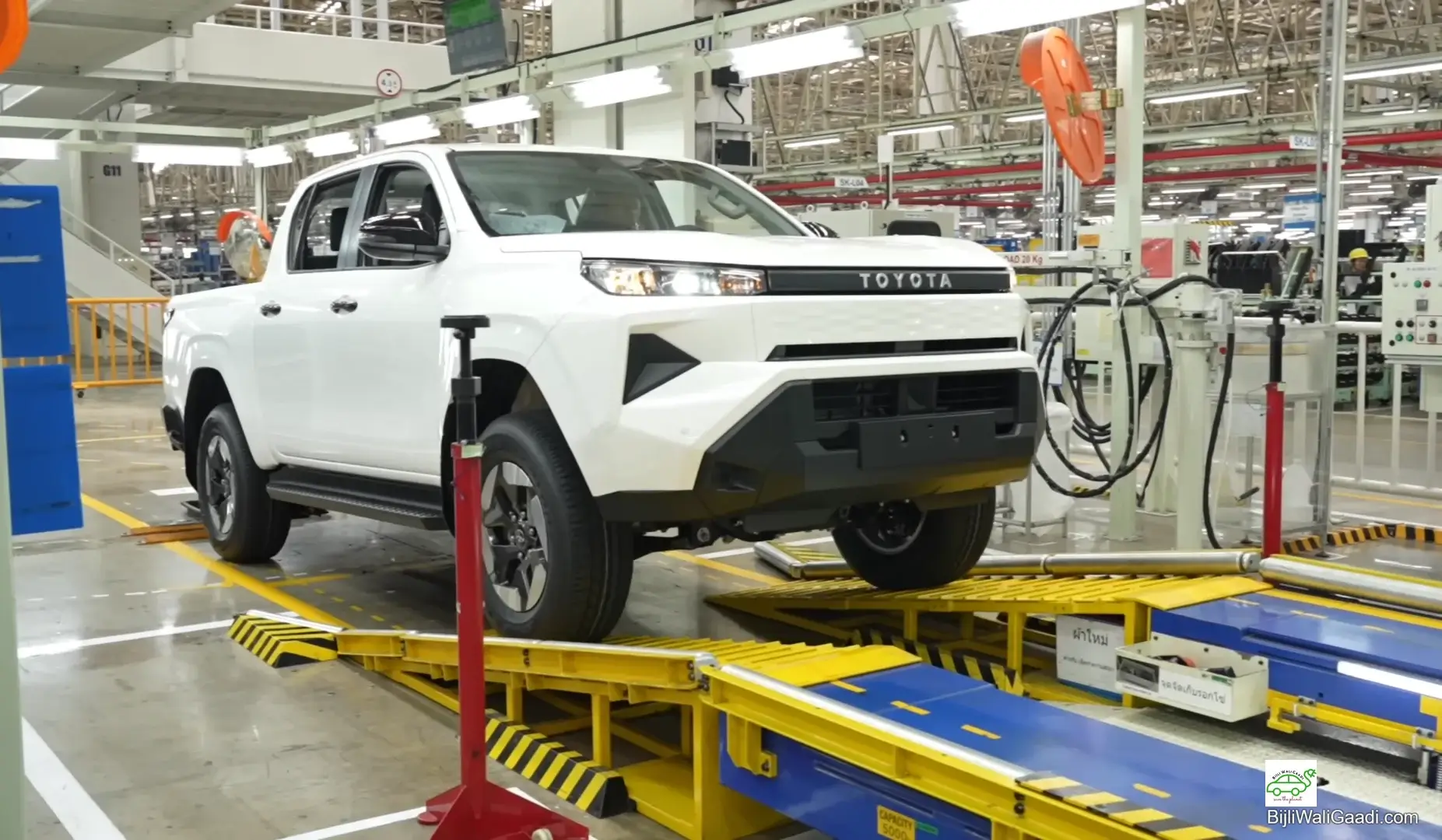
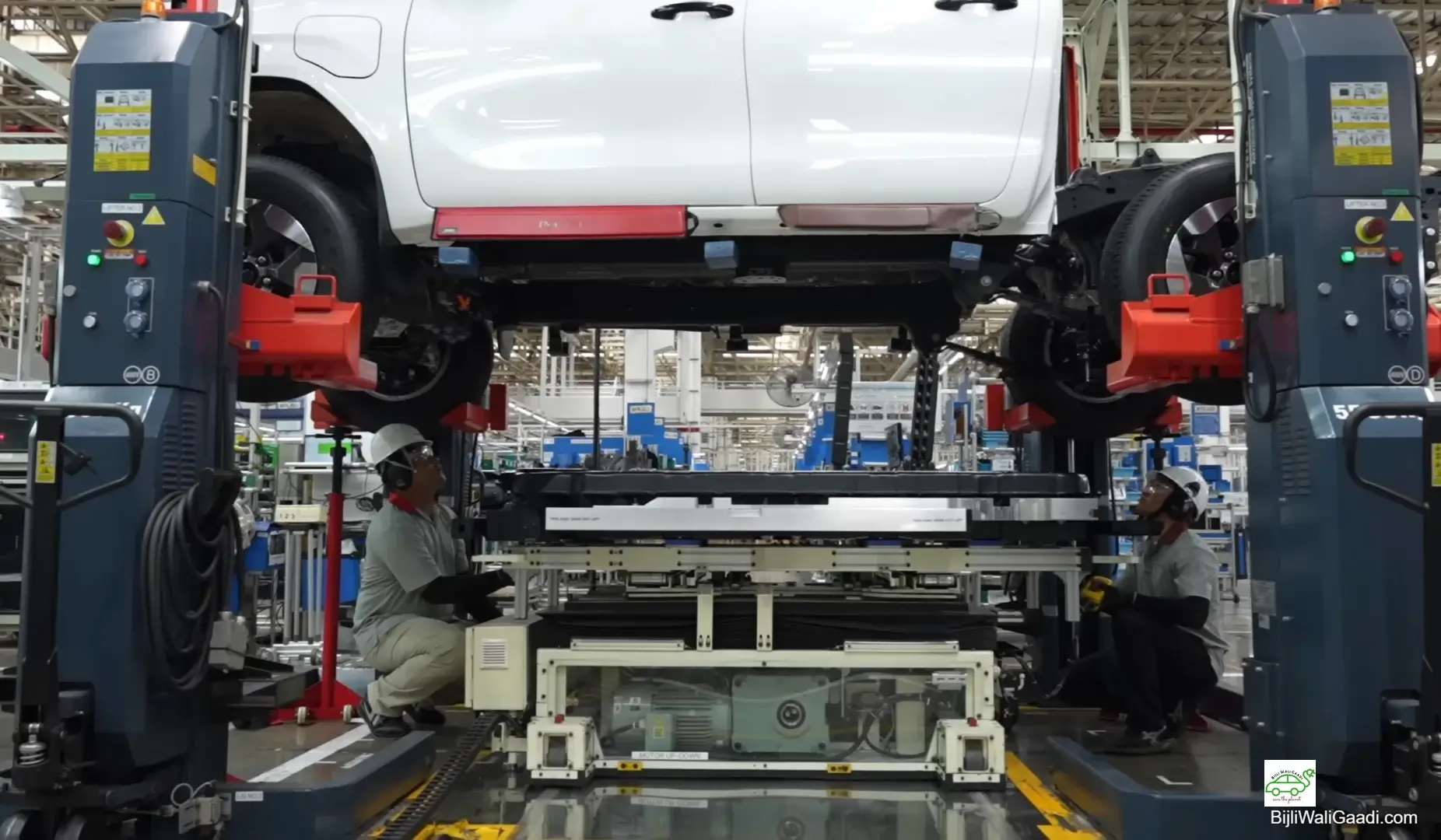
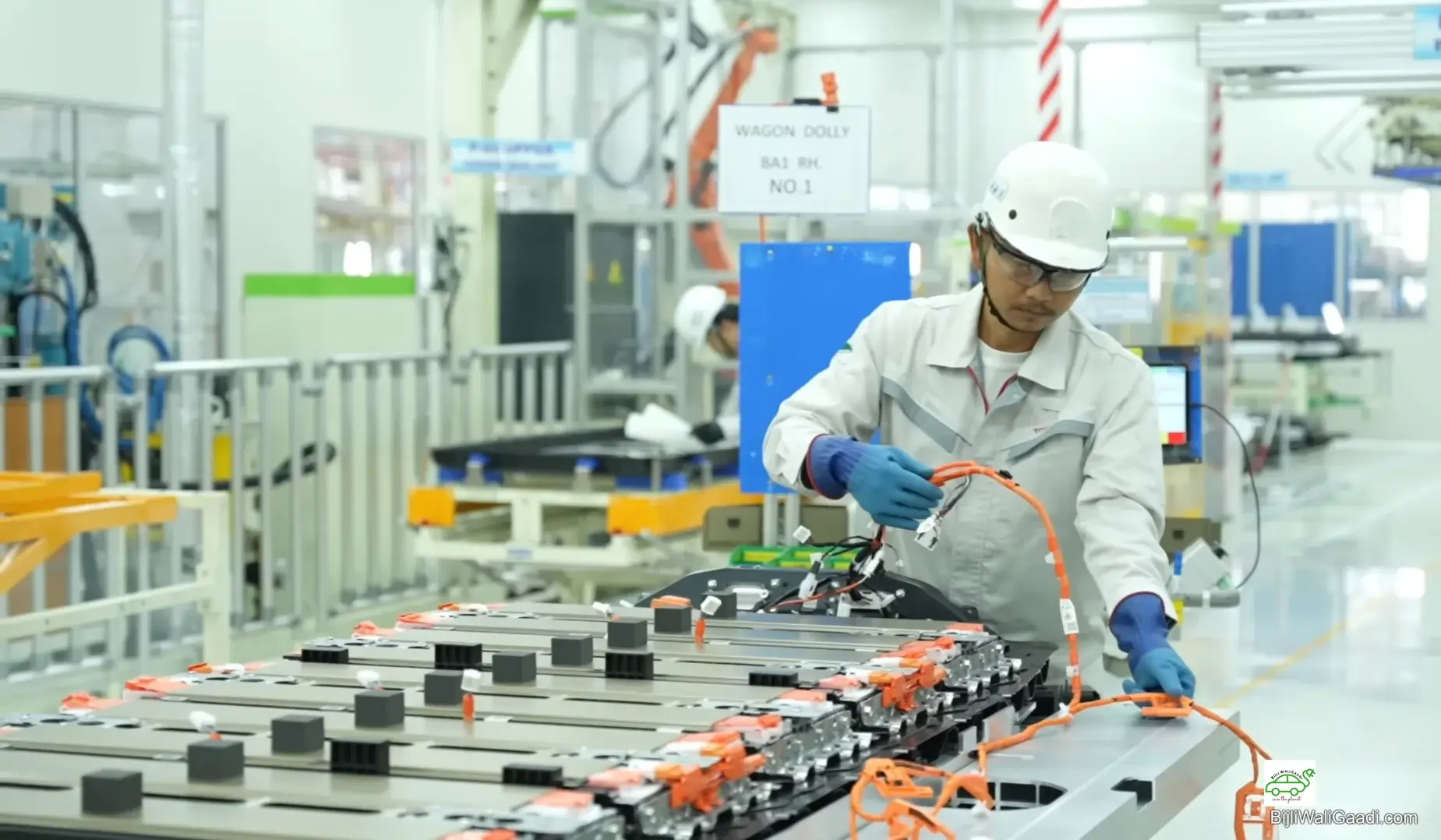
- Hilux Travo-e: It is reported as being built at Ban Pho, so its production could potentially be exposed to the temporary plant suspension. Toyota has not confirmed a model-specific production or delivery delay.
Could Toyota Thailand Deliveries Be Delayed by the Floods?
Some customer deliveries could be affected, but Toyota has not announced a blanket delay. If a customer’s vehicle delivery is affected, Toyota says it will coordinate with dealers to promptly inform the customer of the confirmed new delivery date.
Toyota also said it recognises the importance of delivering vehicles on schedule and is working to minimise the impact on customers.
Will the Flood-Related Shutdown Affect Toyota’s Quality Standards?
Toyota says the production adjustment will not compromise its quality standards. The company said it will keep following strict procedures for parts inspection, vehicle assembly control and quality checks at every stage. The aim is for customers to receive vehicles that meet Toyota’s quality and safety standards.
What Happens Next at Toyota’s Thailand Plants?
- Toyota continues monitoring conditions.
- Toyota is coordinating with parts suppliers.
- Restoring parts deliveries is a key requirement for resuming production.
- Production and transportation plans are being adjusted.
- Toyota will communicate the resumption date once confirmed.
- The 5–10 October period may change depending on conditions.
What Toyota Thailand Buyers Should Do Now
- Contact your Toyota dealer if you have a pending order.
- Ask whether your vehicle’s delivery schedule is affected.
- If an impact has been identified, request the confirmed revised delivery date.
- Follow official Toyota Motor Thailand updates.
- Do not assume every Toyota model is affected.
Frequently Asked Questions
Stay connected via Google 'Electric Vehicle' News
Follow BijliWaliGaadi | India's Trusted EV Insights Portal
source on Google