Lexus RX 500h F Sport Performance Review: 366 HP Turbo-Hybrid Power Meets DIRECT4 AWD
Stay connected via Google 'Electric Vehicle' News
Follow BijliWaliGaadi | India's Trusted EV Insights Portal
source on Google

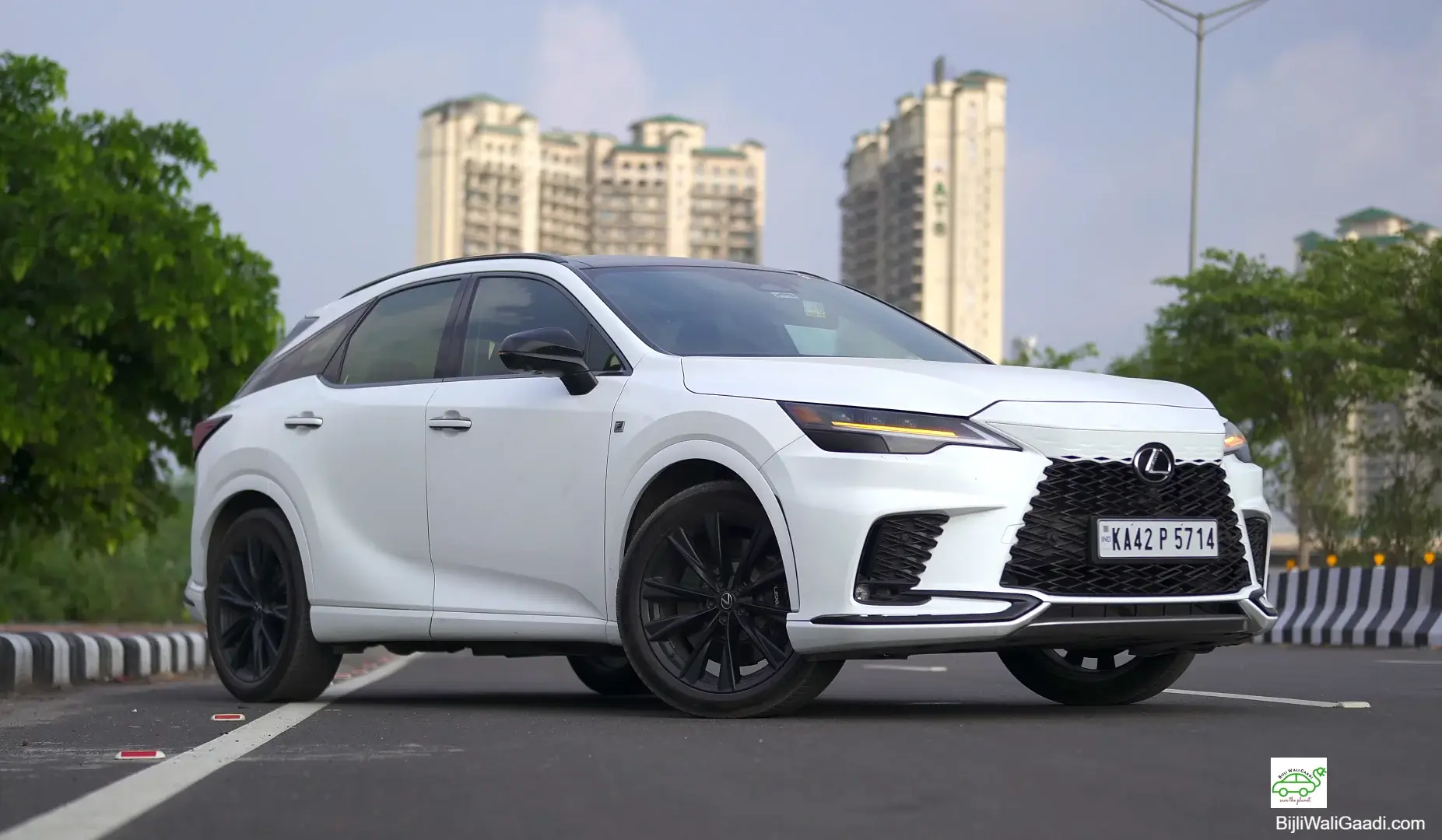
Quick Take: The Lexus RX 500h F-Sport+ starts at ₹1.10 crore ex-showroom, following GST 2.0 price cuts. It pairs a 2.4L turbo petrol engine (200 kW/272 PS) with front and rear electric motors for a quoted 366 hp combined output, through a 6-speed automatic with a wet start clutch and DIRECT4 electronic AWD. Lexus claims 0–100 km/h in 6.2 seconds and 210 km/h top speed, with Dynamic Rear Steering exclusive to this grade.
| Lexus RX 500h F-Sport+ — India | Detail |
| Starting price | ₹1.10 crore ex-showroom |
| Engine | 2.4L turbocharged inline-4 |
| Combined output | 366 hp (claimed) |
| Engine torque | 460 Nm |
| Transmission | 6-speed automatic (wet start clutch) |
| Drivetrain | DIRECT4 electronic AWD |
| 0–100 km/h | 6.2 seconds (claimed) |
| Top speed | 210 km/h (claimed) |
| Battery | Ni-MH, 288V, 240 cells |
| Exclusive tech | Dynamic Rear Steering, ANC/ASC |
Lexus RX 500h F-Sport+ Price in India
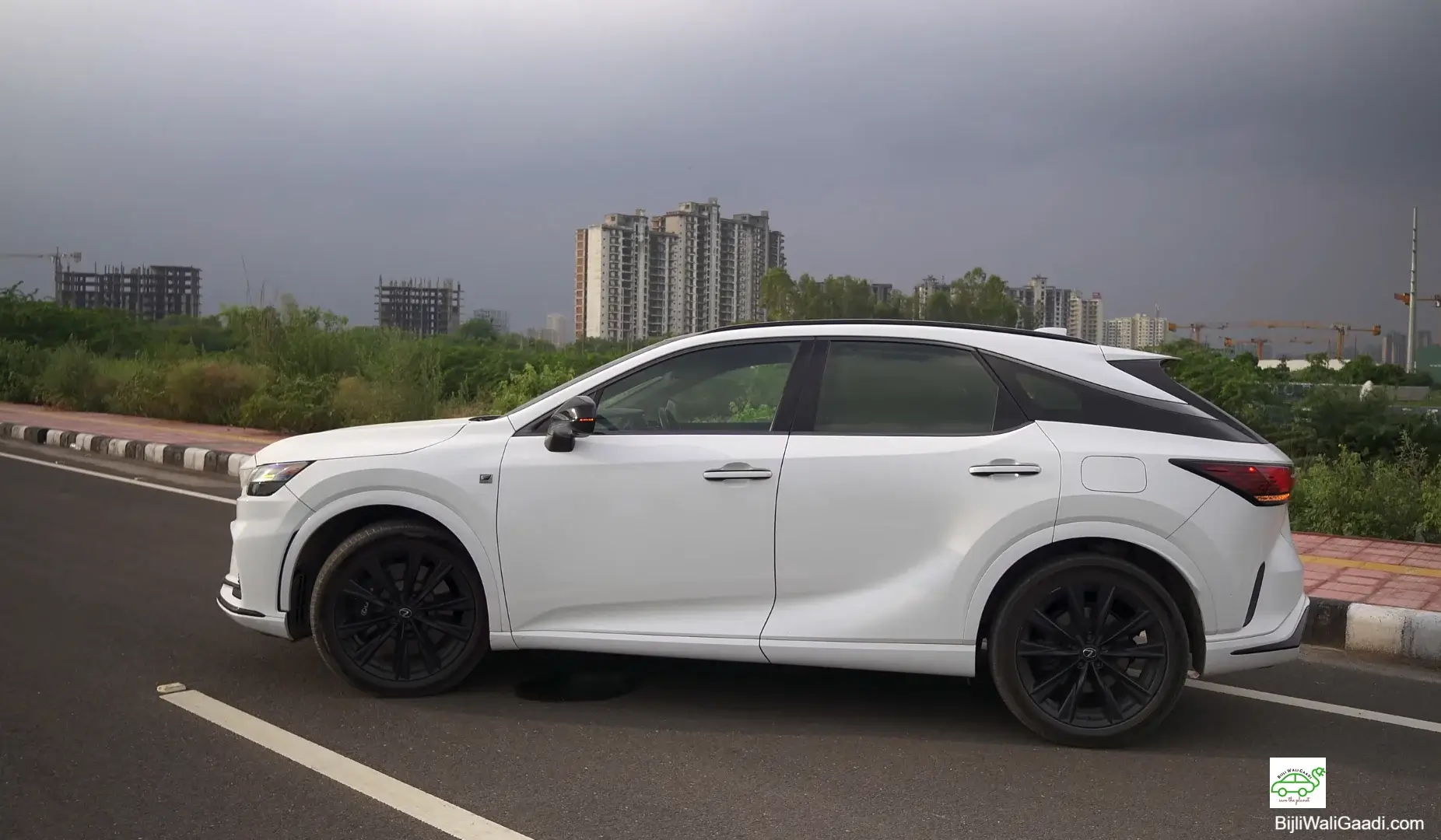
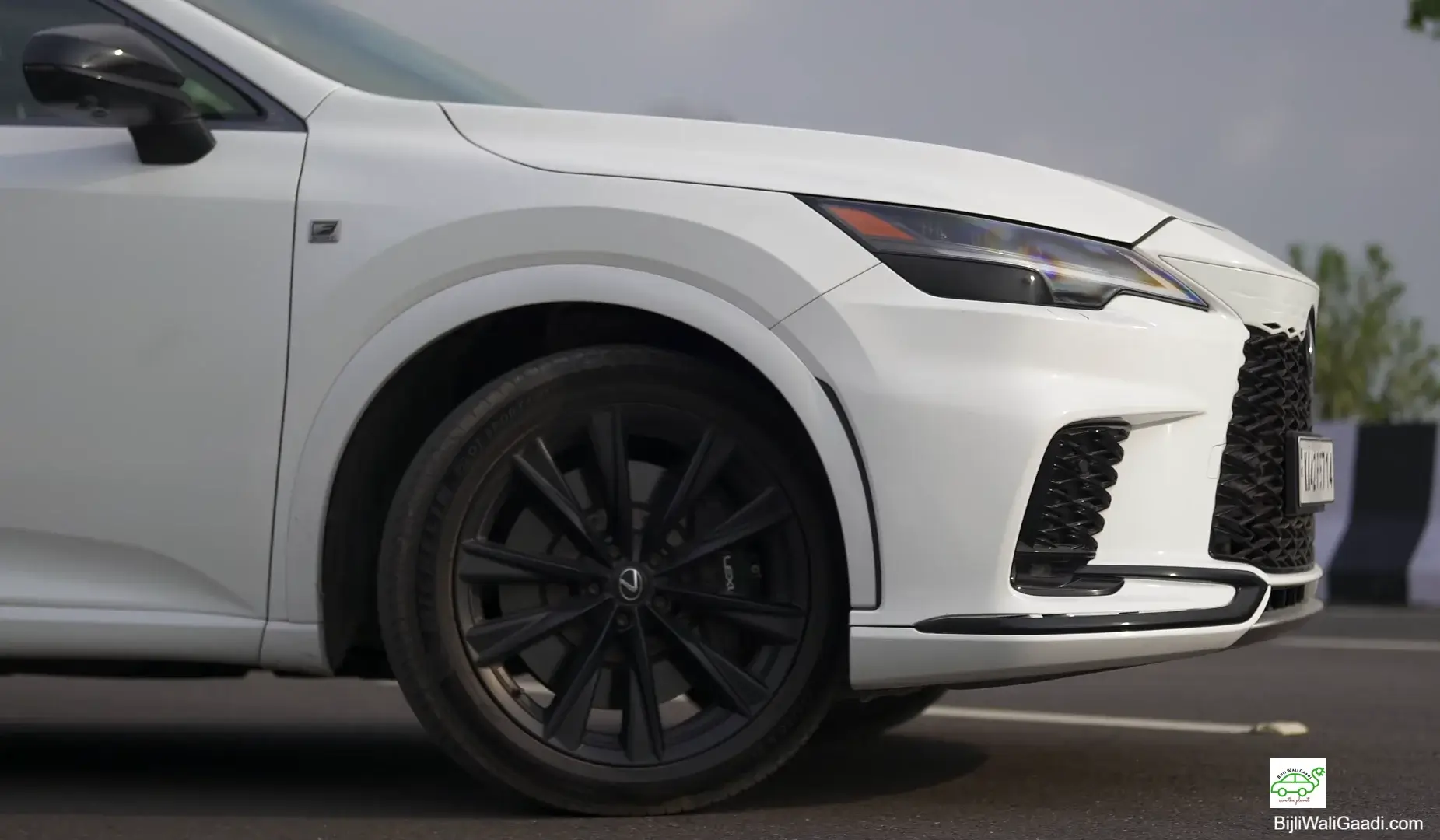
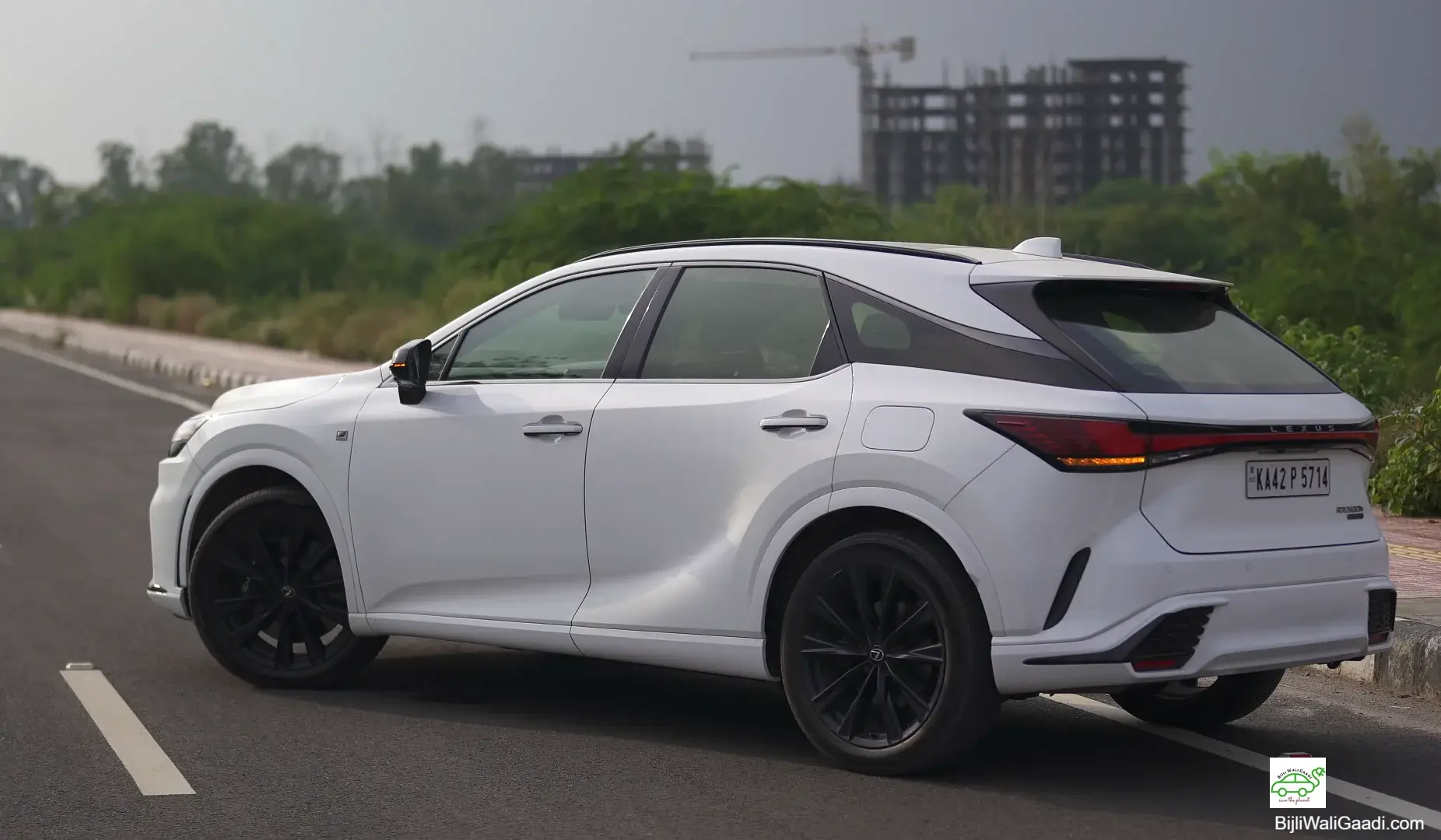
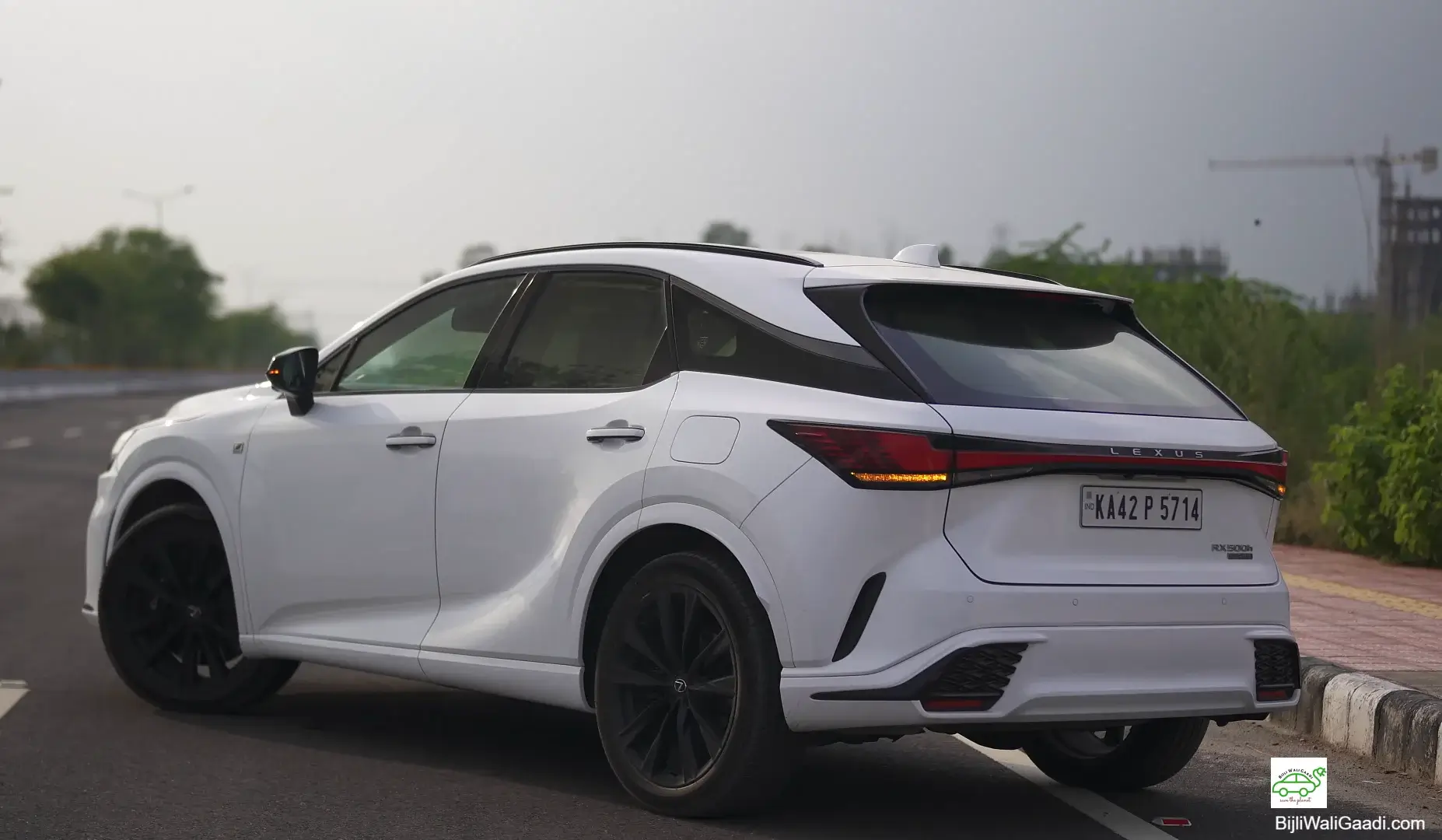
Lexus positions the RX 500h F-Sport+ as the performance flagship of the RX range, well above the RX 350h Exquisite. The current ₹1.10 crore price reflects a cut from the roughly ₹1.21 crore Lexus originally listed, following GST 2.0’s reduction on luxury vehicles — worth confirming with a dealer, since pricing has moved this year. It’s mechanically distinct from the RX 350h: different engine, transmission and AWD hardware.

What Powers the Lexus RX 500h F-Sport+?
| Powertrain Specification | RX 500h F-Sport+ |
| Engine | 2.4L turbo inline-4 (T24A-FTS), 2,393cc |
| Engine output | 200 kW / 272 PS @ 6,000 rpm |
| Engine torque | 460 Nm @ 2,000–3,000 rpm |
| Front motor | Permanent magnet, 64 kW / 292 Nm |
| Rear motor (eAxle) | Permanent magnet, 75.9 kW / 168.5 Nm |
| Total system output | 273 kW / claimed 366 hp |
| Transmission | 6-speed automatic, wet start clutch |
| Battery | Ni-MH, 288V, 240 cells |
| Kerb weight | 2,100–2,140 kg |
Lexus’s India-market figure for combined output is 366 hp; converting the 273 kW system rating gives a close 371 PS, the gap coming down to rounding rather than a real discrepancy. This isn’t simply adding engine and motor outputs — 200 kW plus 64 kW and 75.9 kW sums to nearly 340 kW, above the 273 kW the system actually delivers, since output is capped by what the battery and power electronics can sustain simultaneously.
Two details separate this transmission from a typical hybrid gearbox: the 6-speed unit uses a wet start clutch instead of a torque converter for a more rhythmic shift feel, and the transaxle has a built-in clutch separating engine and motor, letting them work independently or together — smooth electric-only running at low speed, combined output under hard acceleration.
| Dimensions & Chassis | RX 500h |
| L / W / H | 4,890 / 1,920 / 1,695 mm |
| Wheelbase | 2,850 mm |
| Kerb / gross weight | 2,100–2,140 kg / 2,750 kg |
| Turning radius | 5.5 m |
| Brakes (front) | Aluminium monoblock 6-piston calipers |
| Wheels/tyres | 21-inch, 235/50 R21 |
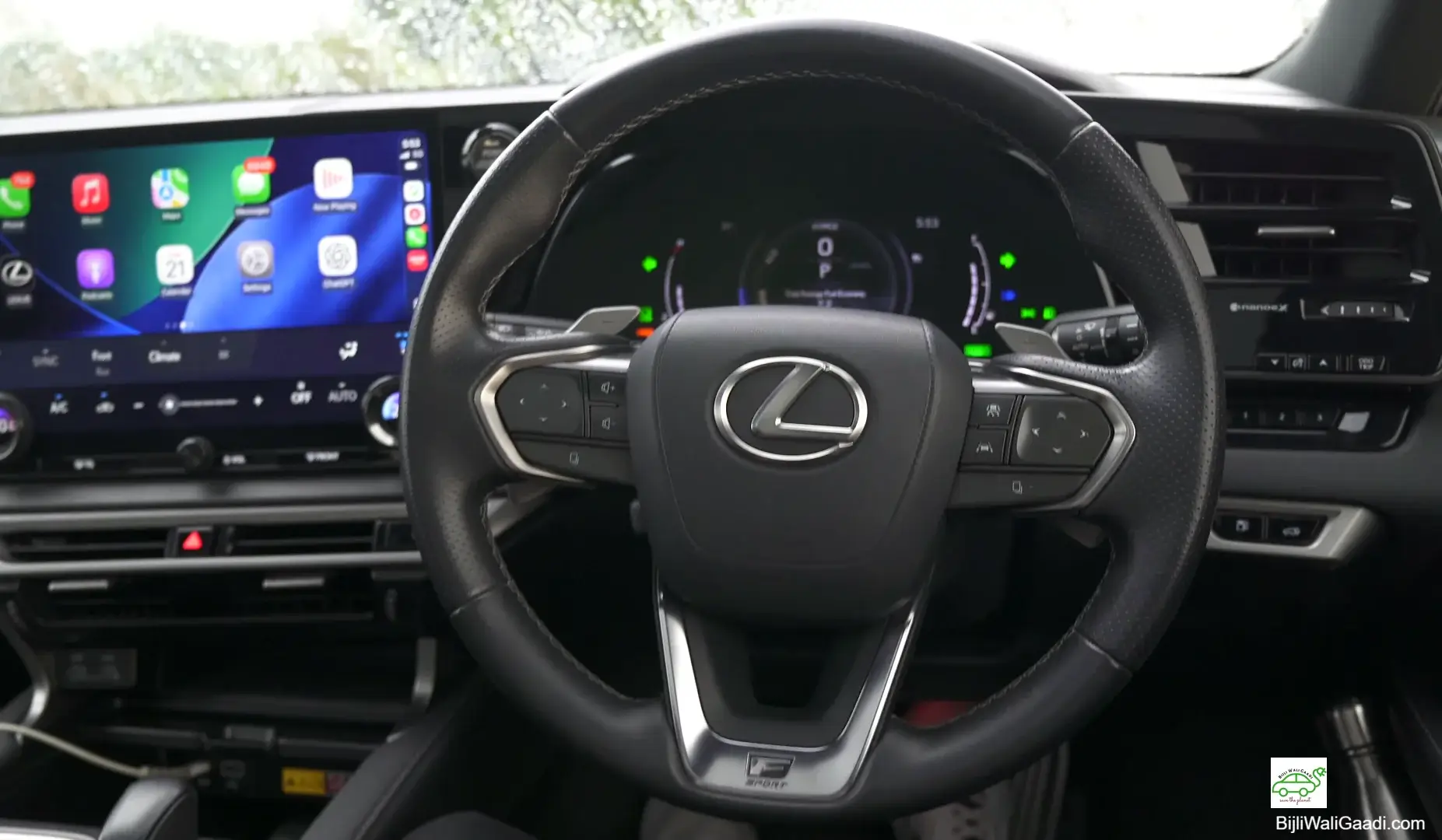
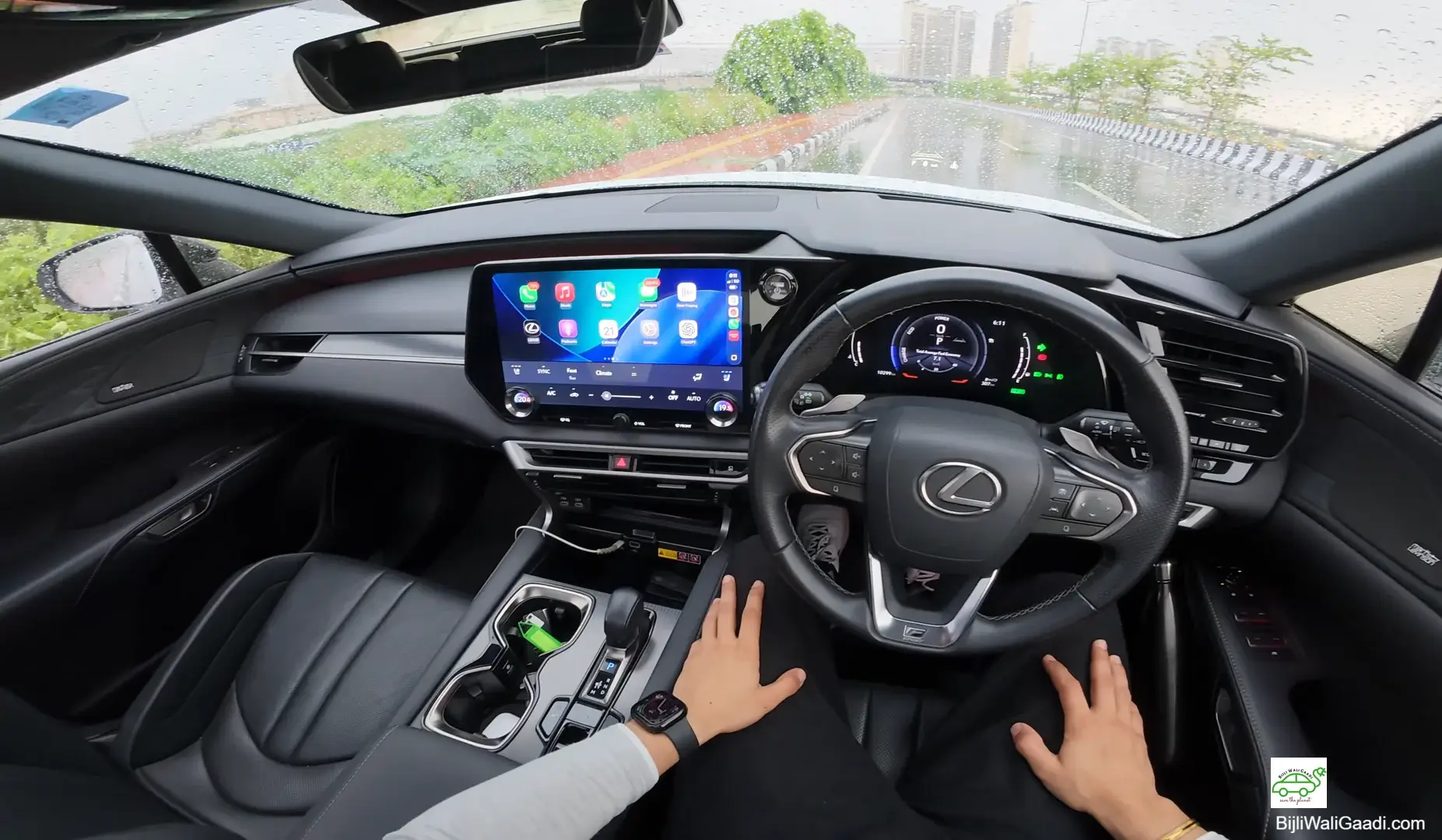
The F-Sport+ cabin builds on the Exquisite’s comfort features and adds F-Sport trim: exclusive sport seats, a dimpled leather steering wheel with paddle shifters, aluminium sport pedals, a TFT meter and F-Sport badging throughout. Lexus’s 8-year/2,00,000 km warranty on vehicle and hybrid battery, subject to terms, applies across the RX range, with 5-year roadside assistance.
How Does DIRECT4 AWD Actually Work, and What Does It Do for Cornering?
DIRECT4 is the mechanical story separating the 500h from the 350h. Up front, the turbo engine, a motor and the transmission form one integrated unit driving the front wheels. At the rear, a separate eAxle — a compact housing built around a dedicated high-output motor — drives the rear wheels independently, with no mechanical driveshaft between the axles.
Lexus’s own figures are specific here: DIRECT4 uses wheel-speed, acceleration and steering-angle sensor data to vary the front-rear torque split continuously between 100:0 and 20:80 (front:rear), rather than a fixed or clutch-based mechanical ratio. Accelerating from a standstill or in a straight line, the system manages vehicle pitch for a direct acceleration feel; cornering, it shifts torque rearward to help rotate the car into a bend and trace the intended line, aiding handling stability and fuel economy. Independent, track-level verification of the cornering benefit on Indian roads isn’t publicly available, so treat this as a documented, sensor-driven architecture rather than a tested lap-time claim.
The F-Sport+ adds Dynamic Rear Steering (DRS), turning the rear wheels up to four degrees — same or opposite the fronts depending on speed, aiding low-speed manoeuvrability and high-speed stability. Vehicle Braking Posture Control works alongside this, using independent front and rear hydraulic controls to coordinate regenerative braking for a more linear pedal feel.

Can a Hybrid SUV Like This Rival German V6 Performance Engines?
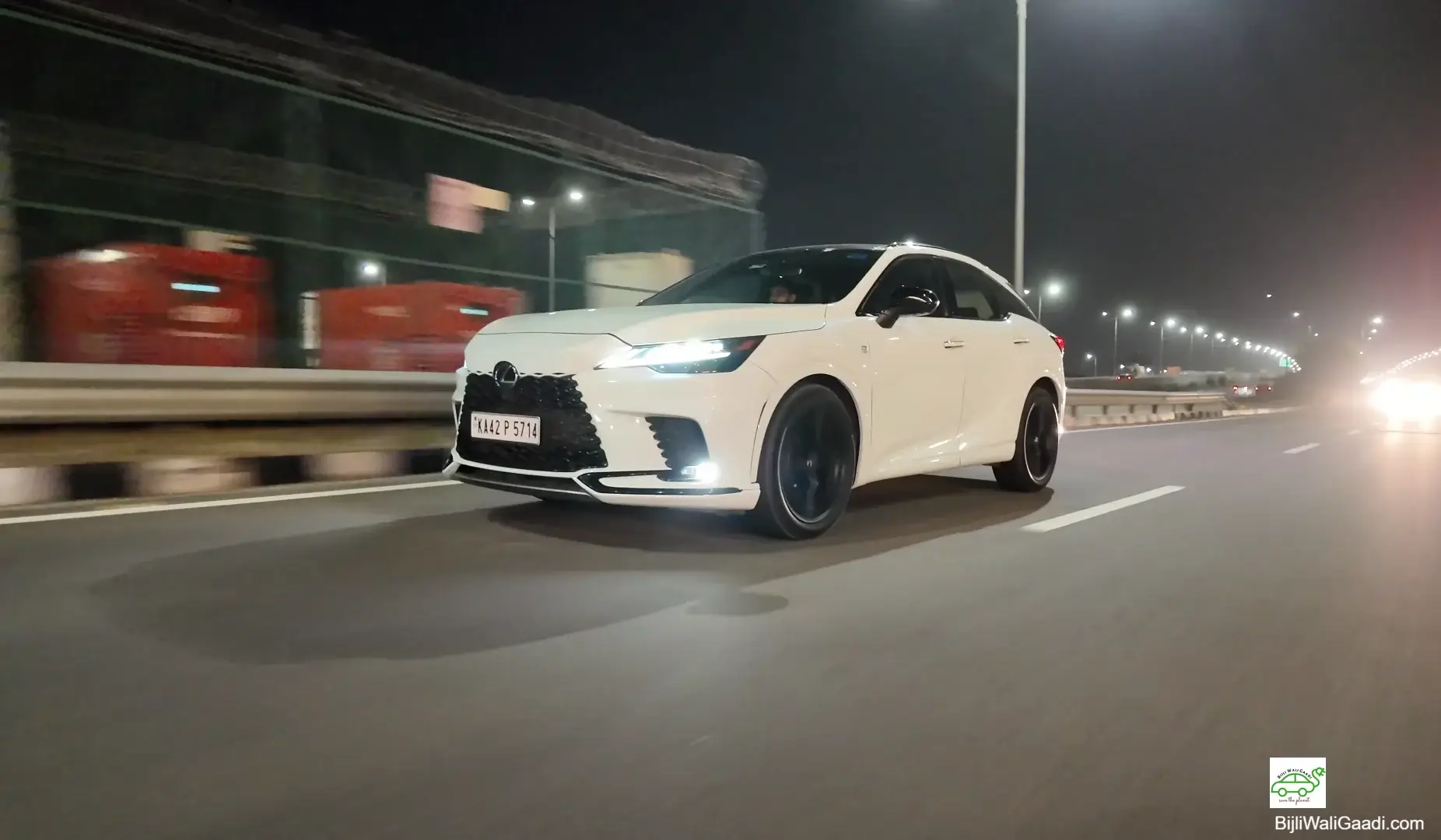
On the numbers, yes: 366 hp and a claimed 6.2-second 0–100 km/h put the RX 500h roughly in line with, or ahead of, several six-cylinder petrol SUVs from German rivals in a similar price band. The turbo-hybrid combination also means peak torque arrives earlier than a naturally aspirated V6, with the electric motors filling in during turbo lag.
On sound character, Lexus engineers it rather than leaving it to chance. Active Noise Control (ANC) uses cabin speakers to actively cancel the four-cylinder turbo engine’s characteristic noise, while a separate Active Sound Control (ASC) system generates driving sounds expressing the combined power of engine and motors, both exclusive to the RX 500h. This makes the acoustic experience a deliberately tuned one rather than a raw, organic note — genuinely different from a German six-cylinder’s natural sound, even if the cabin result is more engaging than four-cylinder power alone would suggest.
GA-K Platform: What Actually Changed for the RX
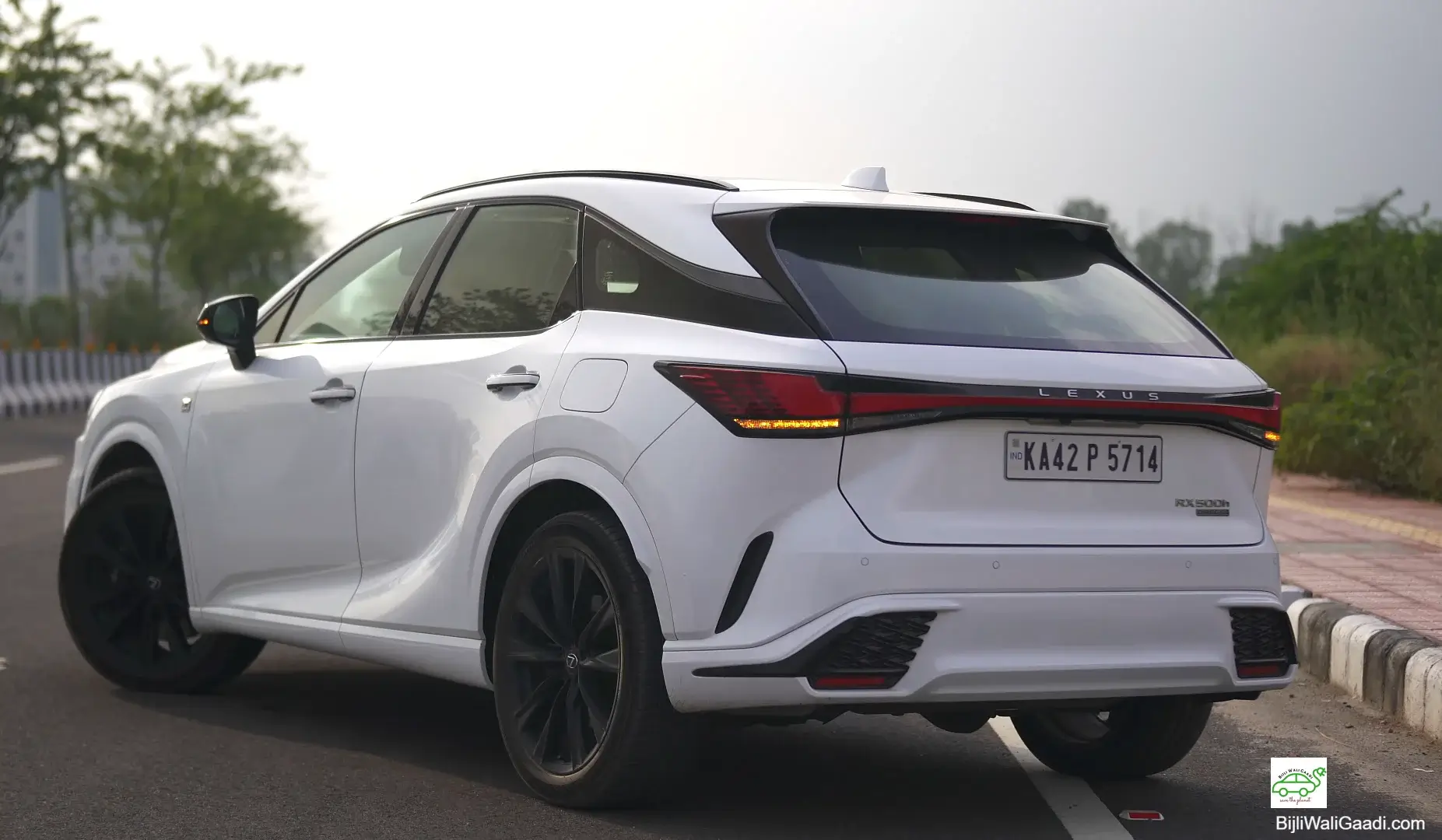
Lexus quotes specific, verifiable improvements for the current GA-K platform versus its predecessor: centre of gravity lowered 15mm through weight reduction and a lower floor, wheelbase extended 60mm, and front/rear tread widened 15mm/45mm — together reducing yaw inertia moment for a more planted stance. Weight savings come partly from aluminium front fenders and hot-stamped 2GPa steel centre pillars. On the F-Sport Performance specifically, fins on the rear lower bumper suppress turbulent airflow behind the rear tyres, aiding straight-line stability at speed and in crosswinds.
Frequently Asked Questions
Stay connected via Google 'Electric Vehicle' News
Follow BijliWaliGaadi | India's Trusted EV Insights Portal
source on Google