Lexus ES 500e Electric Sedan Launched in India: 580 km Range, DIRECT4 AWD & Real-World Specs
Stay connected via Google 'Electric Vehicle' News
Follow BijliWaliGaadi | India's Trusted EV Insights Portal
source on Google
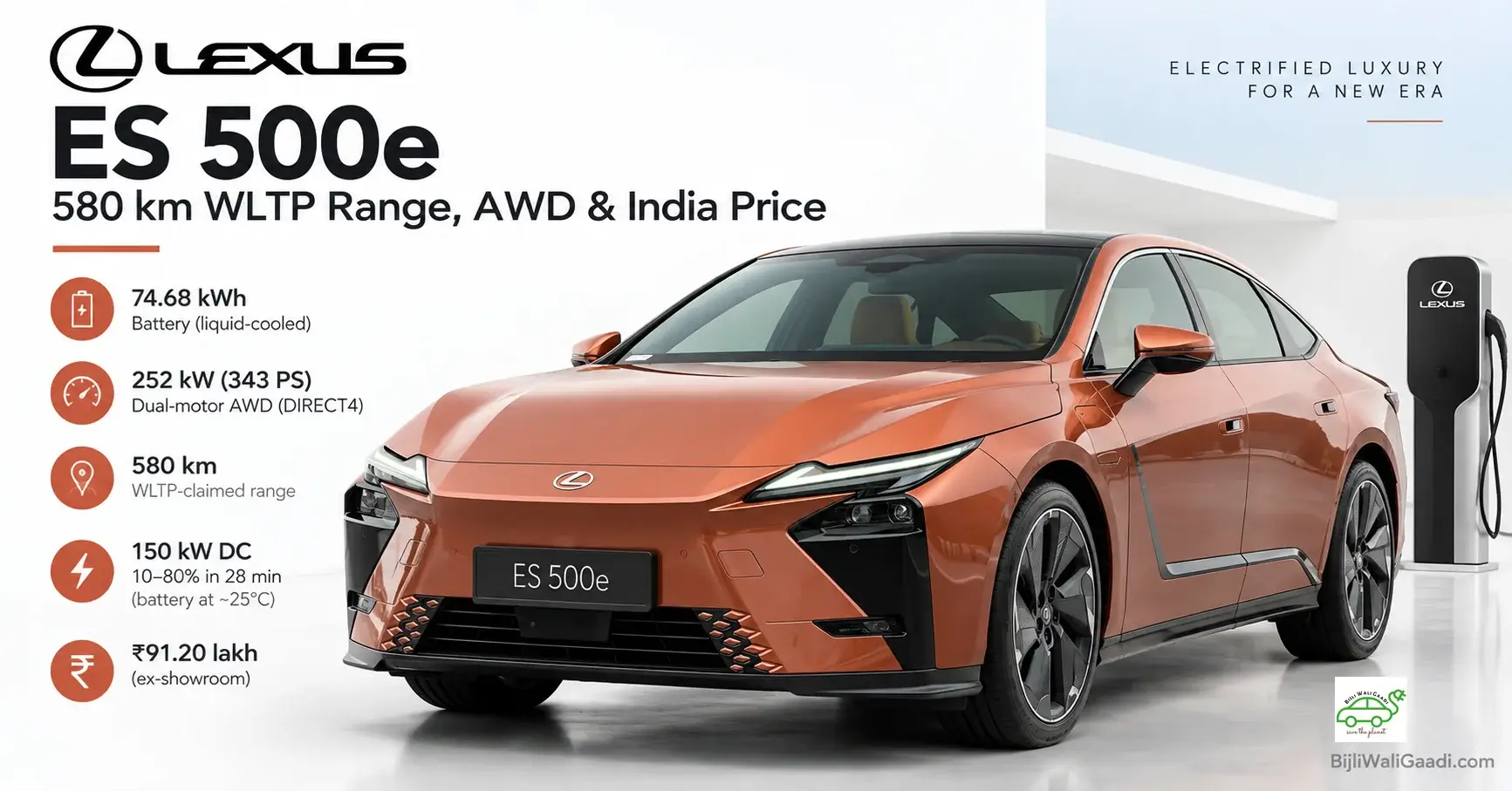
Quick overview: The Lexus ES 500e is Lexus’s first BEV in India, sold in a single Luxury grade priced at ₹91.20 lakh ex-showroom (launched in March 2026 at ₹89.99 lakh). It uses a 74.68 kWh liquid-cooled battery driving a DIRECT4 dual-motor AWD system rated at 252 kW (343 PS) and 438 Nm, with a claimed 0-100 km/h time of 5.5 seconds, a 580 km WLTP-claimed range, and 150 kW DC fast charging (10-80% in 28 minutes). The petrol-hybrid ES 350h now sells alongside it, launched in July 2026 in Exquisite (₹66.10 lakh) and Luxury (₹71.80 lakh) trims.
Lexus’s first BEV for India arrived in March 2026, and a few months on, it now sits in the showroom alongside its hybrid sibling rather than as a lone flagship statement. For a brand built on refinement rather than raw spectacle, going electric hasn’t changed the ES’s basic mission — though it has changed how the car delivers it.
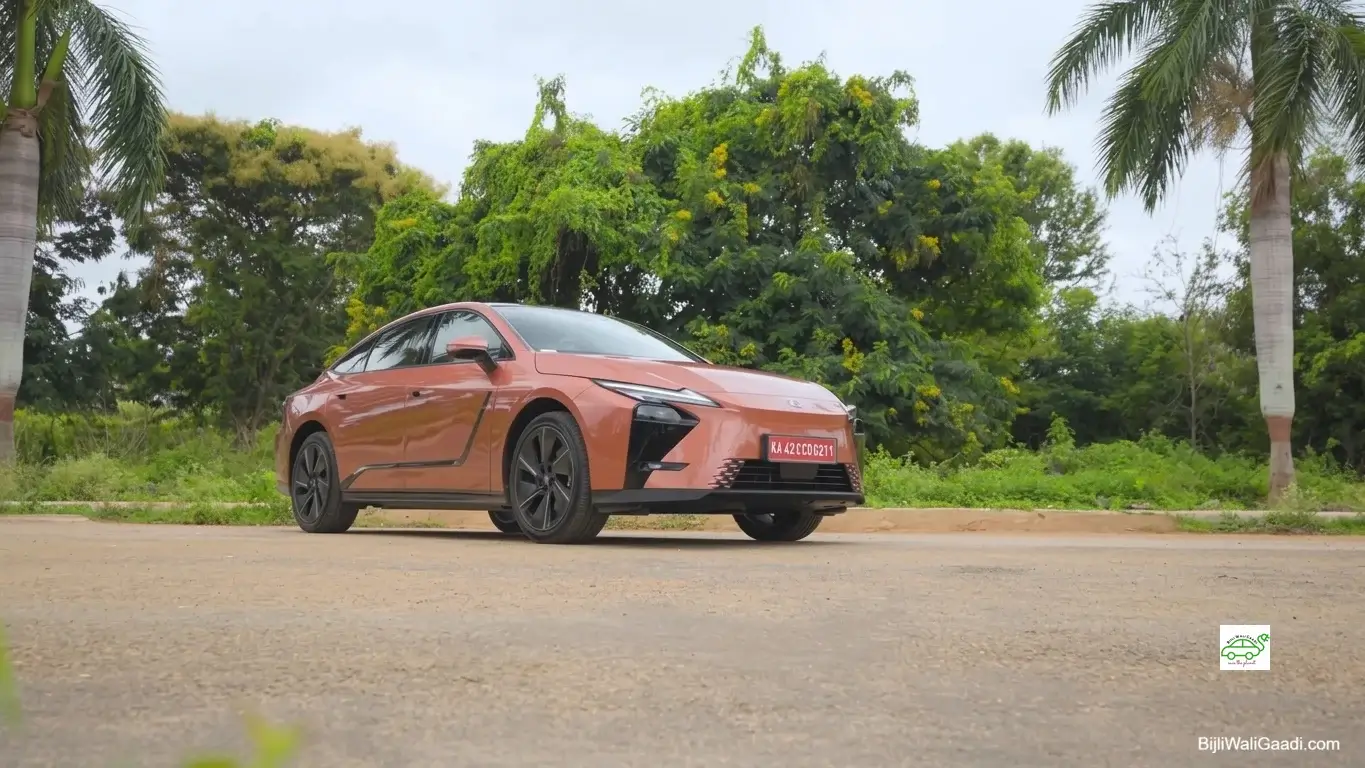
Lexus ES 500e: Key Specifications at a Glance
| Specification | Detail |
| Price (ex-showroom) | ₹91.20 lakh (launched Mar 2026 at ₹89.99 lakh) |
| Variant | Single Luxury grade |
| Battery | 74.68 kWh, liquid-cooled |
| Drivetrain | Dual-motor AWD (Lexus DIRECT4) |
| System output | 252 kW (343 PS) / 438 Nm |
| 0-100 km/h | 5.5 seconds (claimed) |
| Range | 580 km (WLTP-claimed) |
| Real-world range | ~380 km (Autocar India road test) |
| DC fast charging | 150 kW, 10-80% in 28 min (battery at ~25°C) |
| AC home charging | 11 kW wall charger; 2.8 kW portable unit |
| Ground clearance | 158 mm (+20 mm over standard ES) |
| Warranty | 8 years / 2,00,000 km (vehicle and battery) |
Variants and Colours
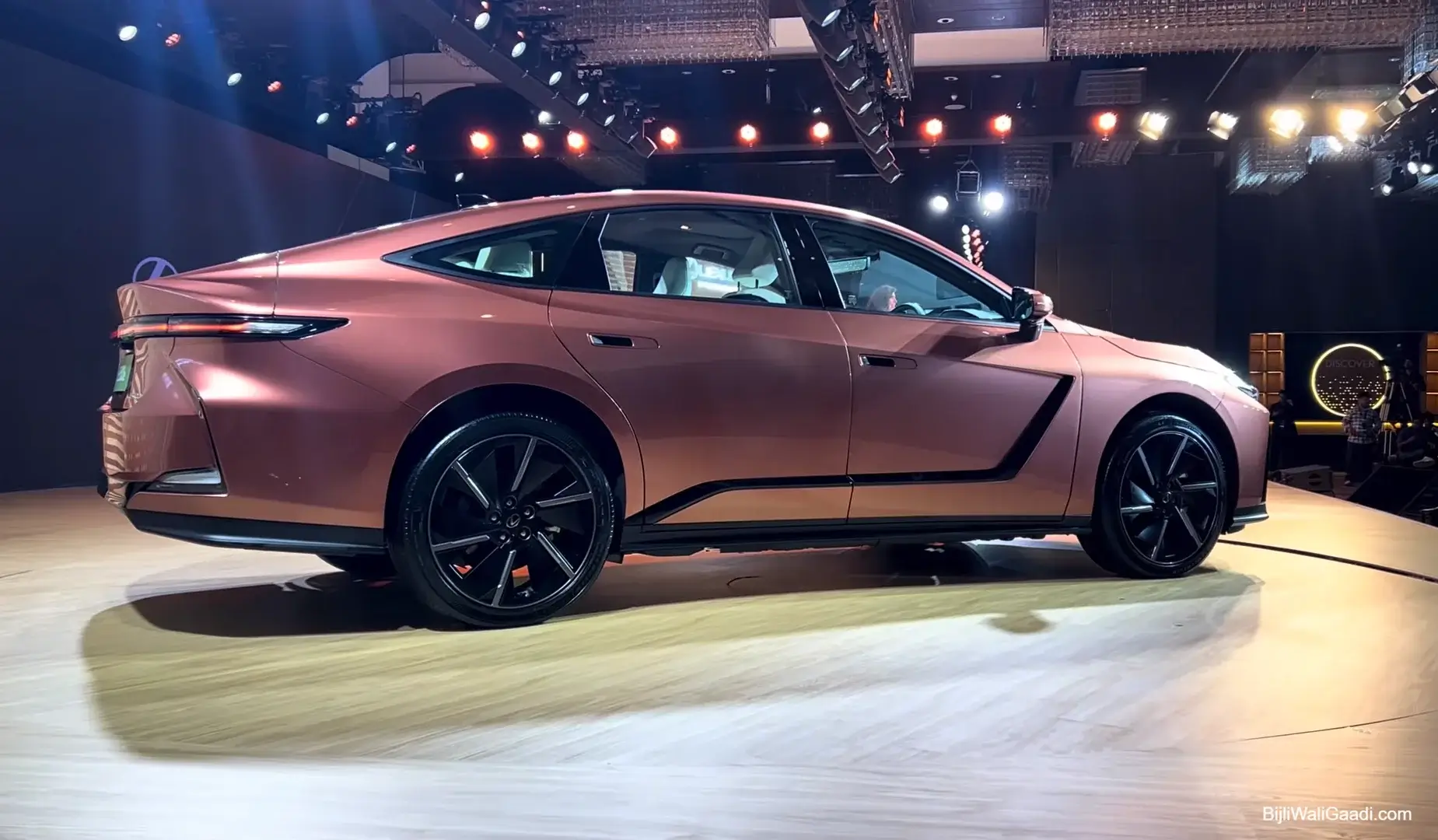
Unlike the ES 350h, which comes in Exquisite and Luxury trims, the ES 500e is sold in India as a single Luxury grade — there’s no stripped-down base version. Every car gets the same dual-motor AWD drivetrain, 21-inch aero wheels, and Lexus Safety System+ suite as standard. Personalisation comes through colour instead:
| Exterior colours | Interior themes |
| White Nova color | Hazel |
| Sonic Titanium color | White |
| Graphite Black color | |
| Sonic Copper color | |
| Sou color |
Powertrain: What 252 kW and 438 Nm Actually Mean
| Motor | Power | Torque |
| Front | ~167 kW | ~267 Nm |
| Rear | ~88 kW | ~170 Nm |
| Combined system | 252 kW (343 PS) | 438 Nm |
Lexus claims a 0-100 km/h time of 5.5 seconds — brisk for a car built primarily around comfort, with the AWD split keeping delivery calm rather than aggressive.
How the AWD-System Works
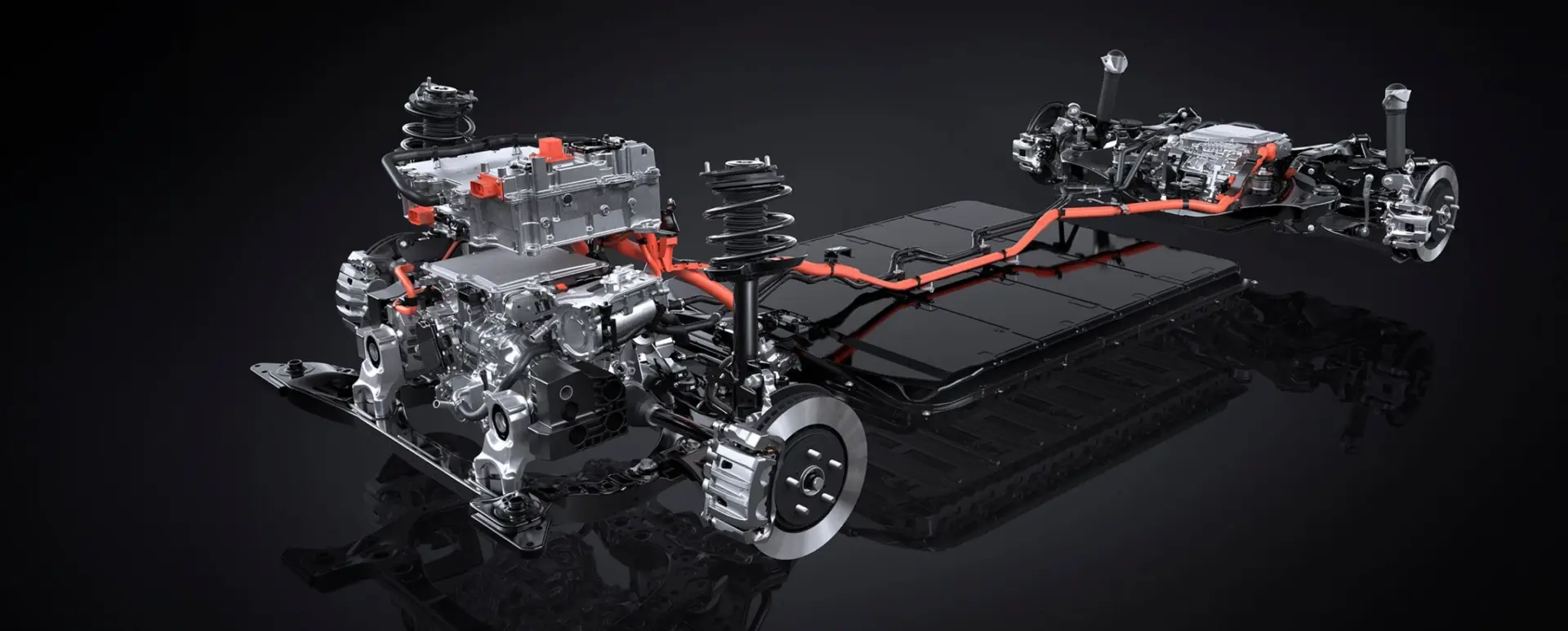
Lexus calls the system DIRECT4, with electronically controlled front and rear eAxles managing traction and power distribution rather than a mechanical propeller shaft. The 74.68 kWh battery sits low in the floor between the axles, lowering the car’s centre of gravity — part of why it feels planted despite its size. Regenerative braking recovers some energy under deceleration, clawing back range lost in stop-start traffic.
Battery, Range and Real-World Numbers
The 74.68 kWh pack carries a claimed WLTP range of 580 km, but Autocar India’s road test recorded a real-world figure closer to 380 km — an independent test observation, not an official Lexus number, and a significant gap that means longer trips need more planning than the headline figure suggests. Actual range varies further with speed, temperature, AC use, traffic and tyre pressure, so it’s best treated as a reference point rather than a guarantee.
Thermal Management: Handling Indian Heat
The battery uses a liquid thermal management system that circulates coolant around the cells during fast charging and sustained high-load driving — climbing ghat sections with the air-conditioning on, for instance. This limits thermal stress on the pack rather than eliminating degradation outright; lithium-ion cells still age over time regardless of cooling.
Charging: Home AC and 150 kW DC Fast Charging
| Charging option | Detail |
| Home AC (wall charger) | 11 kW |
| Portable charger | 2.8 kW |
| DC fast charging | 150 kW |
| 10-80% claimed time | 28 minutes (battery at ~25°C) |
Real-world charging speed can vary with battery temperature, state of charge and the charger’s available output.
Cabin, Design and Ride Quality
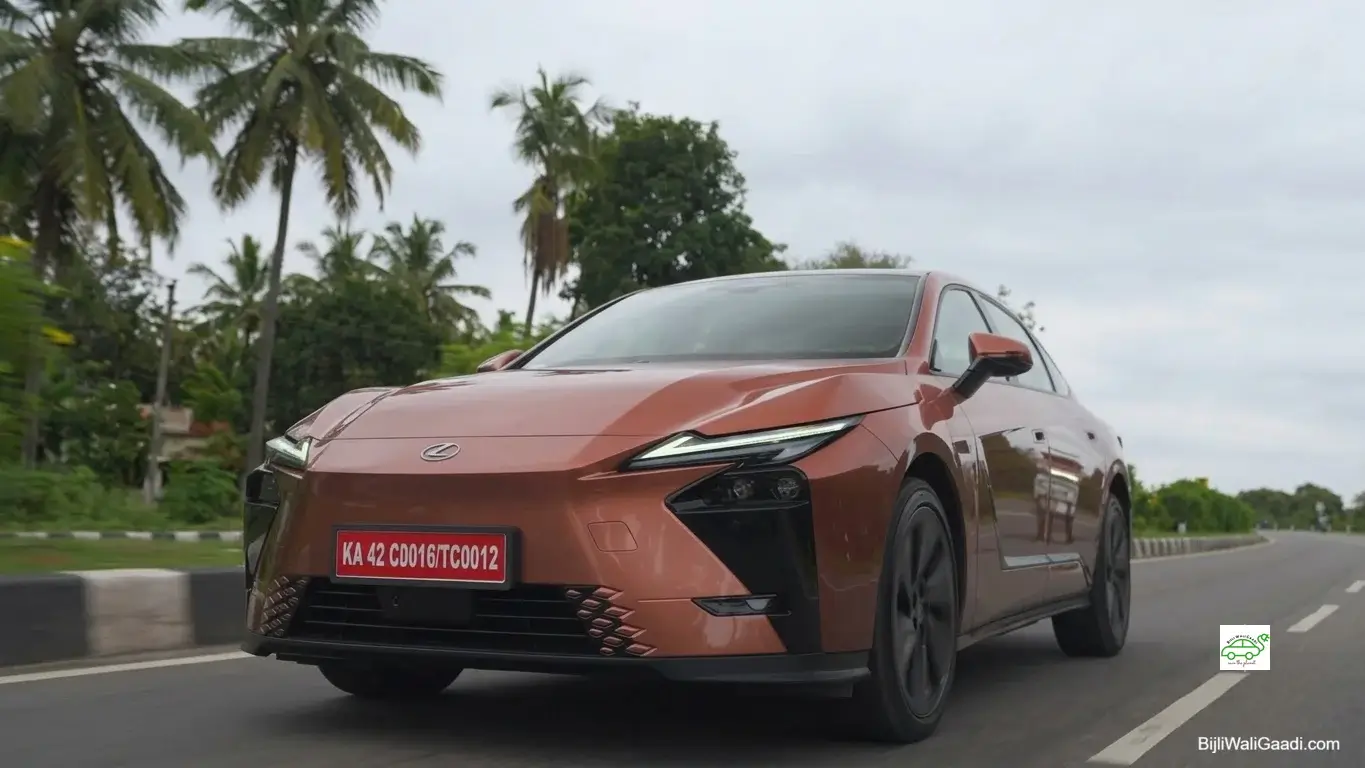
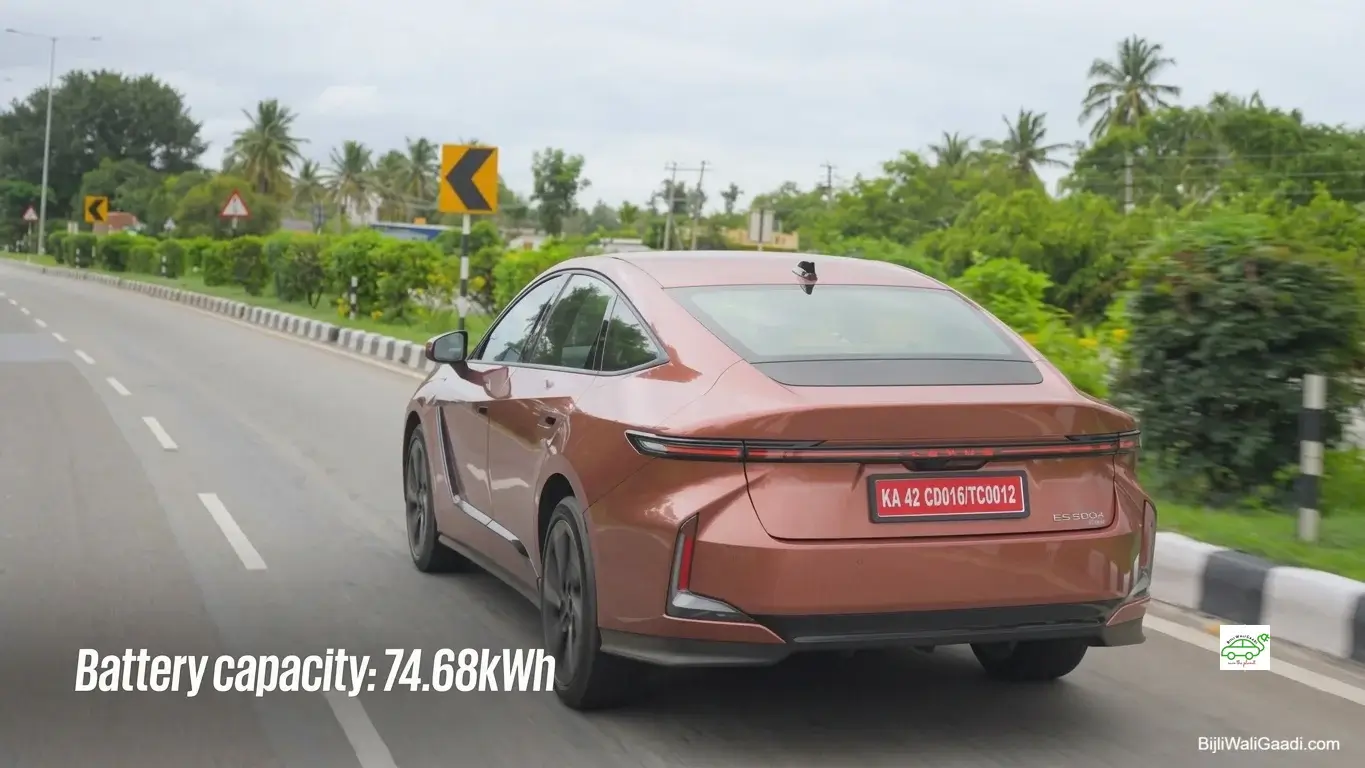
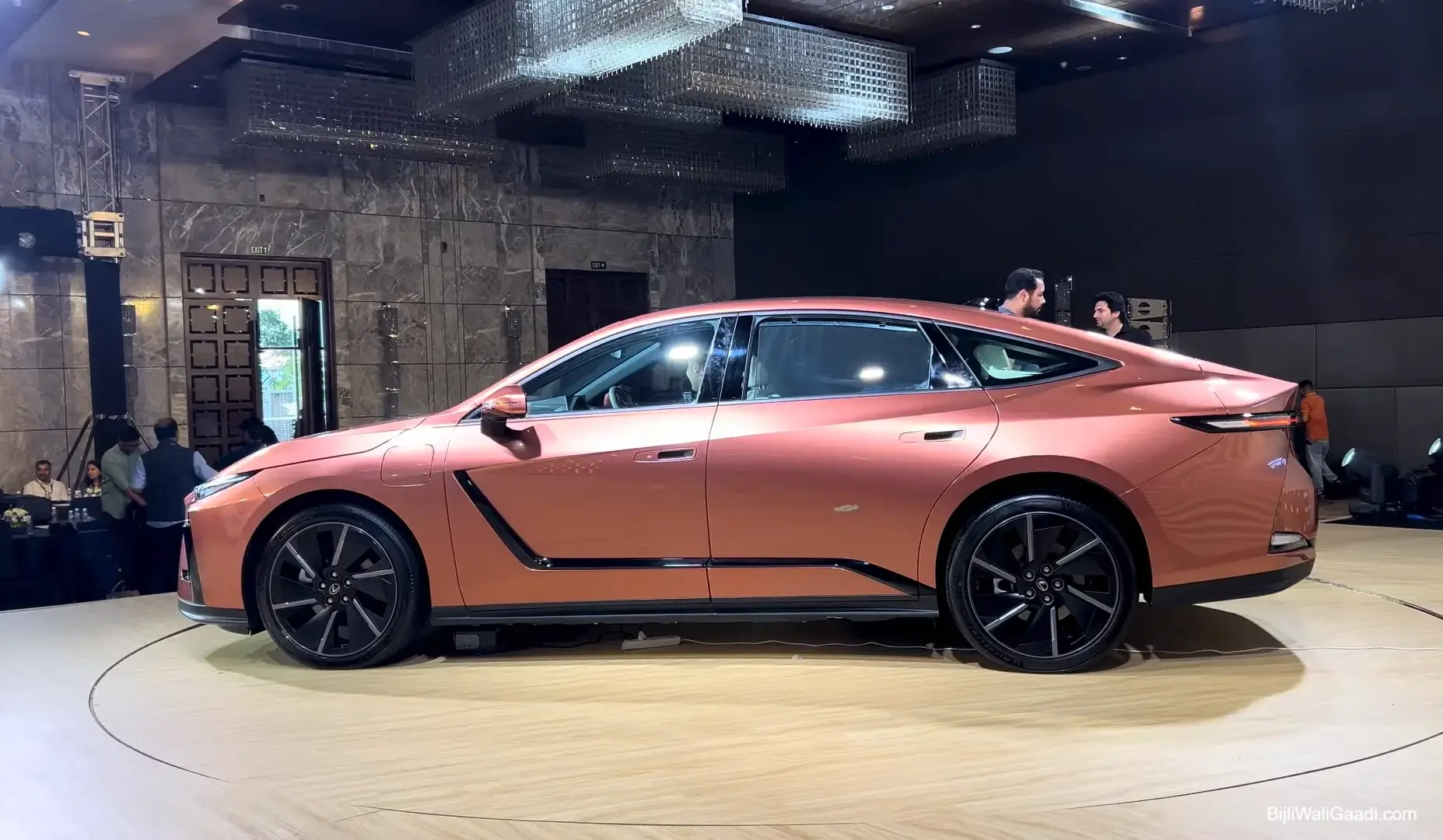
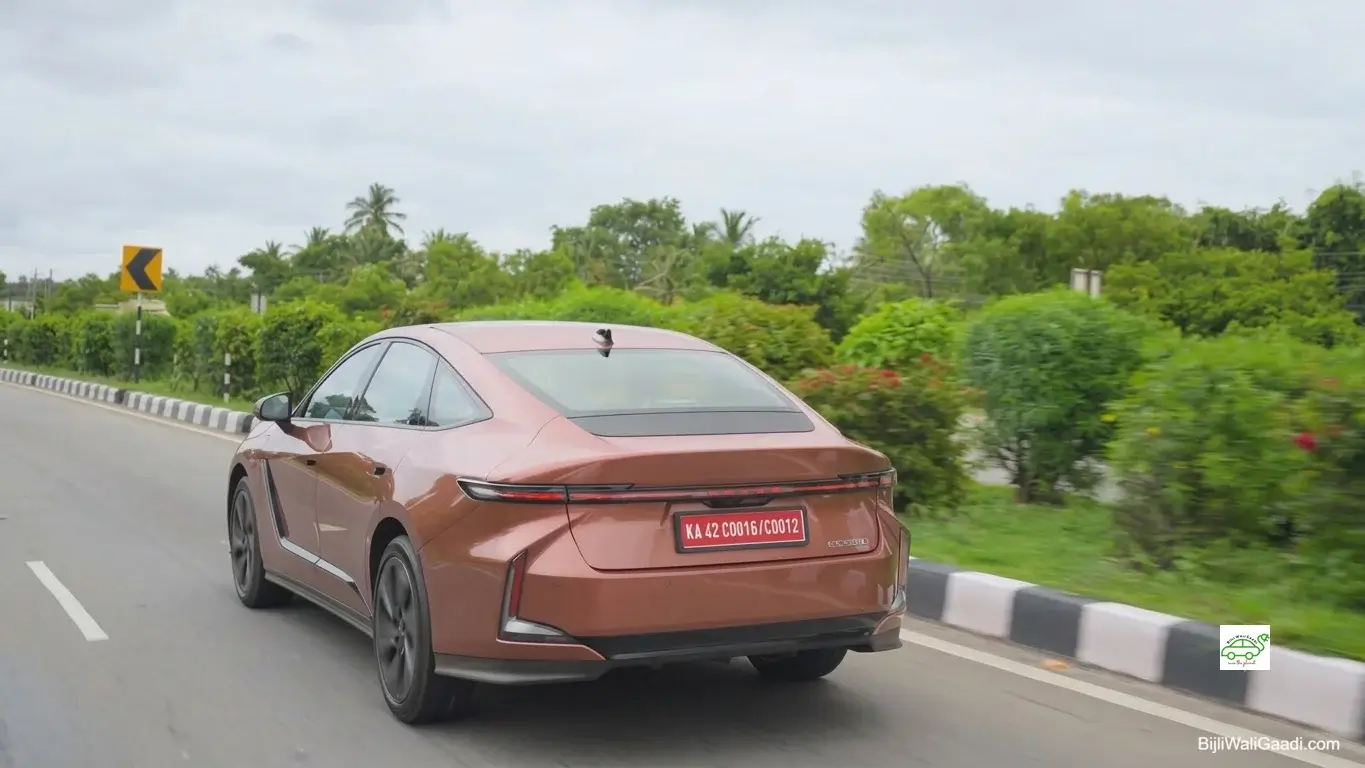
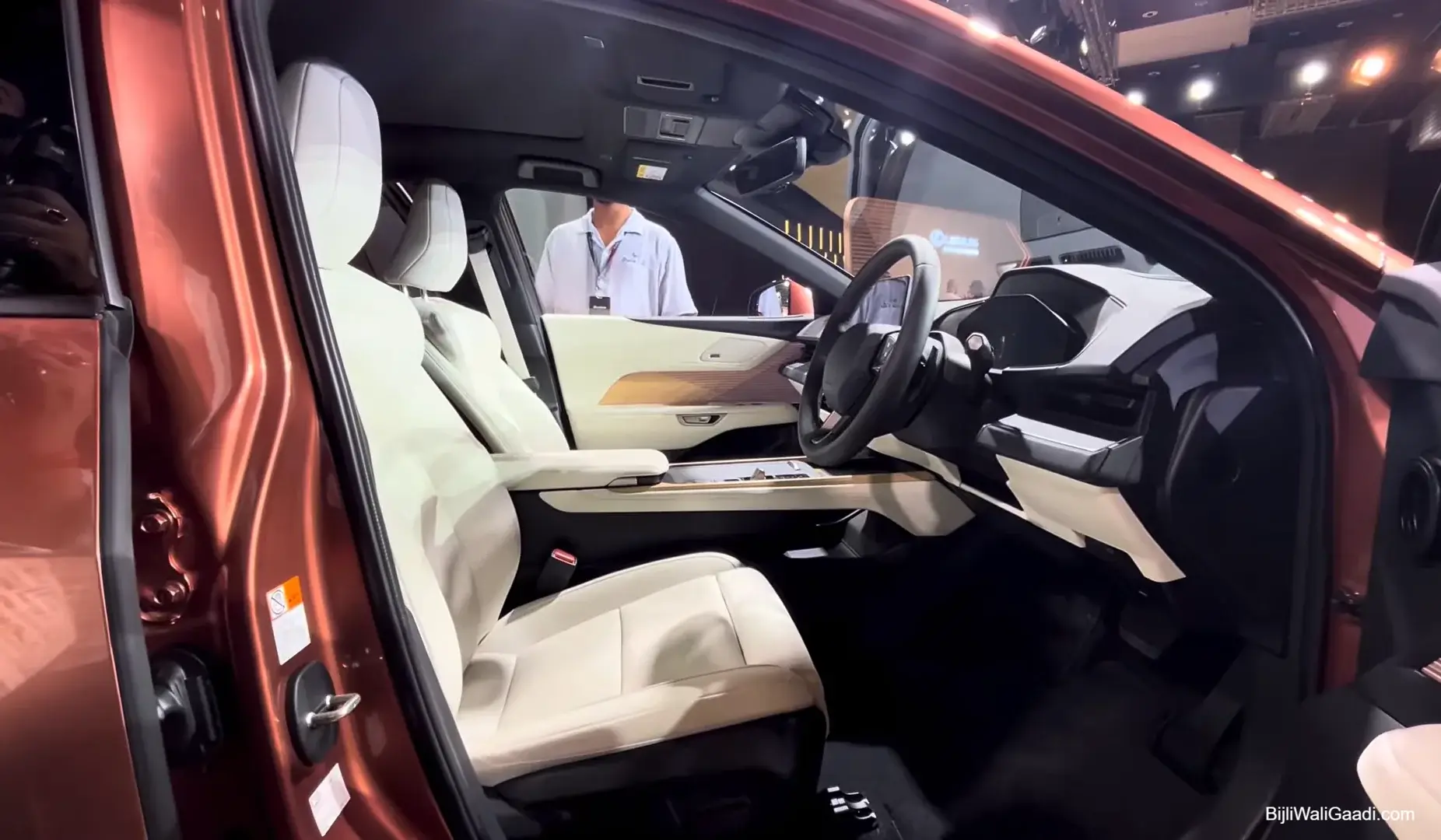
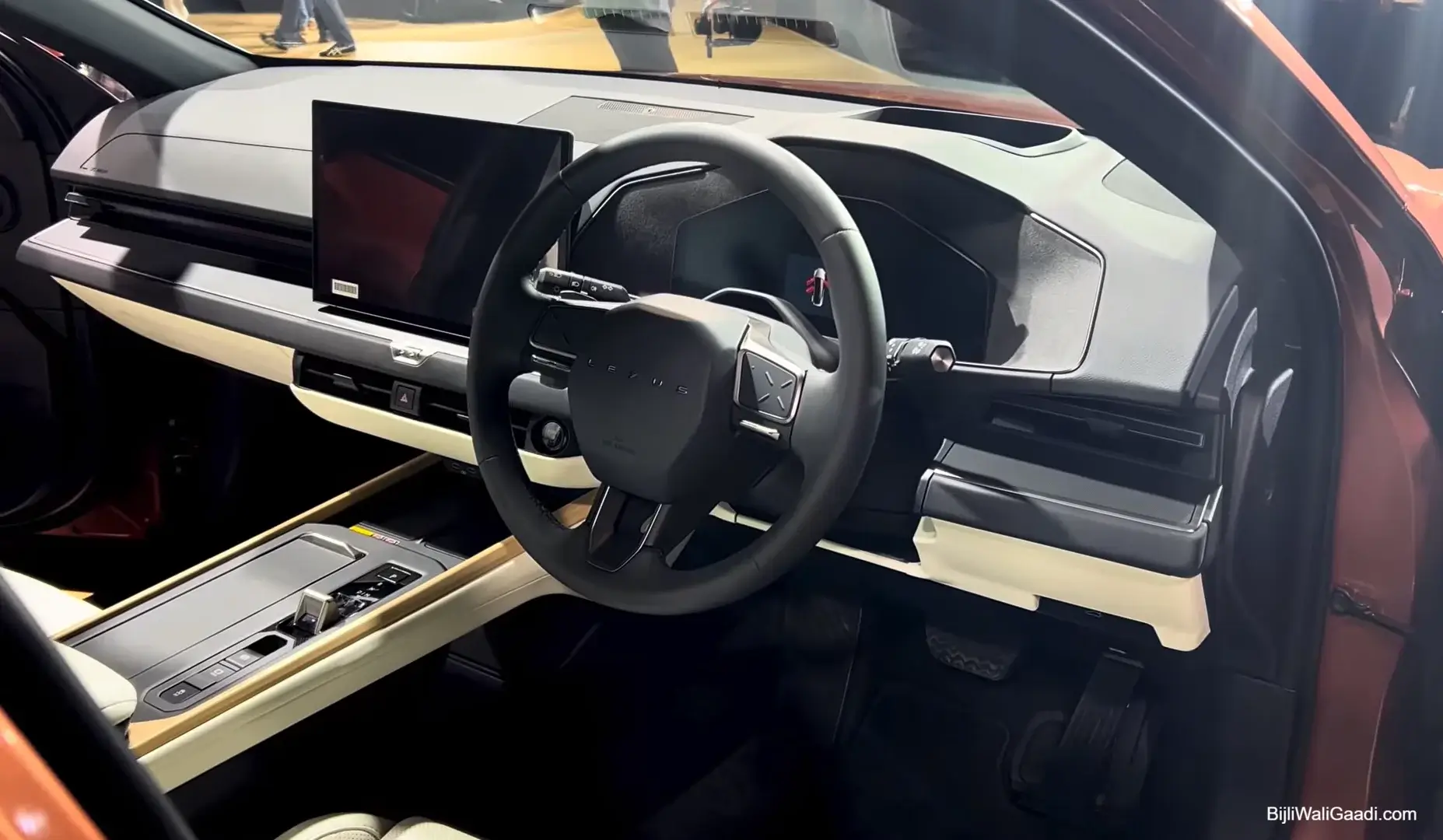
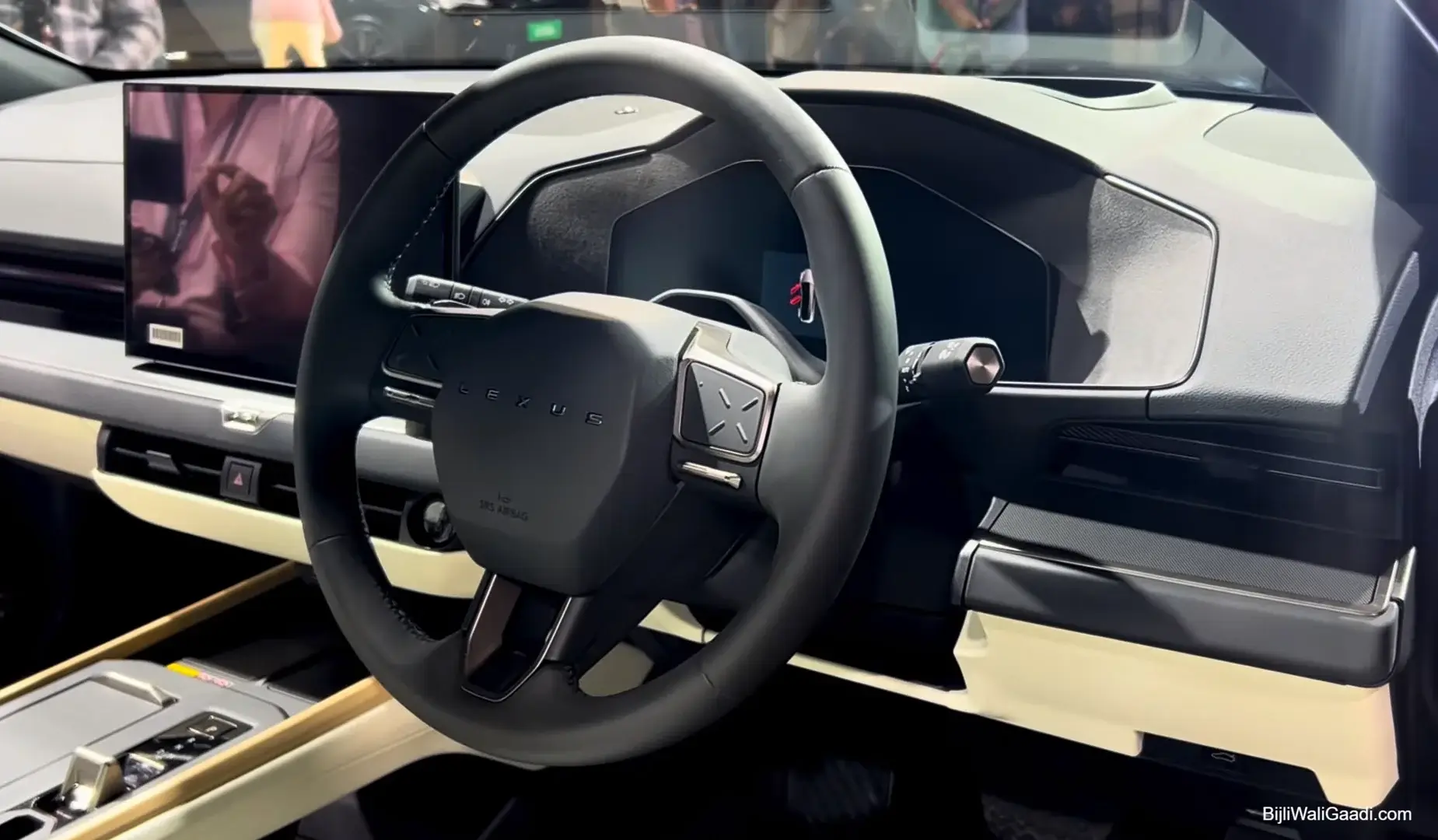
Inside, the ES 500e gets a 14-inch central touchscreen and a 12.3-inch digital driver’s display, along with a Mark Levinson audio system and ambient cabin lighting.
On the move, refinement is a strong suit — wind, road and tyre noise are well controlled even at highway speeds. Ride quality is the trade-off: testers have found it firmer than the ES 350h, with the 21-inch wheels and low-profile tyres making low-speed bumps and expansion joints more noticeable in the cabin, though it settles down at highway speeds.
How the ES 500e Compares with Electric Rivals
The ES 500e’s traditional direct rivals — the BMW 5 Series, Mercedes-Benz E-Class and Audi A6 — are still petrol or hybrid cars, making the ES 500e the electric option in that company. Among EVs, the BMW i5 (sold in India as the M60 xDrive) is its closest current comparison:
| Specification | Lexus ES 500e | BMW i5 M60 xDrive |
| Price (ex-showroom) | ₹91.20 lakh | ₹1.20 crore |
| Battery | 74.68 kWh | 81.2 kWh |
| Power / Torque | 252 kW / 438 Nm | 601 PS / 795 Nm |
| 0-100 km/h | 5.5 sec | 3.8 sec |
| Range (WLTP-claimed) | 580 km | 516 km |
| DC fast charging | 150 kW, 10-80% in 28 min | 205 kW, 10-80% in 30 min |
The BMW i5 M60 is quicker and pricier — a performance flagship rather than a comfort-first executive sedan. Mercedes-Benz doesn’t yet sell the EQE Sedan in India (only the larger EQE SUV, priced from around ₹1.39 crore, is currently on sale), so a direct EQE Sedan comparison isn’t possible until that model launches. Against both, the ES 500e’s edge is cabin refinement, quietness, and Lexus’s established reliability reputation — areas where buyers often value dependability over spec-sheet wins.
Verdict
The ES 500e isn’t chasing the longest range or the sharpest numbers in its class — it’s aiming to be the most Lexus of the electric luxury sedans on sale in India. That means a hushed, comfortable cabin, dependable engineering, and a straightforward ownership proposition, balanced against a real-world range gap and a ride that’s firmer than some buyers might expect. For executive and chauffeur-driven buyers prioritising refinement and brand trust over outright range, it remains a credible option in this segment.
Frequently Asked Questions
Stay connected via Google 'Electric Vehicle' News
Follow BijliWaliGaadi | India's Trusted EV Insights Portal
source on Google