The Volvo EX90 Makes a Strong Safety Case for America’s Electric SUV Buyer
Stay connected via Google 'Electric Vehicle' News
Follow BijliWaliGaadi | India's Trusted EV Insights Portal
source on Google
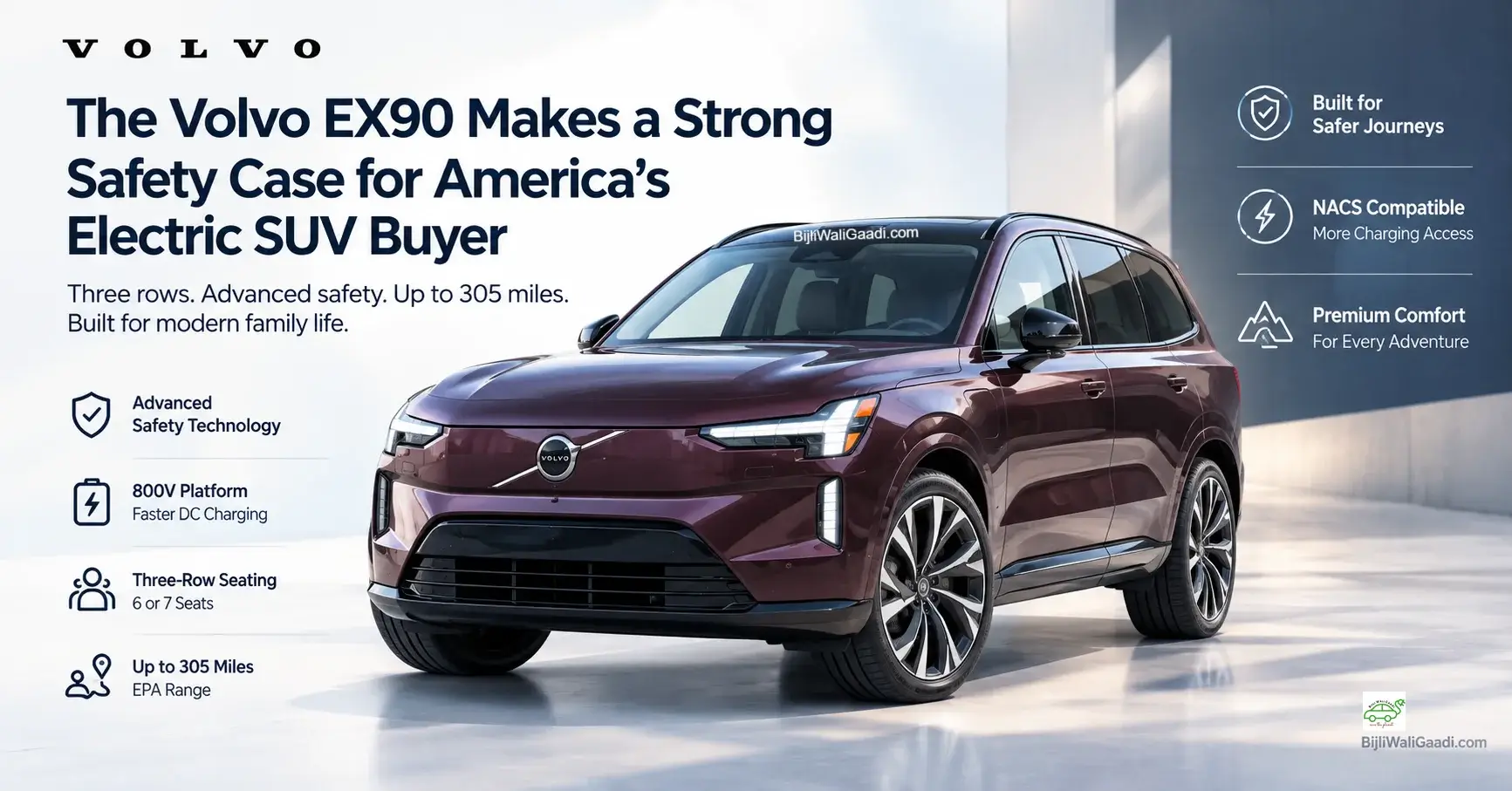
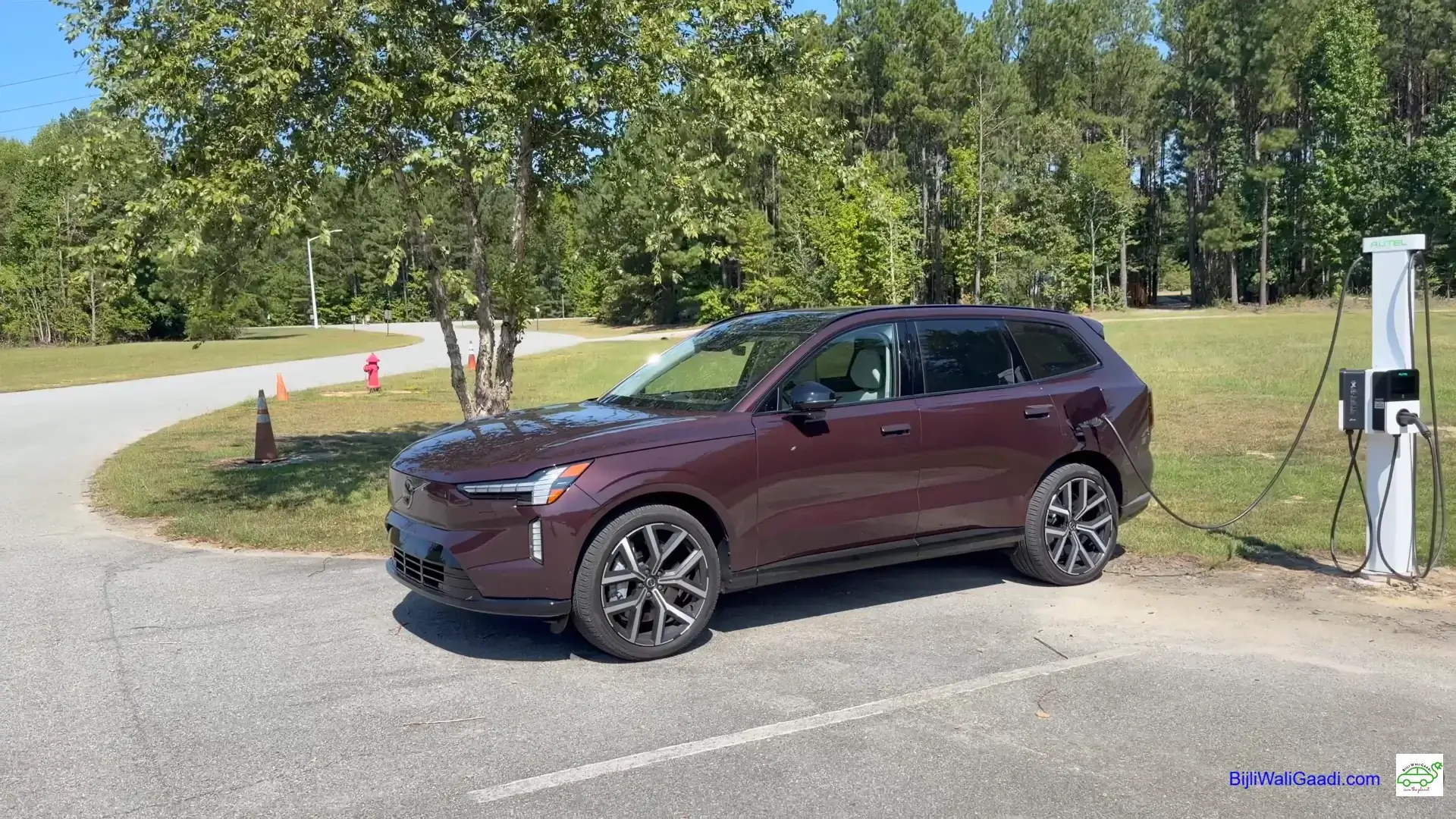
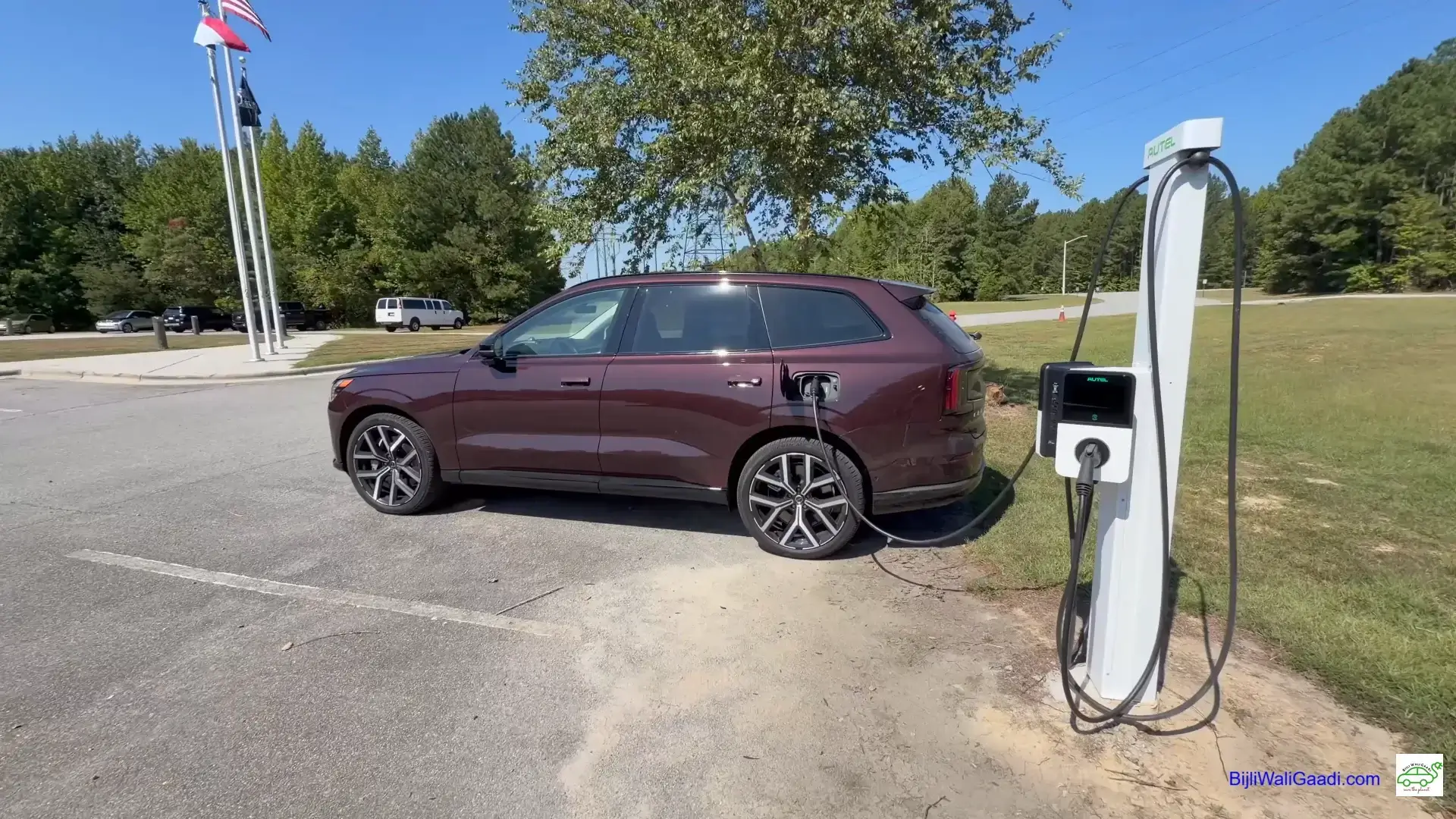
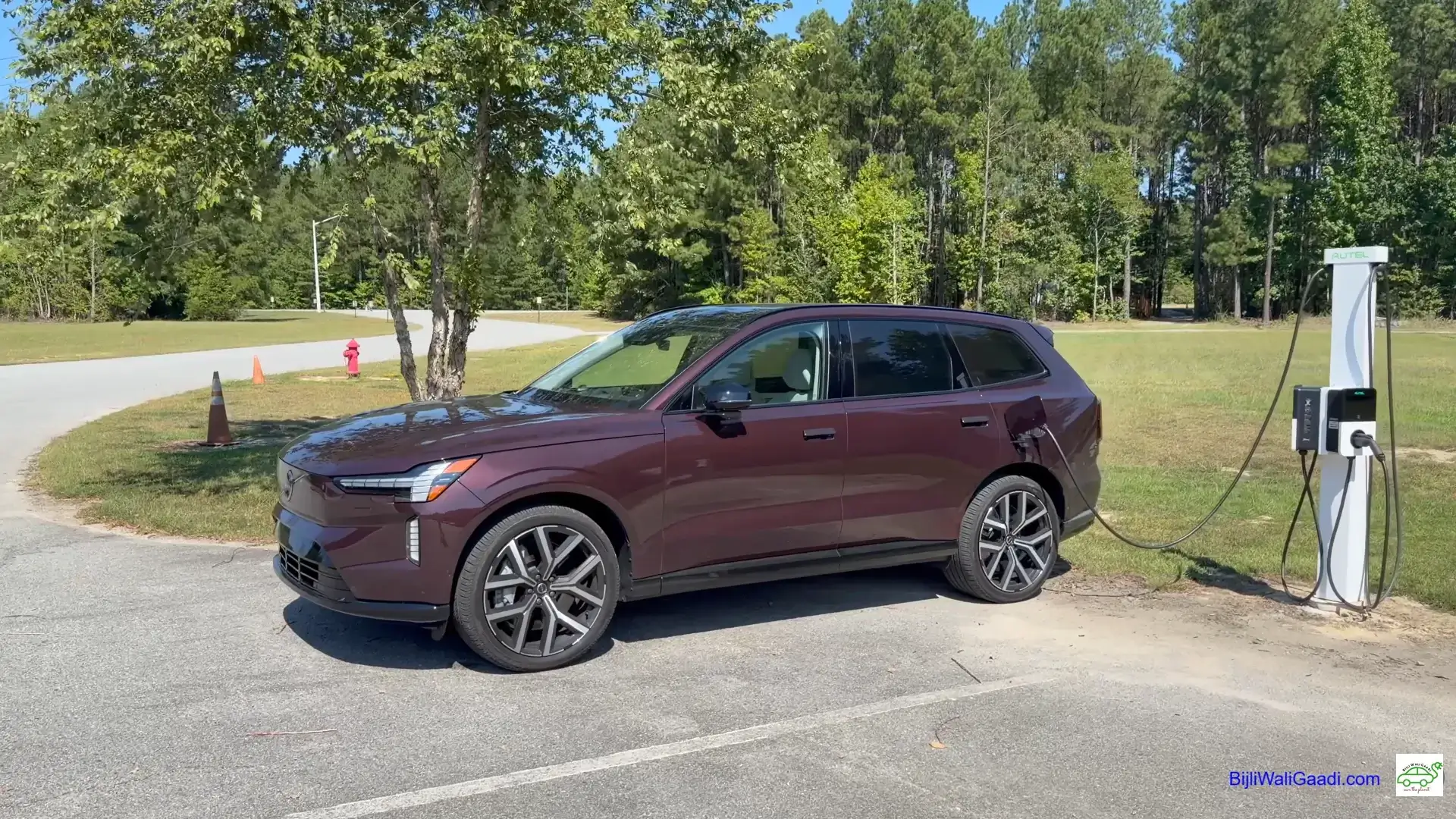
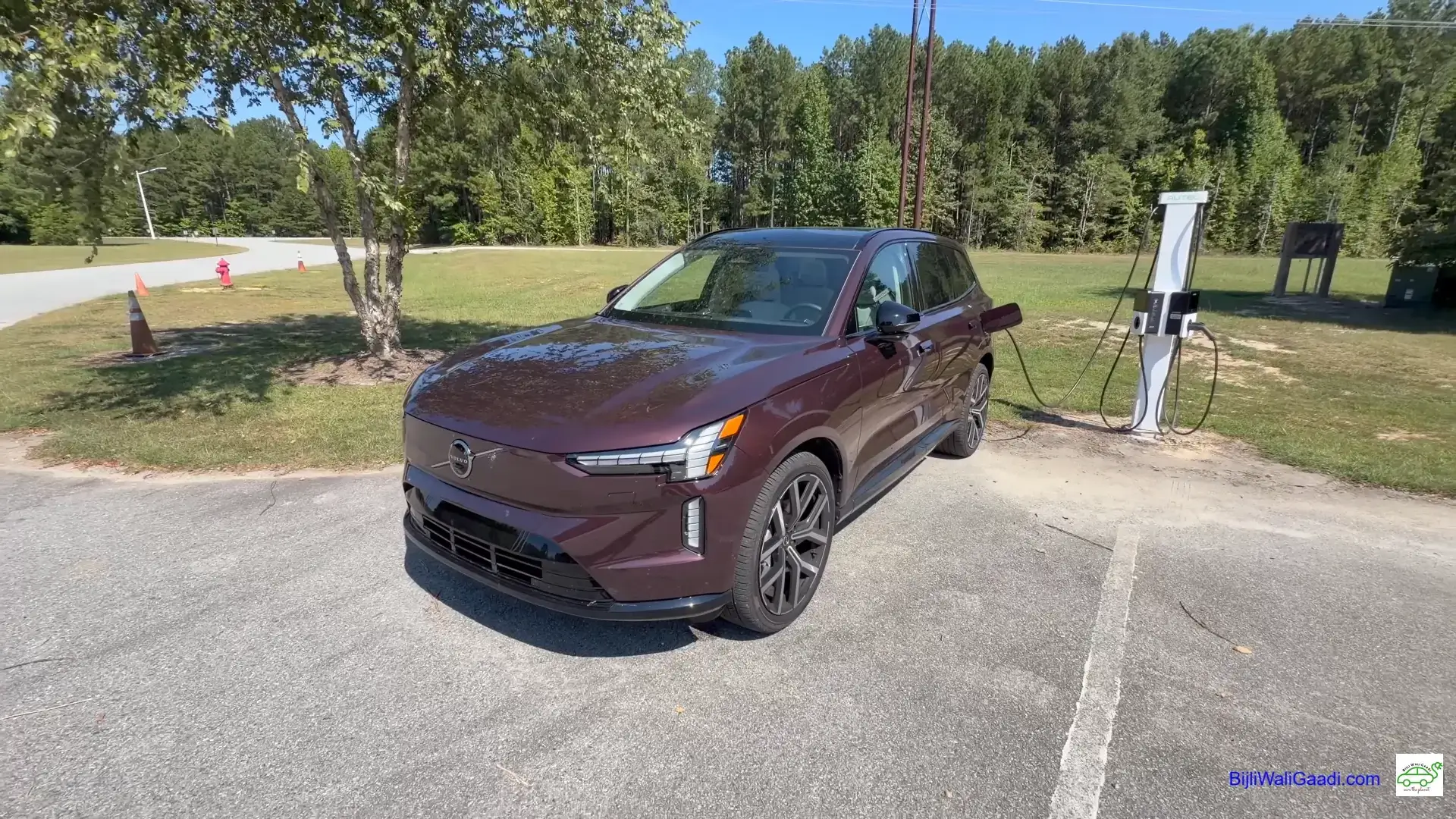
American SUV buyers aren’t walking away from the body style as they go electric — they’re asking electric SUVs to match the space, comfort and safety of the gasoline luxury SUVs they already trust. The Volvo EX90 electric SUV is Volvo’s answer: a large, three-row EV built around its decades-long safety identity. Whether that proposition outweighs rivals with more range, a lower price or a bigger footprint is the real question worth asking.
Why the Volvo EX90 Matters in America’s Premium Electric SUV Market
Three-row electric SUVs remain a more specialized slice of the US EV market than compact crossovers, making vehicles like the EX90, the Rivian R1S and the Cadillac Escalade IQ especially relevant to families moving off a gasoline three-row SUV. The EX90 is the fully electric counterpart to Volvo’s gas and plug-in-hybrid XC90, built on a dedicated 800-volt platform designed for faster DC charging.
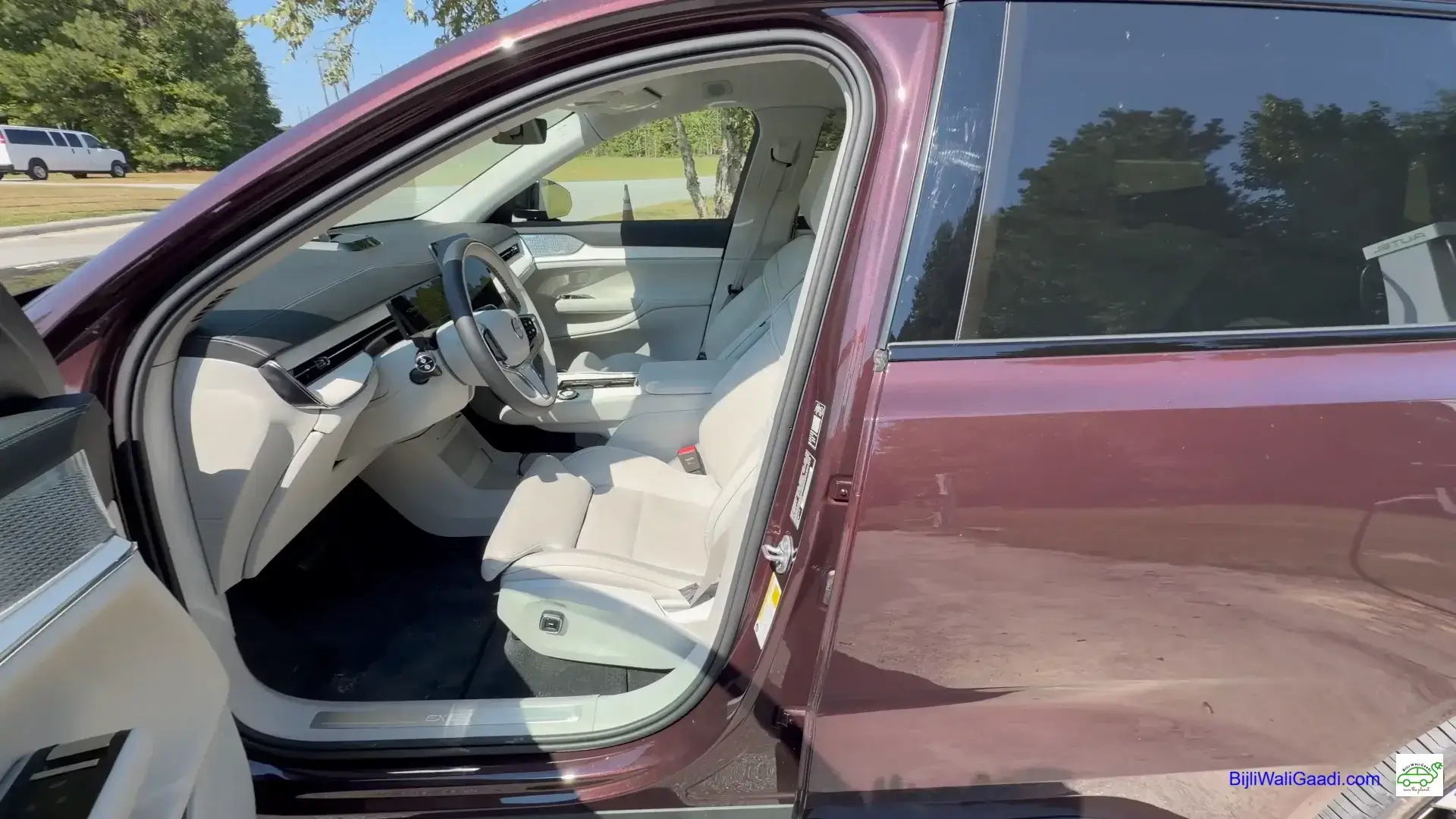
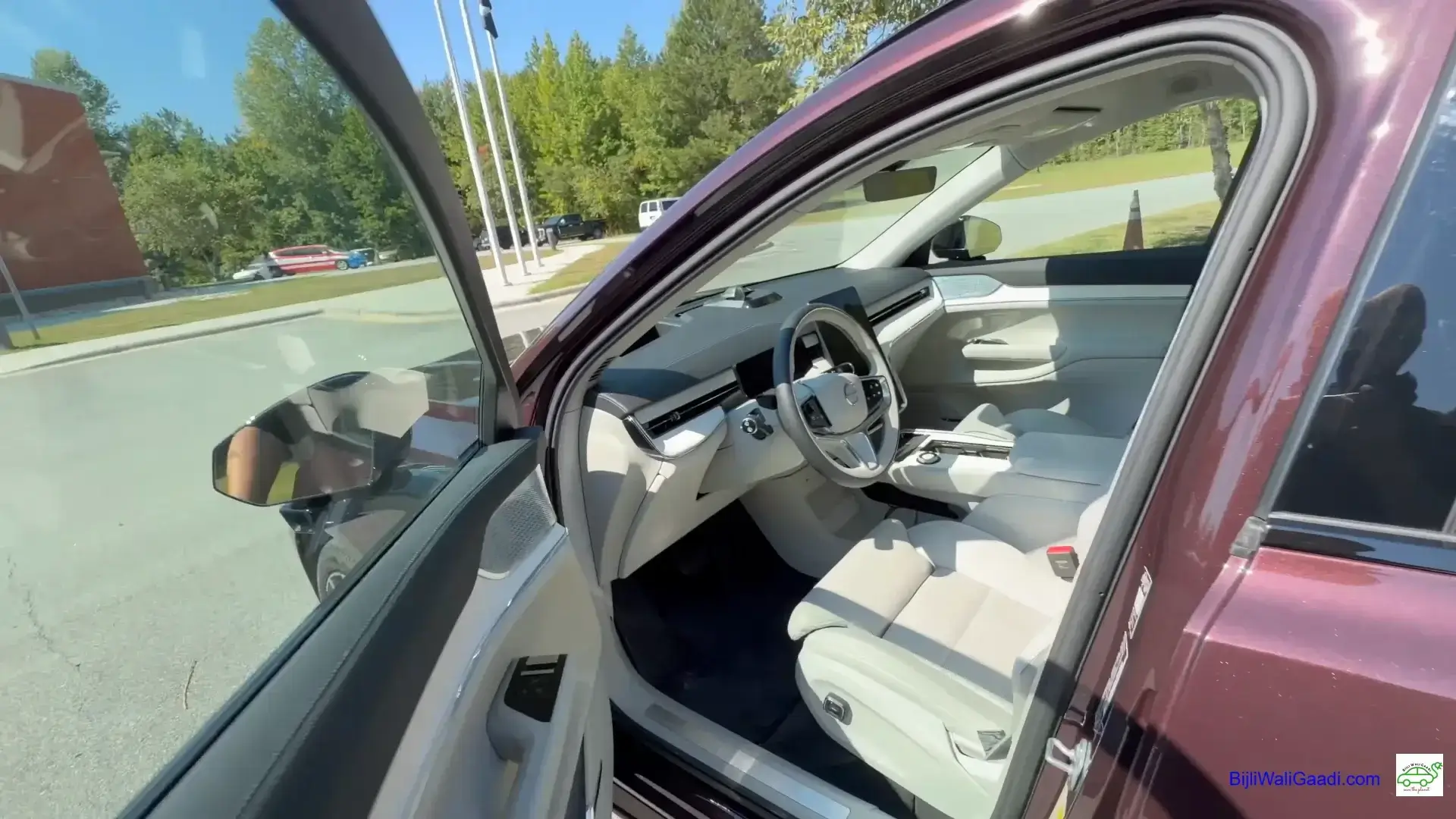
Volvo EX90 US Specifications by Powertrain
Volvo Cars USA offers the EX90 in three powertrains — Single Motor, Twin Motor and Twin Motor Performance — across Plus and Ultra equipment levels, with 6- or 7-seat layouts on Twin Motor variants (Single Motor is 7-seat only).
| Powertrain | Drivetrain | Power | Torque | Battery | EPA Range | Seating |
| Single Motor | RWD | 245 kW / 329 hp | 354 lb-ft | 92 kWh | 276–291 mi (wheel-dependent) | 7 |
| Twin Motor | AWD | 335 kW / 449 hp | 494 lb-ft | 106 kWh | 298–305 mi (wheel-dependent) | 6–7 |
| Twin Motor Performance | AWD | 500 kW / 670 hp | 642 lb-ft | 106 kWh | 298–305 mi (wheel-dependent) | 6–7 |
21-inch wheels return the higher end of each range; 20- and 22-inch wheels return the lower end. Volvo Cars USA lists the 2026 EX90 starting at $78,090 MSRP, including a $1,395 destination fee; actual pricing varies by powertrain, equipment level, options and retailer. Towing runs 3,307 lb (Single Motor) to 4,850 lb (Twin Motor/Performance).
Volvo EX90 Safety Technology Is Its Strongest Selling Point
Volvo separates EX90 safety into distinct jobs rather than one catch-all system.
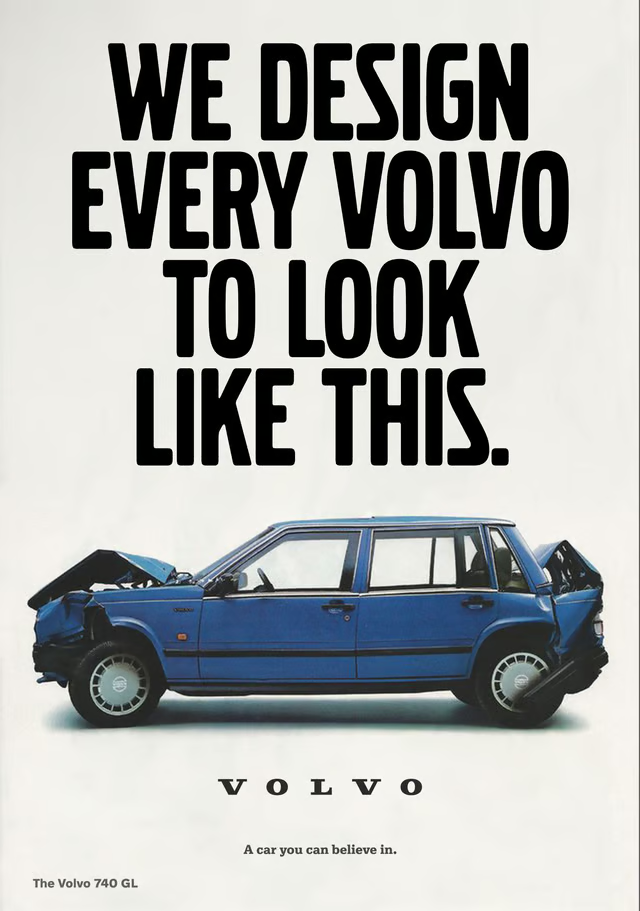
Protective (passive) safety starts with a high-strength steel safety cage and front/rear/side deformation zones designed to absorb and redistribute crash energy, plus a battery pack shielded in its own housing. In a side impact, the Side Impact Protection System is designed to spread crash forces and limit cabin intrusion, backed by a roof-mounted airbag for outboard occupants. Seatbelts pretension ahead of a detected collision, and restraints deploy automatically in a rollover — the structural layer that remains fundamental to occupant protection, particularly in a three-row family SUV.
Advanced sensing combines cameras, radar and ultrasonic sensors into a suite designed to provide a detailed view of the vehicle’s surroundings, paired with interior sensing and core computing. Driver Understanding tracks eye/head movement and steering behavior via sensors and a capacitive steering wheel, adjusting warning timing; if the driver stays unresponsive through escalating alerts, the system can trigger Emergency Stop Assist. Occupant Sensing detects sub-millimeter movement inside the cabin, alerting the driver if a person or pet may have been left behind.
Collision avoidance includes oncoming-collision mitigation (helping slow the car up to 10 mph), rear cross-traffic alert with low-speed auto-braking, intersection autobrake, and run-off-road mitigation. A radar-based door-opening alert warns of approaching cyclists before a door swings open.
Pilot Assist, Volvo’s driver-assistance system, supports steering, braking and acceleration up to 93 mph. It is not self-driving: these functions aren’t a substitute for driver attention, and the driver remains responsible at all times. The 360° camera with 3D view is optional or trim-dependent, not standard.
LiDAR Availability Changed, But Volvo’s Safety Architecture Goes Beyond One Sensor
Volvo’s current US documentation says LiDAR is no longer available on the EX90, while Volvo also explains that some 2026 EX90 vehicles are produced without LiDAR because of limited hardware supply. Volvo states that these vehicles still meet its safety standards through their broader sensor and computing architecture; affected customers are contacted directly. It’s a real change from the EX90’s original launch pitch, which leaned on lidar for object detection — but Volvo’s own position is that camera, radar and computing capability carry the safety function, not that the two configurations are sensorically identical.
305-Mile EPA Range and 22-Minute Charging Address US Road-Trip Concerns
EPA-estimated range spans 276 to 305 miles depending on powertrain and wheel size. Volvo quotes 10–80% DC fast charging in as fast as 22 minutes, but that assumes ideal conditions: a 350 kW charger, a preconditioned battery and no vehicle-side limits. Real-world time varies with temperature, charger output and battery condition. The EX90 is NACS-compatible; the standard adapter unlocks additional DC fast chargers beyond CCS.
What American Families May See Differently in the EX90
Buyers cross-shopping this segment ask similar questions: Is the third row usable for adults, not just kids? Does range cover daily driving and road trips without anxiety? How far does real-world charging fall short of the quoted figure? For a household moving from a gasoline three-row SUV to an EV, the real test isn’t whether the EX90 is electric — it’s whether charging, range, space and safety tech fit naturally into the family’s existing routine.
Volvo EX90 vs Rivian R1S, Cadillac Escalade IQ and Other Premium EV SUVs
The EX90 isn’t necessarily the longest-range, largest or fastest electric SUV on sale. Against the Tesla Model X, the EX90 takes a more conventional three-row family-SUV approach, while the Rivian R1S emphasizes adventure-oriented capability and the Cadillac Escalade IQ emphasizes size and American luxury-SUV presence. Against the Mercedes-Benz EQS SUV and BMW iX, its differentiator is the safety-cage-and-sensor approach paired with Scandinavian design. Its appeal rests on combining family practicality, comfort and safety focus rather than leading any single spec category.
Is the Volvo EX90 the Right Electric SUV for an American Family?
The EX90 is worth serious consideration for families needing genuine three-row space, buyers who rank safety and driver-support tech highly, and those comfortable with a premium price who can make NACS charging work for their routine. Its range is competitive but not necessarily class-leading, and the change in LiDAR availability is worth understanding before a test drive. Buyers prioritizing maximum range, the lowest price, or serious off-road capability may find another electric SUV a better fit.
Quick Answers About the Volvo EX90
What is it? Volvo’s large, fully electric three-row SUV, offered in Single Motor RWD and Twin Motor/Performance AWD.
EPA range? 276 to 305 miles, depending on powertrain and wheel size.
Charging speed? As fast as 22 minutes from 10–80% on a 350 kW DC fast charger under ideal, preconditioned conditions; real-world times vary.
Key safety features? A high-strength steel safety cage, Side Impact Protection System, camera/radar sensing, Driver Understanding, Occupant Sensing, and driver-assistance features including Pilot Assist and collision-avoidance systems.
Good for American families? Potentially, yes — particularly for buyers who prioritize safety, passenger space and driver-support technology. Its premium pricing and competition from other three-row electric SUVs mean it isn’t automatically the best fit for every family.

Stay connected via Google 'Electric Vehicle' News
Follow BijliWaliGaadi | India's Trusted EV Insights Portal
source on Google