The VOYAH DREAM 9 Just Carried an 18.1-Tonne Car Stack. Here’s What Happened Next
Stay connected via Google 'Electric Vehicle' News
Follow BijliWaliGaadi | India's Trusted EV Insights Portal
source on Google
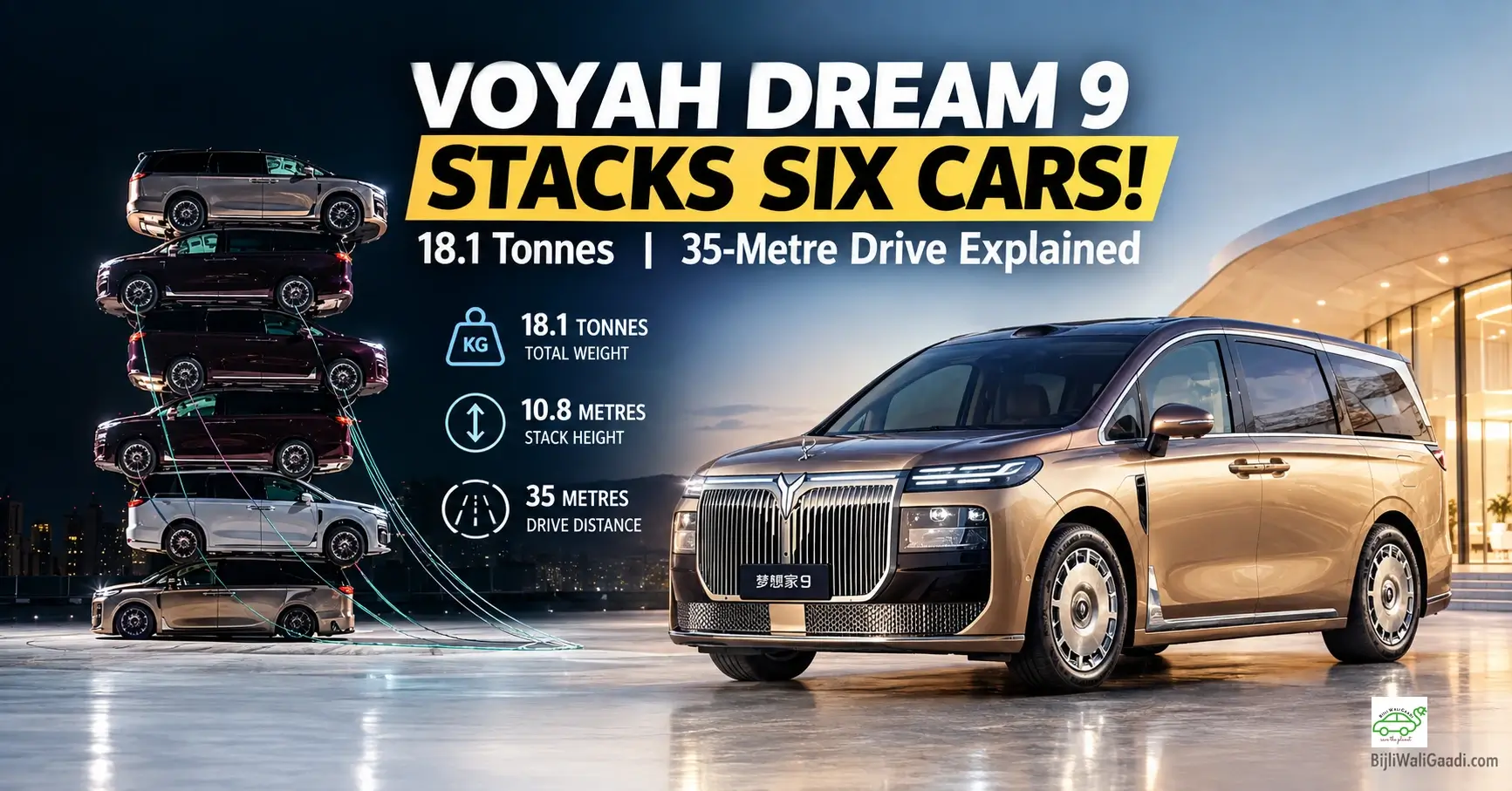
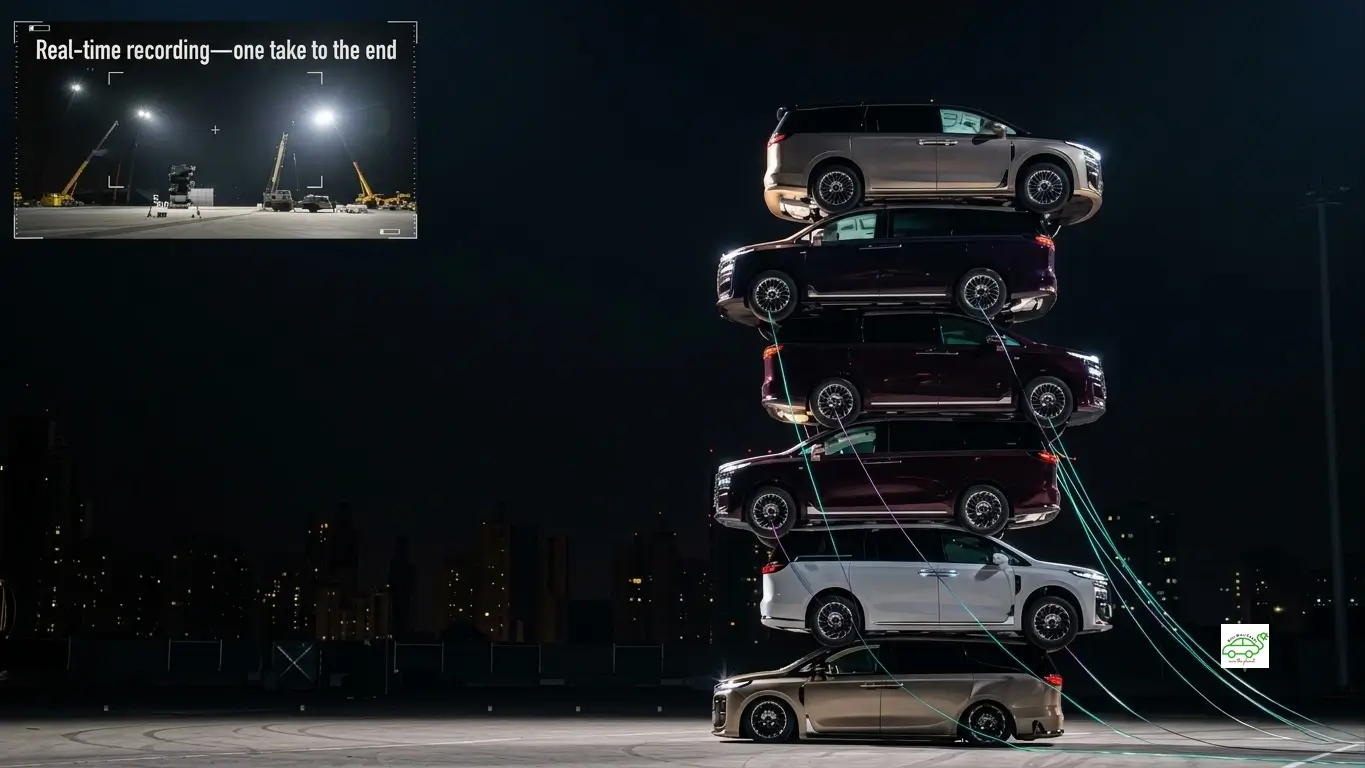
Six flagship MPVs, stacked into a tower roughly the height of a three-storey building. One vehicle at the bottom, asked to pull away, accelerate and stop with everything above it still standing.
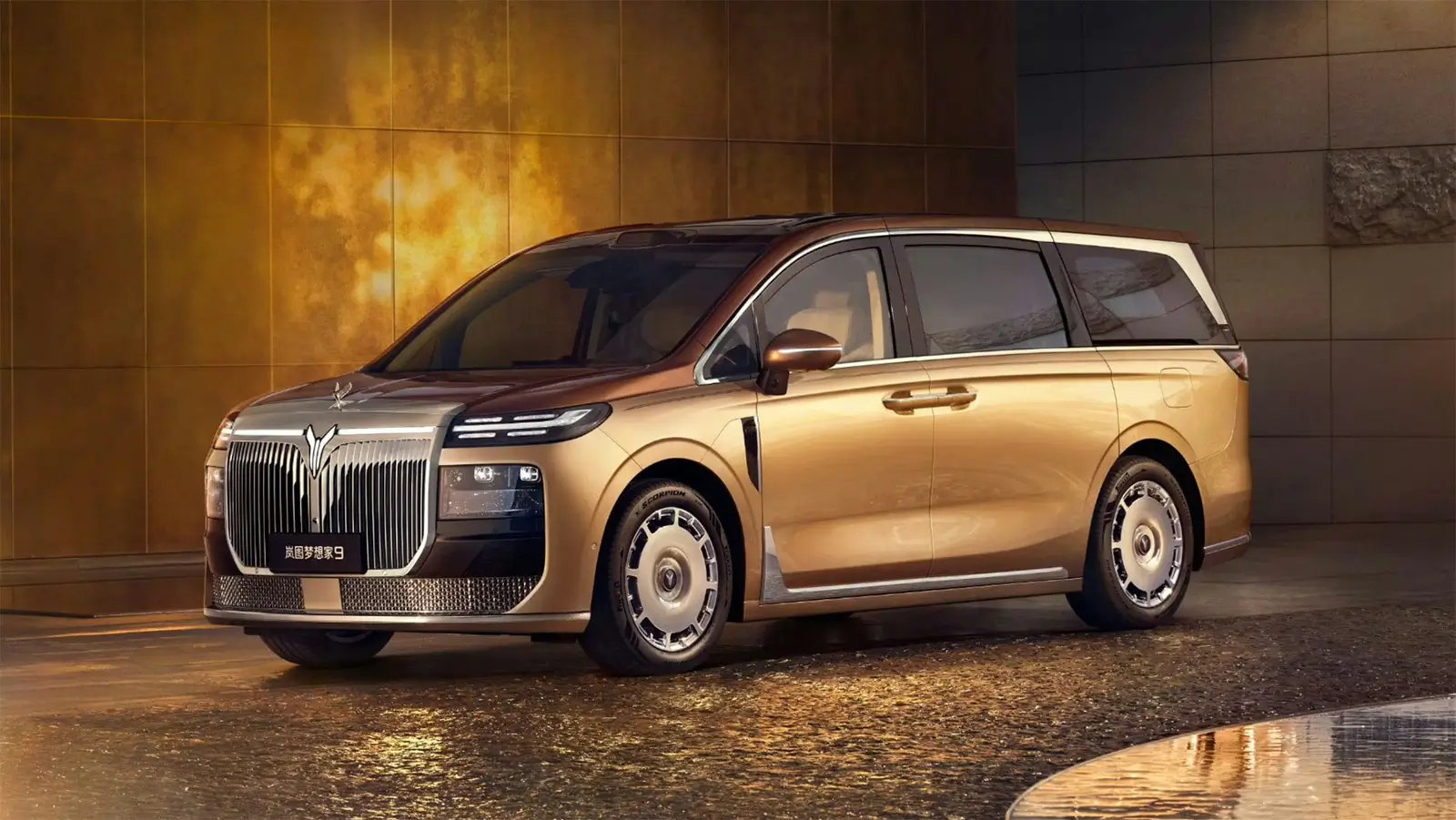
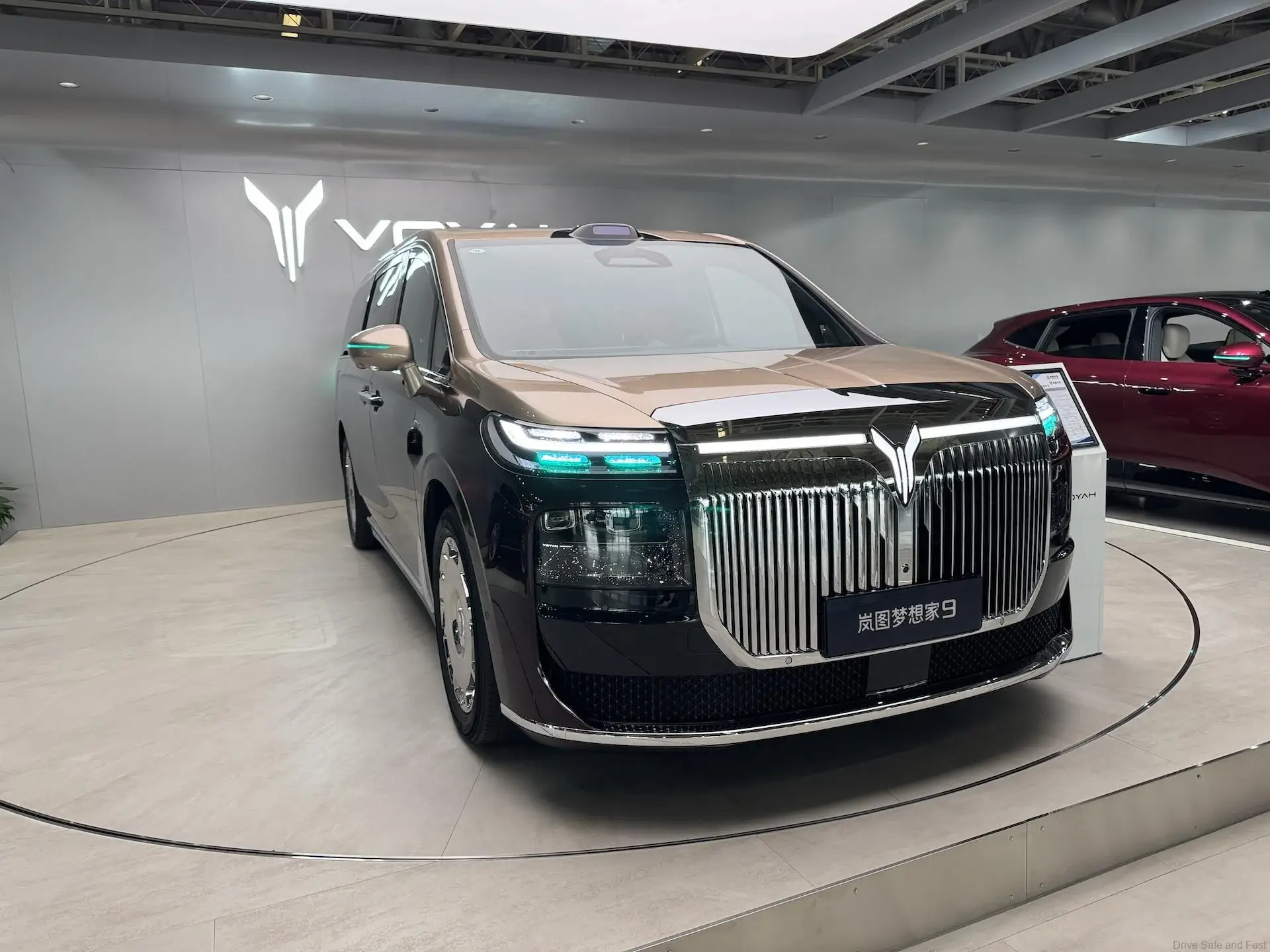
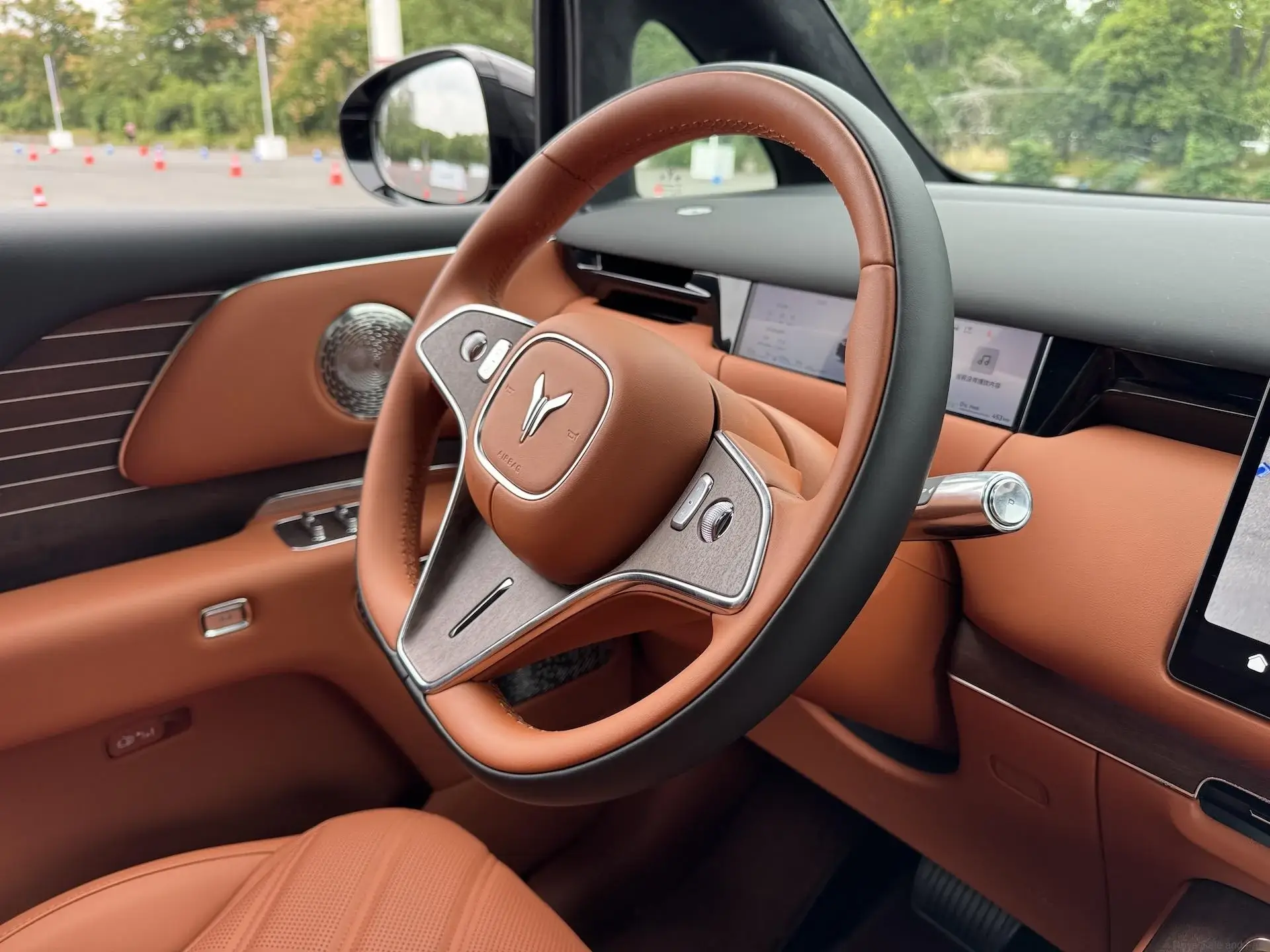
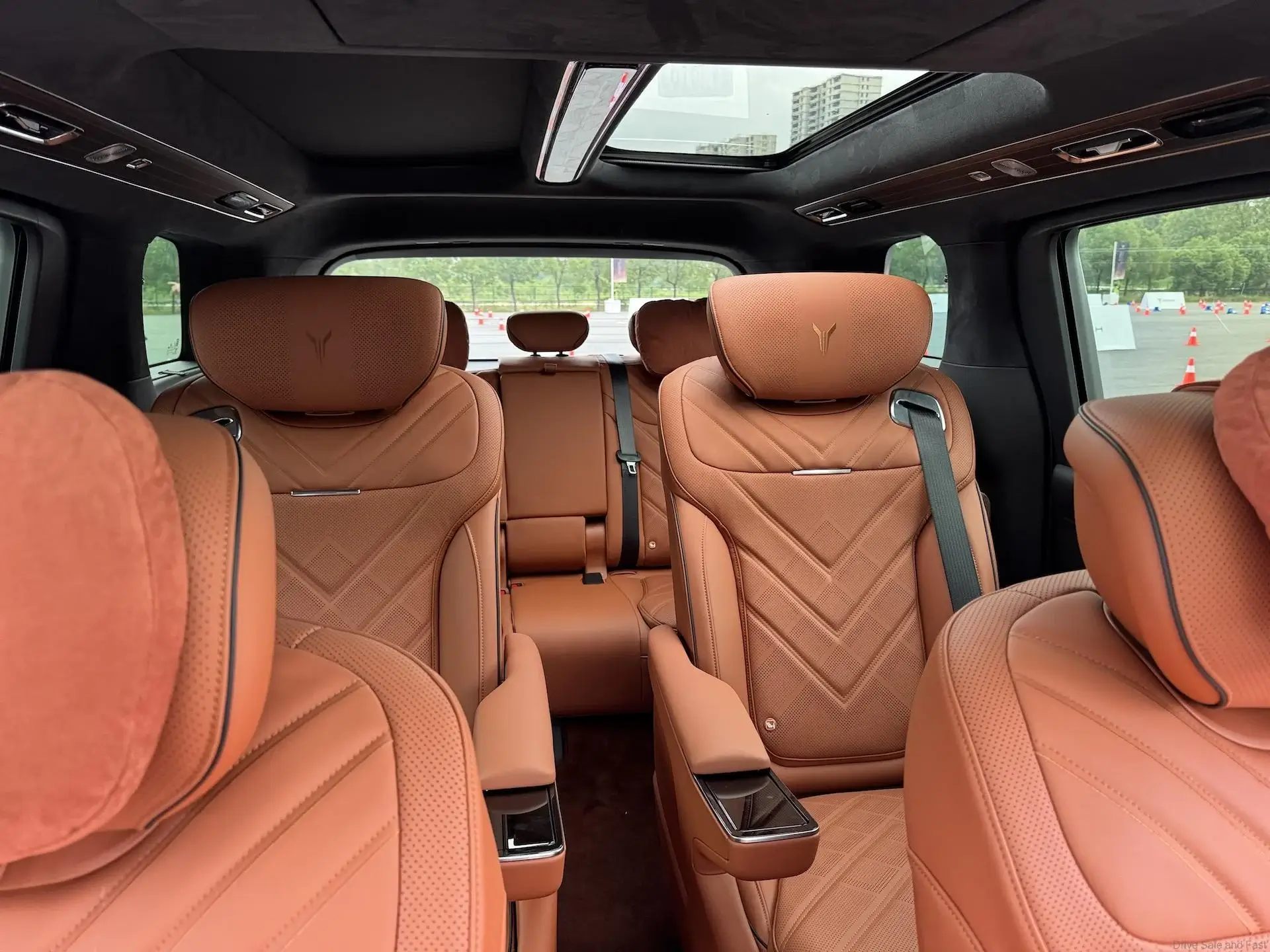
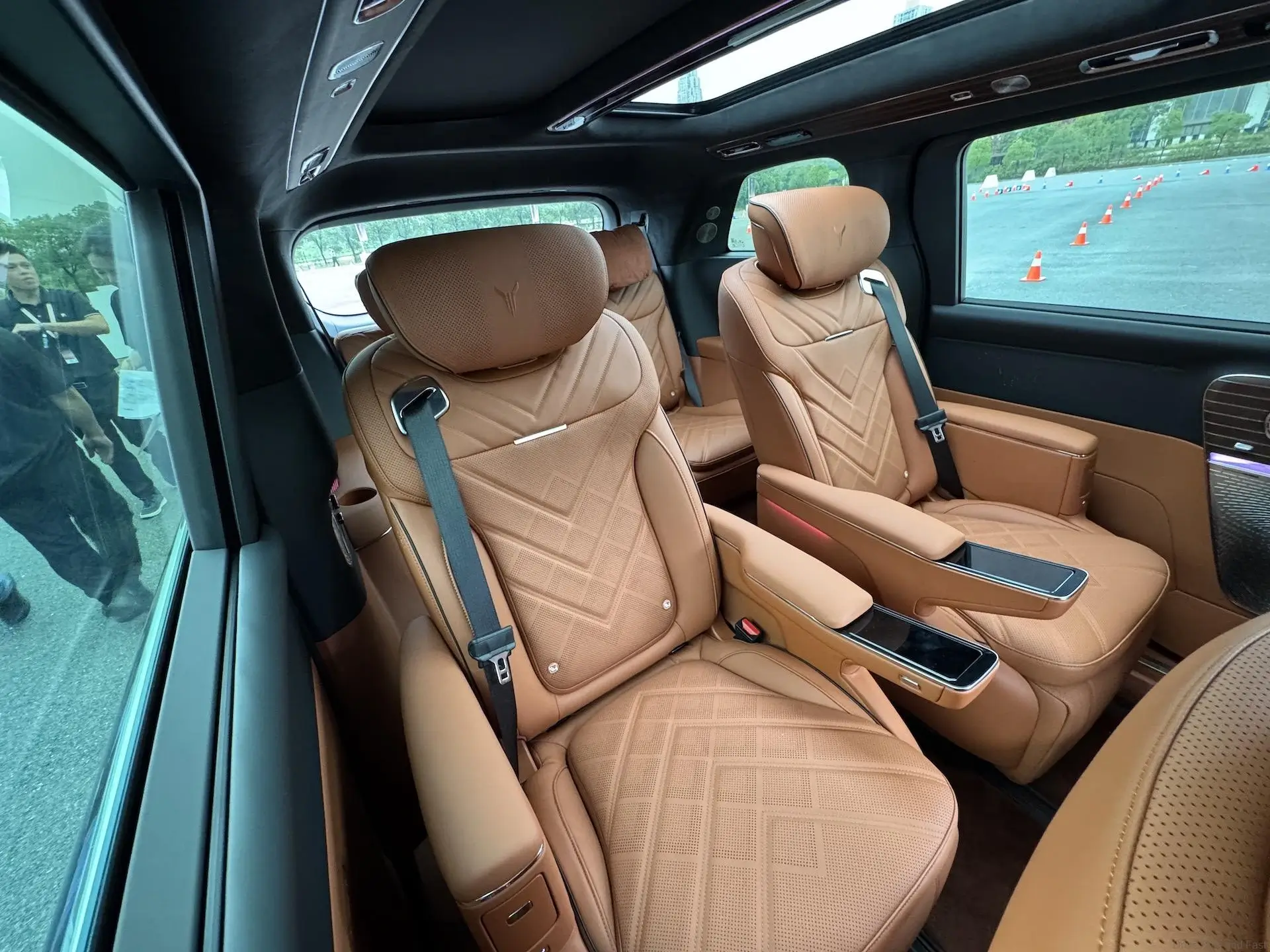
VOYAH says its new DREAM 9 completed the Load-Bearing Drive Challenge in a controlled demonstration (location: Wuhan Intelligent Connected Vehicle Proving Ground). The details show how it is engineered, and where the stunt’s meaning ends.
Key Highlights
- The Load-Bearing Drive Challenge: Six VOYAH DREAM 9 vehicles formed a tower approximately 10.8 m high, with the complete six-vehicle stack weighing approximately 18.1 tonnes.
- The drive: The bottom DREAM 9 completed a 35-metre moving challenge involving starting, acceleration and braking.
- The doors reportedly still opened, with no visible body deformation.
- The DREAM 9 comes as a PHEV (up to 560 kW, 800V architecture) or a BEV (475 kW, 120 kWh).
- This was a manufacturer demonstration, not a payload rating.
What Happened in the 35-Metre VOYAH DREAM 9 Challenge?
In the Load-Bearing Drive Challenge, six DREAM 9 vehicles were stacked vertically into a tower approximately 10.8 metres high, with the complete stack weighing approximately 18.1 tonnes. The bottom vehicle then moved the tower 35 metres, pulling away from rest, accelerating and braking to a stop. Available reporting puts the average speed at about 4.5 km/h, taking around 28 seconds.
Afterwards, the vehicles were reported to have stayed structurally intact, with doors still opening and no visible body deformation. Those are observed outcomes of this one test.
The DREAM 9 was launched at the “Night of Dreams” event in Beijing on 22 September 2026, where VOYAH presented it as its flagship MPV. The challenge was subsequently reported as a controlled manufacturer demonstration at Wuhan Intelligent Connected Vehicle Proving Ground.
How Did the Bottom DREAM 9 Move the Six-Vehicle Stack?
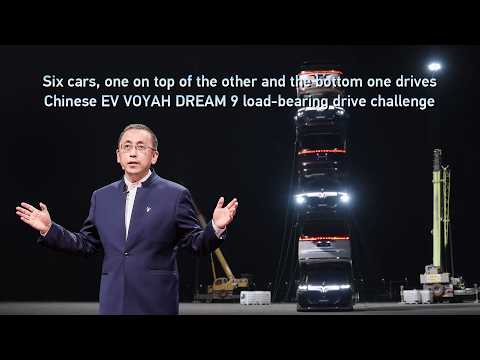
According to VOYAH Chairman Lu Fang, three things worked together: the powertrain, the braking hardware and the Huju P chassis. VOYAH says no jack was used and the suspension’s own structural strength held the stack steady.
Lu Fang credited the “Lanhai hybrid powertrain“, with its 800V platform and dual-motor 4WD, for precise power under extreme load, and pointed to redundant braking for a stable stop with minimal wobble.
That is VOYAH’s explanation. No single system accounts for the result: structure, chassis, electric drive, control software and brakes all played a part.
The Powertrain Technology Behind the Challenge
The DREAM 9 has two quite different powertrains.
PHEV. A 1.5T petrol engine works with front and rear electric motors in the PHEV’s 800V high-voltage architecture. VOYAH quotes up to 560 kW system output and a 65 kWh battery. CLTC range is up to 340 km pure electric and up to 1,500 km combined. With 5C fast charging, the PHEV charges from 20-80% in about 12 minutes.
BEV. Front and rear motors deliver a combined 475 kW from a 120 kWh battery. CLTC range is 701 km, and 20-80% charging takes about 20 minutes. The 12-minute figure applies to the PHEV, not the BEV.
Why dual-motor AWD helps
With a motor on each axle, the control software can decide how much torque goes to front and rear. Electric motors also respond to torque commands far faster than an engine-and-gearbox layout. Under a high traction demand, that control can help in three ways:
- Launch: torque can be built gently, reducing wheel slip when pulling away.
- Traction: if one axle loses grip, torque can shift to the other.
- Smoothness: fine control avoids sudden jerks, which matters with a tall stack on top.
There is a limit. The drive system controls how force reaches the road; the vehicle’s structure, suspension and tyres ultimately transmit the load to the ground.
How the Huju P Chassis Handles Extreme Load
The Huju P chassis combines an aluminium-intensive chassis architecture with front double-wishbone and rear five-link independent suspension, three-chamber air suspension, dual-valve EDC damping, VMC intelligent vehicle-domain control and bidirectional rear-wheel steering of up to 10 degrees, giving a minimum turning radius of about 5.9 m.
The logic is straightforward. Air springs support load and hold ride height. Dual-valve EDC manages compression and rebound damping independently. VMC coordinates suspension, braking, steering and electric drive. Rear steering improves low-speed manoeuvrability.
This suits a controlled demonstration. It does not show the DREAM 9 can routinely carry a six-vehicle stack on the road, and aluminium alone did not make the challenge possible.
Why the Braking System Matters
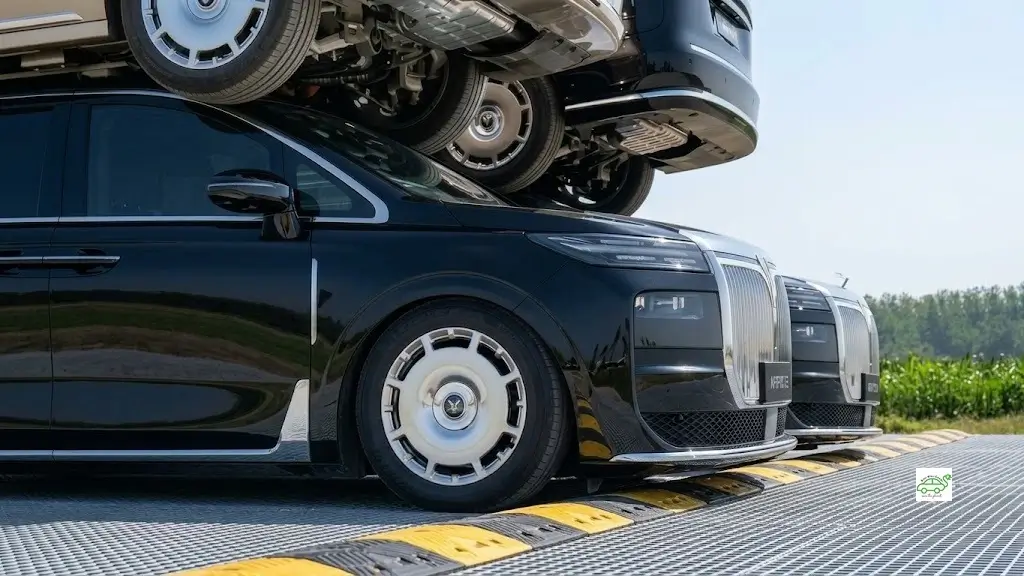
VOYAH describes a second-generation IPB 2.0 integrated braking system with an RBU redundant unit. The RBU provides redundant hydraulic braking capability through dual independent hydraulic circuits. The redundancy adds a further layer of braking control if a primary hydraulic path develops a fault.
Control mattered during the Load-Bearing Drive Challenge. A tall stack has a high centre of gravity, so abrupt deceleration could increase pitching and instability. The brakes alone did not make the challenge possible.
Why the Body Structure Matters
In a stacked configuration, vertical forces have to be transferred through the contact points, body structure, suspension and tyres of the vehicles below. The DREAM 9 uses a 2,200 MPa ultra-high-strength steel cage, an integrated laser-welded door-ring structure, seven-layer frontal and five-layer rear-end protection, and 11 airbags.
Open doors and no visible deformation were observed outcomes of this particular demonstration, not a universal structural test.

VOYAH DREAM 9 Specs, Powertrain, Range and Price
| Specification | VOYAH DREAM 9 PHEV | VOYAH DREAM 9 BEV |
| Powertrain | Plug-in hybrid | All-electric |
| Engine | 1.5T petrol | None |
| Electric motors | Front and rear | Front and rear |
| System power | Up to 560 kW | 475 kW |
| Battery | 65 kWh | 120 kWh |
| CLTC electric range | Up to 340 km | 701 km |
| CLTC combined range | Up to 1,500 km | N/A |
| Charging (20-80%) | About 12 min (PHEV, 5C) | About 20 min (BEV) |
| Drive system | Dual-motor electric AWD | Dual-motor electric AWD |
| Specification | Detail |
| Dimensions (L x W x H) | 5,325 x 1,998 x 1,823 mm |
| Wheelbase | 3,200 mm |
| Suspension | Front double-wishbone, rear five-link, three-chamber air, dual-valve EDC |
| Rear-wheel steering | Bidirectional, up to 10 degrees |
| Braking | IPB 2.0 with RBU redundant hydraulic circuits |
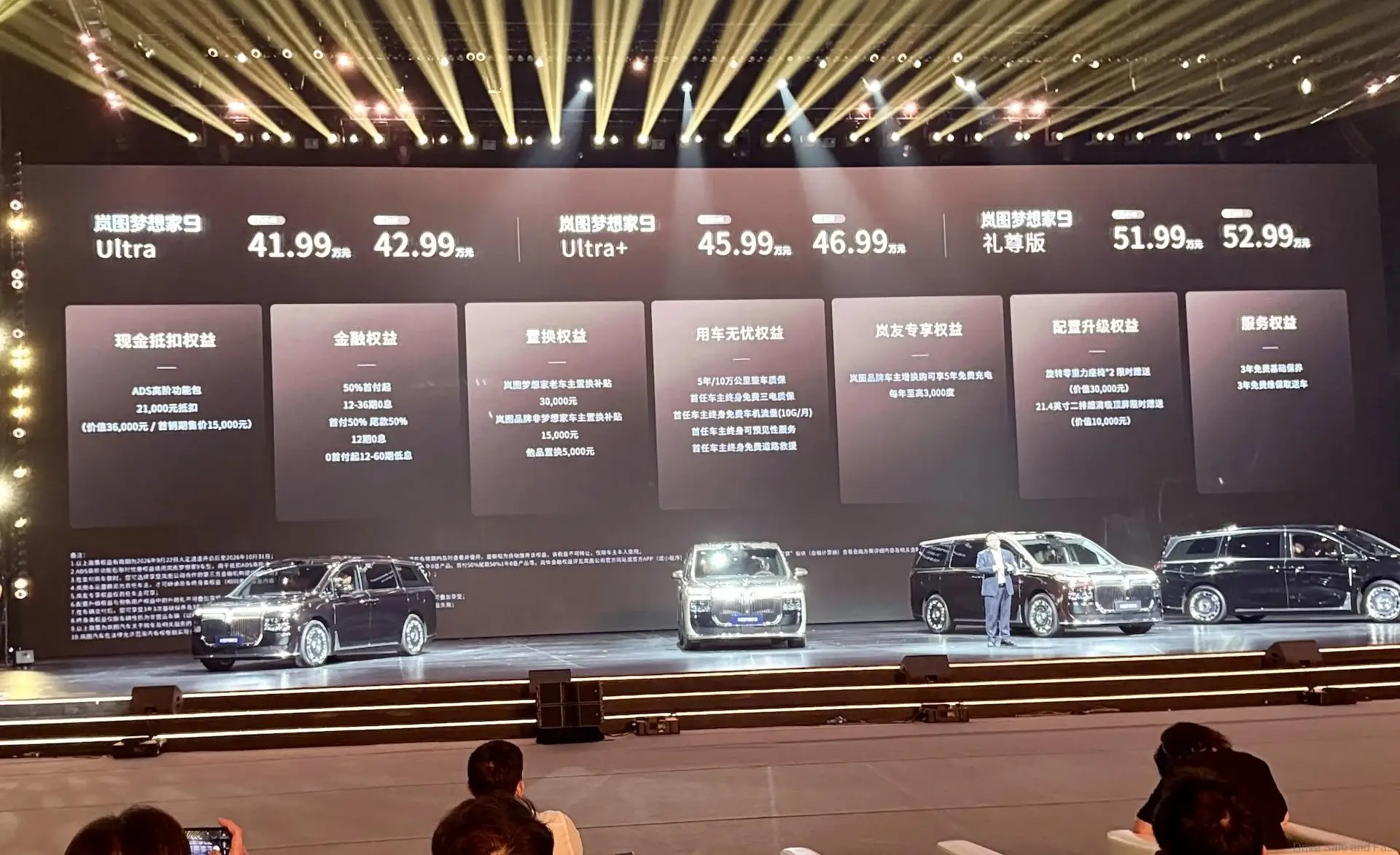
| Price | RMB 419,900-529,900 |
DREAM 9 Variants and Key Features
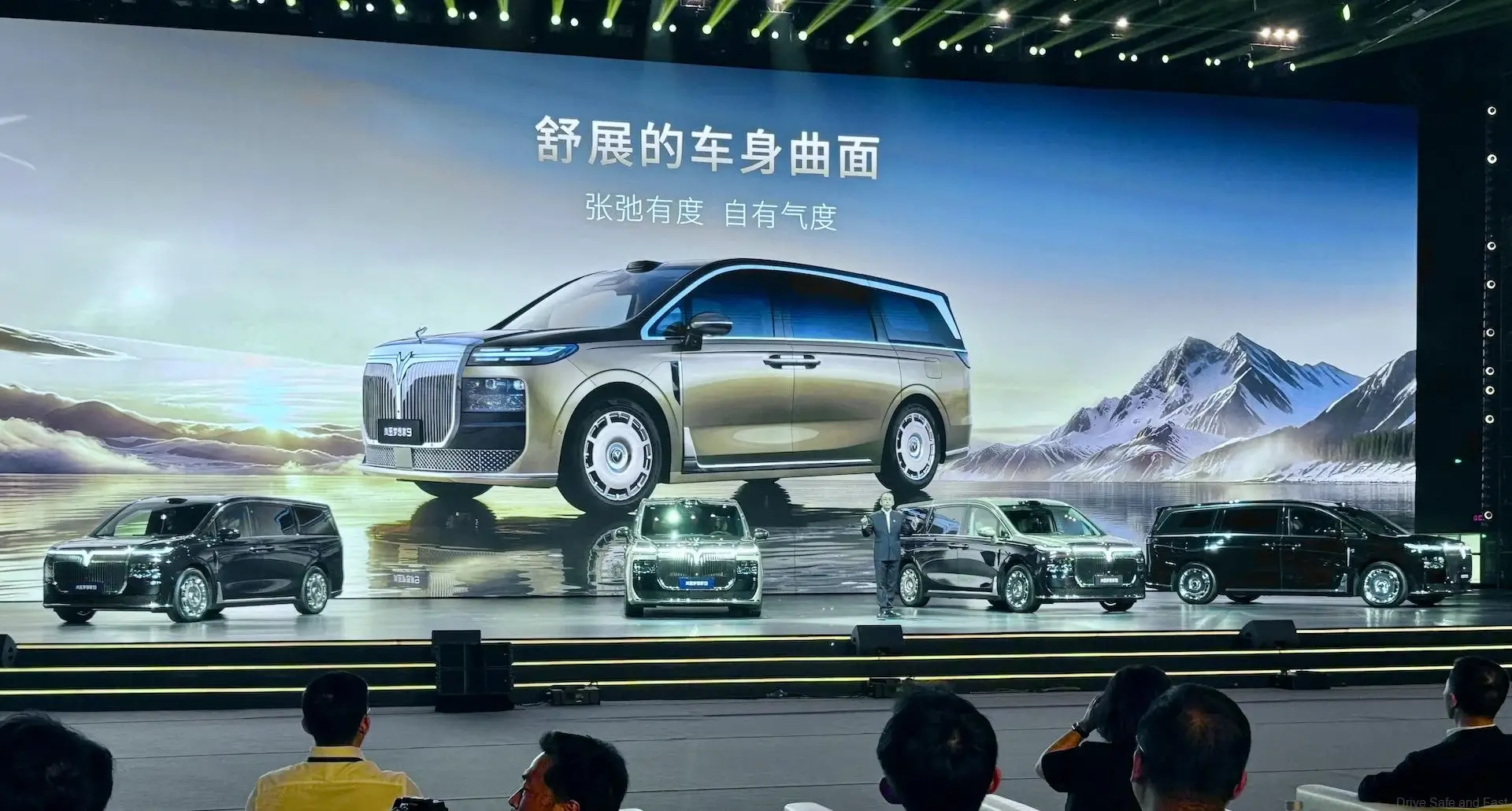
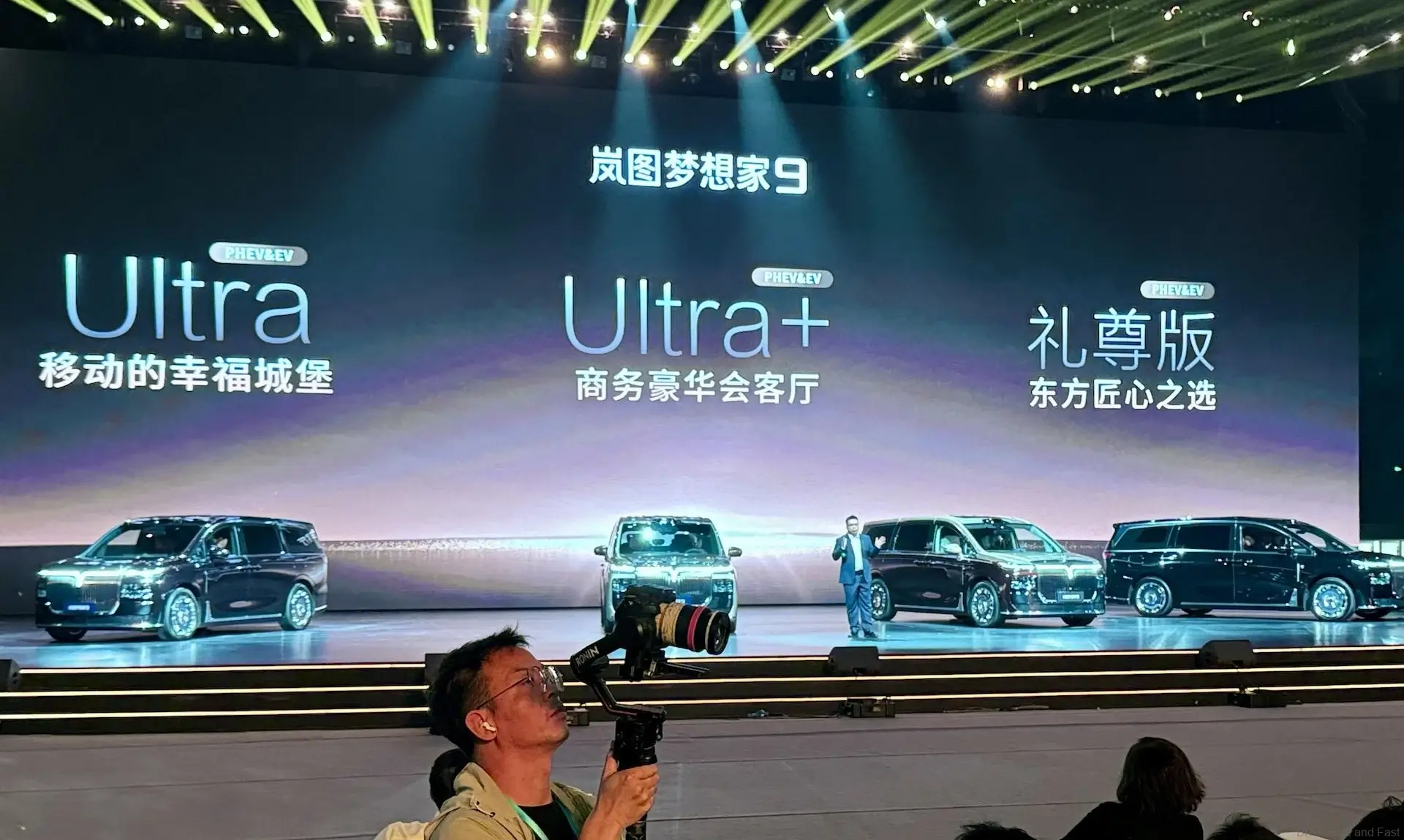
The launch presentation identifies three variants: Ultra, Ultra+ and Lizun Edition. The DREAM 9 is offered with both PHEV and BEV powertrain configurations.
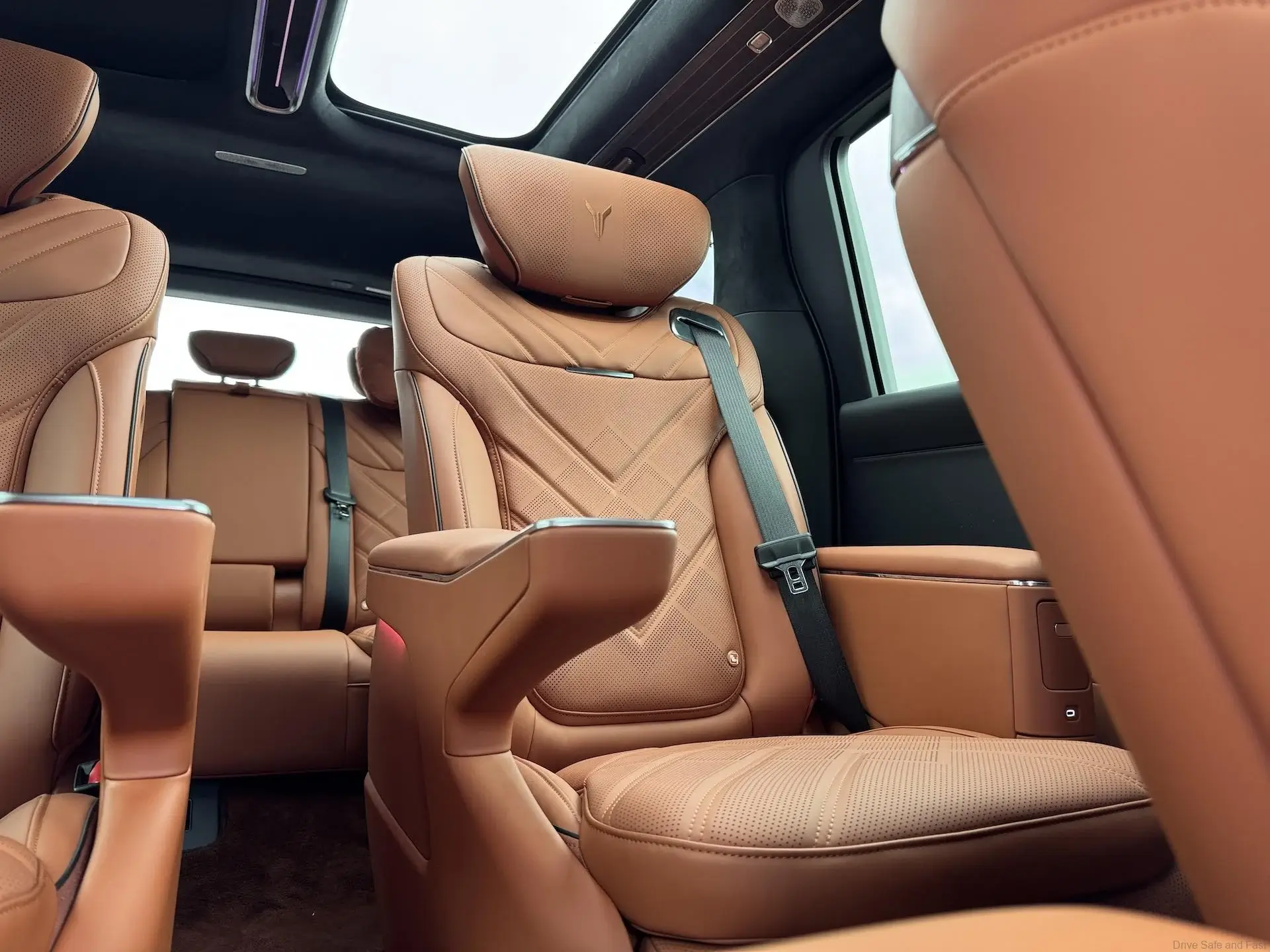
Standout features include a retractable crystal hood emblem with 2,520 precision-cut facets, HUAWEI XPIXEL headlights with 2.6 million combined pixels, second-row rotation of 45°, 90° and 180°, a 21.4-inch ceiling display, a 13L dual-door heating and cooling refrigerator and VOYAH Sound with 35 speakers.
VOYAH describes the vehicle’s intelligent-driving architecture as full-domain Level 3 and equips it with HUAWEI Qiankun ADS 5. That terminology does not mean unrestricted, legally approved Level 3 autonomous driving in every market and condition. Perception hardware is one 896-line dual-optical-path image-grade LiDAR, three solid-state LiDAR units and 37 intelligent sensors.
VOYAH’s launch communication reports more than 30,000 pre-orders within 48 hours, over 50% of them for the Lizun Edition, plus more than 20,000 upgrade orders from existing DREAM owners. These are company figures, not independently audited sales or deliveries.
Who Makes the VOYAH DREAM 9?
VOYAH is a premium new-energy-vehicle brand under Dongfeng Motor Corporation. Established in 2019 and based in Wuhan, China, it began trading on the Hong Kong Stock Exchange on 19 March 2026.
What the Load-Bearing Drive Challenge Actually Shows
Under controlled conditions and at walking pace, a DREAM 9 completed the Load-Bearing Drive Challenge by starting, accelerating and braking with a six-vehicle stack weighing approximately 18.1 tonnes above it, while the vehicles reportedly showed no visible deformation afterwards.
The demonstration highlights the combined role of the vehicle’s structure, suspension, electric drive, control systems and braking hardware. It does not establish a normal payload rating, long-term durability under such loads, crash performance or safety under extreme conditions.

Frequently Asked Questions
Stay connected via Google 'Electric Vehicle' News
Follow BijliWaliGaadi | India's Trusted EV Insights Portal
source on Google