550PS Range Rover Electric Revealed: The Extraordinary Engineering of a Silent Luxury Legend
Stay connected via Google 'Electric Vehicle' News
Follow BijliWaliGaadi | India's Trusted EV Insights Portal
source on Google
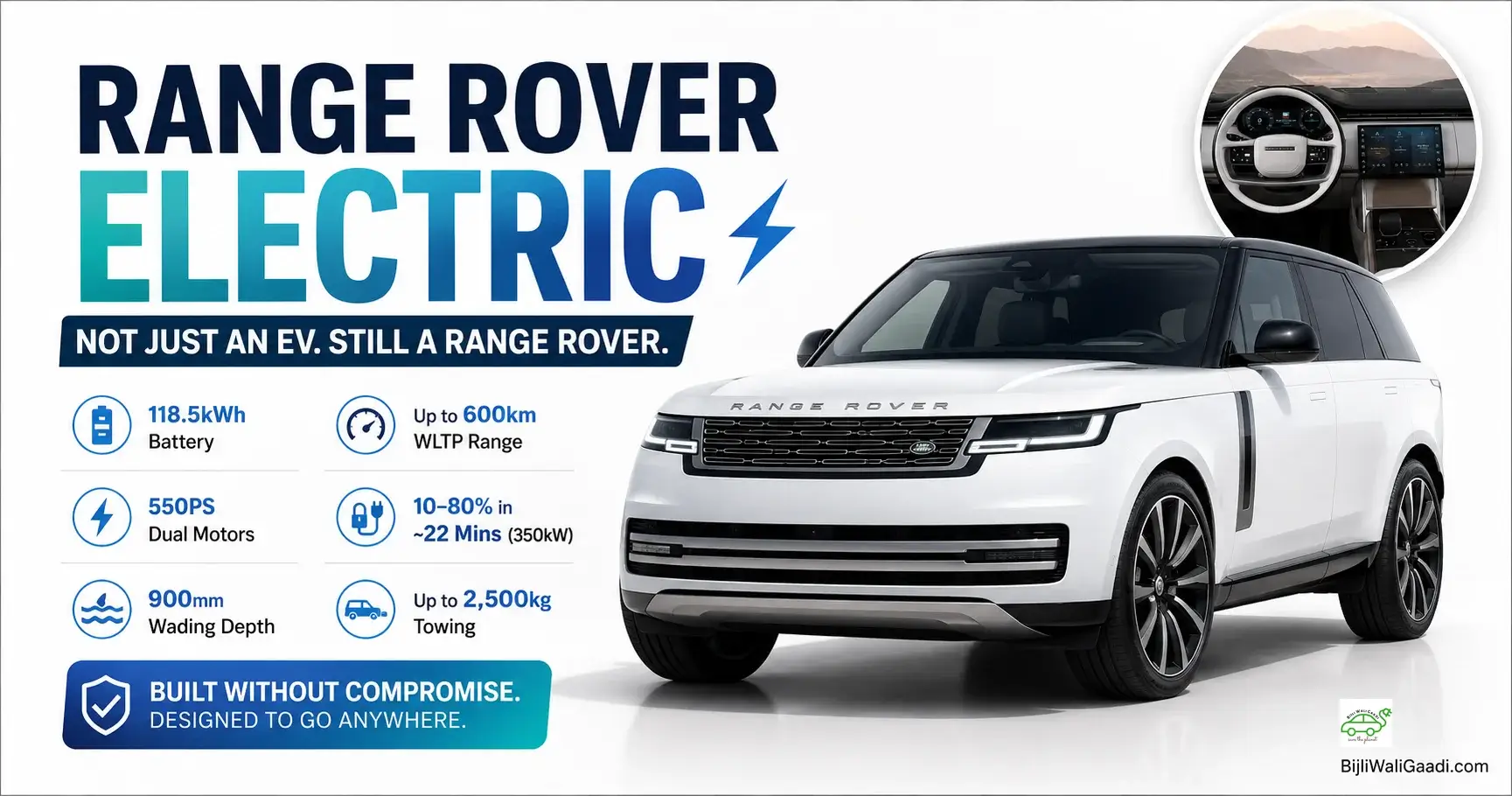
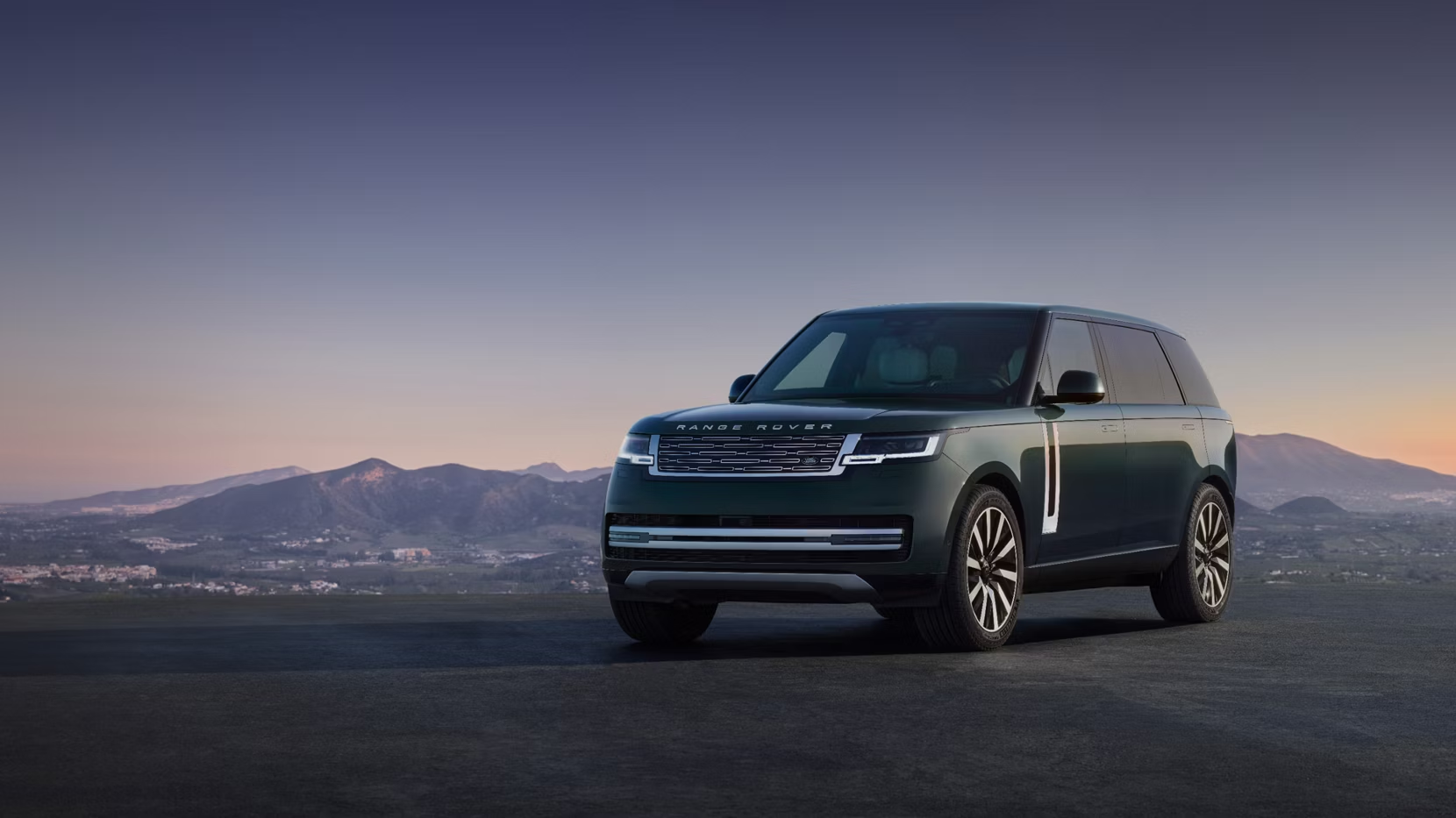
JLR has opened order books for the Range Rover Electric: a 118.5kWh battery, up to 550PS from two motors, an 800V architecture enabling a 10-80% charge in around 22 minutes, and a claimed WLTP range of up to 600km. UK prices start at £154,070; Indian bookings are open against a token of Rs 10 lakh.
None of that is the real story, though. What JLR’s engineers spent years trying not to change is the composure, silence and go-anywhere ability that define a Range Rover. As one JLR engineer put it, the powertrain was meant to be a means of propulsion, not the point of the car itself.
Range Rover Electric: The Key Specifications
| Spec | Detail |
| Battery | 118.5kWh, 344 NMC cells, double-stack |
| Motors | Two 260kW permanent-magnet motors, in-house developed |
| Power / Torque | Up to 550PS / 850Nm (full torque in Dynamic Launch & Off-Road modes) |
| Range (WLTP) | Up to 600km; claimed real-world 535km |
| Charging | 350kW DC (10-80% in ~22 min); 22kW AC home in under 7 hrs |
| 0-100km/h | 4.5 seconds (claimed) |
| Wading / Towing | 900mm / up to 2,500kg |
| Battery warranty | 8 years / 160,000km |
| Architecture | MLA-Flex platform, 800V |
| India status | Bookings open (₹10 lakh token); around ₹3.5-3.7 crore ex-showroom in current listings |
The 118.5kWh Battery Is More Than a Range Solution
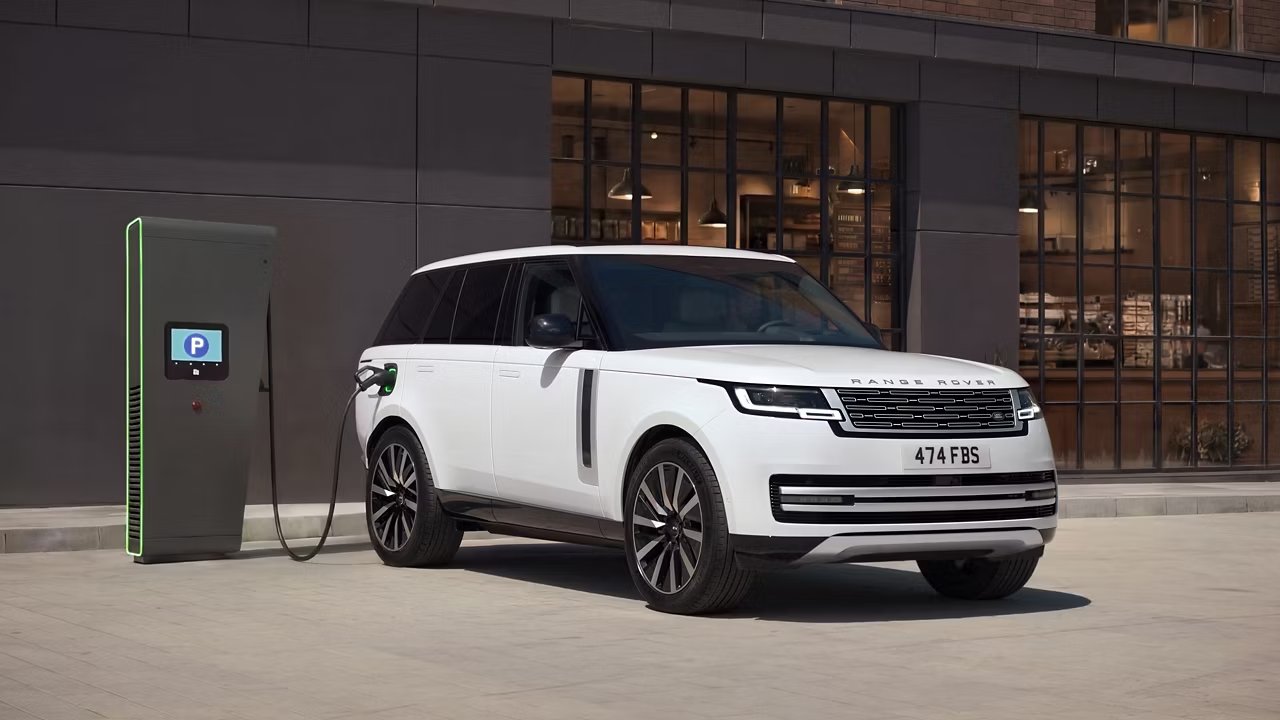
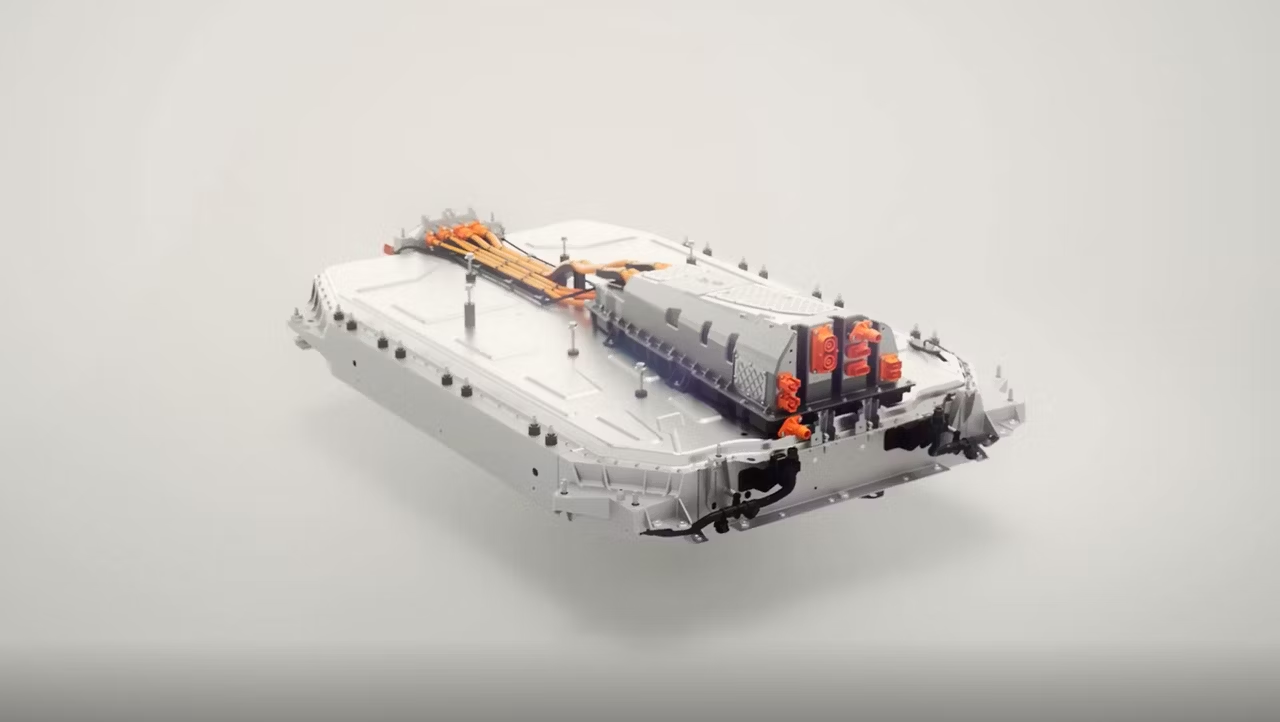
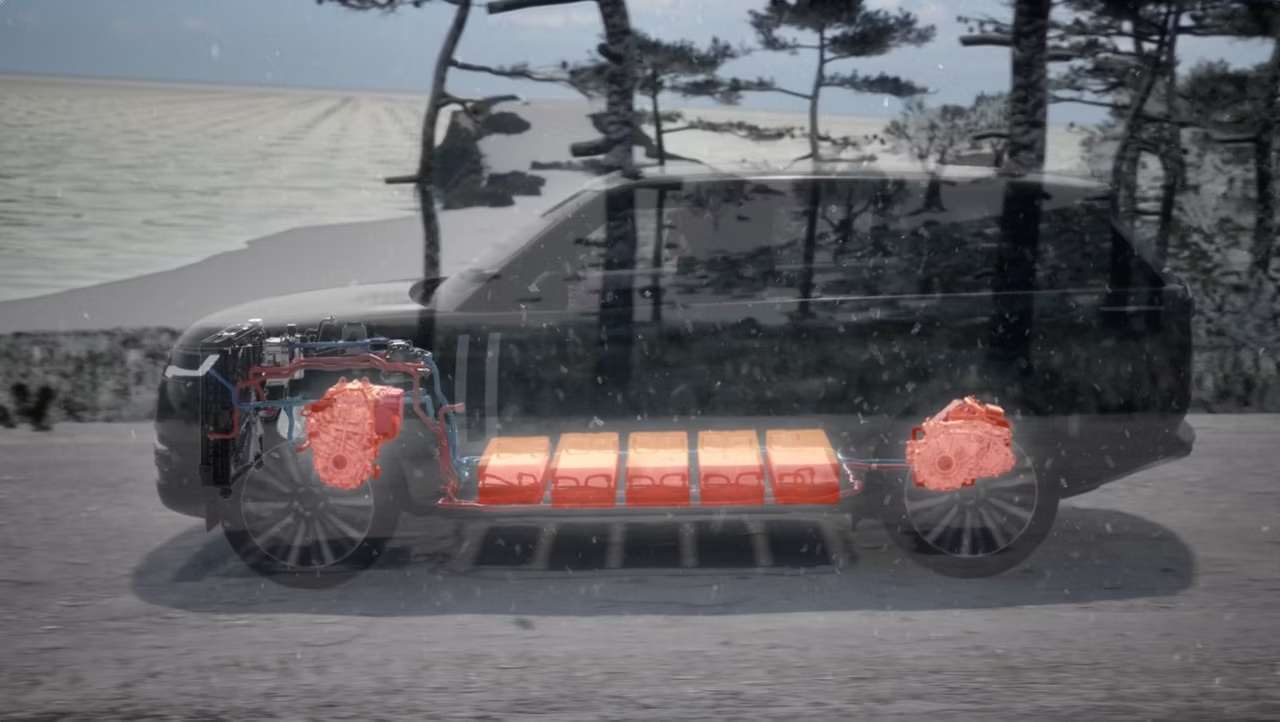
A battery this large exists partly because a Range Rover is heavy, and partly because JLR wanted range without asking owners to change how they drive. The 344 NMC cells sit in a double-stack layout — not simply to pack more energy into a tighter footprint, but to fit a very large battery within the existing architecture while preserving proportions and ground clearance. A reinforced, flattened underbody adds robustness and protects the pack from impact and water.
JLR’s ThermAssist system is claimed to cut heating energy use by around 40%, recovering range that would otherwise disappear in cold weather. Low battery placement also helps lower the centre of gravity, though JLR’s stated priority was packaging without compromising established proportions. The battery carries an eight-year/160,000km warranty.
Two Permanent-Magnet Motors Give Range Rover Electric Its Character
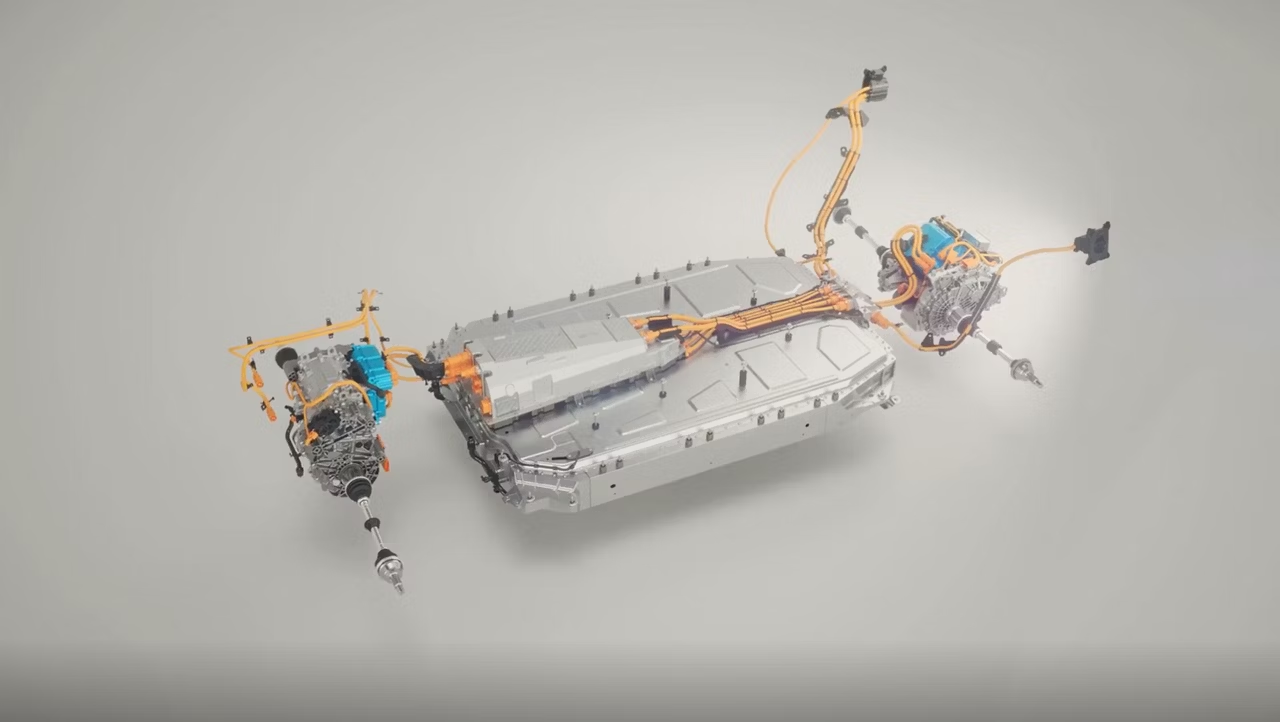
The dual-motor layout uses two 260kW permanent-magnet motors, one per axle, engineered and manufactured in-house — together producing up to 550PS and 850Nm, full torque available only in Dynamic Launch and Off-Road modes. A cooling system adjusts oil flow to optimise motor performance, and Intelligent Driveline Dynamics uses terrain-dependent torque control between axles rather than a fixed split. The powertrain can also effectively deactivate one motor when its contribution isn’t needed, reducing energy use under lighter loads. JLR benchmarked drivability against the Range Rover V8, not other EVs, because customers expect the same linear throttle response.
5ms Torque Management, 50ms Traction Control: The Real Engineering Story
Instant torque is usually marketed as an EV’s headline advantage. For a Range Rover, it’s also a hazard — dump full torque onto a wheel losing grip on ice or wet rock, and the car spins rather than moves. JLR addresses this at two levels: Intelligent Torque Management, the more significant figure, adjusts torque delivery within five milliseconds, while the broader traction-management system controls motor speed within roughly 50 milliseconds — a combination JLR says manages wheel slip up to 100 times faster than an equivalent combustion Range Rover.
That layered response matters because torque isn’t simply switched on: it’s filtered and metered against throttle input and terrain in near real time, so the driver feels controlled progression rather than an unfiltered surge.
How Range Rover Electric Keeps Its 900mm Wading and Off-Road Ability
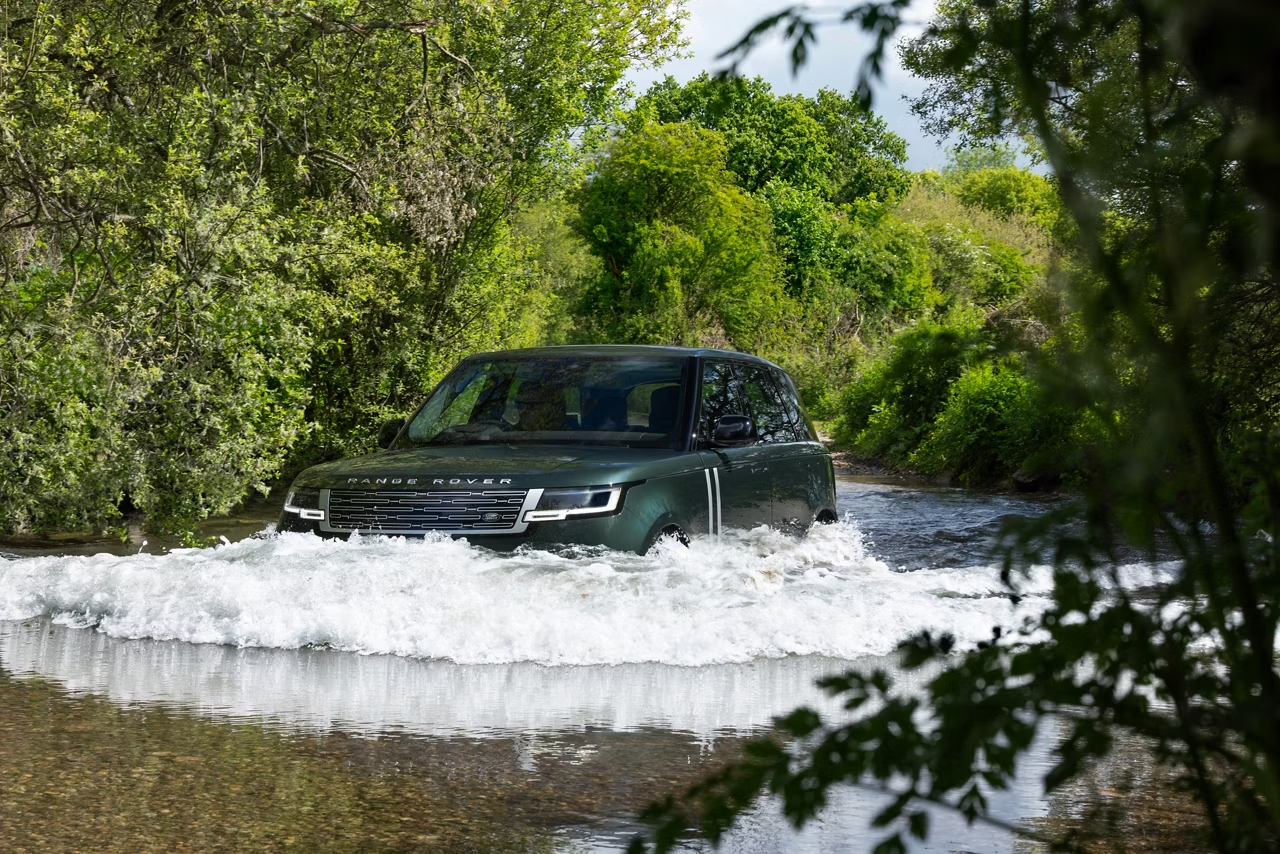
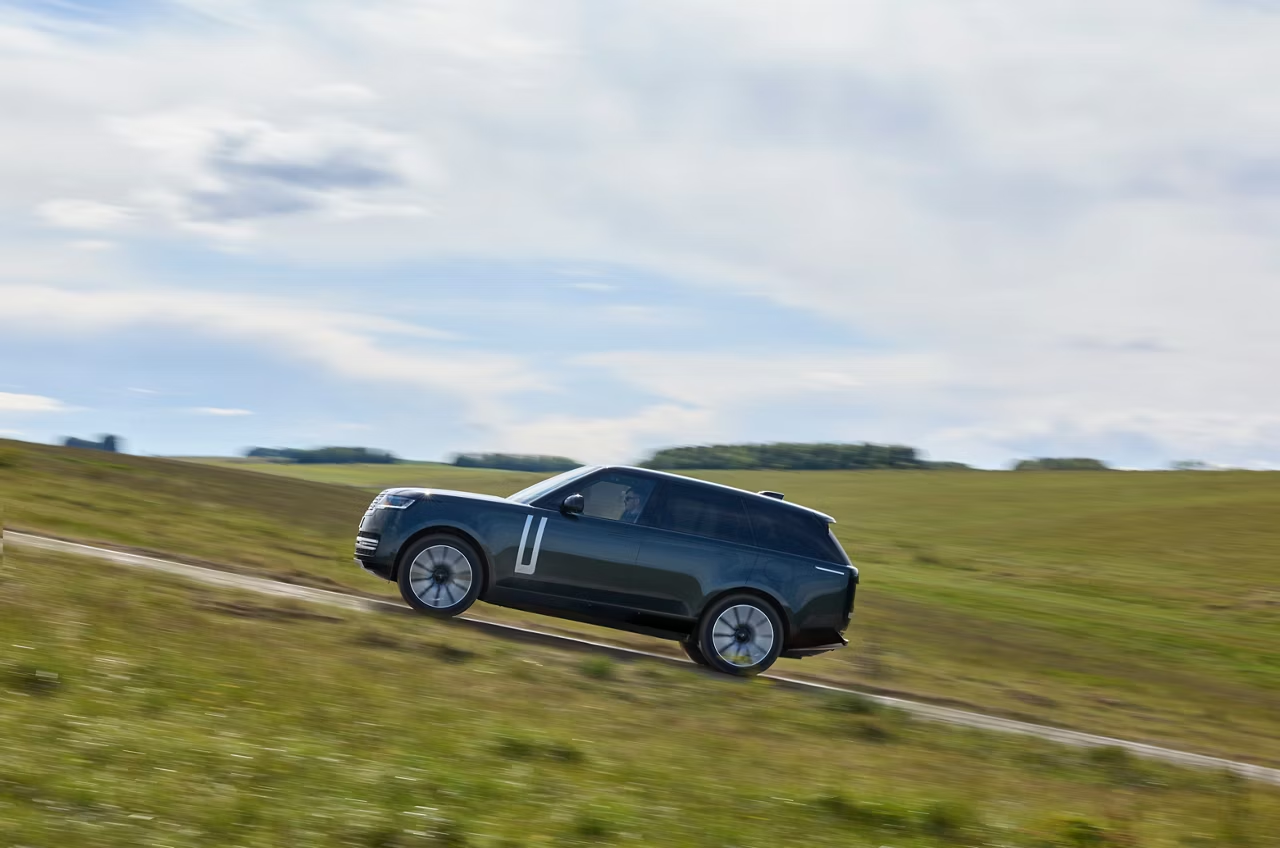
The Range Rover Electric matches the 900mm wading depth of its combustion siblings, climbs gradients up to 45 degrees in single-pedal mode, and tows up to 2,500kg, with air suspension and Terrain Response carried over for low-speed control across sand, mud and rock. Instant torque improves crawl control and lets single-pedal driving hold a controlled descent without braking, though only with precise calibration — every scenario was benchmarked against the petrol and diesel Range Rover.
Thermal Management Had to Work in Sand, Heat and Cold
JLR tested the car from -40°C in Arjeplog, Sweden, to the peak heat of the Dubai desert and off-road routes at Eastnor Castle, UK, with testing focused on cooling and thermal durability as much as performance. JLR says the programme accumulated physical testing equivalent to roughly 38 trips around the globe, plus over 250,000 hours of virtual testing, with battery packs shock-tested between -40°C and 90°C.
Why This EV Is Designed to Be Quieter Than “Just Silent”
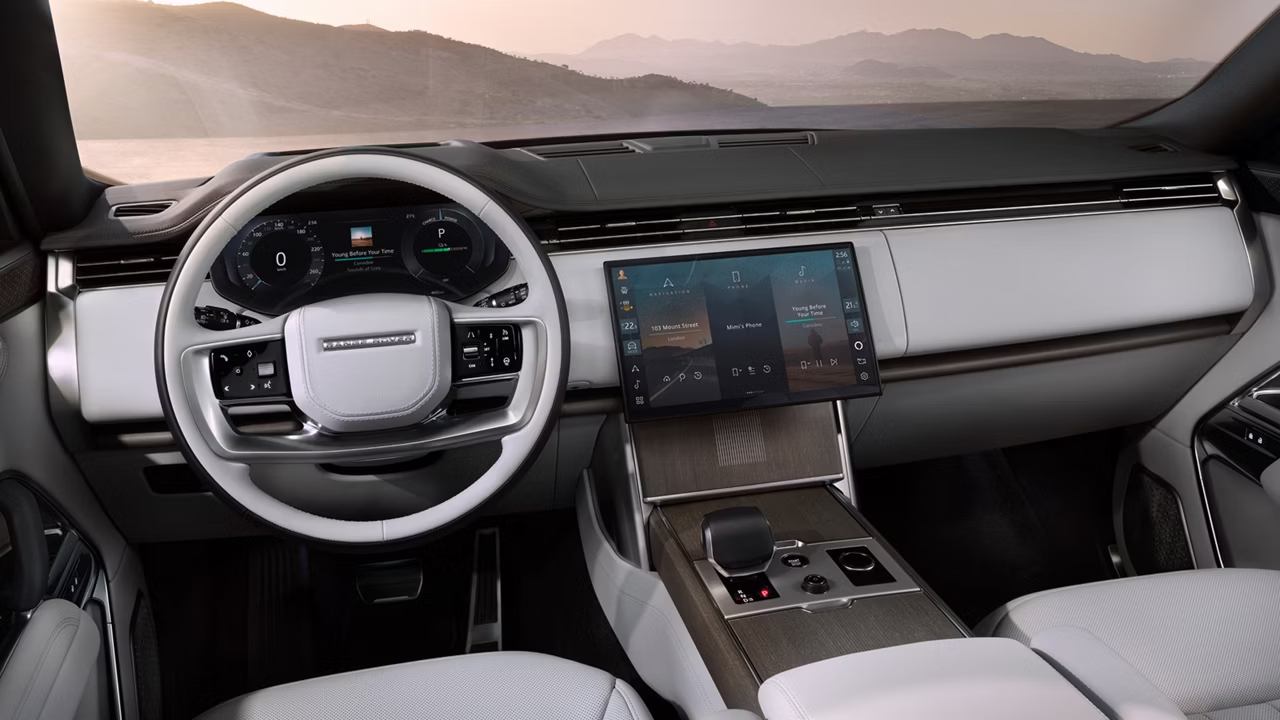
Removing a combustion engine doesn’t automatically create a luxury cabin — it exposes every other noise source. JLR’s engineers separately managed road, tyre, wind and drivetrain noise via acoustic laminated glass and drivetrain isolation, while Active Noise Cancellation is said to establish individual acoustic quiet zones per occupant.
Because total silence can feel unnatural, sound designers also built a bespoke soundscape — reportedly centred on an F-major chord — extending to the exterior acoustic alert pedestrians hear at low speed. The point: EV propulsion removes one noise source, but luxury refinement requires engineering everything that remains.
Virtual Engineering Helped Shape the Production Car
Range Rover Electric was JLR’s first vehicle to have part of its physical prototyping phase replaced by virtual development. Engineers drove a virtual model on a simulator at JLR’s Gaydon facility, built from around 80 miles of mapped test tracks and proving grounds, before a running prototype existed. JLR estimates around 80% of the finished car’s character was shaped virtually, with physical testing used to validate those decisions.
Range Rover Electric India: Bookings, Variants and Range
Indian bookings are open against a token of Rs 10 lakh, covering the standard-wheelbase Autobiography, long-wheelbase SV/SV Ultra/SV Black, and a First Edition in three exterior colours. JLR quotes WLTP range up to 600km, with a claimed real-world figure of 535km.
The car arrives as a fully imported unit built at Solihull and won’t benefit from tariff relief under the India-UK trade agreement. Indian coverage currently lists it around ₹3.5-3.7 crore ex-showroom, though JLR’s India communication remains the final authority on pricing.
Range Rover Electric Price and Its Rivals
In the UK, the EV550 Autobiography SWB starts at £154,070 OTR. Against rivals like the Mercedes-Benz G-Class Electric, Porsche Cayenne Electric and BMW iX, the differentiator is less about winning a single spec battle and more about combining 800V fast charging, dual-motor performance, 900mm wading and 2,500kg towing with Range Rover’s luxury/off-road brief.
The Verdict: An Electric Range Rover, Not Simply a Range Rover EV
What makes the Range Rover Electric genuinely different is restraint. JLR didn’t use electrification as an excuse to reinvent the car; it used it as a constraint to design around while keeping the size, proportions and behaviour buyers expect. The battery, the layered torque management and the bespoke acoustic engineering all serve one goal — making the switch to electric feel less like a new car and more like the same one, done quietly.
Stay connected via Google 'Electric Vehicle' News
Follow BijliWaliGaadi | India's Trusted EV Insights Portal
source on Google